Published: Friday, July 17, 2026 · 7:11 AM | Updated: Friday, July 17, 2026 · 7:11 AM
📊 232 views




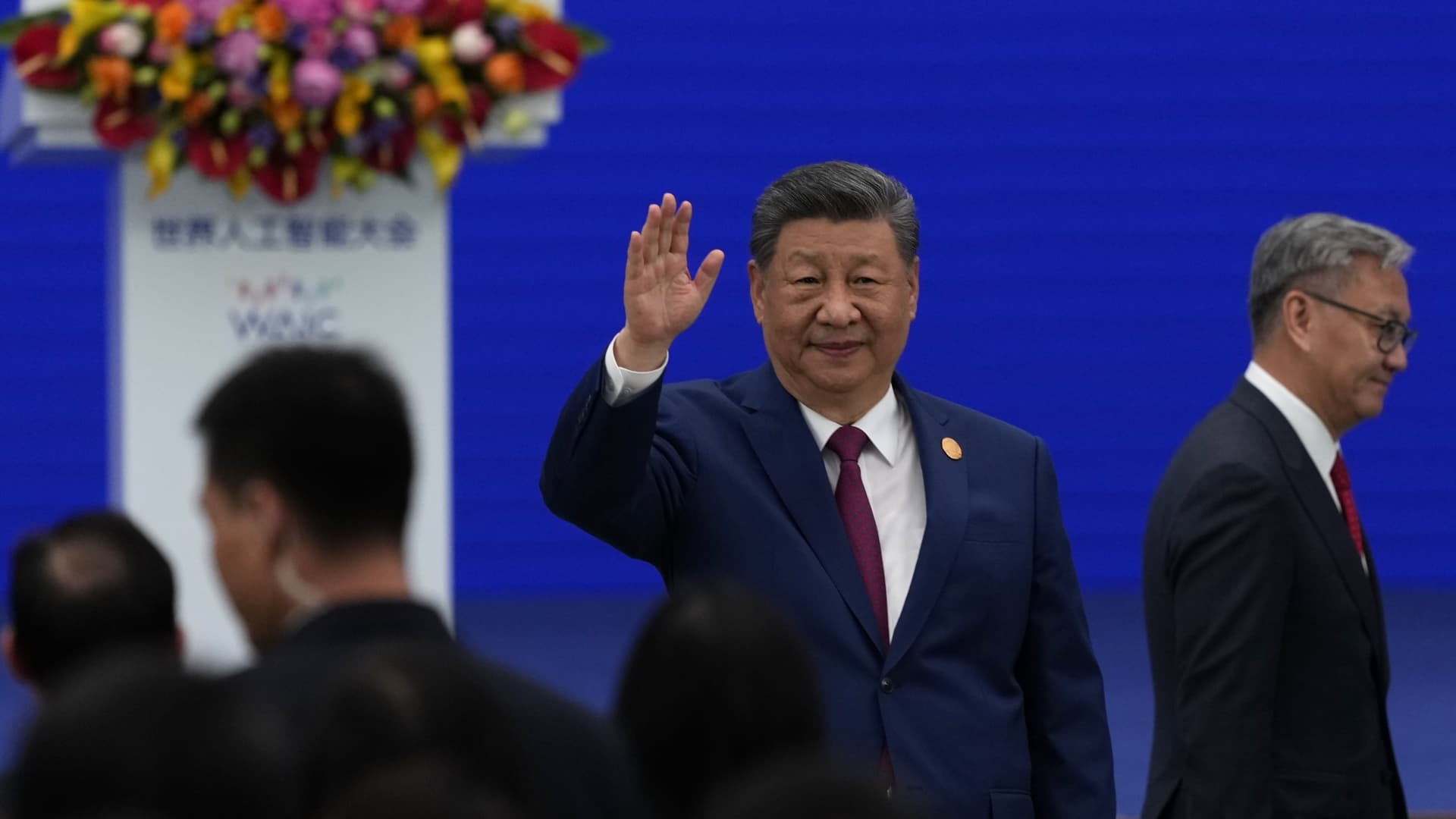
Chinese President Xi Jinping recently positioned China as a key AI partner for the developing world, advocating for a multilateral approach to artificial intelligence development. This strategic overture aims to foster international collaboration while overtly cautioning against the unilateral national security measures that have shaped the current geopolitical tech landscape.
🚀 Tech Strategy & Market Disruptions
- Global South Engagement. China offers 5,000 AI training opportunities to developing nations, cementing its role as a technology enabler and fostering diplomatic ties.
- WAICO Establishment. The formation of the World Artificial Intelligence Cooperation Organization (WAICO) headquartered in Shanghai signals China’s ambition to shape global AI governance and standards.
- Domestic Tech Advancement. Chinese firms like Huawei are rapidly developing indigenous AI hardware, exemplified by the Atlas 950 SuperPoD, directly countering Western export controls and bolstering self-sufficiency.
Speaking at the World AI Conference in Shanghai, President Xi Jinping underscored China’s intent to be a collaborative force in artificial intelligence. He articulated a vision where AI development is a ‘symphony of international cooperation,’ directly contrasting with what he implied were isolationist national security concerns. This strategic pivot includes a pledge of 5,000 AI training opportunities for developing countries and active cooperation with blocs such as ASEAN, the League of Arab States, and the African Union.
This push for a global AI partner model comes amidst escalating tech tensions, particularly with the United States. US export controls, initiated under the Trump administration and intensified by the Biden administration, have significantly restricted China’s access to advanced computing chips and semiconductor manufacturing capabilities. These measures, citing national security risks, have demonstrably impacted leading tech firms.
Nvidia, for instance, has reported a sharp decline in its market share within China’s data center computing segment, noting an inability to develop and deliver competitive products that satisfy both Beijing and Washington’s regulatory frameworks. This has inadvertently created an environment where competitors can expand their developer and customer ecosystems, challenging Nvidia’s global dominance. The broader implication for technology market trends is a balkanization of supply chains and a dual ecosystem approach to AI innovation.
- Geopolitical Tech Divide: The US-China rivalry is spurring distinct AI development trajectories and hardware ecosystems, fragmenting global technology standards.
- Indigenous Innovation Drive: China’s response to export controls is an accelerated push for self-sufficiency in AI hardware and software, as seen with Huawei’s Atlas 950 SuperPoD.
- Global South Influence: China is actively leveraging AI diplomacy to build technological alliances and influence future AI governance frameworks with developing nations.
China’s proactive stance as an AI partner through training and cooperation initiatives in the Global South → fosters technological self-reliance and reduces dependence on Western tech ecosystems → directly challenges established global tech supply chains and intellectual property norms → accelerating the formation of alternative AI governance bodies like WAICO → leading to increased market fragmentation and the emergence of distinct, regionally-aligned AI platforms. This cause-and-effect chain signifies a fundamental shift in how AI will be developed, governed, and adopted globally.
‘The strategic positioning of China as an AI development ally to the Global South is not merely about technological transfer; it’s a profound play for data sovereignty and establishing alternative AI governance frameworks. For any CTO, understanding this dual push – indigenous advancement and international alliance-building – is crucial for navigating future supply chain resilience and market access,’ explains a StockXpo Lead Solution Architect.
- Chinese AI Training Initiative: 5,000 opportunities for developing countries in AI training and seminars.
- World AI Conference (WAIC): Held in Shanghai, serving as a platform for China’s international AI agenda.
- World Artificial Intelligence Cooperation Organization (WAICO): Established by 29 countries, headquartered in Shanghai, aimed at global AI cooperation and standards.
- US Export Control Impact on Nvidia: Effective foreclosure from China’s data center computing/compute market as of fiscal year 2026.
- Huawei Atlas 950 SuperPoD: Designed to link multiple chips for boosted computing power, addressing large-scale data center and model training needs.
Huawei’s AI Ecosystem Expansion Potential
Huawei’s unveiling of the Atlas 950 SuperPoD supernode highlights a formidable domestic response to US semiconductor restrictions. This high-performance computing solution is explicitly designed to address the intensive computational demands of large-scale data centers and sophisticated AI model training, crucial for emerging technologies. By integrating multiple chips, Huawei aims to provide an alternative architecture to current market leaders, specifically targeting a captive domestic market and potentially expanding its influence across partner nations in the Global South. This strategic move could bolster China’s self-sufficiency in critical AI infrastructure components, fostering an independent hardware and software stack. Building a robust developer ecosystem around this indigenous technology will be paramount for its long-term viability and global competitive posture.
China’s AI Market Adoption Challenges
Despite an aggressive push for AI partner leadership and international cooperation, China faces significant hurdles in global AI market adoption beyond its immediate allies. The ‘overstretching the national security concept’ rhetoric, while aimed at the US, also underscores the trust deficits that can arise from state-driven technological initiatives. For global enterprises and developers, concerns over data privacy, intellectual property protection, and potential geopolitical entanglement can complicate the adoption of Chinese-developed AI platforms. The dual-ecosystem reality, where a Chinese tech stack coexists with or competes against Western alternatives, necessitates strategic choices for multinational corporations. Furthermore, the intensity of domestic competition within China itself, coupled with the need for continuous innovation, requires substantial investment in R&D and talent development to maintain a leading edge.
The Ripple Effect of China’s AI Partner Strategy
China’s assertive posture as a global AI partner, coupled with its indigenous innovation drive, is poised to redefine the international technology landscape. The establishment of WAICO and direct engagement with the Global South signals a deliberate strategy to build an alternative framework for AI development and governance, challenging existing Western-centric models. This dual approach will accelerate the bifurcation of the global tech ecosystem, demanding careful navigation from all stakeholders.
- The strategic move to empower developing nations with AI training will likely strengthen China’s technological influence and soft power.
- Intensified domestic innovation, as seen with Huawei, aims to mitigate the impact of external tech restrictions, potentially creating a formidable parallel tech stack.
- The emphasis on ‘secure and controllable’ AI while opposing ‘security overreach’ sets a philosophical battleground for the future of global AI governance.
How will the developing world balance the allure of accessible AI technology with the complex geopolitical implications of aligning with a specific tech superpower?
📊 StockXpo Analyst’s View
Market Impact: This news suggests a deepening divide in the global technology market, potentially leading to segregated supply chains and distinct regional AI ecosystems. Investors should anticipate increased volatility in semiconductor and AI-related stocks as companies navigate export controls and the emergence of new, government-backed competitors. The long-term implication is a more fragmented global tech investment landscape, where localized strengths become paramount.
Sector To Watch: The semiconductor and AI infrastructure sectors are critical. Companies investing in domestic AI hardware and software solutions in China, and those in the Global South leveraging these new partnerships, could see significant growth. Conversely, Western companies heavily reliant on the Chinese market for high-end AI components will continue to face headwinds. Keeping abreast of these shifts is vital for informed decisions, available through educational tech insights. Further analysis on global tech shifts can be found on Reuters technology news and Bloomberg’s technology insights.
Financial Disclaimer:
StockXpo.com is a financial news aggregator and educational portal, not a registered investment advisor or broker-dealer. All information, news, and analysis provided herein are strictly for educational purposes and do not constitute investment, financial, legal, or tax advice. Investing in the stock market involves high risks, and past performance is not indicative of future results. StockXpo will not be liable for any financial losses or investment damages. Always consult a certified financial advisor before making market decisions.
MORE IN INSIDE TECHNOLOGY
Starlink India: Regulatory Hurdles and Innovation-Driven Growth Risks
Published: Friday, October 9, 2026 · 12:48 AM
Starlink Launch: India’s Digital Transformation Faces Regulatory Risk
Published: Thursday, October 8, 2026 · 1:51 AM