Published: Thursday, July 16, 2026 · 1:20 PM | Updated: Thursday, July 16, 2026 · 1:20 PM
📊 233 views




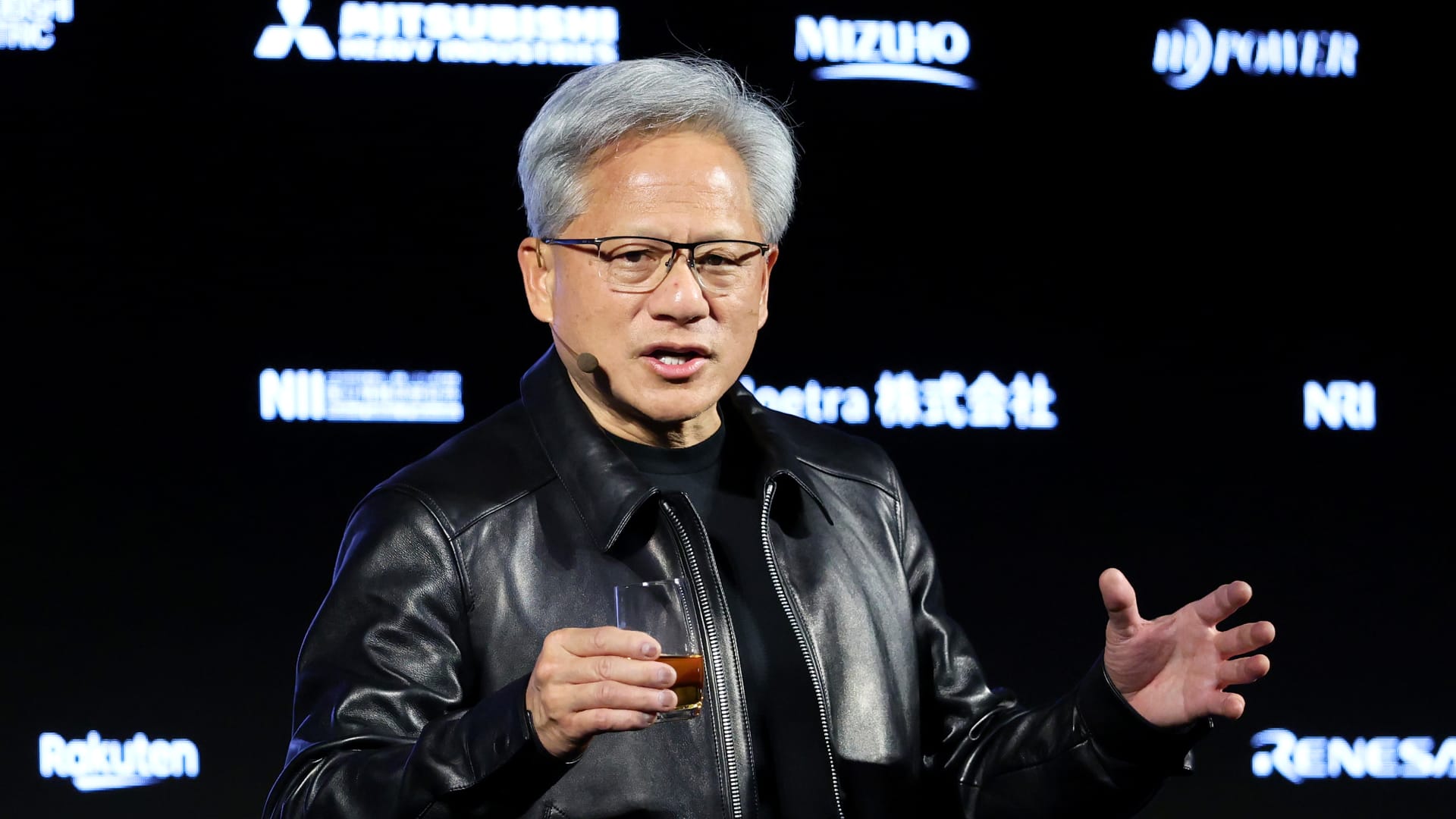
Nvidia’s latest expansion into Japan marks a pivotal moment in the global race for artificial intelligence dominance, emphasizing a significant push into physical AI. The company’s introduction of a new ‘world model’ and strategic partnerships across key industries underscore a robust commitment to integrating intelligent automation. This strategic move positions Nvidia AI at the forefront of Japan’s ambitious drive to revolutionize its manufacturing and healthcare sectors with advanced technological capabilities.
🚀 Tech Strategy & Market Disruptions
- New AI Model Unveiled. Nvidia launched Cosmos 3 Edge, a ‘world model’ designed to perceive and navigate physical environments in real time, offering capabilities beyond traditional large language models (LLMs).
- Industrial Coalition Formed. CEO Jensen Huang announced a new coalition with Japanese industrial giants, including Fujitsu, Hitachi, and Kawasaki Heavy Industries, aimed at embedding advanced AI into manufacturing.
- Healthcare & Biotech Advance. The company is deepening its agentic AI footprint in drug discovery through the Tokyo-1 consortium, leveraging its BioNeMo Agent Toolkit with major pharmaceutical firms like Astellas Pharma and Daiichi Sankyo.
During CEO Jensen Huang’s recent visit, Nvidia unveiled Cosmos 3 Edge, a significant enhancement to its Cosmos 3 platform, explicitly designed for robots and vision AI agents. This ‘world model’ allows AI systems to learn from a broader range of inputs, enabling them to understand and interact with physical spaces with unprecedented accuracy. The company views Japan as a critical battleground for the ‘next frontier of AI,’ specifically in the physical world, citing the nation’s manufacturing prowess as a prime candidate for reinvention through intelligent industries.
The chip giant is actively cultivating a robust physical AI ecosystem in Japan, forming a powerful coalition that includes local industrial leaders like Fujitsu, Hitachi, and Kawasaki Heavy Industries. This move comes at a time when Japan’s government is aggressively promoting AI adoption across various sectors, creating an environment ripe for international collaborations. The country’s AI market is projected to reach an estimated $27.9 billion by 2029, according to the International Trade Administration, attracting substantial foreign investment. Barclays’ global chairman of research, Ajay Rajadhyaksha, highlighted Japan’s advantage in Asia due to its diverse AI and clean structural growth narratives.
Nvidia’s proactive approach aligns with recent major investments from other tech titans, notably Microsoft’s $10 billion commitment to Japan for AI infrastructure and cybersecurity. SoftBank, a key Japanese investment firm, is also heavily backing the AI boom, exploring partnerships with Microsoft and Sakura Internet to further develop AI capabilities within the country. This collective surge in investment highlights Japan’s strategic importance in the evolving global technology market trends.
Beyond traditional manufacturing, Nvidia is aggressively extending its reach into Japan’s cutting-edge healthcare and biotechnology sectors. This involves deploying agentic AI for advanced sciences, focusing on new drug discovery and medical robotics. The Tokyo-1 AI drug discovery consortium, operated by Xeureka (a Mitsui subsidiary), has been a centerpiece of this expansion, leveraging the Nvidia BioNeMo Agent Toolkit. Major Japanese pharmaceutical companies are already scaling their involvement, utilizing Nvidia’s specialized biology toolkit to streamline workflows and accelerate autonomous drug discovery, signaling a profound shift in pharmaceutical R&D.
- Astellas Pharma Inc.
- Daiichi Sankyo
- Ono Pharmaceutical
The introduction of Cosmos 3 Edge facilitates a disruption flow that starts with more sophisticated perception and navigation capabilities for robots and vision AI agents. This directly translates to faster integration and deployment of automation solutions across industries, leading to enhanced operational efficiency and entirely new manufacturing paradigms. For instance, in industrial automation, the improved visual intelligence of robots (cause) enables more precise and adaptable operations (effect), reducing errors and increasing throughput (market disruption). Similarly, Nvidia’s BioNeMo Agent Toolkit (cause) accelerates drug discovery processes (effect), potentially bringing life-saving treatments to market faster and at lower costs (market disruption in healthcare), as highlighted by Bloomberg Technology.
“The expansion of ‘world models’ like Nvidia’s Cosmos 3 Edge fundamentally redefines how AI systems interact with complex physical environments. Unlike narrowly focused LLMs, these models offer a holistic understanding, enabling true autonomy in robotics and industrial automation. This is not just an incremental improvement; it’s a foundational shift towards more intelligent and adaptable physical AI, paving the way for unprecedented innovation across sectors.”
The Architecture Behind Nvidia’s World Models
Nvidia’s Cosmos 3 Edge represents a critical architectural evolution in the development of AI, moving beyond the text-centric limitations of large language models. A ‘world model’ fundamentally aims to build an internal, predictive representation of the physical world, allowing an AI agent to simulate actions and predict consequences before execution. This requires sophisticated neural network architectures capable of processing multi-modal data—visual, auditory, tactile—and understanding spatial and temporal relationships. For instance, the system can predict how a robot’s movement will affect objects in its environment, crucial for complex manufacturing tasks or navigating dynamic healthcare settings. This approach makes AI agents more robust, less reliant on extensive real-world trial-and-error, and significantly more efficient in learning and adapting to new physical challenges, a cornerstone of advanced emerging technologies.
Nvidia’s Ecosystem Expansion Potential in Asia
Nvidia’s aggressive push into Japan’s AI ecosystem signals a broader strategy for regional dominance in Asia. By forging deep partnerships with established industrial and pharmaceutical giants, Nvidia is not merely selling chips; it is embedding its entire AI platform—from hardware accelerators to specialized software toolkits like BioNeMo—into the operational core of major industries. This strategy creates a powerful network effect, making it more challenging for competitors to penetrate. The Japanese market, with its strong government backing for AI and a readiness for international collaboration, serves as an ideal launchpad for expanding similar initiatives across other Asian economies. Such strategic ecosystem building could solidify Nvidia’s position as the foundational AI provider for physical industries throughout the continent, fueling long-term growth and resilience against competitive pressures, offering valuable educational tech insights.
Nvidia AI’s Blueprint for Japan’s Industrial Renaissance
Nvidia’s multifaceted strategy in Japan, centered on advanced physical AI and deep industrial partnerships, is establishing a clear blueprint for national digital transformation. The company’s innovative ‘world models’ and specialized toolkits are poised to drive unprecedented efficiencies and new capabilities across manufacturing, robotics, and drug discovery.
- Accelerated Automation: Cosmos 3 Edge will significantly enhance robotic capabilities, making industrial automation more intelligent and adaptable.
- Biotech Breakthroughs: The BioNeMo Agent Toolkit is streamlining drug discovery, potentially reducing R&D cycles and costs for pharmaceutical firms.
- Strategic Market Capture: By forming coalitions with local industry leaders, Nvidia is solidifying its market position and fostering a dependent ecosystem in a high-growth region.
Will this deep integration with Japan’s industrial backbone set a new global standard for AI-driven economic revitalization?
📊 StockXpo Analyst’s View
Market Impact: Nvidia’s expansion into Japan, particularly its focus on physical AI and strategic industrial alliances, is expected to positively influence investor sentiment towards the company, reinforcing its leadership in the AI hardware and software stack. This move could spur increased investment in robotics, industrial automation, and biotech sectors across Asia, signaling strong demand for high-performance computing and specialized AI solutions. The deepening ties with major Japanese conglomerates also insulate Nvidia against potential geopolitical shifts and reinforce long-term revenue visibility.
Sector To Watch: Investors should closely monitor the Industrial Automation and Biotechnology sectors, especially in markets adopting advanced AI frameworks. Semiconductor manufacturers providing AI-specific hardware will remain critical, as will software companies developing specialized AI models and platforms. The success of large-scale AI consortiums, like Tokyo-1, will be a key indicator for broader market adoption trends, as reported by Reuters technology news.
Financial Disclaimer:
StockXpo.com is a financial news aggregator and educational portal, not a registered investment advisor or broker-dealer. All information, news, and analysis provided herein are strictly for educational purposes and do not constitute investment, financial, legal, or tax advice. Investing in the stock market involves high risks, and past performance is not indicative of future results. StockXpo will not be liable for any financial losses or investment damages. Always consult a certified financial advisor before making market decisions.
MORE IN INSIDE TECHNOLOGY

Starlink India: Regulatory Hurdles and Innovation-Driven Growth Risks
Published: Friday, October 9, 2026 · 12:48 AM

Starlink Launch: India’s Digital Transformation Faces Regulatory Risk
Published: Thursday, October 8, 2026 · 1:51 AM