Published: Tuesday, July 14, 2026 · 3:15 PM | Updated: Tuesday, July 14, 2026 · 3:15 PM
📊 211 views




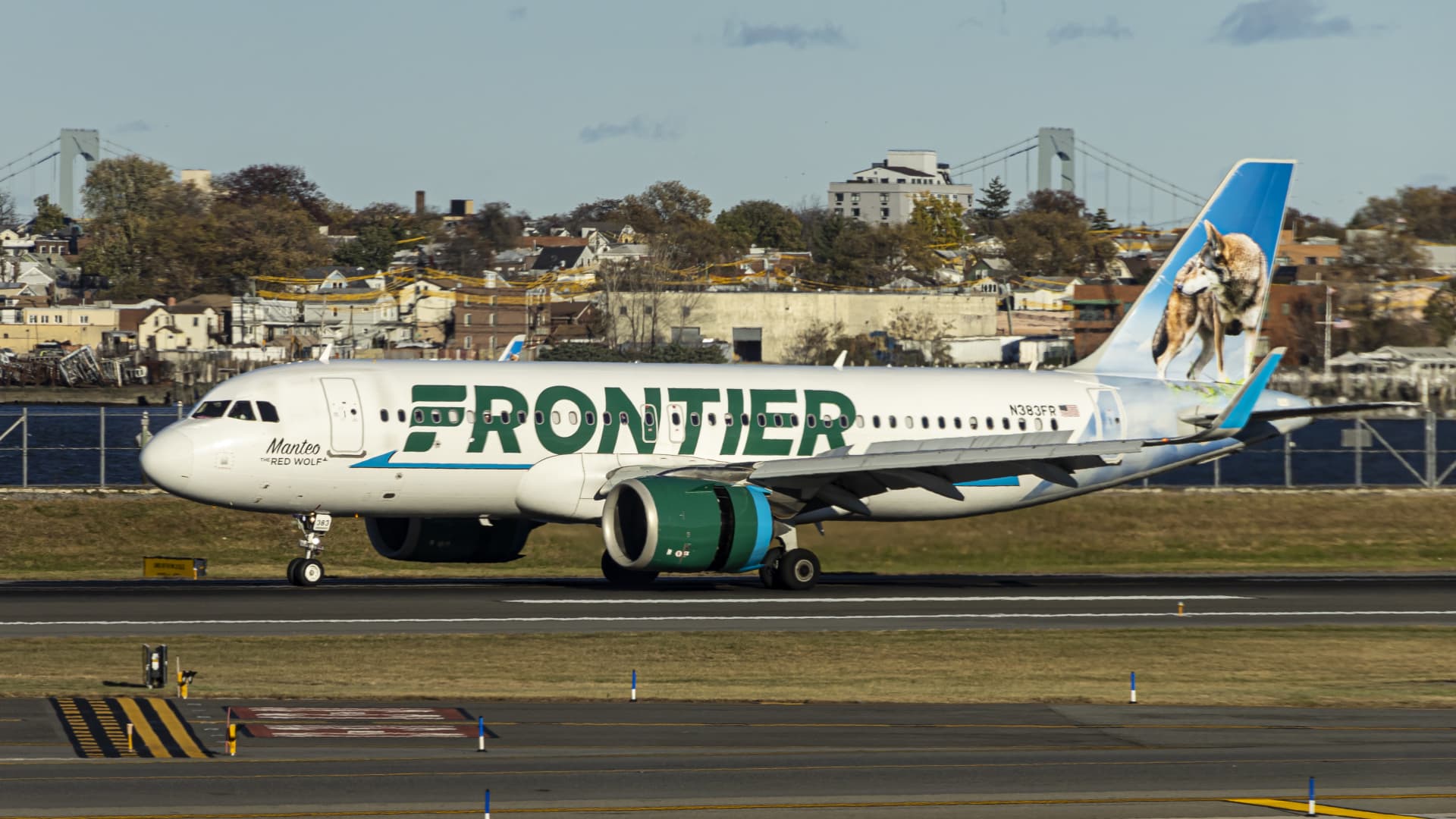
Frontier Airlines, alongside four other budget carriers, is set to introduce Starlink In-Flight Wi-Fi connectivity on its fleet by early 2027, marking a significant upgrade in passenger experience for the ultra-low-cost segment. This move signals a broader trend within the aviation industry to meet growing customer expectations for seamless internet access at 30,000 feet, leveraging advanced satellite technology.
🚀 Tech Strategy & Market Disruptions
- Ultra-Low-Cost Carriers Embrace Premium Amenities. Frontier’s adoption of Starlink Wi-Fi, along with plans for first-class seating, challenges the traditional no-frills model, driven by competitive pressures and evolving passenger demands.
- Satellite Internet’s Aviation Dominance. SpaceX’s Starlink continues its aggressive expansion into the airline sector, securing deals with over 40 carriers globally, solidifying its position as a leading provider for high-speed airborne connectivity.
- Digital Transformation in Aviation. The integration of high-bandwidth internet transforms in-flight services, opening new avenues for entertainment, real-time data for operations, and potential revenue streams for airlines.
Frontier Airlines (ULCC), a notable holdout among U.S. carriers, announced its partnership with SpaceX’s Starlink to roll out in-flight Wi-Fi services starting in early 2027. This development, first hinted at in 2022 by CNBC, signifies a strategic shift for the budget airline, which previously cited concerns over adding equipment weight to its aircraft. The initial deployment will see Starlink internet on Frontier’s first Airbus plane, with further integration expected across its fleet.
The deal extends beyond Frontier, encompassing four other budget carriers: Mexico’s Volaris, European budget giant Wizz, Chile’s Jetsmart, and the Philippines’ Cebu Pacific. All five airlines share a common investor in private equity firm Indigo Partners, led by veteran airline investor Bill Franke. This consolidated approach underscores a broader industry pivot towards enhancing passenger experience, even within the typically cost-conscious budget segment.
Starlink, part of Elon Musk’s SpaceX, has rapidly become a dominant force in the in-flight connectivity market. With agreements spanning more than 40 carriers worldwide, including major players like United Airlines (UAL) and American Airlines (AAL), the company is redefining expectations for internet quality in the sky, as airlines ramp up their in-flight services and customers grow to expect at-home-quality internet in the sky, a trend highlighted in recent global tech developments. While the financial terms of these agreements remain undisclosed, major airlines are increasingly offering complimentary Wi-Fi to loyalty program members, suggesting a shift in how this amenity is monetized or bundled.
This push for advanced connectivity aligns with broader technology market trends and changes in consumer behavior. Passengers now expect seamless digital experiences wherever they travel, making reliable and fast in-flight Wi-Fi a crucial competitive differentiator rather than a mere luxury. The pressure on budget carriers to ‘go upmarket’ is palpable, especially as larger rivals report substantial revenue growth from premium cabin services. Frontier’s concurrent plans to introduce first-class seats next year further illustrate this strategic evolution.
- Key Starlink airline partners include:
The introduction of high-bandwidth Starlink In-Flight Wi-Fi in the budget airline sector creates a significant disruption flow. It starts with enhanced satellite connectivity providing superior speeds and reliability. This leads directly to a vastly improved passenger experience, enabling streaming, real-time communication, and productivity aloft. Consequently, customer satisfaction and loyalty increase, pushing budget carriers to compete not just on price, but also on amenity quality. This, in turn, reshapes industry standards, accelerating digital transformation across aviation and compelling traditional airlines to continually innovate their own service offerings.
‘The integration of Starlink’s low-latency, high-bandwidth satellite internet into commercial aviation represents a critical juncture for airline digital strategy,’ says our CTO. ‘This isn’t just about faster Wi-Fi; it’s about enabling a future where the aircraft becomes an extension of the ground-based digital ecosystem, opening doors for advanced operational analytics, personalized passenger services, and new revenue models previously constrained by legacy connectivity limitations.’
Starlink Platform Architecture: Pioneering Airborne Connectivity
Starlink’s core technological advantage lies in its vast constellation of low-Earth orbit (LEO) satellites, operating at altitudes significantly lower than traditional geostationary satellites. This proximity dramatically reduces signal latency, offering internet speeds comparable to broadband connections on the ground. For aviation, this translates into a seamless user experience, overcoming the previous limitations of slower, less reliable in-flight Wi-Fi. The terminal hardware, designed for aerodynamic efficiency, integrates an electronically steered phased array antenna, capable of tracking satellites across the sky with minimal power consumption and physical drag. This architectural choice addresses crucial concerns for airlines, particularly budget carriers like Frontier, regarding equipment weight and fuel efficiency. The robust global network also promises consistent coverage over diverse flight paths, a key differentiator for international carriers.
Starlink Market Adoption Challenges: Navigating Regulatory and Commercial Skies
Despite its technological prowess, Starlink’s path to widespread airline adoption is not without hurdles. Regulatory approvals for satellite ground stations, airborne terminals, and spectrum usage vary significantly across international jurisdictions, adding complexity and time to deployments. Furthermore, while the service offers a compelling value proposition, the upfront installation costs and ongoing subscription fees represent a substantial investment for airlines, particularly for smaller or budget operators managing tight margins. Competing satellite internet providers, though often using different orbital strategies, also present alternative solutions, intensifying the market competition for long-term contracts, a competitive landscape frequently analyzed by leading financial news outlets such as Reuters’ tech coverage on aviation trends. The challenge for Starlink is to continue demonstrating a superior blend of performance, reliability, and cost-effectiveness that justifies the investment for a diverse global airline clientele. These are key considerations when assessing emerging technologies and can offer more educational tech insights.
Frontier Airlines’ Starlink Adoption: Reshaping Budget Travel Expectations
Frontier Airlines’ decision to integrate Starlink in-flight Wi-Fi marks a pivotal moment for the budget airline sector, signaling an inevitable evolution of passenger amenities. This move, aligned with Indigo Partners’ portfolio carriers, suggests a broader industry awakening to consumer demand for ubiquitous connectivity, even at the lowest fare tiers. The transformation goes beyond just Wi-Fi, reflecting a strategic adaptation to a market increasingly valuing experience over pure cost.
- Frontier’s delayed entry into in-flight Wi-Fi underscores the financial and operational considerations, particularly aircraft weight, that historically challenged budget carriers.
- Starlink’s expanding footprint across global airlines reinforces its dominance as a high-performance satellite internet solution, setting new benchmarks for airborne connectivity.
- The trend among budget airlines to offer premium amenities, including Wi-Fi and first-class seating, indicates a strategic response to competitive pressures from full-service carriers and shifting passenger expectations.
How will this amenity race redefine the value proposition of ultra-low-cost carriers in the coming decade?
### 📊 StockXpo Analyst’s View
Market Impact: This news could modestly boost investor sentiment for ULCCs by signaling an enhanced competitive stance against legacy carriers, albeit with a lag until 2027. SpaceX (SPCX) further solidifies its market leadership in the burgeoning aerospace connectivity sector, potentially attracting more institutional interest. The broader aviation market will see increased capital expenditure on technology upgrades.
Sector To Watch: The airline technology and satellite communications sectors remain dynamic. Companies specializing in in-flight entertainment, connectivity hardware, and data analytics solutions for aviation are poised for growth. The shift among budget airlines may pressure traditional providers to accelerate their own upgrade cycles, impacting profitability in the short term.
Financial Disclaimer:
StockXpo.com is a financial news aggregator and educational portal, not a registered investment advisor or broker-dealer. All information, news, and analysis provided herein are strictly for educational purposes and do not constitute investment, financial, legal, or tax advice. Investing in the stock market involves high risks, and past performance is not indicative of future results. StockXpo will not be liable for any financial losses or investment damages. Always consult a certified financial advisor before making market decisions.
MORE IN INSIDE TECHNOLOGY

Starlink India: Regulatory Hurdles and Innovation-Driven Growth Risks
Published: Friday, October 9, 2026 · 12:48 AM

Starlink Launch: India’s Digital Transformation Faces Regulatory Risk
Published: Thursday, October 8, 2026 · 1:51 AM