Published: Monday, July 13, 2026 · 11:10 AM | Updated: Monday, July 13, 2026 · 11:10 AM
📊 186 views




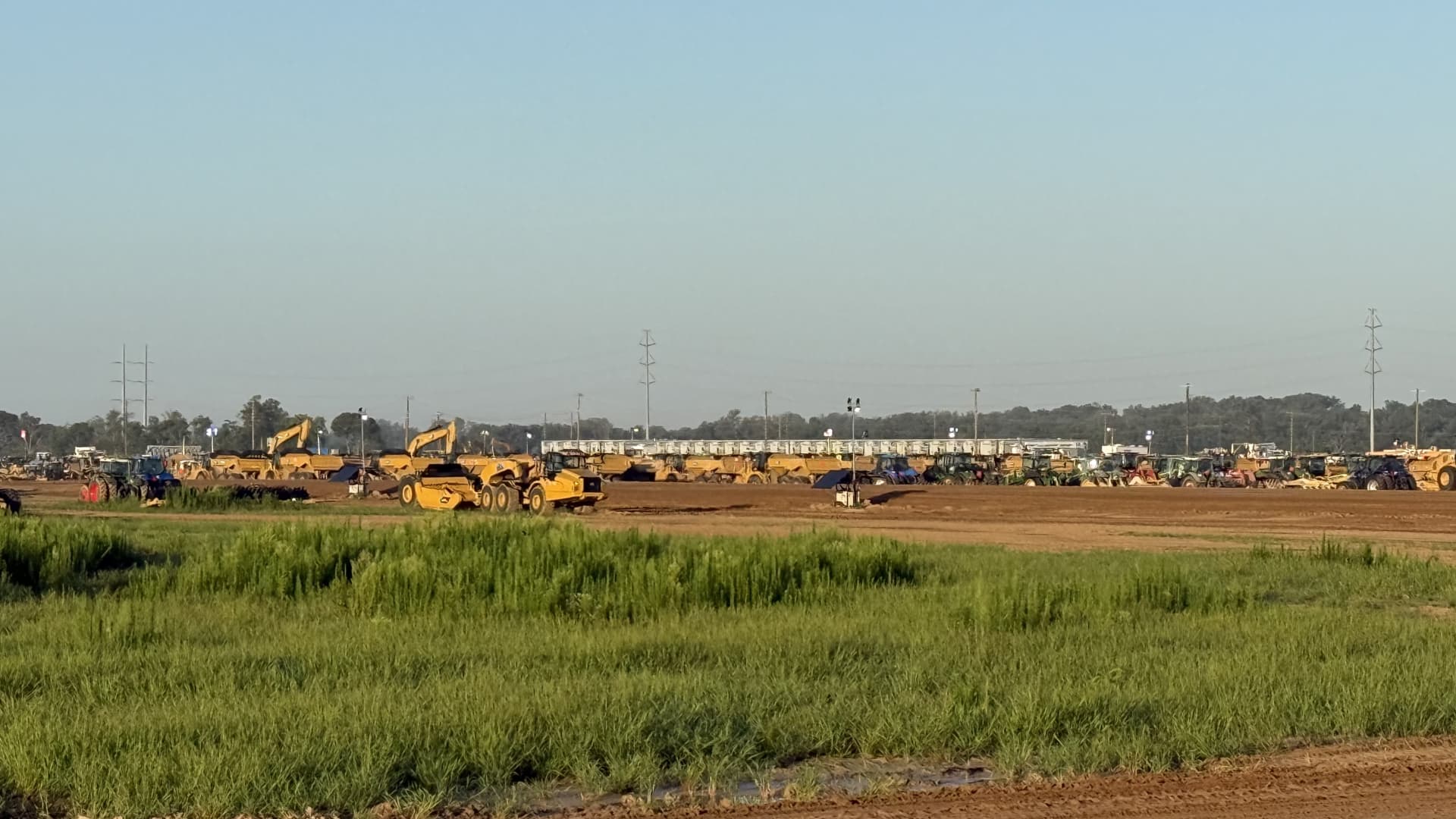
Meta Platforms Inc. is dramatically escalating its Hyperion data center project in Louisiana, with total investment now projected to exceed $50 billion. This substantial increase, aided by significant state tax incentives, underscores Meta’s aggressive pursuit of artificial intelligence dominance.
🚀 Tech Strategy & Market Disruptions
- Hyperscale AI Infrastructure. Meta’s Hyperion project is expanding to a 5GW facility, indicating a significant commitment to building out industry-leading compute for advanced AI models.
- Government Incentives as Growth Levers. Generous state tax exemptions and energy deals are accelerating massive investments by tech giants, shaping regional economic development and infrastructure buildouts.
- Competitive AI Arms Race. The escalated investment reflects the fierce competition among hyperscalers like Meta, Microsoft, Alphabet, and Amazon to secure AI compute capacity amidst an exploding demand.
Meta’s decision to nearly double its investment in the Louisiana Hyperion data center project, from an initial $27 billion to over $50 billion, highlights the escalating infrastructure demands driven by the artificial intelligence arms race. This colossal Meta data center investment, projected to reach 5 gigawatts (GW) in capacity, is set to become the company’s largest facility, specifically designed as a ‘supercluster’ for intensive AI workloads. Such superclusters are distinct from traditional data centers, packing specialized graphics processing units (GPUs) and cutting-edge hardware essential for training and deploying advanced AI models.
The expansion is significantly bolstered by a 20-year sales tax exemption enacted by Louisiana Governor Jeff Landry, demonstrating a clear governmental strategy to attract and retain major tech investments. This move places Louisiana in a competitive arena with other states offering attractive incentives to hyperscalers like Microsoft, Alphabet, and Amazon, all vying for a share of the burgeoning AI economy. States recognize the long-term economic benefits, including job creation and local infrastructure improvements, despite the initial tax abatements. Meta has already invested over $1 billion in local infrastructure, encompassing roads and water systems, and awarded $1.6 billion in contracts to local businesses since construction began in December 2024.
Meta CEO Mark Zuckerberg initially unveiled the Hyperion supercluster with an aim to scale to 5GW over several years, emphasizing its role in housing ‘industry-leading levels of compute’ for Meta Superintelligence Labs. The company expects the facility to reach 2GW by 2030, though a timeline for the full 5GW completion remains undefined. This strategic push comes on the heels of Meta’s recent release of major AI models, showcasing the company’s commitment to translating its substantial AI investments into tangible product and capability advancements, a move that has been positively received by investors looking for returns on significant capital expenditure in AI. This accelerated buildout is crucial for Meta as it navigates technology market trends and seeks to maintain a competitive edge in the evolving AI landscape, as observed by leading tech news outlets.
The sheer scale of this Meta data center investment creates a significant disruption flow across several sectors. A massive capital infusion (Cause) leads to an unprecedented demand for specialized AI hardware and energy infrastructure (Effect). This, in turn, drives innovation in GPU manufacturing, cooling technologies, and renewable energy solutions (Further Effect). The availability of such immense compute power then accelerates the development and deployment of more sophisticated AI models (Market Disruption), fundamentally changing industries from content creation to scientific research by enabling capabilities previously considered theoretical. Furthermore, the reliance on state incentives establishes a precedent (Cause) that could reshape how future hyperscale infrastructure projects are funded and located (Effect), potentially creating new regional tech hubs and altering economic geographies.
“Hyper-dense AI data centers, or ‘superclusters,’ represent a paradigm shift from conventional data center design. They demand specialized liquid cooling, advanced power distribution, and a highly optimized network fabric to manage the unprecedented heat and data throughput from thousands of interconnected GPUs. This architectural evolution is critical for achieving the teraflops per watt efficiency required for next-generation AI model training.”
| Metric | Details |
|---|---|
| Total Investment | Over $50 billion (increased from $27 billion) |
| Planned Capacity | 5 Gigawatts (GW) |
| Projected Capacity by 2030 | 2 Gigawatts (GW) |
| Local Contracts Awarded | Over $1.6 billion |
| Local Infrastructure Investment | Over $1 billion (roads, water, wastewater) |
| Tax Incentives | 20-year sales tax exemption for data centers built before 2029 |
Meta’s Platform Architecture for AI Superclusters
The Hyperion project’s core innovation lies in its ‘supercluster’ design, a specialized architectural departure from standard data centers. This architecture is purpose-built for AI, focusing on maximizing the density and efficiency of Graphics Processing Units (GPUs). Unlike traditional server farms optimized for general computing, superclusters require a highly interconnected network fabric with ultra-low latency to facilitate the rapid communication between tens of thousands of GPUs during complex AI model training. Advanced cooling solutions, often incorporating liquid immersion or direct-to-chip liquid cooling, are indispensable to manage the extreme heat generated by these high-performance components. Power delivery systems must also be robust and highly redundant, capable of supplying consistent, high-amperage current to racks densely packed with AI accelerators. This dedicated infrastructure ensures that Meta Superintelligence Labs can operate with unparalleled compute per researcher, pushing the boundaries of what is possible in AI development, offering educational tech insights.
Meta’s Ecosystem Expansion Potential in AI
The substantial investment in Hyperion not only bolsters Meta’s internal AI capabilities but also signals a broader ecosystem expansion potential. By building out such a massive AI infrastructure, Meta positions itself to attract top-tier AI talent and collaborators, potentially fostering a research environment that accelerates breakthroughs. The company’s recent open-sourcing of AI models like Llama has already demonstrated a strategy of fostering an external developer ecosystem, and superior compute resources could further enhance this appeal. Additionally, as Meta pursues the landscape of emerging technologies like the metaverse, the underlying AI infrastructure becomes a critical enabler for rendering complex virtual worlds and powering intelligent agents within them. This expansion could lead to new partnerships, research grants, and even potential cloud AI services down the line, although Meta has not explicitly outlined such plans, contributing to global technology developments.
Meta’s AI Ambition: The Hyperion Blueprint for Future Compute
Meta’s escalating investment in the Hyperion data center is a definitive statement about its long-term commitment to AI leadership. By tripling its financial commitment and expanding the facility’s power capacity, Meta is not merely participating in the AI race but actively building the foundational compute infrastructure required to win it. This project underscores the critical role of hyperscale infrastructure in unlocking the next generation of AI capabilities.
- The $50 billion investment signifies an industry-wide pivot towards specialized, high-density AI compute infrastructure.
- Government incentives are becoming crucial differentiators in attracting mega-scale tech projects, impacting regional economies.
- Meta’s ability to monetize these massive AI investments will be a key performance indicator for investors in the coming years.
Will other tech giants follow suit with similar drastic increases in their AI infrastructure spending?
📊 StockXpo Analyst’s View
Market Impact: This aggressive expansion by Meta is a significant tailwind for the semiconductor industry, particularly GPU manufacturers and specialized hardware providers. It also signals increased capital expenditure trends across the hyperscaler landscape, which could pressure free cash flow in the short term but promises long-term competitive advantage in AI services. Investor sentiment towards Meta’s AI strategy is likely to remain positive, contingent on continued demonstrable progress in AI model development and monetization.
Sector To Watch: The immediate beneficiaries are data center infrastructure providers, power utilities, and companies involved in advanced cooling technologies. Furthermore, enterprises developing AI-powered applications across various sectors will eventually leverage this expanded compute, making AI software and services a critical sector to monitor for secondary impacts and growth acceleration.
Financial Disclaimer:
StockXpo.com is a financial news aggregator and educational portal, not a registered investment advisor or broker-dealer. All information, news, and analysis provided herein are strictly for educational purposes and do not constitute investment, financial, legal, or tax advice. Investing in the stock market involves high risks, and past performance is not indicative of future results. StockXpo will not be liable for any financial losses or investment damages. Always consult a certified financial advisor before making market decisions.
MORE IN INSIDE TECHNOLOGY

AI’s Dual Edge: Innovation-Driven Growth Meets Global Economic Hazard
Published: Wednesday, October 7, 2026 · 3:12 AM

Anduril Navy Contract: A $2.9 Billion Breakthrough in Submarine Production
Published: Tuesday, October 6, 2026 · 9:36 AM