Published: Sunday, July 12, 2026 · 7:37 AM | Updated: Sunday, July 12, 2026 · 7:37 AM
📊 212 views




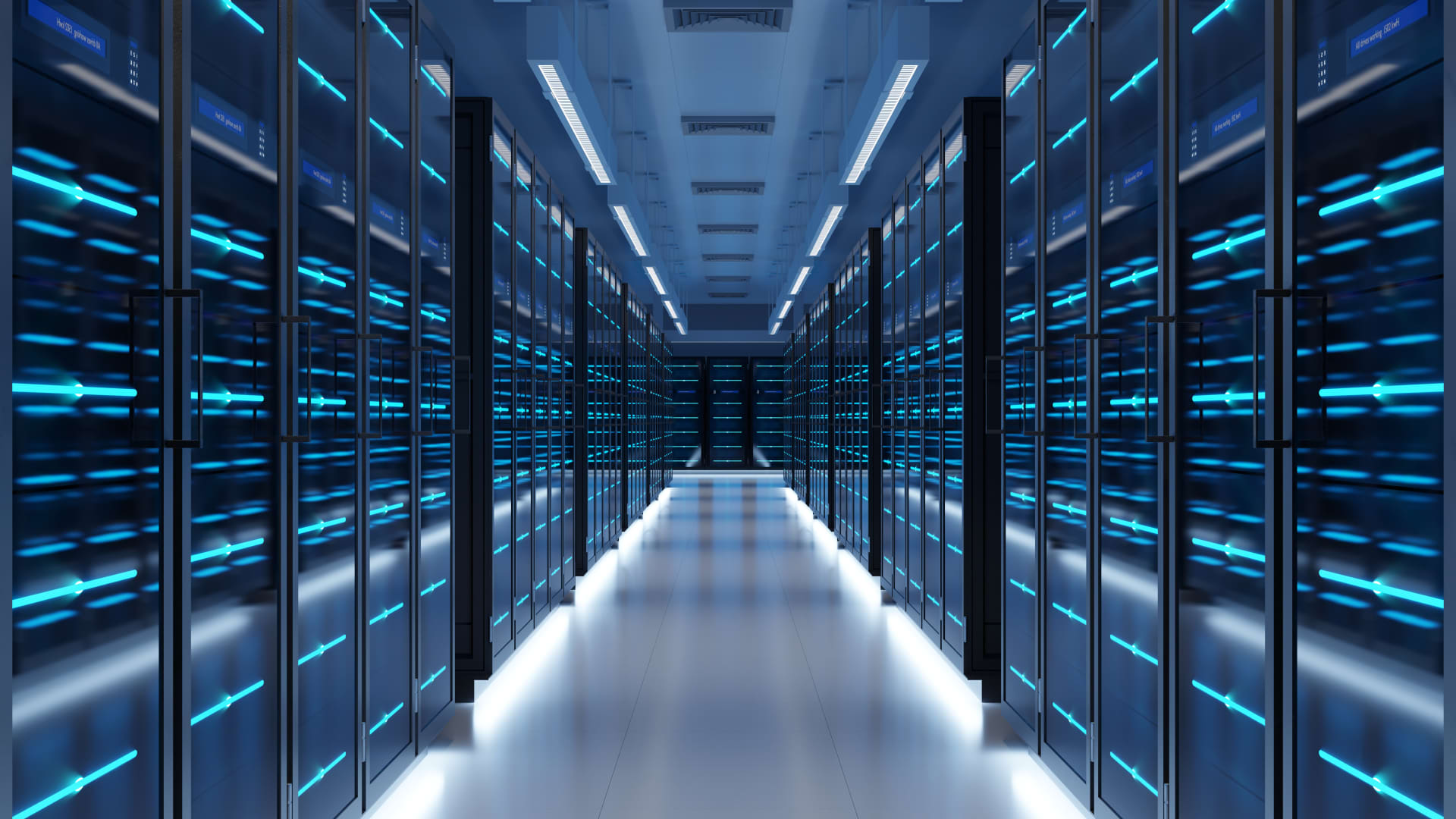
The relentless pursuit of artificial intelligence continues to fuel an ‘almost unlimited’ appetite for advanced computing infrastructure, even as enterprises pivot towards a more discerning ‘valuemaxxing’ approach for their AI investments. Recent market fluctuations in chip stocks and reports of excess capacity from tech giants like Meta and xAI have ignited debate, but industry executives remain steadfast in their conviction that AI demand shows no signs of abatement.
🚀 Tech Strategy & Market Disruptions
- Sustained AI Infrastructure Demand. Despite recent chip stock volatility, the fundamental requirement for powerful compute and data center components remains exceptionally high, driven by perceived infinite economic returns from increased intelligence.
- Strategic Shift to ‘Valuemaxxing’. Enterprises are evolving past unbridled AI experimentation (‘tokenmaxxing’) towards a disciplined strategy focused on maximizing return on investment, aligning AI projects directly with tangible business outcomes.
- Critical Supply Chain Constraints Persist. Key component providers like Lumentum report their optical products, crucial for high-speed data center connectivity, are sold out for half a decade, highlighting significant bottlenecks in scaling AI infrastructure globally.
Senior executives across the tech landscape largely dismiss recent concerns about a slowdown in AI demand, which briefly impacted semiconductor stocks. Pat Gelsinger, General Partner at Playground Global and former Intel CEO, articulated this perspective, describing AI demand as ‘almost unlimited’ with energy availability posing the primary constraint. This sentiment underscores a broad industry belief in the profound, pervasive economic value AI is poised to deliver across virtually every sector.
Market volatility, including Meta’s announcement to sell excess AI computing capacity and xAI’s similar move, has prompted some to question potential overcapacity. However, industry insiders largely view these as unique instances rather than indicators of a broader market saturation. Marc Boroditsky, Chief Revenue Officer at Nebius, which leverages Nvidia GPUs for its data centers, confirmed ‘extraordinary’ demand that far outstrips their current fulfillment capabilities, a trend observed for some time. This echoes the experience of Andrew Feldman, CEO of Cerebras Systems, who stated that ‘the demand for compute far outstrips available capacity,’ noting shortages across many vital inputs for compute infrastructure. South Korean chip startup Rebellions also reported ample demand, reinforcing the robust market signal for emerging technologies.
Critical bottlenecks are emerging, particularly in specialized hardware. Lumentum, a key provider of photonics and optical products essential for data center connectivity, has seen its products sold out for the next five years. This unprecedented backlog highlights the intense pressure on manufacturing and supply chains to keep pace with the infrastructure buildout for AI. The rally in Lumentum’s stock, up approximately 600% over the last 12 months, reflects investor confidence in companies addressing these core constraints.
Concurrently, enterprise AI spending is undergoing a significant rationalization. The era of ‘tokenmaxxing’ – where companies encouraged extensive AI use without stringent ROI metrics – is giving way to ‘valuemaxxing.’ This shift is driven by CFOs demanding measurable returns on costly AI models, particularly as more cost-effective open-source alternatives from DeepSeek or Alibaba offer competitive performance for many applications. As Nebius’ Boroditsky explains, AI investments are now being scrutinized for their ability to create tangible value that justifies the expenditure.
- The pivot towards ‘valuemaxxing’ signifies a maturity in AI adoption, where strategic implementation and cost-efficiency become paramount.
- Enterprises are increasingly evaluating the performance-to-cost ratio of AI models, opting for tailored solutions over generic, expensive frontier models for specific workloads.
- This rationalization is expected to sustain demand by ensuring investments are productive, fostering long-term, sustainable growth rather than speculative spending.
Cerebras’ Feldman aptly compares this evolution to transportation: ‘you don’t need a giant bus to go to the grocery store.’ This analogy suggests a future where different AI models, from high-performance frontier models to specialized, efficient open-source variants, will be deployed strategically for appropriate workloads, optimizing both cost and utility as organizations become more sophisticated in their AI integration.
The confluence of insatiable AI demand and supply chain constraints creates a powerful disruption flow across the tech ecosystem. Surging computational needs drive massive data center expansion, intensifying demand for GPUs and high-bandwidth optical interconnects. This pressure accelerates innovation in specialized AI hardware, fostering competition to Nvidia and pushing for more efficient chip architectures. Simultaneously, the enterprise pivot to ‘valuemaxxing’ forces AI developers and solution providers to prioritize cost-effectiveness and demonstrable ROI, potentially shifting market share towards optimized open-source models and customized AI applications. This creates a feedback loop: new hardware capabilities enable more complex AI, which then demands further infrastructure, while economic viability ensures practical, widespread adoption, fundamentally reshaping how businesses operate and strategize around global tech advancements in artificial intelligence.
“The underlying principle here is that AI, at its core, represents a new form of capital – an intelligence layer capable of transforming every industry. Our strategic focus as CTOs must extend beyond mere adoption to orchestrating scalable, secure, and cost-efficient AI infrastructure that truly delivers on its promise of economic value, not just computational prowess. This requires foresight into silicon advancements, energy management, and a robust data strategy.”
Key Infrastructure and Investment Highlights
- Demand Persistence: Executives like Pat Gelsinger describe AI demand as ‘almost unlimited,’ constrained primarily by energy availability rather than diminishing enterprise interest.
- Market Contradictions: While Meta and xAI sold excess AI compute capacity, data center builders like Nebius and specialized chip companies like Cerebras Systems report significant demand shortfalls against available supply.
- Supply Chain Bottleneck: Lumentum, a critical supplier of optical components for data centers, has its products entirely sold out for the next five years, indicating severe limitations in global production capacity.
- Enterprise Shift: The industry is transitioning from ‘tokenmaxxing’ to ‘valuemaxxing,’ where ROI and the tangible economic value generated by AI applications dictate investment decisions.
Nvidia’s Ecosystem Expansion Potential
Nvidia’s dominance in the AI chip market positions it not just as a hardware vendor but as a foundational ecosystem enabler. The company’s CUDA platform has become a de facto standard, creating a high barrier to entry for competitors. Future growth will likely stem from extending this ecosystem deeper into vertical-specific AI solutions, cloud integrations, and potentially even energy-efficient computing innovations to address the aforementioned power constraints. Strategic partnerships with data center operators and specialized AI solution providers will be key to solidifying its long-term market leadership and benefiting from educational tech insights into market dynamics.
AI Infrastructure Security & Data Sovereignty
As AI demand continues its exponential rise and enterprises adopt more sophisticated models, the security and data sovereignty of AI infrastructure become paramount. Protecting proprietary models, training data, and inferences from cyber threats is critical, particularly for industries handling sensitive information. Solutions must address not only traditional network and endpoint security but also novel threats arising from model poisoning, adversarial attacks, and supply chain vulnerabilities in hardware. Furthermore, with geopolitical considerations, the ability to ensure data remains within specific geographical boundaries becomes a significant driver for regional cloud and data center investments, impacting the entire AI buildout strategy.
Navigating the AI Demand Landscape: A StockXpo Outlook
The current market signals paint a clear picture: underlying AI demand is robust, driven by the profound economic potential AI offers, but enterprises are becoming more judicious in their investment strategies. The shift to ‘valuemaxxing’ will lead to more targeted, ROI-driven AI deployments, filtering out speculative spending and solidifying the market for solutions that demonstrate clear value.
- The long-term growth trajectory for AI infrastructure remains strong, fueled by continuous innovation and broader application across industries.
- Supply chain resilience and the development of alternative, efficient chip architectures will be critical factors in sustaining this growth.
- Companies demonstrating clear ROI for AI solutions and adaptable model deployment strategies are best positioned for future success.
How will this intensified focus on value reshape the competitive landscape for AI hardware and software providers in the coming years?
📊 StockXpo Analyst’s View
Market Impact: The narrative around ‘almost unlimited’ AI demand, tempered by the enterprise shift to ‘valuemaxxing,’ suggests a maturing market rather than a slowdown. Investor sentiment will likely favor companies that can clearly articulate and deliver return on AI investment, moving beyond pure infrastructure plays to those demonstrating impactful application. Liquidity may become more discerning, flowing into firms with proven deployment strategies and scalable, cost-effective solutions. The initial exuberance might cool slightly, but foundational growth remains intact.
Sector To Watch: The semiconductor and optical networking sectors will continue to gain due to persistent infrastructure demand. However, expect a significant spotlight on AI software and service providers that specialize in industry-specific applications, efficiency optimization, and hybrid cloud AI deployments. Legacy enterprises successfully undergoing digital transformation with measurable AI-driven gains will also present compelling investment opportunities, as detailed in our technology market trends analyses.
Financial Disclaimer:
StockXpo.com is a financial news aggregator and educational portal, not a registered investment advisor or broker-dealer. All information, news, and analysis provided herein are strictly for educational purposes and do not constitute investment, financial, legal, or tax advice. Investing in the stock market involves high risks, and past performance is not indicative of future results. StockXpo will not be liable for any financial losses or investment damages. Always consult a certified financial advisor before making market decisions.
MORE IN INSIDE TECHNOLOGY

Data Centers Face Global Headwinds: A $119 Billion Investment at Risk
Published: Saturday, October 3, 2026 · 2:48 AM

AI Cyberattacks: Interpol Warns of Escalating Speed and Risk
Published: Friday, October 2, 2026 · 1:18 AM