Published: Wednesday, July 8, 2026 · 7:24 AM | Updated: Wednesday, July 8, 2026 · 7:24 AM
📊 181 views




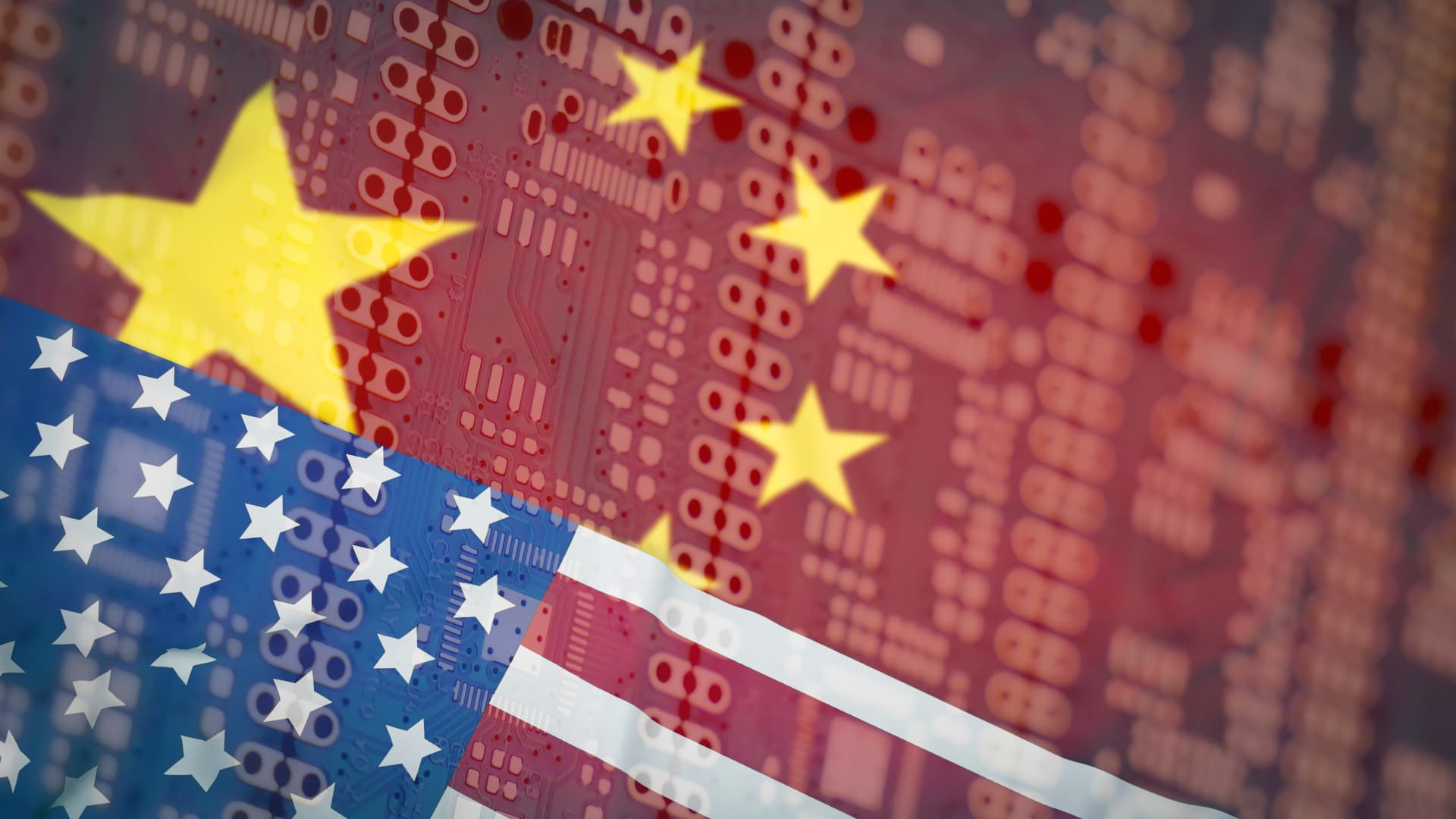
The increasing adoption of Chinese AI models by U.S. companies is drawing intense scrutiny from lawmakers, escalating a geopolitical rivalry over artificial intelligence supremacy. This trend, driven by the competitive pricing and improving performance of Chinese AI models, introduces complex challenges for corporate digital transformation strategies and national security alike.
🚀 Tech Strategy & Market Disruptions
- Legislative Scrutiny. U.S. House Committees are investigating the risks associated with American firms using Chinese-developed AI, citing concerns over data integrity and national narratives.
- Cost-Performance Parity. Chinese AI models are gaining traction among U.S. companies due to their lower costs and performance nearing that of American rivals, pushing firms like Coinbase and Lindy to leverage them.
- Geopolitical Tensions. The debate underscores a broader rivalry between the U.S. and China for AI leadership, with implications for cybersecurity, intellectual property, and global tech supply chains.
The ongoing geopolitical friction between the U.S. and China has found a new battleground in artificial intelligence, as American lawmakers intensify their probe into the expanding reliance of homegrown companies on Chinese AI models. While Beijing defends its ‘self-reliance’ in AI development, as a spokesperson for the U.K. embassy of the People’s Republic of China stated, U.S. officials express ‘serious concerns’ that these models could be designed to propagate Chinese Communist Party (CCP) narratives, facilitate censorship, and undermine U.S. values. The Trump administration has even accused Chinese entities of ‘industrial-scale campaigns’ to replicate U.S. AI systems, signaling potential accountability measures, as reported by Reuters tech news reporting. Conversely, Beijing is reportedly exploring ways to curb overseas access to its leading AI models.
The appeal of Chinese AI models for U.S. firms largely stems from their improving performance coupled with lower operational costs, as highlighted by CNBC. This economic advantage has led to prominent tech figures, including Coinbase CEO Brian Armstrong and Lindy CEO Flo Crivello, publicly advocating for their use to optimize expenditures. For instance, Cursor, a company set to be acquired by Elon Musk’s SpaceX, built its Composer 2 model leveraging Kimi, an AI model developed by China’s Moonshot AI. This dynamic presents a paradox: businesses seek efficiency and innovation, while governments grapple with the national security implications of cross-border technological dependencies.
The bipartisan investigation, led by the House Committee on Homeland Security and the House Select Committee on China, has already targeted companies like Cursor and Airbnb. Airbnb, while acknowledging limited use of China-origin models, emphasized that these are open-source and operated through U.S.-based service providers, ensuring data and operations remain separated and protected. However, lawmakers such as Andrew Garbarino, chairman of the House Committee on Homeland Security, view the situation with alarm.
- Garbarino noted that recent reports suggesting Chinese open-weight models can rival leading U.S. models in cybersecurity tasks are ‘highly alarming,’ indicating a shrinking performance gap that poses significant risks.
- The probe is also examining the adequacy of U.S. strategies to counter this trend, questioning whether American companies are being ‘forced to choose between expensive or restricted U.S. models and cheap, capable PRC-developed alternatives.’
- Andy Ogles, chairman of the Subcommittee on Cybersecurity and Infrastructure Protection, warned that without a robust U.S. alternative, Chinese models could become the ‘default foundation of the global digital economy,’ embedding censorship and uncertain security.
The Cascade Effect of Foreign AI Adoption
The increasing adoption of advanced, yet cost-effective, Chinese AI models acts as a significant catalyst, leading to a re-evaluation of global tech supply chains and digital sovereignty. This widespread integration by U.S. companies, driven by efficiency gains, creates a disruptive chain reaction:
- Cost-Performance Advantage: Chinese AI models offer compelling price points and competitive capabilities, drawing U.S. firms seeking operational efficiencies.
- Heightened Geopolitical Tension: This adoption intensifies U.S.-China rivalry, triggering legislative probes and calls for protective measures against perceived national security and intellectual property risks.
- Regulatory Uncertainty: The lack of clear prohibitions against using Chinese AI models creates a complex regulatory landscape, potentially leading to procurement bans for government-linked entities or requirements that discourage their use.
- Innovation & Security Trade-offs: Companies face a critical decision between leveraging affordable, capable foreign models for rapid innovation and adhering to national security concerns that prioritize domestic alternatives, potentially at a higher cost or slower pace.
- Market Re-segmentation: The debate could lead to a bifurcation of the AI market, with distinct ecosystems forming based on geopolitical alignment, influencing how technology market trends evolve for future-proofed enterprises.
The strategic proliferation of AI models across national borders presents a profound challenge to digital sovereignty. CTOs must navigate a complex landscape where technological advantage is inextricably linked to national interest, demanding a rigorous evaluation of supply chain integrity, data residency, and the potential for embedded ideological bias in foundational models. Balancing innovation speed with regulatory compliance and ethical AI use is now paramount.
Key Players and Model Engagement
Key Entities and AI Model Engagement:
- U.S. Congressional Committees: House Committee on Homeland Security, House Select Committee on China – jointly investigating Chinese AI adoption.
- Companies Probed: Cursor (leveraged Moonshot AI’s Kimi for Composer 2), Airbnb (acknowledged limited use of open-source China-origin models via U.S. providers).
- Publicly Advocating for Chinese Models: Brian Armstrong (Coinbase CEO), Flo Crivello (Lindy CEO) – citing cost efficiency.
- Chinese AI Models Under Scrutiny: Kimi (Moonshot AI), DeepSeek – noted for closing performance gaps with U.S. rivals.
Chinese AI Model Security & Infrastructure Strength
The core concern surrounding the adoption of Chinese AI models by U.S. companies revolves around the implicit security and infrastructure implications. While Chinese firms like Moonshot AI emphasize ‘self-reliance and strength in science and technology,’ as quoted by a spokesperson for the U.K. embassy of the People’s Republic of China, U.S. lawmakers raise critical questions about data security, potential backdoors, and the models’ alignment with CCP ideology. The open-source nature of some of these models, while fostering transparency and broader adoption, simultaneously presents a double-edged sword: it makes outright bans difficult, but also means their internal mechanisms and potential vulnerabilities can be scrutinized. The infrastructure supporting these models, whether cloud-based or on-premises, must adhere to stringent cybersecurity protocols, especially when handling sensitive U.S. company data, a point that remains a significant area of contention and investigation. The ability to verify the absence of embedded censorship or data exfiltration capabilities is a complex technical and geopolitical hurdle, influencing the long-term viability and trust in these emerging technologies within American enterprises.
U.S. AI Ecosystem Expansion Potential
The intensifying debate over Chinese AI models underscores an urgent need for the expansion and strengthening of the U.S. domestic AI ecosystem. Lawmakers are explicitly investigating ‘whether the United States has a sufficient open-weight AI strategy to ensure American companies and cyber defenders are not forced to choose’ between expensive domestic options and cheaper, capable foreign alternatives. This implies a strategic imperative to foster innovation in emerging technologies, particularly in open-source and foundational AI models that can compete on both performance and cost. Initiatives could include increased federal funding for AI research and development, incentives for startups to build open-source alternatives, and collaborative efforts between academia, industry, and government to accelerate the deployment of secure, high-performing U.S.-origin models. Such an expansion would not only address national security concerns but also solidify the U.S.’s leadership in the global AI race, providing reliable platforms for digital transformation across all sectors.
The Future of Chinese AI Models in Global Enterprise
The escalating U.S. congressional probe into the use of Chinese AI models marks a pivotal moment for global tech integration and national security. Companies are caught between the economic efficiencies offered by these models and growing governmental concerns regarding data sovereignty and ideological alignment. The challenge lies in developing robust frameworks that balance innovation with the imperative to safeguard critical infrastructure and sensitive information.
- Regulatory uncertainty will likely persist, potentially leading to varied industry-specific guidelines for AI model procurement.
- U.S. domestic AI innovation efforts will gain renewed urgency, pushing for more competitive open-source alternatives.
- Enterprises will increasingly prioritize verifiable security audits and transparent model architectures when evaluating AI solutions.
How will the evolving regulatory landscape shape the global deployment and adoption of advanced AI technologies in the next five years?
📊 StockXpo Analyst’s View
Market Impact: This heightened scrutiny over Chinese AI models introduces significant uncertainty for technology companies heavily invested in global supply chains and cross-border innovation. It could trigger a pivot towards domestic or allied-nation AI solutions, potentially increasing R&D costs for firms while stimulating investment in home-grown AI startups. Investor sentiment may become cautious towards companies with substantial reliance on foreign AI infrastructure, leading to re-ratings based on perceived geopolitical risk.
Sector To Watch: The cybersecurity and defense sectors stand to gain as demand for secure, verifiable AI solutions and advanced threat intelligence against foreign AI influence surges. Concurrently, the broader enterprise software and cloud computing industries will be critical, as they may become the primary architects and providers of sovereign AI ecosystems, offering new avenues for growth and investment opportunities for those following educational tech insights or tracking global tech developments on Bloomberg Technology.
Financial Disclaimer:
StockXpo.com is a financial news aggregator and educational portal, not a registered investment advisor or broker-dealer. All information, news, and analysis provided herein are strictly for educational purposes and do not constitute investment, financial, legal, or tax advice. Investing in the stock market involves high risks, and past performance is not indicative of future results. StockXpo will not be liable for any financial losses or investment damages. Always consult a certified financial advisor before making market decisions.
MORE IN INSIDE TECHNOLOGY

Starlink India: Regulatory Hurdles and Innovation-Driven Growth Risks
Published: Friday, October 9, 2026 · 12:48 AM

Starlink Launch: India’s Digital Transformation Faces Regulatory Risk
Published: Thursday, October 8, 2026 · 1:51 AM