Published: Monday, July 6, 2026 · 4:28 AM | Updated: Monday, July 6, 2026 · 4:28 AM
📊 227 views




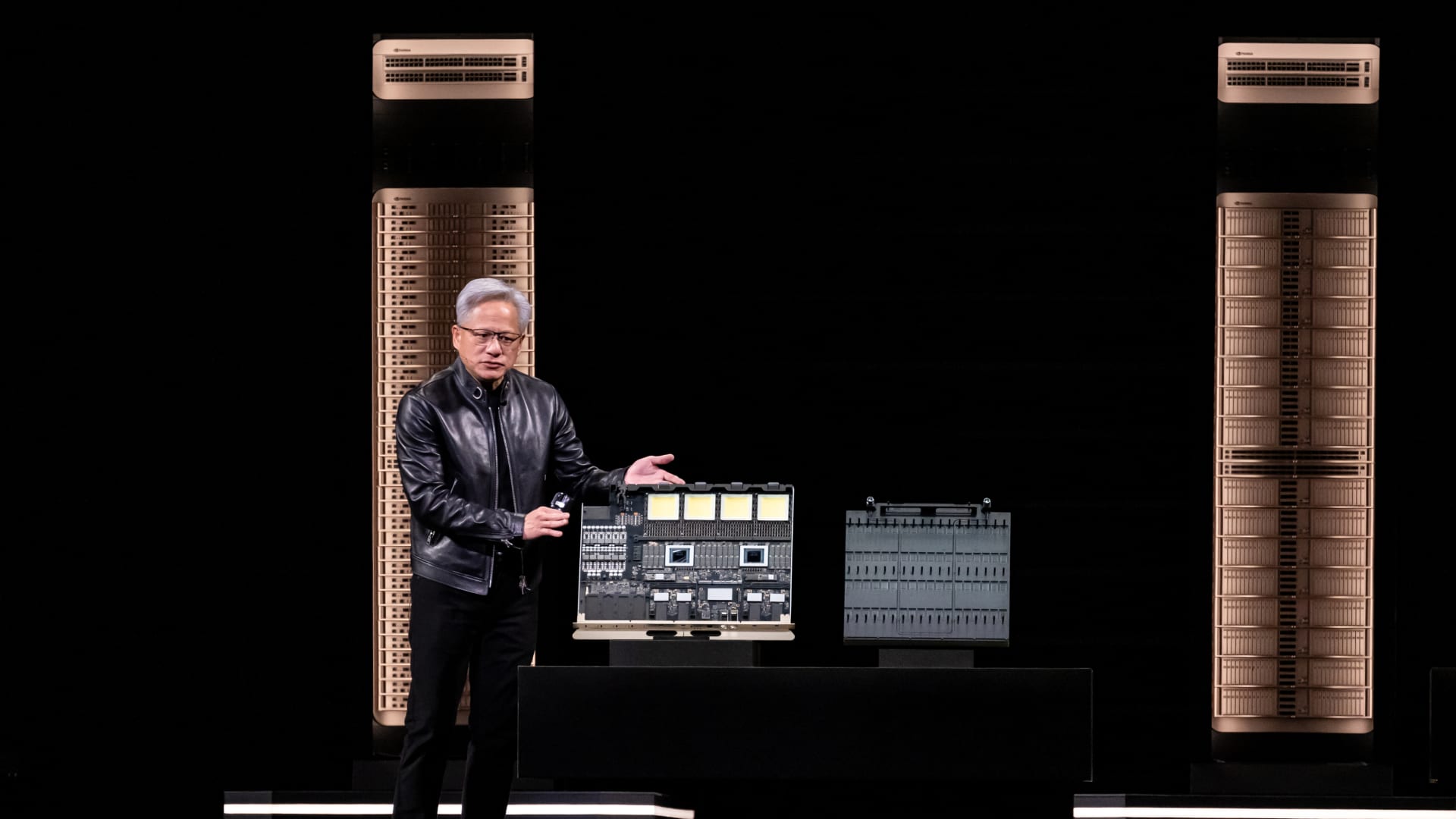
NVIDIA, the dominant force in AI hardware, is reportedly facing a significant delay in its next-generation Kyber rack-scale architecture, critical for its 2027 Rubin Ultra chips. This setback pushes the anticipated debut of the advanced Nvidia AI rack system to 2028, sparking concerns across the industry regarding the company’s ambitious product roadmap and manufacturing capabilities.
🚀 Tech Strategy & Market Disruptions
- Manufacturing Hurdles. The Kyber NVL144 rack architecture, designed for Rubin Ultra chips, is delayed to 2028 due to challenges in manufacturing its complex PCB midplane.
- Competitive Opening. This delay creates a rare opportunity for rivals like AMD and Google, whose in-house AI chips are gaining traction with major cloud service providers and AI labs.
- Hyperscaler Pushback. Nvidia’s proposed backup plan to link current-gen racks was rejected by cloud providers due to operational complexity and cost, leaving a void in scale-up solutions.
The highly anticipated Kyber rack-scale architecture, central to NVIDIA’s strategy for housing its powerful 2027 Rubin Ultra chips, now faces a delay of over a year, shifting its launch timeline to 2028. This postponement, first reported by research firm SemiAnalysis, stems from persistent manufacturing difficulties with a specialized, multi-layer printed circuit board (PCB) midplane at the core of the system. This critical component is essential for connecting and enabling the 144 high-performance chips within a single server cabinet to function as a unified, massive compute engine. The delay casts a shadow over NVIDIA’s aggressive annual product refresh cycle, raising questions about the company’s ability to maintain its breakneck pace of innovation amidst complex production realities.
Kyber’s design innovation involves vertically mounting Graphics Processing Units (GPUs) in compute trays to significantly boost density and reduce latency, a critical requirement for training and operating the most advanced AI models. The NVL576, an even larger system intended to connect eight Kyber racks optically, is also likely to be affected, potentially facing delays or limited initial volumes. These manufacturing snags are not isolated; they represent the latest in a series of reported challenges for NVIDIA’s product lines, hinting at a potential collision between ambitious design cycles and practical production constraints, a common hurdle in rapidly evolving technology market trends.
Adding to the complexities, NVIDIA’s contingency plan—to bolt together two of its current-generation racks to offer similar computational power—has been abandoned. This alternative was met with considerable resistance from major cloud service providers (CSPs) and hyperscalers, including AWS, Microsoft Azure, and Google Cloud, who found the design cumbersome and economically inefficient to operate. This rejection leaves NVIDIA without a readily available, proven solution to scale up its Rubin Ultra systems for the most demanding AI workloads, creating a technical vacuum at the high end of the market.
This development is particularly noteworthy as it comes at a time when competitors are intensifying their efforts. Rivals such as Advanced Micro Devices and Google, with their burgeoning in-house AI chip development, are already securing business from leading AI laboratories. The Kyber delay provides these competitors with a valuable window to further entrench their offerings, potentially altering the competitive landscape for emerging technologies crucial to large-scale AI deployment. While current-generation Rubin systems are shipping this fall to cloud partners, the strategic implications of the Kyber setback are considerable. Key challenges highlighted by this situation include:
- The intricate balance between groundbreaking AI chip design and the feasibility of high-volume manufacturing for complex rack systems.
- The evolving demands of cloud service providers for seamless, cost-effective, and scalable AI infrastructure, beyond raw compute power.
- The increasing competitive pressure from alternative chip developers seeking to capitalize on market opportunities and diversify the AI supply chain.
The Nvidia AI rack system delay triggers a clear disruption flow: Manufacturing delays in specialized PCBs → Postponement of the Kyber architecture launch to 2028 → Loss of scale-up solution for Rubin Ultra chips → Opening for rivals (AMD, Google) to capture high-end AI accelerator market share → Potential shift in AI infrastructure adoption curves for hyperscalers seeking immediate, scalable solutions.
“The complexities of advanced packaging and novel interconnects like those in the Kyber midplane represent a frontier challenge for the entire semiconductor industry. Achieving ultra-low latency and high-bandwidth density at scale requires not just design prowess, but manufacturing mastery that pushes the boundaries of current fabrication techniques. Delays here highlight the critical interplay between innovation in architecture and the practical realities of industrial-scale production.”
Key Technical Specifications & Delays
- Kyber Rack Architecture: Designed to house 144 of NVIDIA’s most powerful AI chips per unit.
- Rubin Ultra Integration: Initially slated for 2027 debut alongside the Vera Rubin Ultra system.
- Delay Impact: Kyber NVL144 system now delayed by over 12 months to 2028.
- Larger System (NVL576): A larger optical-linked system (8 racks) also likely delayed or volume-limited.
Navigating Nvidia’s Market Adoption Challenges
The reported pushback from Cloud Service Providers (CSPs) on NVIDIA’s interim scale-up solution underscores a fundamental challenge in market adoption: theoretical power often clashes with operational practicality and total cost of ownership. Hyperscalers prioritize seamless integration, simplified management, and predictable scaling, often rejecting solutions that introduce undue complexity or disproportionate operational burdens. The cancellation of the two-rack interim solution suggests that while NVIDIA leads in raw chip performance, designing integrated systems that meet the rigorous deployment and management demands of large-scale data centers is a distinct and equally critical engineering challenge. This highlights the nuanced balance between bleeding-edge innovation and the enterprise-grade robustness required for widespread deployment within sophisticated digital transformation programs.
Unpacking the Nvidia Platform Architecture Complexity
The Kyber architecture’s ambition to vertically mount GPUs and create a single, massive computer from 144 chips represents a significant leap in system design, moving beyond traditional horizontal tray layouts. This approach aims to reduce latency and maximize density, but it introduces formidable challenges in areas like power delivery, thermal management, and especially signal integrity across the specialized PCB midplane. The difficulty in manufacturing this multi-layer circuit board suggests that the physical realization of such high-density, low-latency interconnects at scale is pushing the limits of current fabrication technologies. Ensuring reliability and yield for such intricate components is paramount, and any compromise here can cascade into significant production bottlenecks, directly impacting NVIDIA’s ability to maintain its market leadership in high-performance computing.
What Kyber Delays Mean for Nvidia’s AI Trajectory
The reported delay of NVIDIA’s Kyber rack-scale architecture to 2028 represents more than a mere scheduling adjustment; it signals critical manufacturing limitations colliding with an aggressive innovation roadmap. This situation opens a strategic window for competitors and compels hyperscalers to re-evaluate their long-term AI infrastructure strategies beyond a single vendor’s offerings.
- Innovation Pace vs. Production Reality: NVIDIA’s ambitious annual release cycle is showing signs of strain against the complex manufacturing demands of next-gen AI systems.
- Competitive Dynamics Shift: AMD and Google are well-positioned to capitalize on this delay, potentially gaining market share with their proprietary solutions.
- Hyperscaler Diversification: Cloud providers may accelerate their efforts to diversify AI hardware suppliers to mitigate future single-vendor risks.
Can NVIDIA accelerate manufacturing breakthroughs to close this gap, or will this delay fundamentally alter the landscape of AI infrastructure leadership?
📊 StockXpo Analyst’s View
Market Impact: This news could temper immediate investor enthusiasm for NVIDIA’s near-term product pipeline, particularly regarding its ability to quickly scale its most advanced AI solutions. While NVIDIA’s current-generation products remain strong, the delay introduces uncertainty about future high-end market dominance, potentially leading to increased scrutiny on its manufacturing partnerships and supply chain resilience.
Sector To Watch: The competitive landscape in AI accelerators is heating up. Investors should closely monitor AMD’s MI series development and Google’s TPU advancements, as these companies stand to benefit from any perceived weakness or delays from the market leader. Hyperscalers will likely accelerate investment in proprietary silicon and diversified AI hardware suppliers.
Financial Disclaimer:
StockXpo.com is a financial news aggregator and educational portal, not a registered investment advisor or broker-dealer. All information, news, and analysis provided herein are strictly for educational purposes and do not constitute investment, financial, legal, or tax advice. Investing in the stock market involves high risks, and past performance is not indicative of future results. StockXpo will not be liable for any financial losses or investment damages. Always consult a certified financial advisor before making market decisions.
MORE IN INSIDE TECHNOLOGY

Bond Yields Under Pressure: IMF Warns of ‘Disorderly’ Spike Driven by AI Debt and Inflation
Published: Tuesday, October 13, 2026 · 1:21 AM

AI Breakthroughs: TikTok CEO Predicts Major Scientific Leap Within Three Years
Published: Monday, October 12, 2026 · 2:40 AM