Published: Tuesday, June 30, 2026 · 7:10 PM | Updated: Tuesday, June 30, 2026 · 7:10 PM
📊 263 views




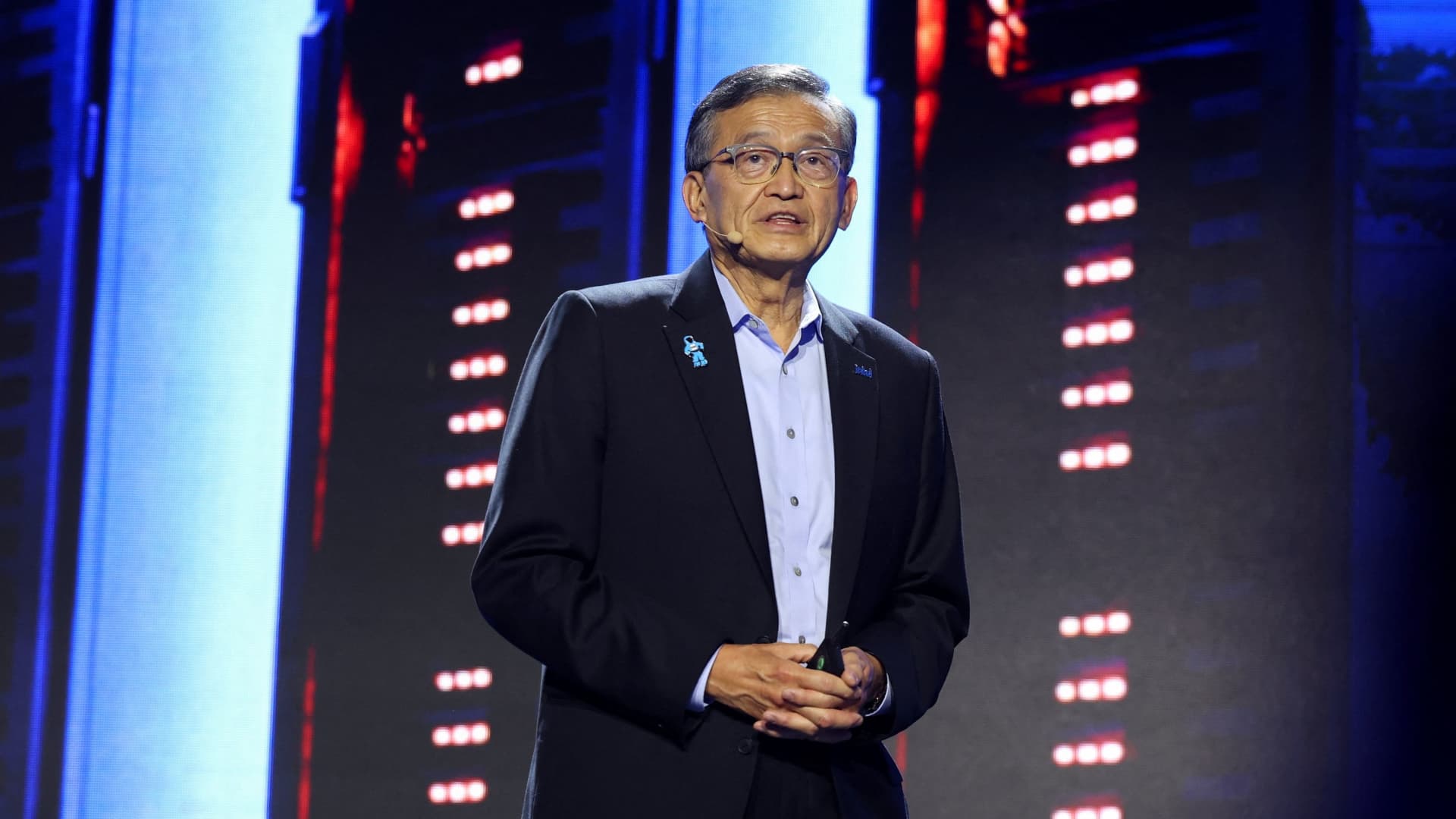
Intel stock has emerged as a top performer in 2026, with CNBC’s Jim Cramer projecting an additional 40% upside, anticipating its share price could hit $200. This bullish outlook is primarily fueled by Intel’s strategic positioning in the burgeoning artificial intelligence inference market and its revitalized semiconductor foundry business.
🚀 Tech Strategy & Market Disruptions
- AI Inference Shift Accelerates. The pivot from AI model training to widespread inference, particularly for agentic AI systems, is driving robust demand for Intel’s CPUs, re-establishing their market relevance in a GPU-dominated era.
- Foundry Business Re-Emerges as Strategic Asset. Under CEO Lip-Bu Tan, Intel’s foundry operations are poised to address critical global semiconductor production shortages, drawing attention from the White House and potentially attracting major clients like Apple.
- Market Revaluation Driven by AI & Manufacturing Edge. Intel’s dual strength in AI-centric CPUs and advanced manufacturing positions it for significant market upside, differentiating it from pure-play design or foundry rivals and signaling a potential industry shift.
Jim Cramer’s recent bullish call on Intel stock, predicting a rise to $200 per share—a 40% jump—highlights the company’s unexpected resurgence in the competitive semiconductor landscape. Intel has already proven to be the third-best S&P 500 performer in 2026, with an impressive gain of nearly 285% year-to-date. This remarkable performance is rooted in a fundamental shift within the artificial intelligence computing paradigm and the strategic revival of its chip manufacturing capabilities.
While Nvidia remains a stalwart in AI training with its powerful GPUs, the evolving needs of agentic AI systems are driving a new demand cycle. Agentic AI, capable of completing tasks autonomously, relies heavily on central processing units (CPUs) for inference—the day-to-day application of trained models. Cramer explicitly stated on CNBC that ‘CPUs are worth a fortune,’ and are ‘more valuable than GPUs’ in this new agentic era. This pivot plays directly into Intel’s traditional strengths, where it has long dominated the CPU market alongside Advanced Micro Devices (AMD), which has also seen a substantial 170% gain this year. Arm Holdings, a key architectural partner for CPU development, has also climbed nearly 230% in 2026, underscoring the broader strength in CPU-related technologies. The interplay of strong CPU demand for AI inference and a resurgent foundry business positions Intel uniquely in the current technology market trends.
Beyond its core CPU business, Intel’s revitalized foundry segment is proving to be a significant differentiator. Since taking the helm in March 2025, CEO Lip-Bu Tan has prioritized the foundry business, positioning it as a potential solution to global production capacity shortages. The strategic importance of domestic semiconductor manufacturing has garnered attention from the U.S. government, with the White House reportedly viewing Intel’s foundry as a ‘national treasure.’ While unconfirmed by either company, former President Donald Trump stated in June that Intel had reached a deal with Apple to design and build chips in the U.S. This would represent a significant win, as Apple currently relies on Taiwan Semiconductor Manufacturing Company (TSMC), the world’s leading foundry and a direct competitor to Intel, for its chip production. TSMC itself is expanding its U.S. presence, reflecting the strategic imperative of onshore chip manufacturing, a trend closely watched by industry observers as noted by Reuters Technology.
The accelerating shift towards sophisticated agentic AI systems marks a significant inflection point, triggering a direct disruption flow in the semiconductor industry. This begins with the proliferation of agentic AI, which demands localized, efficient processing for real-time inference rather than raw computational power for training. This demand cascade directly elevates the strategic importance and market value of high-performance CPUs, Intel’s long-standing domain, consequently challenging the recent GPU-centric dominance in AI hardware. Simultaneously, the global imperative for resilient semiconductor supply chains and national technological sovereignty fuels the resurgence of Intel’s foundry business. This combination could lead to a recalibration of market leadership as Intel leverages its integrated device manufacturer (IDM) model to offer both advanced chip design and manufacturing capacity, potentially disrupting established foundry giants and specialized AI chip designers. The synergy of leading-edge AI inference capabilities and robust manufacturing services positions Intel to profoundly impact the evolving digital transformation landscape by becoming a pivotal infrastructure provider for next-generation intelligent systems.
CTO Insight: The shift from large-scale AI model training to ubiquitous inference, especially for agentic AI, fundamentally alters the compute architecture required at the edge and within enterprise data centers. While GPUs remain critical for training, the economic and latency demands of real-time AI agents necessitate optimized CPU and custom silicon solutions. Intel’s resurgence here isn’t merely a cyclical upturn; it’s a strategic re-alignment with a critical, high-growth segment of the AI lifecycle, potentially redefining the ‘AI chip’ beyond just parallel processing. Its foundry capacity then becomes the strategic lever to control supply and innovation cycles.
Recent market performance highlights a competitive landscape:
- Intel (INTC): Up nearly 285% year-to-date in 2026, with a record-high close above $140.95 and a projected target of $200.
- Advanced Micro Devices (AMD): Gained 170% year-to-date, also benefiting from CPU demand.
- Arm Holdings (ARM): Rose nearly 230% in 2026, capitalizing on its foundational chip architecture royalties.
These figures underscore a broad investor confidence in the foundational chip technologies powering the next wave of computing.
Intel’s Foundry Business: A Strategic Imperative
The revival of Intel’s foundry operations under CEO Lip-Bu Tan is more than a diversification play; it is a critical strategic imperative for both the company and the broader U.S. technology sector. With global semiconductor supply chains under intense scrutiny, establishing robust domestic manufacturing capabilities becomes paramount. Intel Foundry Services (IFS) aims to compete directly with leading pure-play foundries like TSMC, offering advanced process technologies to third-party chip designers. This move not only addresses national security concerns by bringing advanced chip production onshore but also provides Intel with a significant competitive advantage. By controlling both design and manufacturing, Intel can optimize performance, cost, and supply chain resilience for its own products, while also generating revenue from external clients. This vertically integrated model contrasts sharply with the fabless model adopted by many competitors and could prove crucial in a future where manufacturing capacity is a bottleneck for emerging technologies.
Navigating the AI Chip Ecosystem: Intel’s Opportunity
The evolving AI chip ecosystem, marked by the increasing importance of inference, presents a substantial opportunity for Intel. While Nvidia’s GPUs have dominated the high-compute training phase for large language models (LLMs), the daily operational demands of agentic AI systems shift the focus to efficient, scalable inference. These systems require vast numbers of CPUs for parallel task execution and decision-making, where Intel holds a deep heritage and extensive market penetration. The challenge for Intel lies in demonstrating superior performance and power efficiency against custom AI accelerators and specialized inference chips that are also emerging. Success will hinge on continued innovation in CPU architecture, optimized software stacks, and strategic partnerships that embed Intel’s solutions into the core of emerging technologies. This focus on inference processing aligns well with the growing need for compute closer to data sources, underpinning the expansion of edge AI and distributed intelligent systems across various industries, a topic frequently covered in Forbes Technology.
Intel’s AI-Powered Resurgence: A New Era for the Chip Giant
Intel’s impressive rebound in 2026 signifies a pivotal moment for the semiconductor veteran. Driven by a newfound relevance in AI inference and a strategically revitalized foundry business, the company is re-asserting its position as a key player in the next generation of computing. The market is clearly re-evaluating Intel’s potential, moving beyond its past struggles to recognize its core strengths in a rapidly changing technological landscape.
- Intel’s CPUs are critical for the growing demand for agentic AI inference, moving beyond training-centric GPU dominance.
- The foundry business provides a unique advantage, addressing supply chain security and offering a compelling value proposition for domestic chip manufacturing.
- Strategic partnerships and continued architectural innovation will be crucial for sustaining momentum against fierce competition, providing educational tech insights.
Can Intel leverage these dual engines of growth to sustain its momentum and solidify its leadership in the foundational technology market of the future?
📊 StockXpo Analyst’s View
Market Impact: This resurgence of Intel, driven by credible shifts in AI computing and strategic manufacturing, is likely to foster increased investor confidence in foundational semiconductor companies. It suggests a broadening of investment beyond pure-play GPU leaders, potentially re-allocating capital towards firms with diversified AI capabilities and robust manufacturing assets. This could enhance market liquidity across the broader chip sector, as investors seek value in overlooked segments.
Sector To Watch: The Semiconductor Manufacturing (Foundry) sector is poised for significant gains as national interests align with technological independence. Additionally, the Enterprise AI Infrastructure segment, particularly companies enabling agentic AI deployments, will benefit directly from the demand for efficient inference processing, impacting cloud service providers and data center operators profoundly. The implications extend to industries reliant on advanced microprocessors, underscoring the vital role of these emerging technologies in global digital transformation.
Financial Disclaimer:
StockXpo.com is a financial news aggregator and educational portal, not a registered investment advisor or broker-dealer. All information, news, and analysis provided herein are strictly for educational purposes and do not constitute investment, financial, legal, or tax advice. Investing in the stock market involves high risks, and past performance is not indicative of future results. StockXpo will not be liable for any financial losses or investment damages. Always consult a certified financial advisor before making market decisions.
MORE IN INSIDE TECHNOLOGY
AI Buildout Hits Credit Headwinds: Neoclouds Under Pressure
Published: Saturday, October 24, 2026 · 12:23 AM

SK Hynix Shares Rebound: A Strategic Shift in Semiconductor Funding
Published: Friday, October 23, 2026 · 1:46 AM