Published: Tuesday, June 30, 2026 · 4:34 PM | Updated: Tuesday, June 30, 2026 · 4:34 PM
📊 210 views




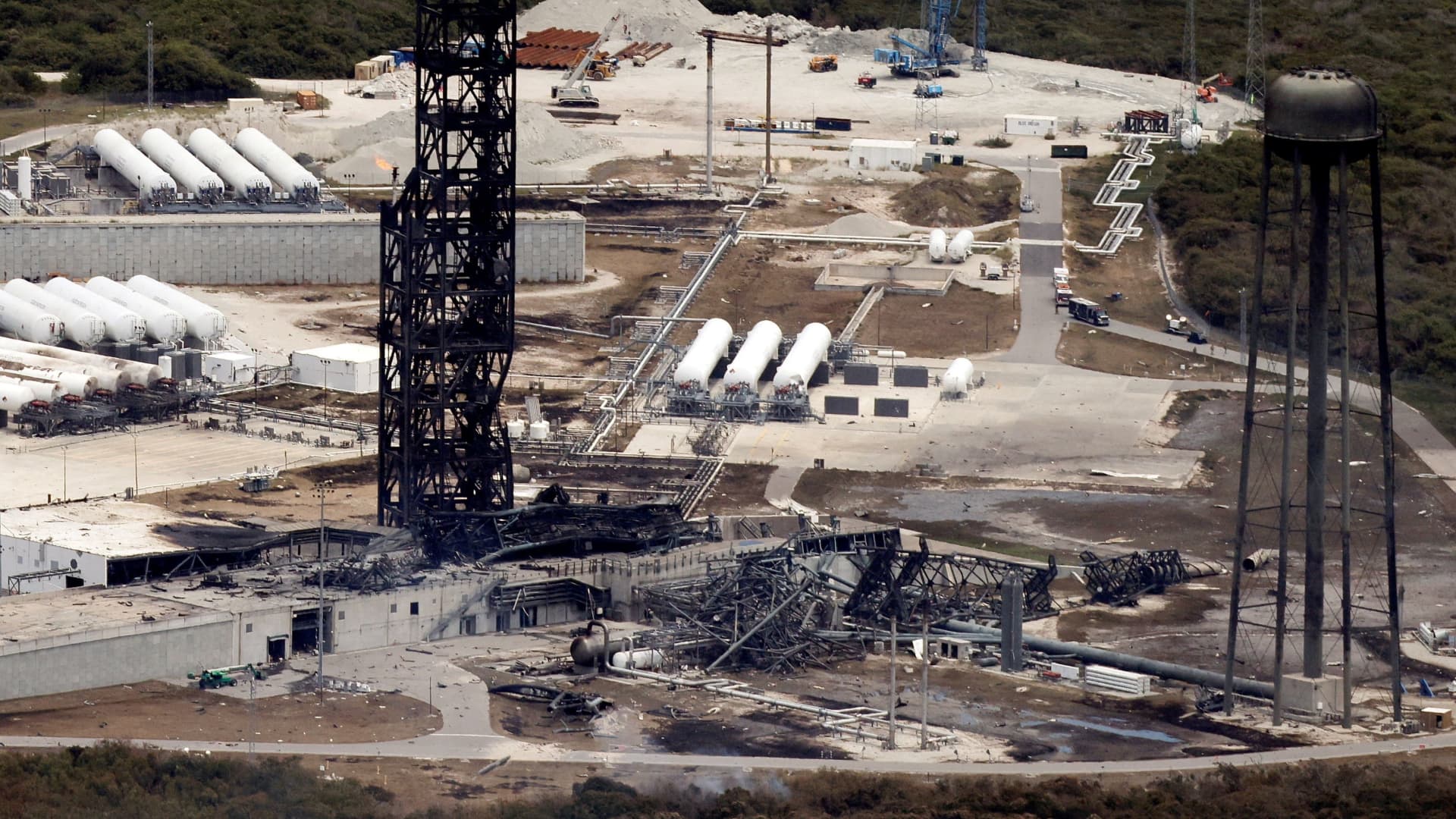
Following a significant setback in May 2026, Blue Origin is rapidly advancing with a critical Blue Origin launchpad redesign at its Cape Canaveral facility. CEO Dave Limp announced a pivot to a ‘horizontal/vertical hybrid’ launch configuration, leveraging existing infrastructure to accelerate the New Glenn rocket’s return to flight by the end of the year. This agile response is crucial for both NASA’s Artemis lunar program and commercial satellite deployments.
🚀 Tech Strategy & Market Disruptions
- Agile Infrastructure Pivot. Blue Origin’s rapid decision to redesign its launchpad rather than rebuild the original indicates a strategic shift towards accelerated development and deployment, prioritizing speed to market over replicating past infrastructure.
- Hybrid Launch Configuration. Adopting a horizontal/vertical hybrid system, initially for the larger New Glenn ‘9×4’ variant, allows for increased flight cadence and operational flexibility, directly challenging competitors like SpaceX in launch efficiency.
- Supply Chain Resilience. Expediting New Glenn’s return is vital for mitigating launch capacity shortages, directly impacting high-profile missions such as NASA’s Artemis program and critical commercial ventures by Amazon and AST SpaceMobile.
On May 29, 2026, a hot-fire test of Blue Origin’s New Glenn rocket at Cape Canaveral resulted in an explosion, severely damaging the launchpad. This incident presented a significant hurdle for the company, which is a key contender in the burgeoning space launch sector and a critical partner for future endeavors. The immediate response from CEO Dave Limp was to forego rebuilding the exact same structure, opting instead for a fundamentally new approach: a Blue Origin launchpad redesign.
The decision to implement a ‘horizontal/vertical hybrid’ launch configuration represents a strategic acceleration for the New Glenn program. This redesign leverages existing infrastructure that was already in development for a more powerful variant, known as the ‘9×4.’ By adapting these pre-existing elements, Blue Origin aims to minimize downtime and enhance its flight cadence, directly addressing the competitive landscape dominated by companies like Elon Musk’s SpaceX. Limp communicated the company’s commitment to reliability and a swift return to flight, emphasizing the critical role Blue Origin plays as a launch provider.
The mishap was particularly ill-timed, given Blue Origin’s pivotal role in significant upcoming missions. The company is tasked with launching an uncrewed Blue Moon lander for NASA’s Artemis program later this year, a mission central to the agency’s efforts to return humans to the moon. Furthermore, commercial giants like Amazon and AST SpaceMobile are heavily reliant on New Glenn’s heavy-lift capabilities to deploy their internet satellites into low-Earth orbit. The explosion occurred just days before a scheduled launch of Amazon’s Kuiper satellites, underscoring the tight dependencies within the space industry.
Low-Earth orbit satellite internet services have experienced rapid growth, yet this expansion has been constrained by a persistent shortage in rocket launch supply. Blue Origin, with its New Glenn rocket, was poised to offer a robust heavy-lift alternative to SpaceX, capable of ferrying larger payloads. The incident therefore exacerbates an existing bottleneck, making the swift and successful implementation of the launchpad redesign even more critical.
Blue Origin continues to investigate the precise cause of the May anomaly, with early findings pointing to the ‘aft section of the first stage’ of the rocket as a potential source. The physical damage to the launchpad was extensive, resulting in the loss of:
- The lightning tower
- The transporter-erector
- The hydraulic cylinders
Despite these substantial losses, Limp expressed confidence in the company’s ability to overcome the challenges, stating, ‘we caught a lot of breaks, too, and intend to make the most of them.’ This implies a degree of preparedness or adaptability in their existing development plans that could now be repurposed for the accelerated recovery. The broader implications for technology market trends and the overall space economy hinge on Blue Origin’s execution of this revised strategy.
The unexpected explosion of Blue Origin’s New Glenn rocket triggered an immediate strategic imperative for the company: a rapid, innovative redesign of its launch infrastructure. This disruption, though initially a setback, is expected to catalyze a faster, more efficient launch system through the new horizontal/vertical hybrid configuration. The accelerated operational readiness will in turn address the existing bottleneck in heavy-lift launch capacity, which is critical for government contracts like NASA’s Artemis and commercial constellations such as Amazon Kuiper and AST SpaceMobile. Ultimately, this push for enhanced cadence and reliability could intensify competition with market leader SpaceX, potentially lowering launch costs and accelerating the deployment of satellite internet services, thus reshaping the commercial space launch ecosystem.
‘In high-stakes industries like space launch, technical setbacks are inevitable. What defines a leader is not the absence of failure, but the agility and strategic foresight to pivot rapidly. Blue Origin’s decision to pursue a redesigned, hybrid launchpad rather than a direct rebuild exemplifies an ‘architectural resilience’ – transforming a crisis into an opportunity for an optimized system, critical for maintaining competitive velocity in a sector where every launch delay costs millions.’
Blue Origin Platform Architecture Evolution
The pivot to a horizontal/vertical hybrid launch configuration for New Glenn represents a significant evolution in Blue Origin’s launch platform architecture. This design, originally slated for the ‘9×4’ variant, allows for greater integration flexibility and potentially faster processing times between launches. By adopting elements like horizontal integration for payload encapsulation, followed by vertical erection at the pad, the system aims to streamline operations compared to purely vertical stack-and-launch approaches. This architectural shift could improve reliability by enabling more comprehensive pre-flight checks in a controlled environment and accelerating the post-launch recovery and refurbishment of reusable components. Such innovations in launch infrastructure are crucial for scaling up operations and meeting the demand for heavy-lift capabilities, directly influencing the trajectory of emerging technologies in space.
Blue Origin Market Adoption Challenges
Despite its ambitious goals and significant investments from Jeff Bezos, Blue Origin faces substantial market adoption challenges, particularly in catching up to SpaceX’s established lead. The recent launchpad explosion highlights the inherent risks and complexities in spaceflight, which can lead to costly delays and eroded customer confidence. For companies like Amazon and AST SpaceMobile, reliable and timely launch services are paramount for deploying their multi-billion dollar satellite constellations. Any further delays could push these customers towards alternative providers or force them to delay their own market entry strategies. Blue Origin’s successful and expedited execution of the Blue Origin launchpad redesign is therefore not just an engineering feat, but a critical test of its ability to consistently deliver on promises and secure long-term contracts in a fiercely competitive commercial space market. This situation provides valuable educational tech insights into the pressures faced by late entrants in a rapidly evolving technological domain.
Blue Origin’s Trajectory: Reclaiming Launch Dominance
Blue Origin’s swift decision to redesign its launchpad following the New Glenn explosion signals a proactive, innovation-driven strategy to overcome significant setbacks. This architectural pivot is not merely a recovery effort but a calculated move to enhance operational efficiency and increase flight cadence, aiming to re-establish the company’s competitive standing in the heavy-lift launch market.
- The hybrid launch configuration is expected to accelerate New Glenn’s return to service, potentially by late 2026.
- This expedited return is critical for NASA’s lunar ambitions and the deployment schedules of major commercial satellite projects.
- Blue Origin’s ability to swiftly implement this redesign will be a key determinant of its future market share and investor confidence against formidable competitors.
Will this strategic launchpad redesign provide the necessary momentum for Blue Origin to truly challenge SpaceX’s market dominance and revolutionize access to space?
📊 StockXpo Analyst’s View
Market Impact: Blue Origin’s aggressive pivot post-explosion, while indicative of strong internal engineering capabilities, sends a mixed signal to the market. While the commitment to a rapid return to flight could alleviate some investor concerns regarding delays, the initial setback itself underscores the high-risk nature of space launch investments. Companies reliant on launch capacity, such as satellite operators, may see increased volatility in their deployment schedules until Blue Origin demonstrates consistent reliability. This incident could reinforce the perceived reliability advantage of established launch providers, at least in the short term, as reported by leading tech news outlets. Global technology developments are keenly watching this space.
Sector To Watch: The commercial space launch sector, particularly heavy-lift providers and their downstream clients in satellite communications and remote sensing, remains a critical area to monitor. The continued scarcity of reliable launch capacity means that any player capable of quickly scaling operations, even after a significant incident, will gain a strategic advantage. Investment in advanced manufacturing and agile engineering processes within aerospace will become even more attractive as companies seek to build resilience against inevitable operational challenges.
Financial Disclaimer:
StockXpo.com is a financial news aggregator and educational portal, not a registered investment advisor or broker-dealer. All information, news, and analysis provided herein are strictly for educational purposes and do not constitute investment, financial, legal, or tax advice. Investing in the stock market involves high risks, and past performance is not indicative of future results. StockXpo will not be liable for any financial losses or investment damages. Always consult a certified financial advisor before making market decisions.
MORE IN INSIDE TECHNOLOGY

AI Pricing Innovation: Reshaping Retail & Consumer Spend
Published: Sunday, October 11, 2026 · 1:36 AM

AI Legal Tech: Revolutionizing Billing and Training in Law with Innovation
Published: Saturday, October 10, 2026 · 2:58 AM