Published: Thursday, July 23, 2026 · 8:19 PM | Updated: Thursday, July 23, 2026 · 8:19 PM
📊 177 views




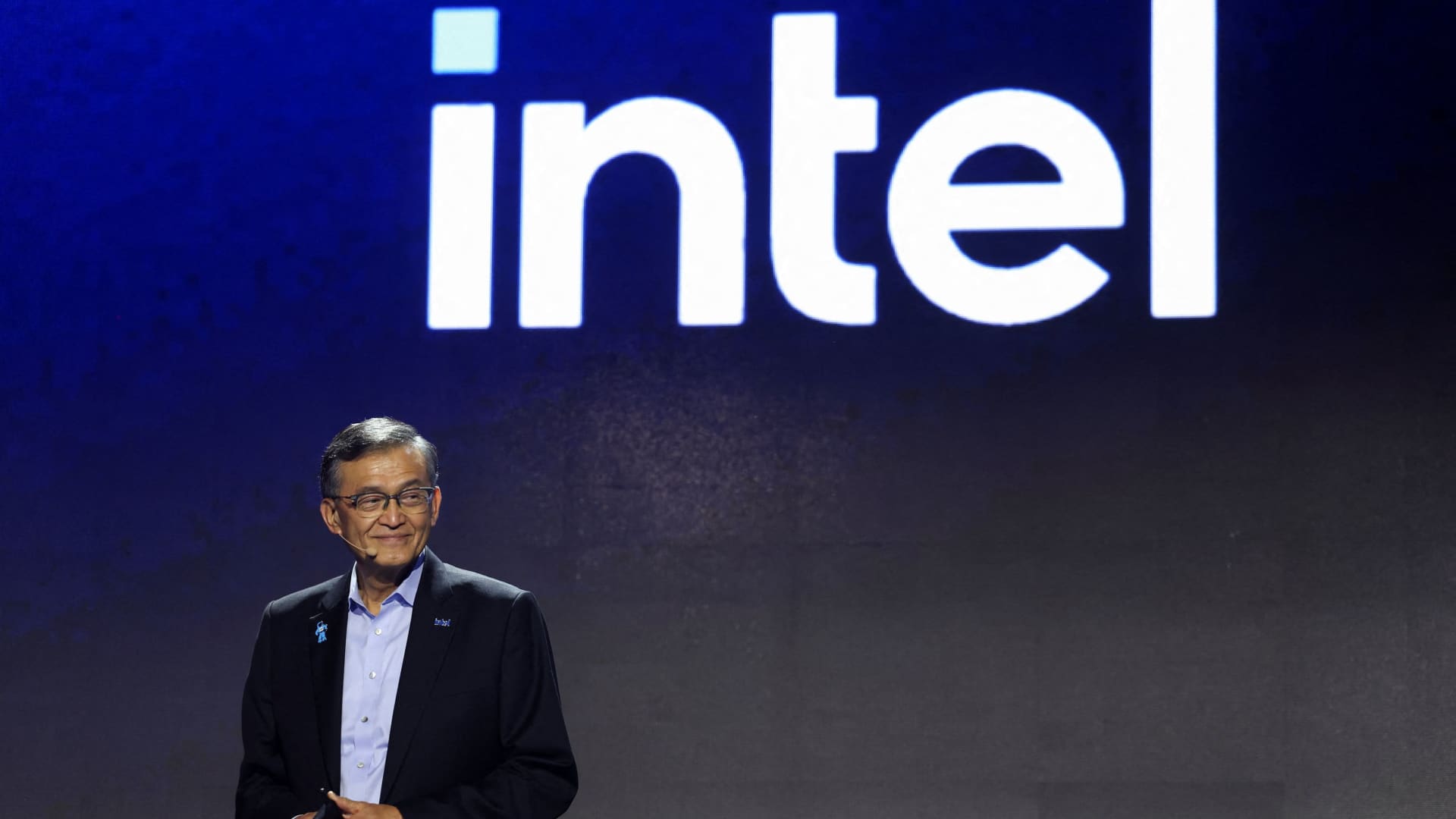
Intel (INTC) has reported its strongest quarterly revenue surge in almost 15 years, significantly exceeding Wall Street expectations for the second quarter of 2026. This remarkable resurgence, fueled primarily by escalating demand for AI infrastructure, positions the chip giant for sustained momentum despite recent market volatility. The substantial Intel sales growth underscores a pivotal shift in the semiconductor landscape.
🚀 Tech Strategy & Market Disruptions
- AI-Driven Resurgence. Intel’s data center revenue jumped 59%, showcasing AI’s ‘unprecedented demand’ for compute power as a primary growth engine.
- Foundry Ambitions Accelerate. The company is boosting CapEx for 2027 to expand its manufacturing capabilities for external customers, with its 14A process ahead of schedule, aiming to diversify revenue streams beyond proprietary chip production.
- Strategic Customer Lock-ins. Intel is securing long-term agreements for server CPUs, with 10 deals already in place, signaling efforts to stabilize pricing and secure volume amidst supply constraints and intense market competition.
The semiconductor behemoth posted adjusted earnings per share of 42 cents on revenue of $16.1 billion, vastly outperforming LSEG analyst estimates of 21 cents and $14.42 billion, respectively. This 25% year-over-year revenue increase marks its most rapid expansion since the third quarter of 2011, directly attributing the acceleration to the burgeoning artificial intelligence infrastructure boom. CEO Lip-Bu Tan remarked, ‘AI is driving unprecedented demand for compute,’ reaffirming Intel’s strategic alignment with current technological imperatives. This strong performance sent the stock up 11% in extended trading, demonstrating renewed investor confidence despite a recent 28% drop in July.
Intel’s robust growth wasn’t uniformly distributed across its segments. While its Client Computing Group, responsible for PC chips, saw a 13% rise to $8.9 billion, the true powerhouse was its data center business, which surged by an impressive 59% to $6.3 billion. This stark contrast highlights the significant shift in demand toward high-performance computing necessary for AI workloads. The company anticipates flat PC sales in the third quarter, a direct consequence of ongoing memory shortages impacting the broader hardware supply chain. For the upcoming quarter, Intel projects adjusted EPS of 38 cents on revenue between $15.8 billion and $16.8 billion, again topping analyst expectations of $15.1 billion in revenue and 27 cents EPS, according to CNBC reporting.
In a strategic move to secure future revenue and market position, Intel is initiating long-term agreements (LTAs) with key customers for its server CPUs. These agreements involve locked-in pricing and commitments on chip volume, a trend becoming increasingly common in the memory sector as vendors seek to protect current high valuations against potential market shifts. Intel has already inked 10 such LTAs and reported being supply-constrained, with data center customers requesting more units than it can currently produce. This reflects the intense pressure on semiconductor manufacturers to scale production while navigating complex supply chain dynamics. You can find more insights into current technology market trends on StockXpo’s platform.
The confluence of increasing AI demand and Intel’s renewed focus on high-performance server processors creates a significant disruption flow. Escalating AI workloads → Requires advanced data center CPUs → Fuels Intel’s data center revenue surge (59%) → Drives strategic long-term supply agreements → Intensifies competition in the foundry market as Intel accelerates its manufacturing expansion to meet future demand. This cycle accelerates digital transformation across industries, requiring robust computing foundations.
‘Intel’s strategic shift to prioritize high-margin data center and AI compute, coupled with its accelerated foundry push, is a classic play in technology market dynamics. It’s about owning the foundational compute layer while simultaneously diversifying manufacturing for a more resilient, future-proof business model,’ observes a leading CTO within the enterprise infrastructure space.
Key financial highlights from Intel’s Q2 2026 earnings include:
- Adjusted EPS: 42 cents (vs. 21 cents expected)
- Total Revenue: $16.1 billion (vs. $14.42 billion expected)
- Client Computing Group Revenue: $8.9 billion (up 13%)
- Data Center Business Revenue: $6.3 billion (up 59%)
- Foundry Sales: $5.8 billion (up 31% annually)
- Gross Margin: 42% (up from 2.5% year-ago)
Intel Platform Architecture: Future-Proofing for AI Workloads
The resurgence in Intel’s data center segment is deeply tied to its evolving platform architecture, designed to optimize for AI and high-performance computing. The focus is on integrating specialized accelerators and enhancing interconnects to manage the massive data flows inherent in generative AI and large language models. While historically dominant with x86 architecture, Intel is now innovating rapidly on hybrid solutions, leveraging its next-generation CPUs alongside discrete GPUs and FPGA-based solutions to offer a comprehensive compute portfolio. This architectural evolution aims to provide scalable, energy-efficient solutions that can handle increasingly complex computational demands, a critical aspect for emerging technologies and enterprise clients alike. The success of their 14A manufacturing process, reportedly ahead of schedule, signifies progress in delivering these advanced architectural designs to market.
Intel Ecosystem Expansion Potential: Beyond Proprietary Silicon
Intel’s ambition to become a major foundry player for other chip companies represents a significant ecosystem expansion, moving beyond its traditional role as an integrated device manufacturer. By boosting capital expenditures ‘meaningfully’ in 2027, Intel aims to capture a share of the burgeoning chip manufacturing market, currently dominated by TSMC. This strategy is not without its challenges; securing major external customers beyond niche engagements like Fortinet (for security chips using older technology) is paramount. Success in this venture could establish Intel as a diversified technology provider, offering foundational compute and advanced manufacturing services, thereby creating a more robust and resilient business model. This push extends Intel’s influence across the broader semiconductor supply chain, impacting how various industries procure their silicon, and promises to deliver new educational tech insights on StockXpo’s blog.
Intel’s Accelerated Rebound: AI’s Defining Role
Intel’s Q2 2026 results paint a clear picture of a company capitalizing on the AI revolution, achieving its fastest Intel sales growth in nearly 15 years. The impressive performance in its data center division, coupled with strategic moves in foundry services and long-term customer agreements, signals a determined effort to reclaim market leadership and diversify revenue streams. The path forward involves aggressive investment in manufacturing and continued innovation in AI-optimized architectures.
- AI as Core Driver: AI demand fundamentally reshaping Intel’s product strategy and revenue growth trajectory.
- Foundry Future: Success hinges on attracting major external customers and executing on advanced process technologies like 14A.
- Market Rebalancing: Shifting focus from PC-centric to data center and AI-centric computing, potentially changing market dynamics.
Can Intel sustain this momentum, solidifying its position as a foundational provider in the AI era amidst escalating competition?
📊 StockXpo Analyst’s View
Market Impact: Intel’s strong earnings and optimistic guidance inject renewed positive sentiment into the broader semiconductor sector, particularly among foundational tech stocks. The ‘unprecedented demand’ from AI applications suggests a robust, sustained growth cycle for hardware providers, potentially influencing capital allocation towards infrastructure plays. This performance offers a counter-narrative to recent market anxieties, potentially stabilizing tech valuations.
Sector To Watch: The data center and AI infrastructure sectors are clearly paramount. Beyond direct chip manufacturers, companies involved in data center construction, high-bandwidth networking, advanced cooling solutions, and AI software platforms stand to benefit significantly. This ripple effect may also highlight the critical role of memory suppliers, as indicated by Intel’s own supply constraints, making that segment an area for close monitoring. More information can be found at Reuters’ reporting for industry developments, and broader market context from Bloomberg’s analysis.
Financial Disclaimer:
StockXpo.com is a financial news aggregator and educational portal, not a registered investment advisor or broker-dealer. All information, news, and analysis provided herein are strictly for educational purposes and do not constitute investment, financial, legal, or tax advice. Investing in the stock market involves high risks, and past performance is not indicative of future results. StockXpo will not be liable for any financial losses or investment damages. Always consult a certified financial advisor before making market decisions.
MORE IN INSIDE TECHNOLOGY
AI Era Innovation: Nadella’s Bold Microsoft Re-Invention
Published: Monday, October 5, 2026 · 7:16 AM

State-Backed Dating App Innovation: Singapore’s Bold Demographic Tech Strategy
Published: Sunday, October 4, 2026 · 3:36 AM