Published: Tuesday, June 30, 2026 · 11:23 AM | Updated: Tuesday, June 30, 2026 · 11:23 AM
📊 256 views




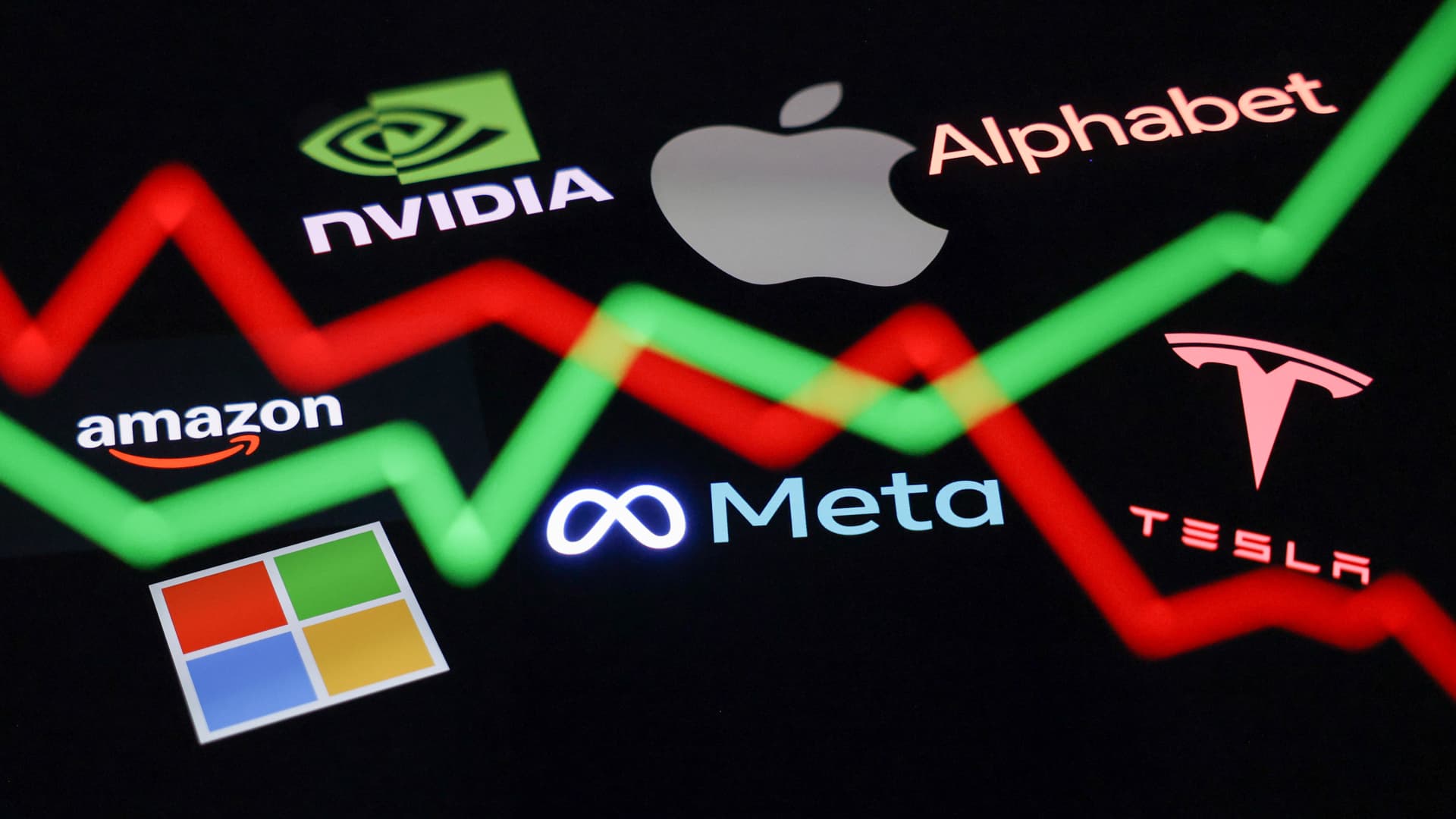
The once-unshakeable Magnificent 7 tech giants are facing significant headwinds, with approximately $2.3 trillion shed from their collective market value this month amidst growing AI Spending Jitters. Investors are increasingly scrutinizing the massive infrastructure investments being poured into artificial intelligence, leading to a reallocation of capital towards other segments, particularly the burgeoning semiconductor industry.
🚀 Tech Strategy & Market Disruptions
- Rethinking Asset-Light Models. Investors are shifting perception of Mag 7 from high free cash flow generators to balance sheet-intensive entities due to massive AI infrastructure spending.
- Semiconductor Sector Resilience. Despite broader tech slowdowns, chipmakers and the memory segment demonstrate robust growth, benefiting directly from Big Tech’s insatiable demand for AI hardware.
- AI Investment Validation Crucial. The upcoming Q2 earnings season will be pivotal in validating whether the substantial capital deployment by tech giants into AI yields tangible returns, influencing future market sentiment.
The sell-off, impacting giants like Microsoft, Nvidia, Apple, Alphabet, Meta, Tesla, and Amazon, highlights a critical re-evaluation by the market. The CNBC Magnificent 7 Index has seen a 10% decline in June alone, a stark contrast to the sector’s previous growth trajectory. Much of this scrutiny stems from the hundreds of billions of dollars these companies are dedicating to acquire advanced chips and construct extensive data centers, all in service of powering their ambitious AI initiatives. A significant portion of this investment is reportedly debt-fueled, raising questions about immediate returns on capital.
Wedbush Securities managing director Dan Ives noted the current period as a ‘gut check’ for the tech trade, emphasizing the market’s anticipation for Q2 earnings in July to validate the ongoing AI Revolution buildout. This period of heightened investor caution is characterized by concerns over the sheer cost of this generational technological shift. Microsoft has seen a 20% drop in June, with Nvidia falling 13%, and both Apple and Amazon experiencing approximately 8% declines. This movement suggests that while the long-term AI narrative remains strong, the immediate financial implications of massive capital expenditure are driving short-term volatility.
Tom Lee, head of research at Fundstrat Global Advisors, articulated this shift, stating that the market is grappling with a new narrative for the Mag 7. Previously perceived as asset-light powerhouses generating substantial free cash flow, these companies are now becoming more ‘balance sheet intensive’ due to their AI commitments. However, Lee suggests that investors will eventually view these deployed balance sheets as a strategic ‘moat,’ anticipating future returns from AI-driven endeavors, implying the current period is merely a transition, as reported by major financial outlets.
Conversely, the semiconductor sector has demonstrated remarkable resilience and growth, largely insulated from the Mag 7’s recent downturn. The Philadelphia Semiconductor Index, encompassing key players like Taiwan Semiconductor Manufacturing Co., Micron, and ASML, has surged by approximately 6% this month and a staggering 90% year-to-date. This performance far outstrips the Mag 7’s 3.4% decline over the same period, underscoring the foundational importance of chips in the AI economy. The relentless demand from Big Tech for high-performance semiconductors has led to critical supply shortages, particularly in memory components, driving prices upward and creating positive ripple effects across the entire supply chain. For instance, the Roundhill Memory ETF, tracking stocks like SK Hynix and Samsung, boasts an impressive 166% rally this year.
Recent strong earnings from Micron ‘pour cold water’ on skepticism surrounding the AI narrative, according to HSBC multi-asset strategist Duncan Toms. This sentiment is echoed by UBS analysts, who foresee no immediate abatement in AI supply chain bottlenecks and anticipate accelerated cloud revenue growth for major platforms. These observations reinforce the robust fundamentals of the AI growth story, which is expected to remain a primary driver of broader market performance. For investors navigating these complex technology market trends, a diversified approach within and beyond AI-related stocks is crucial, as highlighted by leading experts in emerging technologies. For more educational tech insights, StockXpo offers deep dives into market shifts.
- Market Reassessment: Investors are questioning the immediate returns on AI infrastructure, pushing Mag 7 valuations down while waiting for Q2 earnings.
The heavy capital investment by Mag 7 companies into AI infrastructure, fueled partially by debt, has created immediate financial scrutiny (cause). This scrutiny manifests as AI Spending Jitters, leading to a significant $2.3 trillion market value shrinkage for the Mag 7 (effect). Concurrently, this intense demand for AI hardware has directly driven unprecedented growth and investor confidence in chipmakers and the broader semiconductor supply chain (disruption/shift of capital). The reliance on these foundational components means that while the front-facing AI service providers face cost concerns, the underlying tech enablers are experiencing a boom, creating a structural shift in investor preference within the broader technology sector.
‘The current market dynamic underscores a critical shift in how technology investments are perceived. As CTOs, we must balance the imperative to innovate and scale AI capabilities with a clear, demonstrable path to ROI. The sheer scale of current AI infrastructure deployment suggests a long-term strategic play, yet immediate market expectations demand more transparent indicators of value creation beyond speculative growth narratives.’
| Index/Company | Performance (June) | Performance (YTD) |
|---|---|---|
| Magnificent 7 (Combined Value) | -$2.3 Trillion | N/A |
| CNBC Magnificent 7 Index | -10% | -3.4% |
| Microsoft | -20% | N/A |
| Nvidia | -13% | N/A |
| Apple & Amazon | -8% (each) | N/A |
| Philadelphia Semiconductor Index | +6% | +90% |
| Roundhill Memory ETF | N/A | +166% |
AI Infrastructure Investment Dynamics
The core of the Mag 7’s spending spree lies in a complex interplay of hardware acquisition, data center expansion, and software optimization. Companies like Amazon, Microsoft, Alphabet, and Meta are not merely buying chips; they are engineering vast, interconnected ecosystems designed to handle the unprecedented computational demands of advanced AI models. This involves significant capital expenditure on high-bandwidth memory (HBM), next-generation GPUs, and specialized AI accelerators, alongside the construction of mega-scale data centers capable of supporting exaflops of processing power. The economic model shifts from pure software leverage to a hybrid approach, where physical infrastructure becomes a foundational competitive advantage. This requires sophisticated supply chain management, strategic vendor partnerships (like those with TSMC and ASML), and long-term financial planning to amortize these colossal investments over years, not quarters. The challenge lies in translating these raw infrastructure capabilities into monetizable AI services that generate sufficient returns to justify the initial outlay.
Semiconductor Ecosystem Expansion Potential
The robust performance of the semiconductor sector extends beyond just chip manufacturers. It signals a broader expansion across the entire ecosystem, including materials suppliers, equipment manufacturers, and specialized packaging and testing services. Companies like ASML, a crucial supplier of lithography equipment, and memory producers such as Micron and SK Hynix, are experiencing unprecedented demand. This growth is not merely cyclical; it is driven by a structural, long-term need for advanced silicon to power global AI ambitions. The bottlenecks identified in memory supply, for instance, highlight areas of intense innovation and investment. The ability of the semiconductor industry to rapidly scale production and innovate in areas like chip stacking, advanced packaging, and novel architectures will determine the pace of AI’s broader adoption and its subsequent impact on industries ranging from healthcare to autonomous vehicles. This creates sustained demand for specialized knowledge and technological breakthroughs across the chip value chain.
Navigating AI Spending Jitters: What’s Next for Big Tech?
The current market re-evaluation of Magnificent 7 companies underscores a critical juncture for innovation-driven growth, balancing ambitious AI infrastructure investments against investor expectations for tangible returns. While the long-term potential of AI remains undisputed, the immediate future demands greater clarity on monetization strategies and efficient capital deployment from tech giants.
- The market is transitioning from valuing asset-light models to scrutinizing balance sheet-intensive AI plays.
- Q2 earnings will be a crucial litmus test for validating AI infrastructure spending and its impact on profitability.
- Diversification beyond the Mag 7 into foundational AI enablers like semiconductor and memory companies is gaining traction.
How will the strategic investments in AI infrastructure translate into competitive moats and sustainable revenue streams for the Mag 7 in the coming fiscal years?
📊 StockXpo Analyst’s View
Market Impact: The recent market pullback for the Magnificent 7 reflects a healthy but necessary recalibration of investor sentiment regarding the immediate profitability of massive AI infrastructure spend. This isn’t necessarily a loss of faith in AI, but rather a demand for clearer ROI pathways. Capital is likely to remain discerning, favoring companies with demonstrable earnings growth tied to AI, rather than purely speculative buildouts. This could lead to increased volatility for the largest tech names as they navigate this transition.
Sector To Watch: The semiconductor industry, including memory and specialized chip manufacturers, remains the undisputed winner in this scenario. Companies providing the foundational hardware for AI will continue to see robust demand and potentially expanding margins. Investors should also monitor specialized cloud providers and AI software platforms that can demonstrate immediate, scalable value without requiring the same level of capital expenditure as the infrastructure builders. The enterprise AI adoption cycle will also dictate which software players thrive.
Financial Disclaimer:
StockXpo.com is a financial news aggregator and educational portal, not a registered investment advisor or broker-dealer. All information, news, and analysis provided herein are strictly for educational purposes and do not constitute investment, financial, legal, or tax advice. Investing in the stock market involves high risks, and past performance is not indicative of future results. StockXpo will not be liable for any financial losses or investment damages. Always consult a certified financial advisor before making market decisions.
MORE IN INSIDE TECHNOLOGY

AI Innovation Fuels Southeast Asia’s Digital Growth
Published: Thursday, October 22, 2026 · 12:36 AM
NextDC Shares Plunge: Power Delays Threaten Australia’s Data Center Growth
Published: Wednesday, October 21, 2026 · 1:50 AM