Published: Saturday, June 27, 2026 · 3:20 PM | Updated: Saturday, June 27, 2026 · 3:20 PM
📊 229 views




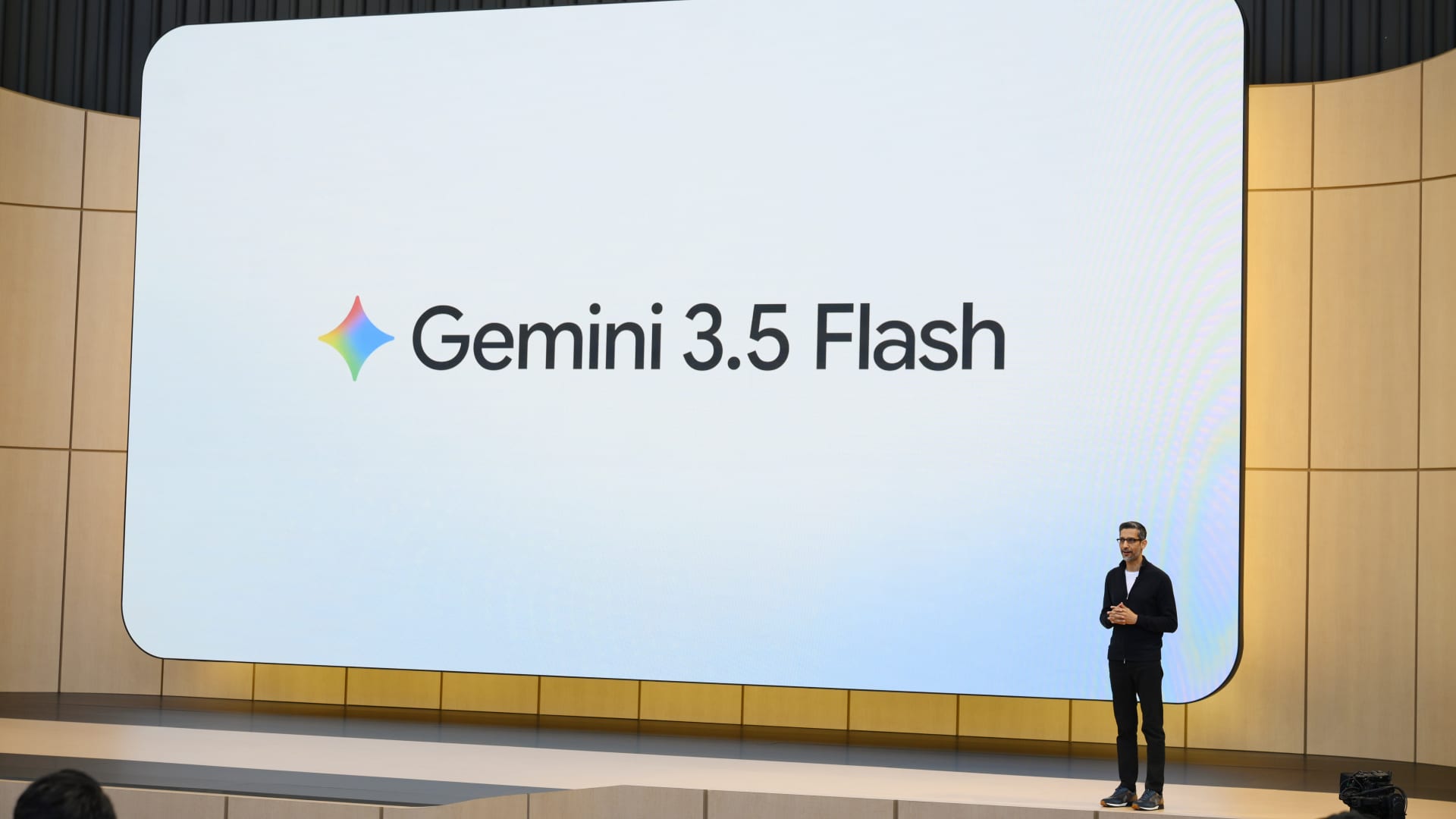
Alphabet is strategically leveraging its homegrown Tensor Processing Units (TPUs) to aggressively compete in the burgeoning AI compute market, challenging Nvidia’s dominance. This decisive move not only underpins Google’s internal AI initiatives but also fuels its rapidly expanding cloud business, attracting major AI players and signaling a new phase in the race for AI supremacy.
🚀 Tech Strategy & Market Disruptions
- TPU Market Impact. Google’s TPUs are emerging as a compelling, cost-effective alternative to Nvidia GPUs, especially for AI inference and training.
- Cloud Growth Driver. Google Cloud revenue is projected to surge, with TPUs driving significant demand from AI startups like Anthropic and enterprise customers.
- Strategic Partnerships. Collaborations like the $5 billion Blackstone joint venture for TPU cloud capacity highlight Google’s capital-light expansion strategy and deepen its footprint in infrastructure.
Alphabet is strategically doubling down on its proprietary Tensor Processing Units (TPUs) as a critical weapon in the intensifying battle for AI supremacy. These custom-designed ASICs, specifically optimized for machine learning, power Google’s foundational AI models like Gemini and are integral to its rapidly expanding Google Cloud business. Analysts project Google Cloud revenue to surge roughly 64% this year, reaching an estimated $96 billion, with robust expansion continuing above 50% into 2027, according to FactSet. This growth is significantly fueled by the strong demand for AI computing, positioning Google’s TPUs as a compelling alternative to Nvidia’s market-leading GPUs. The cost efficiency of TPUs, which can consume 20% to 40% less energy than Nvidia processors, allows Google to offer compute capacity at a 20% to 30% lower cost, attracting major AI unicorns like Anthropic. Indeed, Anthropic has committed to utilizing multiple gigawatts of Google TPUs to scale its models.
The AI compute landscape fundamentally involves two primary stages: training and inference. Training, the initial phase of teaching an AI model with vast datasets, is computationally intensive and expensive. Inference, conversely, is the process of a trained model making predictions on new data. While less computationally heavy per task, cumulative inference costs can ultimately exceed training costs over a model’s lifetime as AI applications are deployed at scale. Google’s TPUs, by design, excel at both, delivering strong performance while reducing the total cost of ownership for AI systems.
While Nvidia’s GPUs, originally designed for graphics, offer broad flexibility and benefit from a dominant software ecosystem like CUDA, their high cost and power consumption present challenges. The market, initially driven by training requirements post-ChatGPT, is now rapidly shifting towards an inference-led regime by late 2026, according to Stifel analysts. This pivot places a premium on cost-effectiveness and performance-per-dollar, driving hyperscalers to invest heavily in homegrown ASICs and other AI accelerators.
Google’s journey with custom silicon began in 2013, driven by internal projections that demand for machine learning compute would overwhelm its existing infrastructure. The first TPU was deployed internally in 2015, quickly becoming a critical component across Google products from Search to YouTube recommendations. This proactive strategy reflects an understanding of the immense computational requirements for future AI capabilities. Competitors are not idle; Amazon has its Graviton CPUs and Trainium AI accelerators, Microsoft developed its Maia chips, Meta Platforms is working on MTIA, and OpenAI is collaborating with Broadcom on its first in-house chip, illustrating a broader industry trend toward custom silicon.
Key advantages contributing to TPU adoption:
- Cost-Performance Ratio: TPUs offer superior performance per dollar, lowering the overall cost of running AI models, particularly for inference workloads.
- Specialized Design: As application-specific integrated circuits (ASICs), TPUs are tailored precisely for machine learning tasks, delivering efficiency unmatched by general-purpose GPUs.
- Strategic Flexibility: Google gains margin benefits by reducing reliance on external, high-priced chip suppliers like Nvidia, and can offer more flexible cloud pricing.
This internal development also mitigates some supply chain risks, although the broader industry still faces component availability and manufacturing capacity challenges. The recent announcement of Google’s eighth-generation TPUs, specifically split into 8t for training and 8i for inference, further underscores this specialized approach, promising up to three times faster training and 80% better performance per dollar. The ability to deploy clusters of over a million TPUs also positions Google to create the largest training clusters globally, accelerating model development from months to weeks, as stated by Alphabet CEO Sundar Pichai.
The move by Alphabet from internal consumption to external sales and partnerships for its TPUs creates a significant disruption. Initially, this directly reduces reliance on third-party silicon providers, lowering Google’s operational costs for AI. This cost advantage then translates into more competitive pricing for Google Cloud’s AI services, attracting a broader base of enterprise clients and AI startups. As demand for AI compute continues its upward trajectory, this expanded accessibility to high-performance, cost-effective TPUs will accelerate AI adoption across various industries, fostering innovation and potentially reshaping market share in the cloud infrastructure domain. The joint venture with Blackstone further amplifies this, allowing Google to scale its TPU footprint with less capital expenditure, thereby creating a new revenue stream and solidifying its position as a foundational AI infrastructure provider.
In the rapidly evolving AI landscape, an Application-Specific Integrated Circuit (ASIC) like Google’s TPU represents a critical strategic advantage. By tailoring hardware precisely for machine learning workloads, companies achieve unparalleled efficiency and performance, optimizing both compute speed and cost-per-inference—a key differentiator in the battle for scale.
| Metric | 2024 Projection | 2026/2027 Projection |
|---|---|---|
| Google Cloud Revenue | ~$96 Billion (64% growth) | >50% growth (2027) |
| TPU Infrastructure Revenue | N/A | ~$3 Billion (2026), ~$25 Billion (2027) |
Google’s Platform Architecture for AI Efficiency
Google’s approach to AI compute, spearheaded by its TPUs, is a masterclass in vertically integrated platform architecture. The co-design of hardware with Broadcom, coupled with deep software optimization, allows Google to extract maximum efficiency. This strategy is epitomized by the new eighth-generation TPUs, which are explicitly designed with specialized variants for training (8t) and inference (8i). This architectural choice allows Google to fine-tune performance for each distinct phase of the AI lifecycle, directly impacting the cost and speed of deploying advanced AI models. By controlling both the silicon and the overarching software stack, Google ensures a harmonious ecosystem, reducing latency and boosting throughput for demanding AI workloads. This robust architecture is attracting diverse clientele, including financial firms like Citadel Securities and U.S. Department of Energy national laboratories, all utilizing Google’s advanced computing for high-performance modeling.
Alphabet’s Ecosystem Expansion Potential
Alphabet’s strategic embrace of TPUs extends beyond its internal needs and cloud services, demonstrating significant ecosystem expansion potential. The partnership with Blackstone, involving a $5 billion initial equity commitment to build out TPU cloud capacity, represents a capital-light model for Google to aggressively grow its infrastructure footprint. This venture allows Google to scale its TPU offerings without incurring the full capital expenditure, providing access to its custom silicon in new ways. Beyond traditional cloud rentals, Google is now selling TPUs directly to customers for their own data centers, further diversifying its revenue streams. This dual strategy of cloud services and direct hardware sales, combined with partnerships that leverage Google’s IP and expertise, is transforming TPUs into more general-purpose infrastructure. This broader availability supports a wider array of use cases beyond core AI labs, penetrating sectors like finance and energy, as noted by Google Cloud CEO Thomas Kurian. This expansion not only enhances Google’s market position but also embeds its technology deeper into critical industry infrastructure, fostering long-term relationships and driving further adoption of emerging technologies across the market.
Alphabet’s AI Compute Ambition: A New Frontier
Alphabet’s long-term vision for AI compute is clearly articulated through its commitment to TPUs, projecting a future where custom silicon drives unprecedented efficiency and scale. The company’s pioneering work, stemming from critical internal needs, has evolved into a formidable external offering that is actively challenging established market dynamics. This integration of bespoke hardware with a robust cloud platform positions Alphabet as a key architect in the evolving AI infrastructure landscape.
- Google Cloud’s aggressive growth projections are largely underpinned by surging TPU demand, with significant revenue expected from specialized infrastructure sales.
- The shift towards an inference-led AI compute regime accentuates the cost and energy efficiency advantages of Google’s custom ASICs over general-purpose GPUs.
- Strategic partnerships, such as the Blackstone joint venture, highlight a flexible, capital-efficient model for scaling AI compute capacity and expanding market reach.
How will this intensified competition in custom AI silicon redefine the operational economics and accessibility of advanced AI across global enterprises?
📊 StockXpo Analyst’s View
Market Impact: Alphabet’s robust commitment to its TPU ecosystem introduces significant competitive pressure on the broader AI compute market. This strategy is likely to drive down the effective cost of AI infrastructure, impacting pricing models across major cloud providers and potentially squeezing margins for general-purpose chip manufacturers. Investor sentiment is likely to favor vertically integrated tech giants capable of controlling their hardware supply chains and optimizing costs for AI workloads, potentially increasing interest in Alphabet’s long-term growth prospects as detailed in various key technology developments and market trends.
Sector To Watch: The immediate beneficiaries are AI-driven enterprises seeking to optimize their large-scale model deployment and inference costs. Industries such as financial services, healthcare, and advanced manufacturing that rely heavily on complex AI models will see accelerated adoption due to more accessible and efficient compute. Additionally, the broader semiconductor supply chain, particularly specialized memory and component manufacturers, warrants close observation for shifting demand patterns and opportunities, as observed in recent industry research.
Financial Disclaimer:
StockXpo.com is a financial news aggregator and educational portal, not a registered investment advisor or broker-dealer. All information, news, and analysis provided herein are strictly for educational purposes and do not constitute investment, financial, legal, or tax advice. Investing in the stock market involves high risks, and past performance is not indicative of future results. StockXpo will not be liable for any financial losses or investment damages. Always consult a certified financial advisor before making market decisions.
MORE IN INSIDE TECHNOLOGY

AI Job Application Breakthrough: Skills Over Resumes Emerge
Published: Wednesday, September 30, 2026 · 3:04 AM

Smart Ring IPO: Oura Delays Public Offering Amidst Market Volatility
Published: Tuesday, September 29, 2026 · 6:52 AM