Published: Friday, June 26, 2026 · 4:28 PM | Updated: Friday, June 26, 2026 · 4:28 PM
📊 231 views




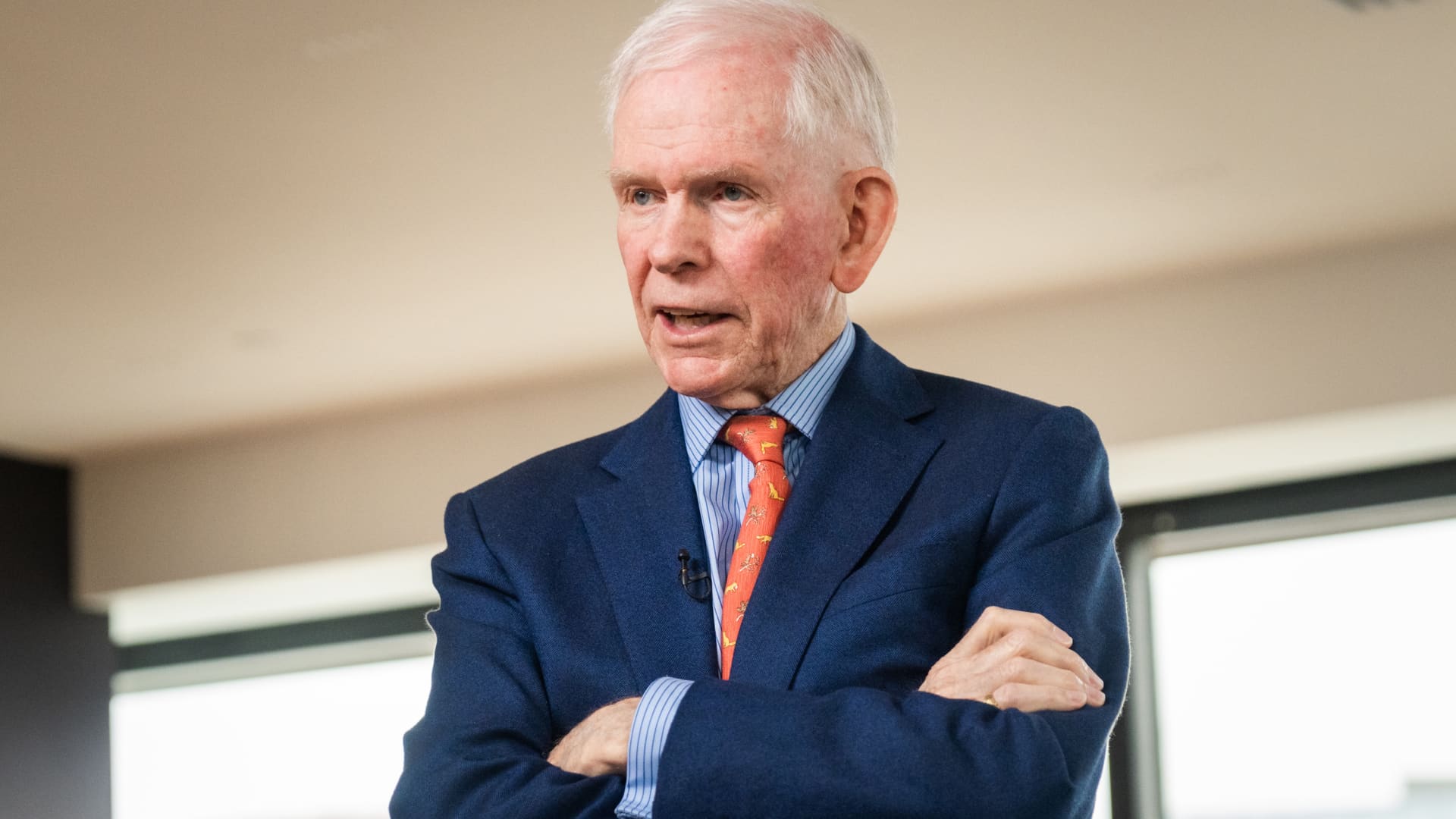
Billionaire investor Jeremy Grantham, co-founder of GMO, has reignited his long-standing criticism of bitcoin, forecasting its slow fade into irrelevance over decades. His latest remarks label the digital asset as ‘useless, speculative’ and devoid of intrinsic value, challenging its role in modern finance.
🚀 Tech Strategy & Market Disruptions
- Grantham’s Bearish Outlook. Investor Jeremy Grantham predicts bitcoin will gradually ‘dwindle away,’ lacking real-world utility or stable value.
- Volatility Concerns Highlighted. Grantham cites bitcoin’s significant price drops, including halving ‘for no particular reason’ and currently sitting 52% off its October peak.
- Questioning Practical Application. The criticism extends to bitcoin’s limited use for everyday transactions, contrasting it with traditional assets like gold.
Speaking on CNBC’s ‘Squawk Box,’ Grantham asserted that bitcoin has failed to prove itself as a reliable speculative asset, let alone a practical currency. He pointed to its significant market volatility, noting a recent halving in value even amidst a strong economy, suggesting its instability as a store of value. This contrasts sharply with gold, which he acknowledged has delivered solid gains over the same period despite recent pullbacks.
Grantham’s primary argument hinges on what he perceives as a fundamental lack of intrinsic value and real-world utility for bitcoin. He stated, ‘People don’t use it to make serious trades, they don’t use it to buy their dinner and pay at the supermarket. … What it does is allows crooks to move money around.’ This critique challenges the narrative of digital assets as a foundational shift in financial infrastructure, framing them instead as purely speculative instruments.
Such high-profile criticisms from established financial figures like Grantham create a ripple effect, disrupting the bullish narrative around digital assets. This discourse could lead to increased scrutiny from traditional investors, potentially slowing institutional adoption or diverting capital towards more established asset classes. The cause-and-effect chain sees investor doubt leading to decreased demand, further impacting market liquidity and potentially dampening innovation in sectors heavily reliant on cryptocurrency valuations.
A critical aspect of asset valuation, particularly for disruptive technologies, revolves around the concept of ‘intrinsic value.’ For traditional assets, this is often tied to tangible cash flows, underlying physical resources, or proven utility. For digital assets like bitcoin, the intrinsic value argument often pivots on network effects, cryptographic security, and its role as a decentralized, censorship-resistant store of value – concepts not universally accepted by all financial veterans.
Grantham’s comments underscore a persistent debate in financial circles regarding the viability and long-term prospects of cryptocurrencies. Market data consistently shows bitcoin’s extreme volatility:
- It has historically dropped at least 70% from its peak in every cycle.
- Currently, it hovers below $60,000, approximately 52% off its October peak.
- These sharp corrections often lead to extended periods of price slump, impacting investor confidence.
Bitcoin Market Adoption Challenges
Despite its decade-plus existence, bitcoin still grapples with significant hurdles to achieving mainstream adoption beyond speculative trading. The very issues Grantham highlights—its volatility and limited utility for everyday transactions—are central to these challenges. For enterprises considering blockchain integration, the price instability of the underlying asset can complicate financial planning and operational costs. Furthermore, regulatory uncertainty across global markets continues to create an unpredictable environment for widespread commercial acceptance. Overcoming these barriers requires not just technological advancement, but robust, stable economic models that appeal to both consumers and businesses, a sentiment often discussed within broader technology market trends.
Bitcoin Ecosystem Expansion Potential
While Grantham focuses on bitcoin’s perceived shortcomings, its underlying blockchain technology continues to drive innovation and ecosystem expansion. Beyond mere price speculation, the network supports a growing infrastructure of decentralized finance (DeFi), NFTs, and Web3 applications. This evolving ecosystem demonstrates a different kind of utility—one centered on programmable money and digital ownership rather than solely acting as a traditional medium of exchange. The continued development of layer-2 solutions, enhanced scalability protocols, and increasing developer engagement signify a potential for bitcoin to evolve beyond its current perception, fostering new applications and expanding its influence on emerging technologies and the digital economy, a topic StockXpo often covers in its educational tech insights.
Bitcoin’s Enduring Test: Reconciling Utility with Volatility
Jeremy Grantham’s latest critique provides a stark reminder of the skepticism bitcoin continues to face from traditional finance. His prediction of a gradual decline, driven by perceived lack of intrinsic value and practical utility, sets a crucial benchmark against which the digital asset’s long-term resilience will be measured. The ongoing challenge for bitcoin lies in proving its fundamental value proposition and establishing itself as more than just a speculative instrument.
- Grantham’s comments reinforce bearish sentiment, potentially influencing institutional hedging strategies.
- The debate over bitcoin’s ‘intrinsic value’ will likely intensify, driving deeper market analysis.
- Wider adoption hinges on overcoming volatility and demonstrating tangible real-world applications.
Will the expanding digital ecosystem prove Grantham wrong, or is bitcoin destined to fade as he predicts?
📊 StockXpo Analyst’s View
Market Impact: Jeremy Grantham’s direct and blunt assessment of bitcoin, while not new, carries weight given his reputation for identifying asset bubbles. Such commentary from a prominent investor is likely to fuel existing bearish sentiment, particularly among risk-averse institutional players, potentially leading to increased capital outflow from highly speculative digital assets. It reinforces the narrative of volatility, making a case for more conservative portfolio allocations and highlighting the divergence in investment philosophies.
Sector To Watch: Investors should closely monitor the broader digital asset infrastructure, specifically the development of blockchain-as-a-service platforms and enterprise-grade stablecoins. If bitcoin’s volatility continues to deter mainstream use, these more stable, utility-focused blockchain solutions, often detailed in Bloomberg’s tech reporting, could see accelerated adoption as companies seek the benefits of distributed ledger technology without the price exposure. Concurrently, traditional safe-haven assets like gold may see renewed interest as a direct counterpoint to digital asset uncertainty, a trend often analyzed in Reuters’ technology coverage.
Financial Disclaimer:
StockXpo.com is a financial news aggregator and educational portal, not a registered investment advisor or broker-dealer. All information, news, and analysis provided herein are strictly for educational purposes and do not constitute investment, financial, legal, or tax advice. Investing in the stock market involves high risks, and past performance is not indicative of future results. StockXpo will not be liable for any financial losses or investment damages. Always consult a certified financial advisor before making market decisions.
MORE IN INSIDE TECHNOLOGY

AI Innovation Fuels Southeast Asia’s Digital Growth
Published: Thursday, October 22, 2026 · 12:36 AM
NextDC Shares Plunge: Power Delays Threaten Australia’s Data Center Growth
Published: Wednesday, October 21, 2026 · 1:50 AM