Published: Tuesday, June 23, 2026 · 12:42 PM | Updated: Tuesday, June 23, 2026 · 12:42 PM
📊 244 views




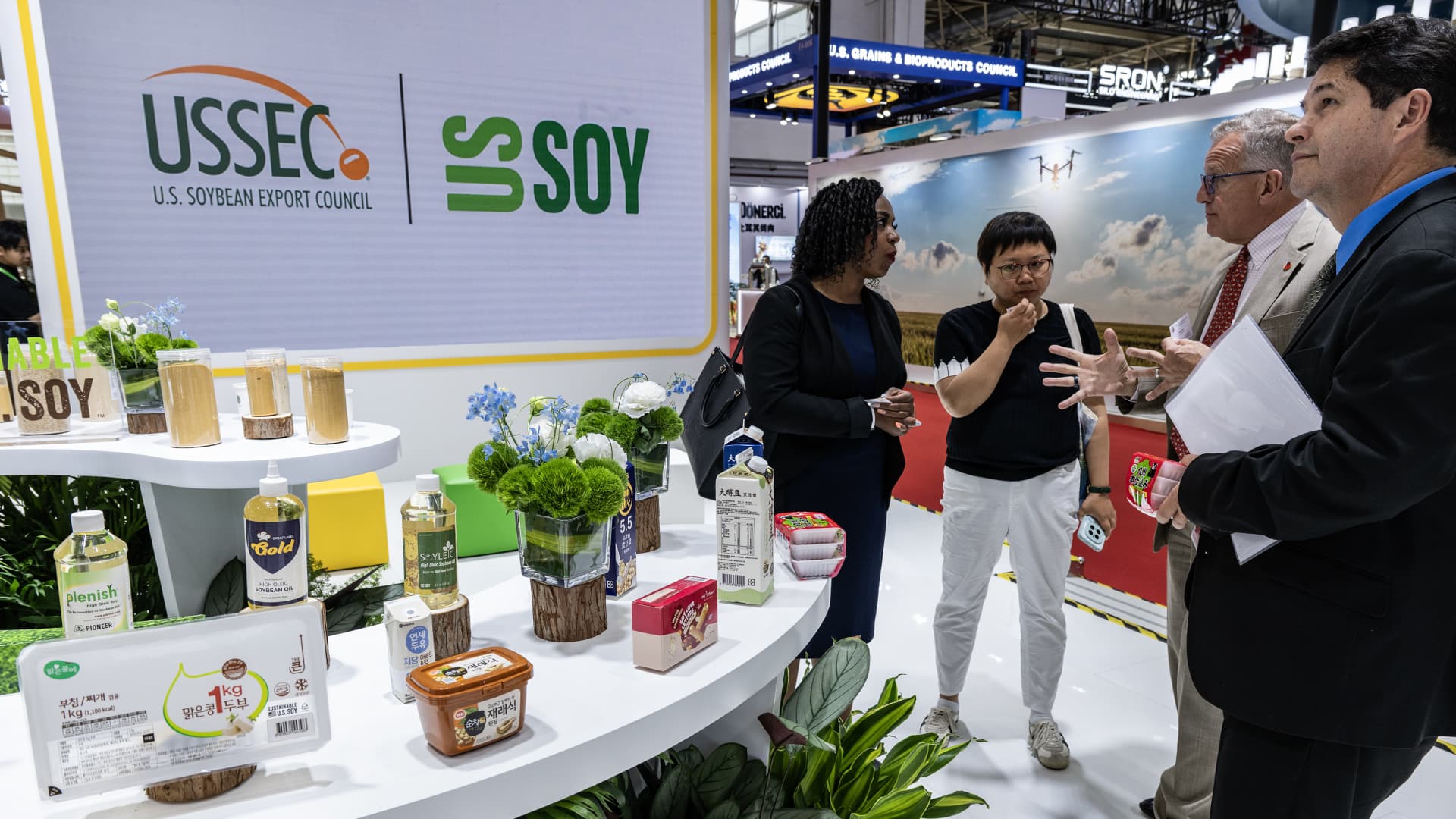
The U.S. is intensifying efforts to reclaim its dominant position in China’s vast soybean market, directly challenging Brazil’s growing influence by emphasizing superior crop quality. This strategic pivot comes amid a significant shift in import dynamics that has seen American farmers lose considerable ground to South American competitors over the past few years.
💰 Financial Strategy & Market Insights
- Diversification Strategy Shift. China’s move towards Brazil and Argentina highlights a strategic imperative for food security, driven by geopolitical tensions and trade policy.
- Quality as a Differentiator. The U.S. soybean industry is leveraging crop condition and nutritional value as key selling points to regain market share, moving beyond sheer volume.
- Trade Deal Impact on Agriculture. Recent high-level agreements between the U.S. and China suggest a potential, albeit gradual, return of American agricultural products to Chinese markets.
Once a near-even split, Brazil has surged ahead in supplying China’s soybean needs, particularly since 2018. Data indicates that for the first five months of 2026, Brazil accounted for over 60% of China’s soybean imports, with the U.S. holding a distant 23% and Argentina 10%. This dramatic reversal underscores the impact of trade tariffs and China’s deliberate strategy to diversify its agricultural supply chain, a move critical for maintaining stability for its 1.4 billion citizens.
The narrative of declining U.S. soybean exports to China is stark. Last year, shipments plummeted by 76% to $3.1 billion, a sharp contrast to the $17.9 billion peak in 2022. Despite this, U.S. soybeans remain the largest agricultural export from the United States to China, underscoring the market’s fundamental importance, even amid political headwinds.
Recent diplomatic engagements have signaled a potential thaw. Following meetings between Presidents Trump and Xi, China committed to purchasing at least $17 billion in U.S. agricultural goods annually through 2028, separate from previous soybean purchase agreements. A prior deal in October 2025 stipulated at least 25 million metric tons of American soybeans annually for three years. China has already fulfilled its marketing year commitment for 2026 and has begun taking delivery on the subsequent year’s quota.
- Recent Sales Activity: Private exporters reported significant sales of U.S. soybeans for delivery to China in the 2027 marketing year, and substantial sales to ‘unknown destinations,’ which often covertly route to China.
- Farmer Sentiment: U.S. soybean farmers are observing a modest pickup in orders, seeing the trade agreements translate into tangible sales, though a full recovery is not expected overnight.
- Geopolitical Influence: The ongoing trade friction between the U.S. and China continues to be a primary driver of shifting agricultural trade patterns.
Quality Metrics: The New Frontier for U.S. Soybeans
Carlos Salinas of the U.S. Soybean Export Council emphasized the inherent differences in production conditions, citing rainfall variations between Brazil and Illinois as a critical factor impacting crop quality and nutrition. This focus on measurable attributes like moisture content and nutrient density is a strategic shift, aiming to appeal to Chinese buyers seeking not just quantity but also optimal ingredients for animal feed and food production. Such granular attention to quality is a direct response to market demand and a subtle critique of the consistency of imports from competing nations.
Technical Insight: Crop quality in agriculture is not merely an aesthetic concern; it directly correlates with yield potential, nutritional content, and suitability for specific end-uses like animal feed. Variations in weather patterns, soil composition, and farming practices—such as the rainfall differences highlighted between Brazil and the U.S.—can significantly impact protein levels, oil content, and the presence of desirable or undesirable compounds, affecting overall market value and buyer preference. For investors, understanding these quality differentiators is crucial for assessing the long-term competitiveness of agricultural commodities.
Soybean Export Dynamics: U.S. vs. Brazil
U.S. soybean exports to China have seen a marked decline, while Brazil has captured a larger share of the market.
- 2018-2026 Shift: Brazil’s market share in China’s soybean imports increased significantly after 2018.
- 2026 (Jan-May) Import Breakdown: Brazil ~60%, U.S. ~23%, Argentina ~10%.
- Export Value Decline (U.S.): From a peak of $17.9 billion in 2022 to $3.1 billion last year.
The Road Ahead: Navigating China’s Soybean Demand
While signs point to a gradual resurgence in U.S. soybean sales to China, sustained growth hinges on more than just trade agreements. The U.S. Soybean Export Council projects volumes to stabilize around 25-30 million metric tons in the near term, with potential for growth towards 40 million metric tons in subsequent years. This projected trajectory suggests that while the U.S. may not fully reclaim its former dominance swiftly, a strategic emphasis on quality and building resilient supply chains could pave the way for a stronger market presence in the coming years. The underlying investment thesis remains sensitive to geopolitical shifts and China’s evolving food security policies.
Navigating the U.S. Soybean Market’s Shifting Tides
The current landscape for the U.S. soybean market in China is complex, shaped by trade policy, production quality, and geopolitical strategy. While recent agreements offer optimism, the battle for market share remains intense.
- Recent U.S. export sales and farmer commitments indicate a positive, albeit gradual, trend driven by bilateral trade talks.
- The U.S. is strategically repositioning by highlighting crop quality and nutritional value to differentiate from Brazilian competition.
- Full recovery of the U.S. market share is anticipated to be a multi-year process, contingent on sustained diplomatic and economic engagement.
As the U.S. Soybean Export Council continues to engage with Chinese buyers, will a sustained focus on quality metrics and consistent delivery be enough to fundamentally alter China’s sourcing strategy, or will geopolitical considerations remain the paramount factor in global agricultural trade for the foreseeable future?
### 📊 StockXpo Analyst’s View
Market Impact: This dynamic reflects broader trends in agricultural commodity markets, where supply chain resilience and geopolitical risk are increasingly influencing investment decisions and asset valuation. Investors should monitor shifts in import/export data closely for indications of long-term trends.
Sector To Watch: The agricultural technology (AgTech) sector, focusing on crop science, precision farming, and sustainable practices, stands to benefit as both U.S. and global producers emphasize enhanced crop quality and yield optimization to secure market access.
Financial Disclaimer:
StockXpo.com is a financial news aggregator and educational portal, not a registered investment advisor or broker-dealer. All information, news, and analysis provided herein are strictly for educational purposes and do not constitute investment, financial, legal, or tax advice. Investing in the stock market involves high risks, and past performance is not indicative of future results. StockXpo will not be liable for any financial losses or investment damages. Always consult a certified financial advisor before making market decisions.
MORE IN INSIDE FINANCE

AI Stock Boom Fuels $67 Billion Equities Growth for Wall Street Giants
Published: Wednesday, October 21, 2026 · 11:03 AM

New Risks Emerge: Global Finance Chiefs Highlight Debt, AI, and Geopolitical Volatility
Published: Tuesday, October 20, 2026 · 2:12 AM