Published: Tuesday, June 16, 2026 · 7:10 PM | Updated: Tuesday, June 16, 2026 · 7:10 PM
📊 259 views




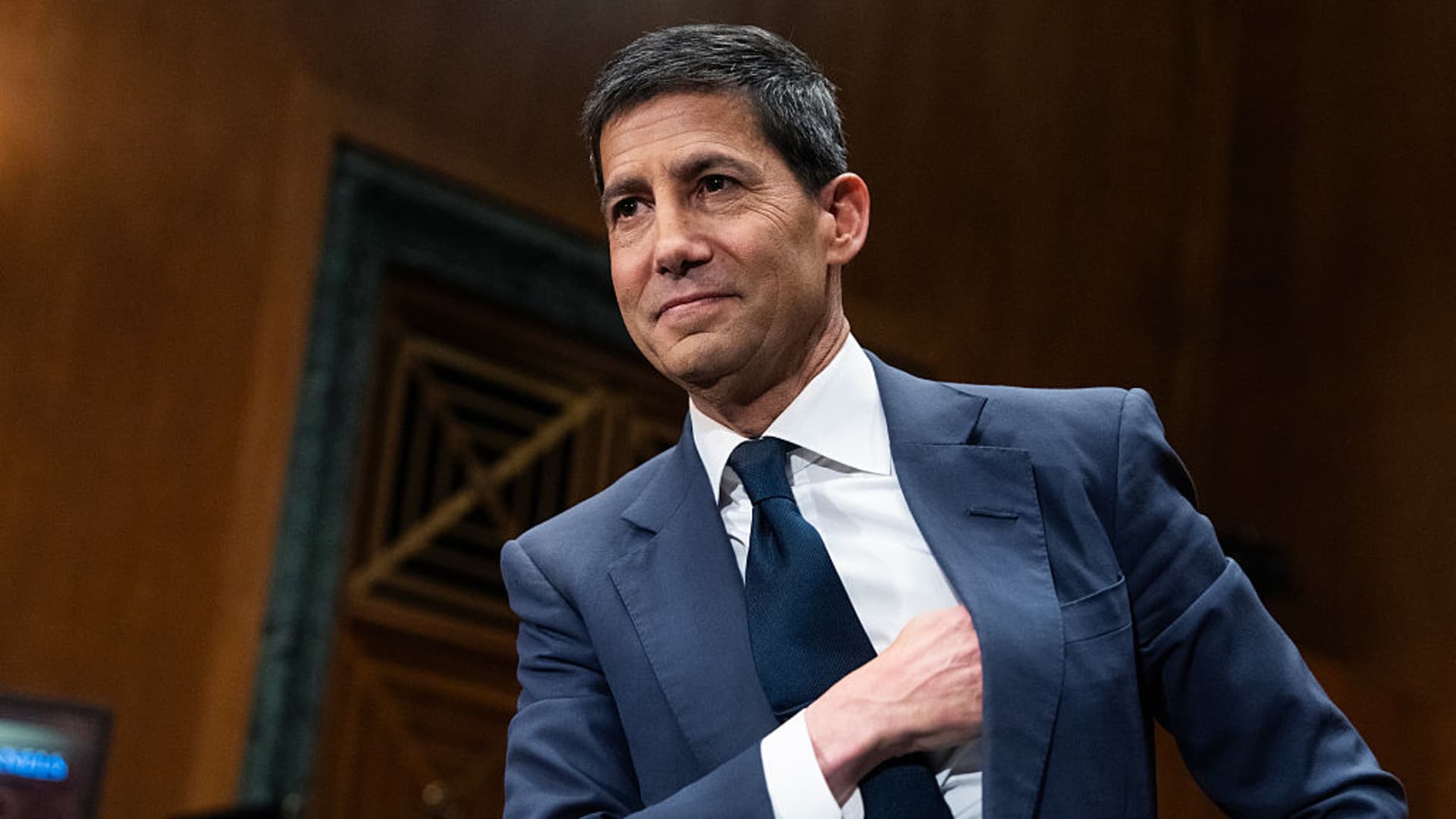
Federal Reserve Chair Kevin Warsh is expected to break a long-standing tradition by potentially declining to submit his individual interest rate forecast to the central bank’s quarterly ‘Fed Dot Plot’. This unprecedented move, if it materializes, could signal a significant recalibration of the Fed’s communication strategy and impact market liquidity, asset valuation, and investor confidence.
💰 Financial Strategy & Market Insights
- Shift in Fed Communication. Chair Warsh’s potential refusal to contribute to the Fed Dot Plot marks a departure from 14 years of post-financial crisis practice, suggesting a move away from explicit forward guidance.
- Market Uncertainty. Investors rely heavily on the dot plot for insights into future monetary policy. Its diminished clarity could introduce greater volatility and risk premium into asset valuations.
- Focus on Deliberation. Warsh advocates for greater flexibility and less pre-commitment from the Fed, believing excessive communication limits decision-making and can lead to compounded errors, as seen with the ‘transitory’ inflation call.
The upcoming Federal Open Market Committee (FOMC) meeting is poised to be a pivotal moment for market observers, not just for its policy outcome, but for how the new Fed Chair, Kevin Warsh, chooses to communicate. Analysts widely anticipate Warsh will opt out of submitting his individual interest rate projection, an act that would fundamentally alter the dynamics of the closely scrutinized Fed Dot Plot. This graphical representation of FOMC members’ interest rate expectations has served as a critical guide for financial markets since its inception post-2008 financial crisis, providing a window into the central bank’s collective thinking on the economy and future monetary policy trajectory. For comprehensive market analysis and insights into these complex shifts, investors often turn to specialized platforms.
Warsh’s skepticism towards forward guidance instruments, including the Summary of Economic Projections (SEP) and the dot plot, is well-documented. He believes these tools can constrain the Fed’s agility, leading to an over-reliance on pre-committed forecasts rather than real-time economic conditions. This perspective gained traction following the Fed’s mischaracterization of inflation as ‘transitory’ in 2021-22, which many argue led to a delayed and more aggressive tightening cycle than necessary. Such a shift away from explicit guidance could lead to increased market analysis, forcing investors to scrutinize economic data and Fed commentary more deeply, a process StockXpo.com frequently covers in its educational financial insights.
- The absence of Warsh’s dot could be interpreted in multiple ways, from a desire for greater policy flexibility to a more hawkish stance on inflation that he prefers not to telegraph explicitly.
Economists like Aditya Bhave of Bank of America and David Mericle of Goldman Sachs have already flagged the high probability of Warsh withholding his forecast, underscoring the broad consensus on Wall Street. This move is not merely symbolic; it represents a philosophical battle within the Fed regarding the optimal balance between transparency and operational discretion. While some FOMC officials value the dot plot’s role in public communication, others, including Warsh, argue it can create undue market expectations and limit the committee’s ability to deliberate freely. This could have significant implications for capital allocation decisions across various asset classes.
The potential decline in forward guidance transparency might also extend beyond the dot plot. Markets will be keenly watching for changes to the post-meeting statement and the frequency of news conferences. Such alterations would further emphasize Warsh’s commitment to fundamental changes in the institution’s operational paradigm, potentially impacting how the broader financial sector interprets signals and adjusts its investment strategies.
The Shifting Landscape of Fed Communication: Risks and Rewards
- Upside: Enhanced Flexibility & Data-Dependency
- Allows the Fed greater freedom to react to evolving economic data without being tethered to prior forecasts, potentially leading to more agile policy adjustments.
- Could encourage markets to focus more on real-time economic indicators and less on potentially outdated central bank projections, fostering a more robust investment landscape.
- May prevent the Fed from ‘compounding errors’ by holding onto forecasts longer than warranted, as Warsh suggested regarding past inflation calls.
- Downside Risks: Increased Volatility & Misinterpretation
- Reduced clarity on the Fed’s future rate path could heighten market uncertainty and volatility, increasing risk premiums in asset valuations.
- Investors might struggle to discern the Fed’s collective stance, leading to potential misinterpretations of policy intentions and increased speculative trading.
- Could be perceived as the Fed attempting to ‘hide a hawkish shift,’ as warned by economist Claudia Sahm, eroding central bank credibility regarding inflation management.
- May complicate risk management for institutions and individuals who rely on Fed guidance for long-term financial planning.
Understanding Forward Guidance: Forward guidance refers to the communication from a central bank about the likely future path of monetary policy. Tools like the Fed Dot Plot are key components, aiming to manage market expectations and influence long-term interest rates. A reduction in such guidance means markets must infer policy more from economic data and less from explicit central bank signaling, adding a layer of complexity to asset valuation and risk management.
Key Analyst Perspectives on Warsh’s Strategy
- Bill English (Former Fed Head of Monetary Affairs, Yale Professor): Believes it’s ‘fairly likely’ Warsh won’t submit a rate forecast, noting others on the committee might share his disfavor for the dot plot.
- Liz Ann Sonders (Chief Investment Strategist, Charles Schwab): Questions the historical accuracy of the SEP but acknowledges its market-moving power as an ‘avenue through which the Fed expresses a view.’
- Claudia Sahm (Chief Economist, New Century Advisors): Cautions that withholding the dot could ‘send the wrong message’ to markets, potentially implying a hidden hawkish stance on inflation.
Asset Valuation Dynamics in a Less Predictable Fed Era
The potential shift away from explicit forward guidance, spearheaded by Chair Warsh’s stance on the Fed Dot Plot, introduces a new variable into asset valuation models. In an environment where the future path of interest rates becomes less transparent, investors will likely demand a higher risk premium for long-duration assets such as growth stocks and certain fixed-income securities. Discounted cash flow (DCF) models, which rely heavily on projected discount rates, will face increased uncertainty, making precise valuations more challenging. This could favor assets with clearer near-term cash flows or those less sensitive to interest rate fluctuations. Market participants will need to reassess their financial sector exposure and diversify portfolios to mitigate the impact of this newfound policy ambiguity.
Market Sentiment Tracker: Gauging Investor Confidence
Monitoring market sentiment will become even more critical if the Fed opts for less explicit forward guidance. The absence of a clear Fed Dot Plot can create a void that alternative sentiment indicators will rush to fill. Investors will intensely track volatility indices (like the VIX), options market activity, and credit spreads for clues about underlying market anxiety or confidence. Social media trends and financial news aggregators will also play a larger role in shaping narratives around monetary policy. For deeper dives into global financial trends and market analysis, reliable sources are key. A sustained period of unclear communication could lead to fragmented sentiment, where different market segments react divergently, impacting overall market liquidity and investment trends.
The Ripple Effect of Warsh’s Dot Plot Decision on 2026 Markets
Chair Warsh’s expected decision regarding the Fed Dot Plot signifies more than a procedural change; it heralds a new philosophy for central bank communication, prioritizing flexibility over pre-commitment. This shift is likely to usher in a period of increased market scrutiny and potentially higher volatility as investors adjust to a less transparent Fed.
- Markets will need to develop new frameworks for interpreting the Fed’s intentions, focusing more on economic data and less on explicit guidance.
- Asset classes sensitive to interest rate expectations, particularly bonds and growth equities, may experience heightened price swings.
- The credibility of the Fed’s inflation fight will be tested if markets perceive the lack of guidance as a cover for policy shifts.
Will this calculated move ultimately foster a more resilient, data-driven market, or will it simply sow the seeds of greater uncertainty and risk?
📊 StockXpo Analyst’s View
Market Impact: Warsh’s move away from the explicit Fed Dot Plot is a calculated risk that will fundamentally alter how markets price in future rate hikes. Expect short-term spikes in volatility, especially in fixed-income markets, as investors adjust to less forward visibility. This could lead to a ‘wait-and-see’ approach from some institutional investors, potentially dampening overall market liquidity. The emphasis on data dependency means economic reports will carry even greater weight.
Sector To Watch: The financial sector, particularly banks, may face challenges from increased interest rate uncertainty, impacting their lending and bond portfolio valuations. Conversely, sectors with strong underlying fundamentals and less sensitivity to rate fluctuations, or those with robust cash flows, could become more attractive as safe havens. Technology and growth stocks, traditionally sensitive to higher discount rates, might see sustained pressure until clarity emerges on the Fed’s long-term stance.
Financial Disclaimer:
StockXpo.com is a financial news aggregator and educational portal, not a registered investment advisor or broker-dealer. All information, news, and analysis provided herein are strictly for educational purposes and do not constitute investment, financial, legal, or tax advice. Investing in the stock market involves high risks, and past performance is not indicative of future results. StockXpo will not be liable for any financial losses or investment damages. Always consult a certified financial advisor before making market decisions.
MORE IN INSIDE FINANCE

Crypto Derivatives Trading: Blockchain.com’s Bold Move into U.S. Markets
Published: Friday, October 9, 2026 · 8:23 AM

China’s Real Estate Market: A Potential Turnaround Amid Policy Shifts
Published: Thursday, October 8, 2026 · 6:10 AM