Published: Wednesday, June 3, 2026 · 1:48 PM | Updated: Wednesday, June 3, 2026 · 1:48 PM
📊 210 views




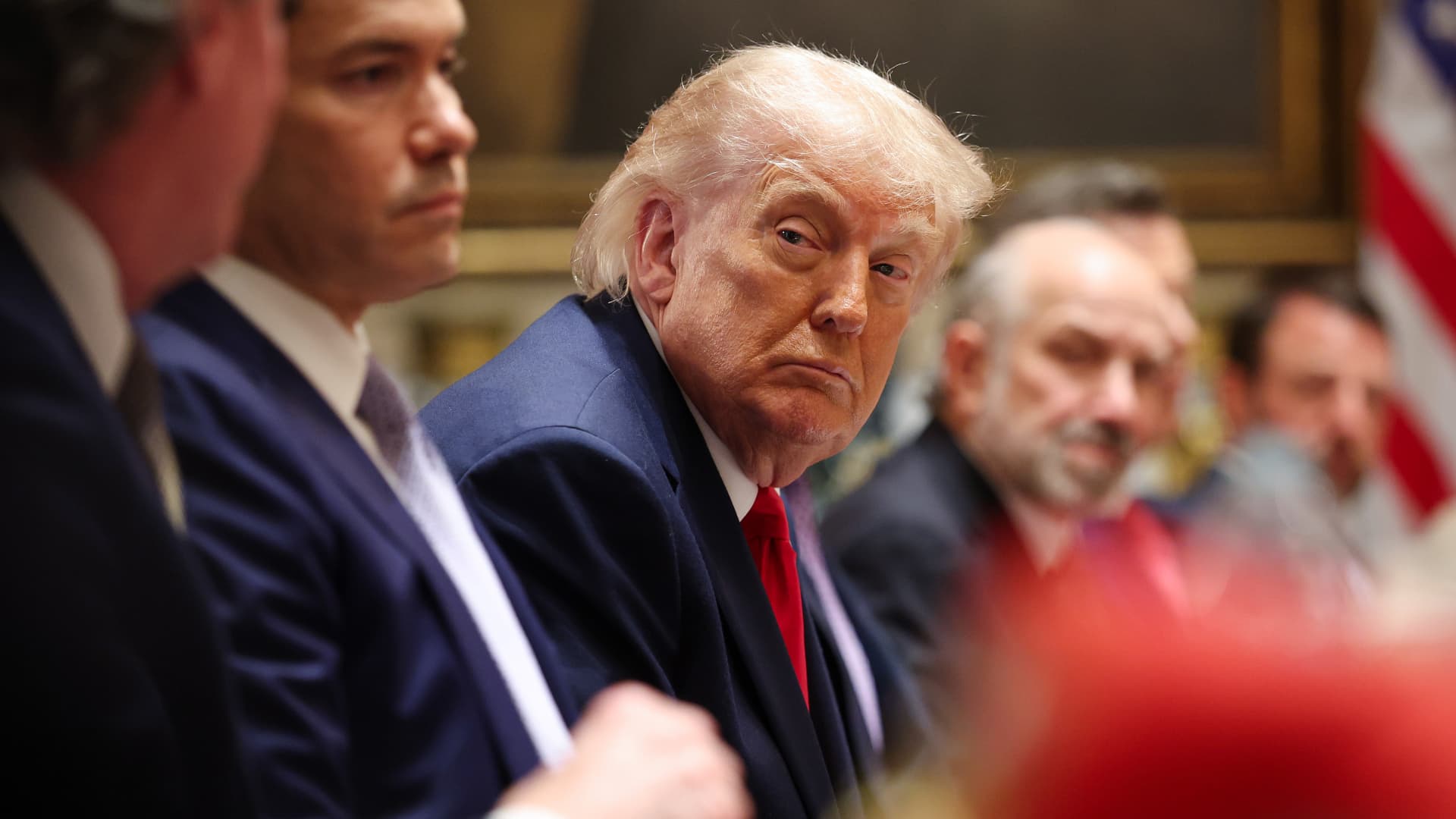
Wednesday opened with a mixed market outlook following consecutive record highs for the S&P 500 and Dow. Amidst this backdrop, President Trump signed a significant AI Executive Order, signaling a new era of federal involvement in artificial intelligence development and deployment. This directive, requiring pre-release access to advanced AI models, positions the U.S. government at the forefront of shaping the technology market trends future trajectory.
🚀 Tech Strategy & Market Disruptions
- AI Regulatory Shift. President Trump’s executive order mandates federal access to AI models pre-release, aiming to assess capabilities and risks before public deployment.
- AI Sector Outperformance. Hewlett Packard Enterprise and Marvell Technology shares surged, driven by strong earnings and industry endorsements highlighting their robust portfolios in the burgeoning AI infrastructure market.
- Retail Resilience. Macy’s defied expectations with its strongest first-quarter comparable sales in four years, signaling positive traction in its turnaround strategy, while Ulta also beat forecasts.
The landscape for technology market trends is increasingly shaped by regulatory shifts, with President Trump’s recent AI Executive Order standing out as a pivotal development. This order, signed privately after a brief delay, compels artificial intelligence companies to grant the federal government access to their advanced models before public release. The stated purpose is to allow for governmental assessment of capabilities, potential risks, and implications, even though the order currently relies on voluntary participation from developers. This move arrives as the AI industry is experiencing a rapid acceleration in model development and a flurry of companies vying for public market entry, as detailed in insights from technology leaders.
The market’s reaction to the broader AI narrative has been electric. Hewlett Packard Enterprise (HPE) saw its shares soar 19% to a record high, buoyed by CEO Antonio Neri’s confidence in the company’s ‘best portfolio we’ve ever had,’ particularly in AI and cloud servers. Similarly, Marvell Technology experienced its biggest one-day gain ever, closing up 32%, after Nvidia CEO Jensen Huang publicly hailed it as a potential ‘next trillion-dollar company.’ Such endorsements underscore the intense investor appetite for companies positioned within the AI infrastructure and chip development ecosystem, reflecting a moment where, as Goldman Sachs CEO David Solomon observed, ‘there’s more greed than there is fear’ in the market for AI firms heading for IPOs.
However, not all sectors shared in the market’s bullish sentiment. Traditional financial exchanges like CME Group and Cboe Global Markets are grappling with their worst weeks since 2020. This sell-off in exchange stocks followed regulatory approval for bitcoin perpetual futures, a development that saw bitcoin itself drop below the $70,000 mark and subsequently pulled down cryptocurrency-linked stocks. This illustrates the complex interplay between evolving digital assets, regulatory frameworks, and their ripple effects across established financial infrastructure, echoing broader market movements.
Separately, the retail sector provided a surprising bright spot. Macy’s (M) shares climbed nearly 3% pre-bell after reporting its strongest first-quarter comparable sales performance in four years, prompting the retailer to raise its full-year forecast. This turnaround, partially attributed to store closures and a focus on core profitable locations, signals potential for traditional brick-and-mortar players to adapt and thrive. Beauty retailer Ulta also exceeded forecasts for Q1, with fragrances emerging as a particularly strong category, now accounting for 12% of its total revenue, according to CNBC reporting. These retail successes highlight the importance of strategic adaptation and targeted market engagement. For a deeper dive into these and other shifts, explore our latest educational tech insights.
Key Takeaways from Recent Market Activity:
- Federal AI Oversight Intensifies: Trump’s executive order marks a significant step towards regulating advanced AI models, potentially influencing development timelines and public availability.
- AI Infrastructure Drives Growth: Companies like HPE and Marvell are experiencing substantial gains, indicative of strong demand for underlying hardware and services powering AI innovation.
- Crypto Regulatory Impact: New approvals in the cryptocurrency derivatives market are creating volatility and reassessment within traditional exchange stocks.
The directive for AI companies to grant federal access to models initiates a direct cause-and-effect chain: Increased Governmental Scrutiny → Enhanced Compliance Requirements for Developers → Potential for Slower Public Releases for Novel Models → Heightened Focus on Trust and Safety in AI Deployment. This regulatory push could subtly influence the pace of emerging technologies adoption and shape the competitive landscape by favoring larger players with robust legal and compliance teams. Meanwhile, the regulatory approval of bitcoin perpetual futures represents another disruption: Evolving Regulatory Frameworks for Digital Assets → Increased Competition for Traditional Financial Exchanges → Investor Reassessment of Exchange Stock Valuations → Accelerated Push for Decentralized Finance (DeFi) Innovation as an Alternative.
‘The delicate balance between fostering AI innovation and ensuring responsible, ethical deployment is now at a critical juncture,’ noted a StockXpo Solution Architect. ‘Federal access to pre-release models, while raising privacy and IP concerns, could accelerate the identification of systemic risks, ultimately building greater public trust—a crucial component for widespread AI adoption.’
Recent market movers and shakers included:
- Hewlett Packard Enterprise (HPE): +19% (Best day on record)
- Marvell Technology (MRVL): +32% (Biggest one-day gain ever)
- CME Group (CME) & Cboe Global Markets (CBOE): On track for worst weeks since 2020
- Bitcoin: Dropped below $70,000 mark
- Macy’s (M): +3% pre-bell (Strongest Q1 comparable sales in four years)
- Ulta Beauty (ULTA): Beat Q1 forecasts, hiked guidance
Anthropic’s Ecosystem Expansion Potential
“Amidst the regulatory discourse, AI developers continue to push boundaries. Anthropic, a key player in generative AI, announced the expansion of access to its Mythos model to 150 partners across more than 15 countries. This move signifies a strategic focus on broad ecosystem development, enabling diverse applications and use cases for its foundational models. However, the requirement for new partners to meet stringent security requirements before approval underscores the growing industry-wide emphasis on responsible AI deployment, even as companies prioritize market penetration. The success of such initiatives will hinge on Anthropic’s ability to balance rapid deployment with robust security and ethical frameworks, shaping future growth in emerging technologies adoption.”
AI Security & Infrastructure Strength Challenges
“The increasing sophistication of AI models and their integration into critical infrastructure present significant security and architectural challenges. With governments now seeking pre-release access, the onus on companies to demonstrate the robustness of their AI systems against vulnerabilities, bias, and misuse intensifies. Building scalable, secure, and resilient AI infrastructure demands substantial investment in advanced cybersecurity protocols, federated learning capabilities, and verifiable model interpretability. The industry must navigate the delicate balance of offering powerful AI tools while mitigating risks of adversarial attacks and ensuring data privacy, especially as federal oversight grows. Companies like HPE, leveraging their hardware expertise, are crucial in building the underlying secure physical and digital foundations for these advanced AI systems.”
The Ripple Effect of the AI Executive Order on 2026 Markets
“The recent AI Executive Order marks a significant inflection point for the technology sector, setting a precedent for federal oversight in a rapidly evolving field. While the market has celebrated AI-related gains, this regulatory move introduces a new layer of complexity for developers and investors alike. Its long-term impact on innovation speed, intellectual property, and competitive dynamics remains to be seen.”
- Regulatory Precedent: The order establishes a new level of government involvement in private sector AI development.
- Innovation vs. Oversight: The industry must now balance rapid innovation with increased scrutiny and compliance.
- Market Rebalancing: While AI stocks surge, other sectors like traditional exchanges face disruption from new digital asset regulations.
How will this new era of regulated AI fundamentally reshape the competitive landscape for global technology leaders?
📊 StockXpo Analyst’s View
Market Impact: The market’s enthusiasm for AI continues unabated, driving significant gains in companies like HPE and Marvell. However, the presidential AI executive order injects a new element of regulatory risk and compliance overhead that investors should monitor closely. While intended to foster trust, it could introduce friction in development cycles, potentially favoring established players over nimble startups. This dichotomy between innovation excitement and regulatory caution will likely define market sentiment in the near term.
Sector To Watch: Beyond the immediate AI hardware and software firms, keep a close eye on the cybersecurity and compliance sectors. Companies specializing in AI model auditing, secure data handling, and regulatory adherence tools are poised for significant growth as the executive order translates into tangible requirements. Furthermore, industries that leverage AI for operational efficiency, such as advanced manufacturing or logistics, may see their adoption rates impacted by the new oversight framework, creating opportunities for solution providers who can navigate both innovation and compliance.
Financial Disclaimer:
StockXpo.com is a financial news aggregator and educational portal, not a registered investment advisor or broker-dealer. All information, news, and analysis provided herein are strictly for educational purposes and do not constitute investment, financial, legal, or tax advice. Investing in the stock market involves high risks, and past performance is not indicative of future results. StockXpo will not be liable for any financial losses or investment damages. Always consult a certified financial advisor before making market decisions.
MORE IN INSIDE TECHNOLOGY

Humanoid Robots: Unitree’s Scalability Challenge in a $9 Billion Market
Published: Friday, August 14, 2026 · 12:37 AM
South Korea’s Kospi: Navigating the AI-Driven Bull Market Volatility
Published: Thursday, August 13, 2026 · 1:58 AM