Published: Monday, June 1, 2026 · 6:08 PM | Updated: Monday, June 1, 2026 · 6:08 PM
📊 212 views




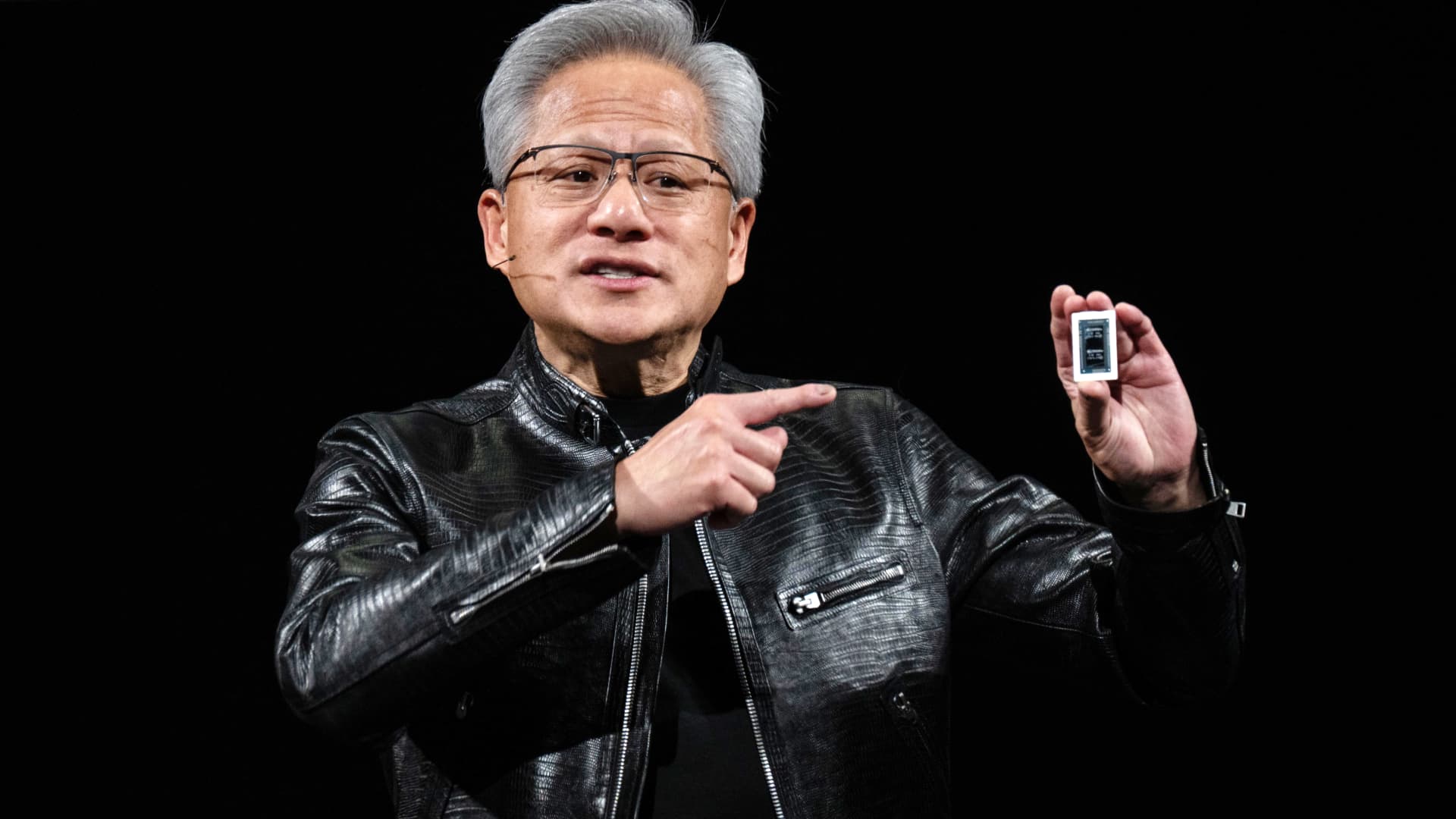
Nvidia, a titan in data center AI acceleration, is making a bold strategic move to directly challenge Intel and AMD in the lucrative personal computer arena. CEO Jensen Huang’s recent unveiling of the integrated RTX Spark system-on-chip (SoC) marks a significant expansion, bringing Nvidia’s advanced processing capabilities, including CPUs, GPUs, and NPUs, directly to laptops and desktops. This venture aims to redefine on-device AI computing and represents a substantial pivot for the company’s consumer-facing strategy.
🚀 Tech Strategy & Market Disruptions
- Vertical Integration in PCs. Nvidia’s RTX Spark SoC integrates CPU, GPU, and NPU onto a single chip, offering unprecedented control over performance and AI capabilities for Windows PCs.
- Arm Architecture Adoption for Windows. By leveraging an Arm-based CPU, Nvidia aims to resolve compatibility issues traditionally associated with Arm in the Windows ecosystem, opening new possibilities for power efficiency and AI acceleration.
- Edge AI Push. Bringing sophisticated AI processing directly to the PC form factor accelerates the trend towards edge computing, enabling local development and execution of complex AI workloads, reducing reliance on cloud resources.
Nvidia’s Strategic Play in the PC Market
Nvidia’s entry into the PC market with the RTX Spark SoC represents a significant escalation of competition, moving beyond its traditional role as a discrete GPU provider. The company’s collaboration with MediaTek on this integrated chip signifies a desire to fully dictate the performance, power consumption, and AI functionalities of the personal computers it powers. This move positions Nvidia directly against established players like Intel and AMD, who have long dominated the Windows PC landscape. The RTX Spark, built on Nvidia’s Blackwell GPU architecture and an Arm-based CPU, promises enhanced on-device AI capabilities, a key differentiator in an increasingly AI-centric computing world.
Historically, PC users seeking Nvidia’s graphics prowess had to opt for dedicated graphics cards, often paired with Intel or AMD CPUs. This new SoC approach consolidates these components, offering a more streamlined and potentially more efficient design. The implications for performance are substantial, particularly for AI-intensive tasks. Developers and power users will be able to run complex models and applications locally, bypassing the latency and cost associated with cloud computing. This aligns with the broader trend of ‘edge computing,’ pushing computational power closer to the end-user.
- The RTX Spark integrates the CPU, GPU, and NPU onto a single SoC, a notable shift from Nvidia’s previous PC component strategy.
- This SoC design, co-developed with MediaTek, leverages Nvidia’s Blackwell GPU architecture and an energy-efficient Arm instruction set for the CPU.
- Nvidia claims these new Arm-based Windows PCs will offer 100% compatibility with existing Windows applications, addressing a key barrier for Arm adoption in the PC market.
Understanding System-on-Chip (SoC) Architectures
The technical underpinnings of the RTX Spark are crucial to understanding its disruptive potential. Unlike traditional setups with separate CPUs and GPUs (dedicated graphics) or CPUs and integrated graphics on the same die (integrated graphics), Nvidia’s SoC bundles the CPU, GPU, and NPU into a single package. This approach utilizes unified memory, enabling high-bandwidth access for all components simultaneously. This eliminates the data transfer bottlenecks inherent in both integrated and dedicated graphics solutions, especially when dealing with AI workloads that require rapid data processing between the CPU and GPU. This design is particularly advantageous for AI-oriented PCs, offering a significant leap in performance and efficiency.
‘By bringing a fully integrated AI computing solution to the personal computer, Nvidia is democratizing access to high-performance AI development and deployment. This isn’t just about faster gaming; it’s about enabling a new generation of AI-powered applications to run locally, reducing latency and cost for developers and end-users alike. It signifies a fundamental shift in how we perceive and utilize personal computing power, blurring the lines between consumer devices and powerful workstations.’
Nvidia’s Ecosystem Expansion Potential
Nvidia’s foray into the PC market goes beyond hardware. The ability for these new machines to run ‘everything Nvidia has ever done’ locally is a powerful proposition for developers. AI engineers can now develop and test large language models or new agents directly on their Windows machines without incurring significant cloud compute costs. This capability directly fuels innovation by lowering the barrier to entry for AI development. The company is effectively placing a compact supercomputer on users’ desks, capable of acting as a central intelligence hub for a network of smart devices. While extremely demanding computations might still require cloud infrastructure, the bulk of AI tasks could soon be handled at the edge.
The market response has been immediate, with Nvidia’s stock seeing a significant uptick following the announcement, while competitors Intel and AMD experienced a dip. The projected $274 billion PC market by 2026, as forecasted by IDC, presents a massive opportunity. Nvidia’s challenge will be to capture significant market share from entrenched players. However, with its established software ecosystem and now a more vertically integrated hardware stack for PCs, the company is well-positioned to disrupt the status quo. Investors are watching closely to see how the valuations of these semiconductor giants might converge as they compete more directly. The long-term implications suggest that Nvidia’s dominance in data centers, combined with its renewed focus on the PC market, solidifies its position as a key player in the future of computing. Read more about emerging technologies on emerging technologies.
The Ripple Effect of Nvidia’s PC Push on Market Valuations
Nvidia’s aggressive expansion into the PC market, challenging incumbents like Intel and AMD, presents a compelling investment narrative. The company’s dual-pronged strategy—maintaining its data center AI dominance while capturing PC market share—positions it for sustained innovation-driven growth. The convergence of semiconductor stock valuations is a likely outcome as competition intensifies, potentially recalibrating the market’s perception of Nvidia’s long-term value proposition. This move underscores the broader trends shaping the technology market trends, especially the increasing integration of AI capabilities across all computing platforms.
- Nvidia’s stock performance suggests investor confidence in its new PC market strategy.
- The move could lead to a re-evaluation of market share and valuation multiples for Intel, AMD, and Nvidia.
- The integrated SoC approach is poised to set a new standard for AI-powered personal computing.
Will this strategic expansion into the PC market allow Nvidia to significantly erode the market share of Intel and AMD, or will the incumbents adapt and maintain their entrenched positions?
### 📊 StockXpo Analyst’s View
Market Impact: The news injects significant dynamism into the semiconductor sector, potentially triggering a period of intense competition and innovation. Investor sentiment is likely to favor companies demonstrating strong AI integration and vertical control, possibly leading to increased market liquidity for companies that can effectively leverage these trends. The expansion could also put pressure on traditional PC manufacturers to accelerate their AI roadmaps to avoid being left behind.
Sector To Watch: The PC hardware manufacturing sector, alongside component suppliers specializing in AI acceleration, will be critical to watch. Furthermore, software developers and AI platform providers that can benefit from enhanced local processing power will likely see increased opportunities for growth and adoption, with companies focusing on developer tools and cloud-agnostic AI solutions potentially gaining an edge. Exploring educational tech insights can provide further context on these evolving dynamics.
Competitor Response: Intel and AMD are expected to accelerate their own integrated AI chip development and marketing efforts. Their ability to innovate and compete on performance, power efficiency, and software ecosystem will be crucial in defending their PC market dominance. Investors should monitor their product roadmaps and partnership announcements for signs of effective counter-strategies. The broader implications for the global chip supply chain and manufacturing capacity will also be a key area of focus for market observers, especially in light of potential shifts in demand and technology standards. A deep dive into Bloomberg Technology news may offer further insights into competitor reactions and market shifts.
Financial Disclaimer:
StockXpo.com is a financial news aggregator and educational portal, not a registered investment advisor or broker-dealer. All information, news, and analysis provided herein are strictly for educational purposes and do not constitute investment, financial, legal, or tax advice. Investing in the stock market involves high risks, and past performance is not indicative of future results. StockXpo will not be liable for any financial losses or investment damages. Always consult a certified financial advisor before making market decisions.
MORE IN INSIDE TECHNOLOGY
 $11B Productivity Breakthrough featured image" style="width: 100%; height: auto;" />
Construction Robots: Innovation Driving a $11B Productivity Breakthrough
Published: Saturday, September 12, 2026 · 10:07 AM

AI Self-Improvement: Unpacking the Existential Risk for Tech Giants
Published: Friday, September 11, 2026 · 7:22 AM