Published: Saturday, May 30, 2026 · 10:30 AM | Updated: Saturday, May 30, 2026 · 10:30 AM
📊 249 views




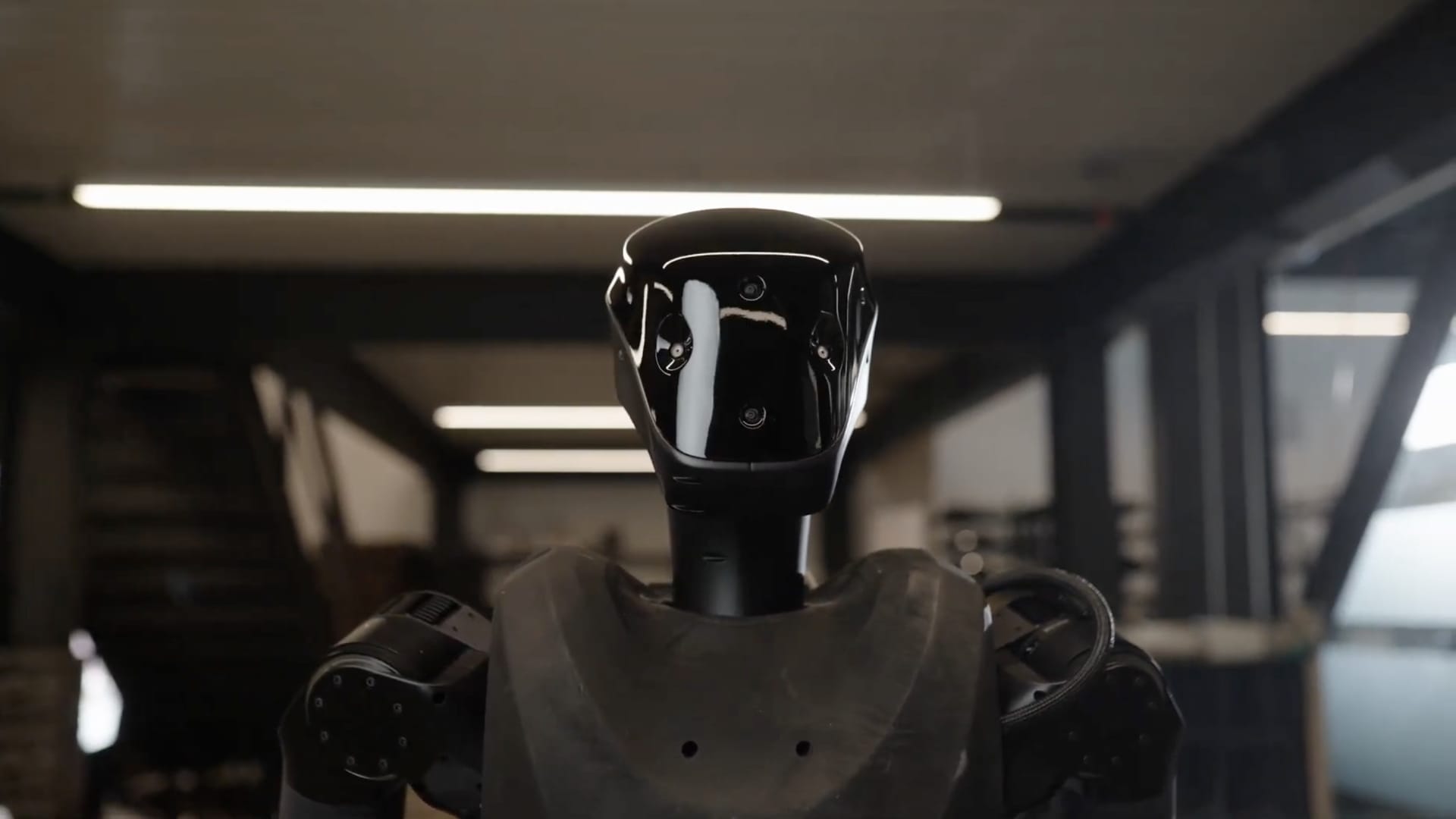
In a significant departure from Silicon Valley’s focus on service robots, Foundation Future Industries is spearheading the development of dual-use humanoid robots in the military and heavy industrial sectors. This San Francisco-based startup, established in 2024, is rapidly pushing autonomous humanoids from science fiction into operational reality, with early models already undergoing tests in Ukraine. Their explicit aim is to tackle humanity’s most hazardous tasks, raising both technological and ethical implications for future warfare.
🚀 Tech Strategy & Market Disruptions
- Dual-Use Robotics Focus. Foundation Future Industries differentiates itself by explicitly targeting military and heavy industrial applications, challenging the consumer-centric development path of many humanoid robot companies.
- Rapid Combat Deployment & Testing. The startup’s Phantom MK-1 units have already been deployed for logistics tests in Ukraine, marking a critical, unprecedented step in integrating humanoid AI into active conflict zones.
- National Security Integration. With significant U.S. government research contracts and direct ties to Washington, Foundation is positioning its technology as a key asset in the geopolitical competition for advanced autonomous systems.
Foundation Future Industries, founded by Sankaet Pathak, Arjun Sethi, and Mike LeBlanc, is carving out a niche in the burgeoning robotics market by focusing on high-stakes applications. While much of the industry pursues domestic or service-oriented androids, Foundation’s Phantom series is designed for environments too dangerous for humans, ranging from industrial sites to battlefields. This strategic pivot highlights a growing trend in emerging technologies where innovation is increasingly driven by national security priorities and critical infrastructure needs. The firm’s initial deployment of Phantom MK-1 units to Ukraine for hazardous logistics, backed by U.S. government support and Ukrainian officials, underscores the rapid pace of this technological integration.
The ongoing conflict in Ukraine has served as an unexpected proving ground for various robotic and AI applications, from supply delivery drones to autonomous reconnaissance units. Foundation’s tests there aim to validate the MK-1’s capacity for tasks like supply pickups, which typically expose soldiers to significant risk. This real-world combat theater deployment offers invaluable data for iterative design improvements, setting the stage for future iterations like the Phantom 2, which promises ‘superhuman abilities’ and doubled payload capacity. This approach contrasts sharply with the often lab-bound development cycles of civilian robotics, providing Foundation a unique competitive edge in a demanding sector.
- Initial Deployment: Phantom MK-1 units tested in Ukraine for hazardous logistics.
- Government Backing: U.S. government and Ukrainian officials supported the pilot.
- Future Enhancements: Phantom 2 targets ‘superhuman abilities’ and increased payload.
Foundation’s close alignment with Washington’s interests, particularly in framing its technology as essential in the U.S.-China geopolitical competition, is noteworthy. With Eric Trump joining as chief strategy advisor, the company has secured substantial government research contracts totaling $24 million across the Army, Navy, and Air Force for feasibility testing. This relationship, while drawing scrutiny from figures like Senator Elizabeth Warren, reflects a broader shift towards integrating advanced AI and robotics into national defense strategies, as detailed by a recent report on military technology advancements. Pathak’s ambition to deploy Foundation’s robots with the U.S. military on the front lines within 12 to 18 months signifies an aggressive timeline for military tech adoption.
The explicit focus on military utility distinguishes Foundation from rivals like Boston Dynamics or Tesla, whose public-facing efforts generally avoid combat applications. While other American companies engage in military robotics, the public deployment of humanoid forms by the Pentagon remains nascent. China, a leader in general robotics, also funds humanoid initiatives, primarily for industrial uses, though military researchers have explored their potential. This global race for supremacy in autonomous systems is accelerating, shaping the future landscape of both industrial automation and defense capabilities, impacting broader technology market trends, as observed in latest tech developments.
The emergence of Foundation Future Industries and its dedicated pursuit of humanoid robots in the military creates a clear disruption flow:
Dedicated Military-Grade Humanoid R&D → Rapid Combat Zone Testing & Iteration → Reduced Human Exposure in Hazardous Operations → Accelerated Adoption of Autonomous Warfighting Capabilities → Redefined Geopolitical Dynamics & Defense Spending Priorities. This chain illustrates how specialized development, validated by real-world trials, can fundamentally alter military doctrines and technological arms races, compelling nations to re-evaluate their defense strategies and investments in advanced robotics.
‘The deliberate pivot of Foundation Future Industries towards dual-use humanoid robotics for military and heavy industrial applications is a strategic differentiator. It moves beyond theoretical concepts to address immediate, critical human safety challenges. This focus on ‘highest net good’ in dangerous environments, rather than household tasks, could establish a new benchmark for ROI in advanced robotics, provided the cost and complexity can be managed for scale. This is where innovation truly drives impact.’
Key specifications for Foundation’s early humanoid robots highlight their current capabilities and planned advancements:
- Phantom MK-1 Payload: Approximately 44 pounds (20 kg).
- Phantom MK-1 Limitations: Lacks waterproofing and sufficient battery life for large-scale deployment.
- Phantom 2 Advancements: Projected to offer ‘superhuman abilities’ and double the payload capacity of the MK-1.
Foundation Future Industries’ Market Adoption Challenges
Despite the ambitious targets and early successes in Ukraine, Foundation faces significant hurdles in achieving widespread market adoption, particularly within the U.S. military. The inherent complexity and high manufacturing costs associated with human-like robots present a compelling argument against their practicality compared to simpler, more specialized robotic systems. As Melanie Sisson of the Brookings Foreign Policy program notes, the current conflict in Ukraine emphasizes the need for rapidly adaptable, cheaply mass-producible solutions, a paradigm that complex humanoids may struggle to fit. Furthermore, proving that humanoid forms offer a distinct advantage over tracked, wheeled, or aerial robots in diverse military scenarios remains an ongoing challenge. The scrutiny around the company’s past claims and its political ties also introduces reputational risks that could impede wider institutional trust and procurement.
Humanoid Robotics Ecosystem Expansion Potential
The strategic choice to focus on humanoid robots in the military and heavy industry opens considerable potential for ecosystem expansion, both technologically and economically. From a tech perspective, the demanding nature of these applications will accelerate advancements in AI decision-making, power management, materials science, and human-robot interaction in high-stress environments. These innovations can then spill over into other sectors, potentially revolutionizing areas like disaster response, deep-sea exploration, and space robotics. Economically, the dual-use nature of the Phantom robots could create a robust domestic manufacturing base, fulfilling Foundation’s stated vision of bringing production back to the U.S. This could foster a specialized supply chain for advanced robotics, attracting further investment and talent into areas of emerging technologies and strengthening national industrial capabilities, impacting the broader educational tech insights. The integration of advanced autonomous systems is becoming a cornerstone of future economic and military competitiveness.
Foundation’s Humanoid Robotics: A New Frontier in Defense?
Foundation Future Industries is unequivocally pushing the boundaries of autonomous systems, positioning its humanoid robots as critical assets for national security and hazardous industrial work. While impressive, the journey from pilot programs to widespread deployment will necessitate overcoming considerable engineering, economic, and ethical challenges. The ultimate success hinges on demonstrating superior practicality and cost-effectiveness over alternative robotic forms.
- The firm’s rapid testing in Ukraine provides invaluable real-world data, accelerating development cycles.
- Significant government contracts highlight growing national interest in advanced autonomous defense solutions.
- Ethical concerns surrounding autonomous decision-making in combat require ongoing, transparent discourse and robust regulatory frameworks.
Will Foundation’s aggressive deployment strategy and unique dual-use focus truly reshape the future of warfare and heavy industry, or will complexity and cost prove too formidable?
📊 StockXpo Analyst’s View
Market Impact: The explicit military application of humanoid robotics by Foundation Future Industries signals a potential shift in defense spending towards advanced autonomous platforms, attracting investor interest in specialized robotics and AI firms. While speculative, successful large-scale deployment could ignite a defense tech boom, diverting capital from traditional defense contractors. The ethical quandaries, however, introduce regulatory risks that could temper enthusiasm.
Sector To Watch: The Defense Technology and Industrial Robotics sectors are poised for significant upheaval. Companies specializing in AI for autonomous navigation, robust hardware design for extreme environments, and advanced human-robot collaboration software stand to gain. Conversely, traditional labor-intensive industries facing dangerous conditions might accelerate their automation timelines, creating opportunities for industrial integration specialists.
Financial Disclaimer:
StockXpo.com is a financial news aggregator and educational portal, not a registered investment advisor or broker-dealer. All information, news, and analysis provided herein are strictly for educational purposes and do not constitute investment, financial, legal, or tax advice. Investing in the stock market involves high risks, and past performance is not indicative of future results. StockXpo will not be liable for any financial losses or investment damages. Always consult a certified financial advisor before making market decisions.
MORE IN INSIDE TECHNOLOGY

AI Job Application Breakthrough: Skills Over Resumes Emerge
Published: Wednesday, September 30, 2026 · 3:04 AM

Smart Ring IPO: Oura Delays Public Offering Amidst Market Volatility
Published: Tuesday, September 29, 2026 · 6:52 AM