Published: Friday, May 29, 2026 · 5:42 PM | Updated: Friday, May 29, 2026 · 5:42 PM
📊 239 views




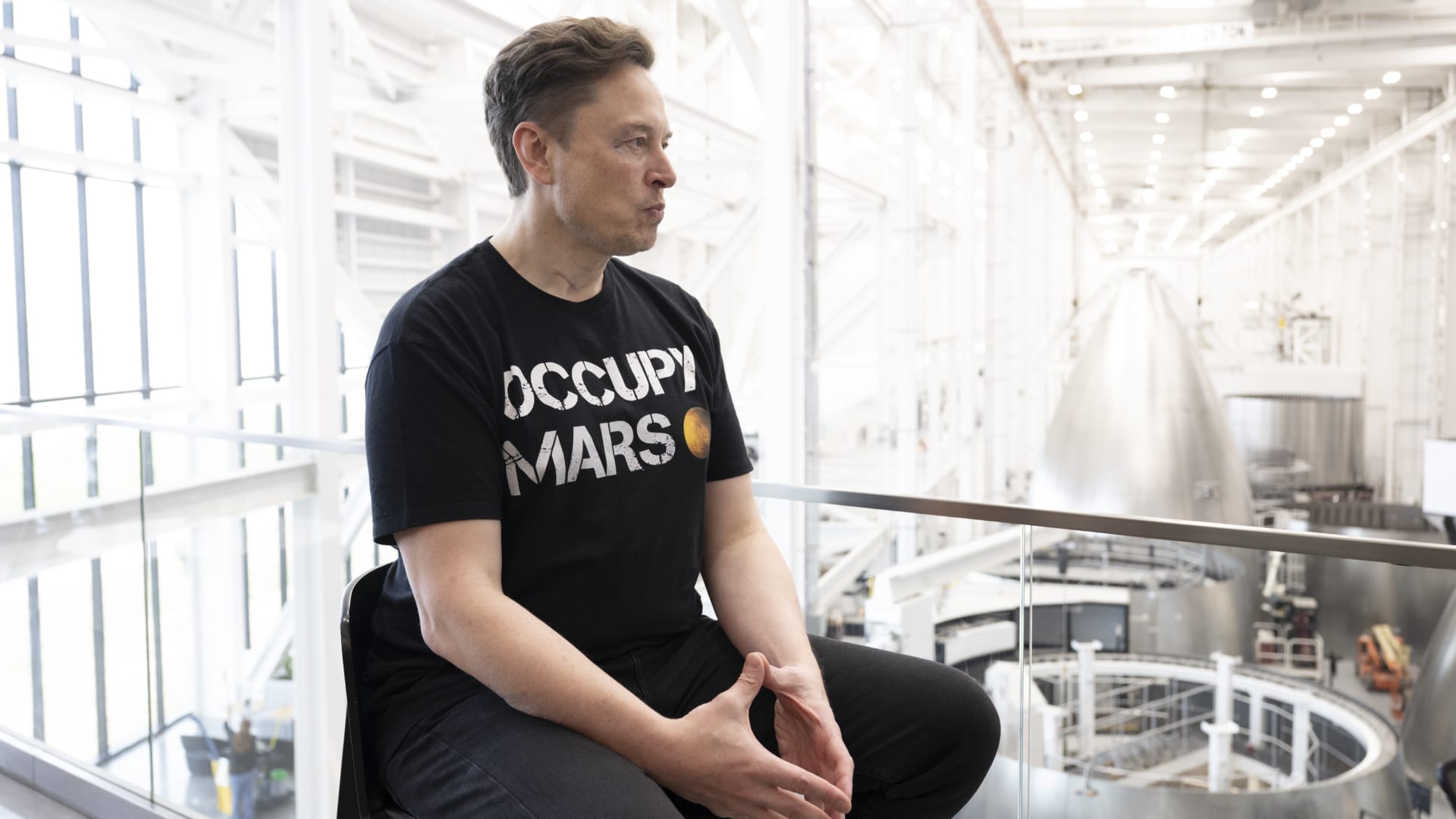
SpaceX’s much-anticipated initial public offering is encountering a new layer of uncertainty. Recent public statements by Elon Musk regarding a significant data center lease agreement with AI startup Anthropic appear to diverge from the details provided in the company’s confidential IPO filing, potentially creating a credibility gap for prospective investors.
🚀 Tech Strategy & Market Disruptions
- Data Ambiguity as a Deal Breaker. Elon Musk’s public clarification on the Anthropic lease terms contradicts the official IPO filing, raising questions about transparency and the true financial outlook of this crucial new revenue stream.
- AI Compute Monetization Strategy. SpaceX’s pivot to lease its substantial compute infrastructure to AI firms like Anthropic signals a pragmatic approach to monetizing expensive assets, yet the short-term nature of the deal adds risk.
- Valuation Scrutiny Intensifies. With a market valuation exceeding $1 trillion and substantial capital expenditures, any discrepancies in financial disclosures, especially concerning a deal worth billions, will be heavily scrutinized by investors evaluating the SpaceX IPO.
SpaceX recently submitted its confidential filing for an initial public offering, a move that has set the stage for what could be a record-breaking market debut. However, Elon Musk’s public commentary has injected a dose of confusion just as the company prepares to engage with potential investors. A statement made on his social media platform, X, concerning the specifics of a partnership with Anthropic, a rival AI company, included details not present in SpaceX’s extensive IPO documentation.
The agreement in question involves SpaceX leasing compute capacity at its ‘Colossus 1′ data center in Memphis, Tennessee, to Anthropic. The IPO prospectus had indicated a commitment to lease capacity through May 2029, with a monthly payment of $1.25 billion, noting that the agreement could be terminated by either party with 90 days’ notice. This presented a significant, long-term revenue stream for SpaceX.
Musk’s subsequent X post, however, stated that SpaceX had not committed to years of leasing and described the pact as a ‘180-day lease with 90-day notice mutual cancellation thereafter.’ This direct contradiction suggests either a material misstatement in the filing or a lack of clear communication regarding the deal’s duration and financial implications. Such discrepancies are critical for investors attempting to accurately value SpaceX, especially given its overall revenue and the potential for this new compute capacity offering to become a substantial income source, placing it in competition with specialized cloud providers like Nebius and CoreWeave.
SpaceX’s AI Ambitions Under the Microscope
The financial ramifications of this data center lease are substantial, particularly for a company with a stated valuation of over $1 trillion that is reportedly burning billions of dollars quarterly. The divergence between Musk’s public statements and the formal SEC filing has drawn sharp criticism from legal and financial experts. Professor Eric Talley of Columbia Law School noted that such inconsistencies leave investors in a difficult position, struggling to ascertain the true financial health and prospects of SpaceX.
- The discrepancy directly impacts the perceived value of a new, high-margin revenue stream.
- Concerns arise regarding the accuracy and completeness of disclosures in the IPO filing.
- Investor confidence may be eroded by perceived opaqueness in key business dealings.
Beyond the Anthropic deal, analysts have pointed to other omissions in SpaceX’s prospectus. PitchBook analyst Franco Granda highlighted missing critical data such as subscriber churn rates, detailed unit economics for the Falcon 9 rocket, and granularity on AI segment performance, including utilization rates for deployed compute capacity. This lack of detail makes it challenging for the market to fully assess the operational efficiency and profitability of various SpaceX divisions.
Economics of AI Infrastructure
The valuation of SpaceX’s AI segment, particularly following its merger with xAI, is already a complex area for investors. Musk valued xAI at $250 billion before merging it with SpaceX, establishing a combined entity valuation of $1.25 trillion. However, SpaceX’s first-quarter capital expenditures surged to $10.1 billion, with $7.7 billion allocated to xAI, which consequently recorded a $2.5 billion operating loss in the same period. This suggests that while SpaceX has invested heavily in AI infrastructure, its own AI models and services have not yet generated significant demand, leading to the strategy of leasing excess capacity.
Musk’s commentary on X, suggesting a desire to retain flexibility to reclaim compute capacity if needed, underscores the speculative nature of the AI market and the company’s cautious approach to long-term commitments. This strategy of monetizing its data center infrastructure, though costly to build, has been viewed positively by some bullish investors, such as Cathie Wood of Ark Invest, who anticipated significant annual revenue from the Anthropic deal. However, the pre-IPO filing and subsequent clarifications by Musk introduce a layer of uncertainty that could temper market enthusiasm.
SpaceX’s move to lease its substantial AI compute infrastructure, though strategically sound for revenue generation, is overshadowed by the lack of clarity in its public disclosures. This ambiguity around the Anthropic deal and other operational metrics poses a significant challenge to establishing investor trust and a stable valuation ahead of its IPO.
Experts like Ann Lipton, a law professor at the University of Colorado, suggest that such discrepancies are typically rectified through separate filings with the Securities and Exchange Commission (SEC), but the timing and public nature of Musk’s comments add an unusual dynamic to the pre-IPO process.
SpaceX’s Data Center Architecture and AI Integration
SpaceX’s ‘Colossus 1’ data center in Memphis represents a significant infrastructural investment, designed to support its rapidly expanding operations, including its ambitious AI initiatives. The architecture likely features high-density compute racks, advanced cooling systems, and robust networking capabilities to handle the intensive processing demands of AI model training and deployment. This infrastructure is not merely supporting SpaceX’s internal needs for Starlink, Starship development, and its growing AI portfolio (including Grok via xAI), but is also being positioned as a potential revenue generator in the burgeoning cloud computing market, specifically for AI workloads. The scale and modularity of such a facility are key to its adaptability, allowing SpaceX to both scale up its internal AI operations and offer capacity to external clients, thereby creating a dual-purpose asset. The decision to lease capacity to Anthropic is a direct testament to this strategy, aiming to offset capital expenditure and generate immediate returns while the company’s own AI services mature. This approach highlights a trend in the tech industry where large corporations leverage their massive infrastructure investments to tap into new market segments.
SpaceX’s AI Market Adoption Challenges
Despite significant investments in its AI capabilities, SpaceX faces considerable challenges in achieving broad market adoption for its proprietary AI services. The competitive landscape is fierce, dominated by established players like OpenAI, Google DeepMind, and Microsoft Azure AI, each possessing extensive research, development, and market penetration. SpaceX’s own AI offerings, including the Grok chatbot, are relatively new entrants. The company’s recent substantial operating losses within its AI unit, SpaceXAI, underscore the difficulty in capturing market share and generating revenue solely from its own AI products. Furthermore, the reliance on leasing compute capacity to established AI firms like Anthropic, rather than exclusively using it for in-house development and product launches, suggests a pragmatic acknowledgment of these market adoption hurdles. While this leasing strategy provides much-needed revenue and cash flow, it also indicates that SpaceX is prioritizing revenue generation and infrastructure utilization over the immediate growth and profitability of its own AI services, a strategic move that could prolong the path to self-sustaining AI product success.
The Cloud Compute Market’s Evolving Landscape
The cloud computing market, particularly for AI workloads, is undergoing rapid transformation. Driven by the insatiable demand for processing power to train increasingly complex AI models, hyperscale cloud providers and specialized compute firms are in a race to expand capacity. SpaceX’s entry into this market, by leasing its surplus data center resources, reflects a broader industry trend where companies with substantial capital and infrastructure are seeking to monetize these assets. This creates new competitive dynamics for existing neocloud providers like CoreWeave, forcing them to innovate on pricing, performance, and specialized offerings to maintain their market position. The involvement of major players like SpaceX, backed by a deep-pocketed entity like Elon Musk’s ventures, signifies an escalation in competition and potentially a shift in market share. As more entities like SpaceX leverage their infrastructure for AI compute, the market is likely to see greater commoditization of raw compute power, while differentiation will increasingly rely on specialized AI software, services, and unique ecosystem advantages.
SpaceX’s Path Forward: Navigating IPO Uncertainty
The upcoming SpaceX IPO is poised to be a landmark event, but the recent disclosures surrounding the Anthropic deal introduce a notable element of risk that investors will need to carefully evaluate. The apparent contradiction in the terms of this multi-billion dollar agreement, as highlighted by Elon Musk himself, raises critical questions about the transparency and reliability of SpaceX’s financial reporting. While the company is lauded for its technological achievements, the ability to clearly and accurately communicate its financial performance and future prospects is paramount for a successful public offering. The market will be watching closely to see how SpaceX addresses these discrepancies in its subsequent filings and investor roadshows. Ultimately, the success of the SpaceX IPO may hinge not only on its technological prowess but also on its capacity to rebuild investor confidence through clear and consistent financial communication.
- The core concern revolves around the disclosed financial terms of the Anthropic lease agreement and Elon Musk’s conflicting public statements.
- Investors will be seeking definitive clarification on the contract’s duration, cancellation clauses, and exact financial value.
- The overall impact on SpaceX’s valuation and its ability to command a premium IPO price will be directly influenced by how this transparency issue is resolved.
Financial Disclaimer:
StockXpo.com is a financial news aggregator and educational portal, not a registered investment advisor or broker-dealer. All information, news, and analysis provided herein are strictly for educational purposes and do not constitute investment, financial, legal, or tax advice. Investing in the stock market involves high risks, and past performance is not indicative of future results. StockXpo will not be liable for any financial losses or investment damages. Always consult a certified financial advisor before making market decisions.
MORE IN INSIDE TECHNOLOGY
AI Buildout Hits Credit Headwinds: Neoclouds Under Pressure
Published: Saturday, October 24, 2026 · 12:23 AM

SK Hynix Shares Rebound: A Strategic Shift in Semiconductor Funding
Published: Friday, October 23, 2026 · 1:46 AM