Published: Thursday, May 28, 2026 · 3:41 PM | Updated: Thursday, May 28, 2026 · 3:41 PM
📊 277 views




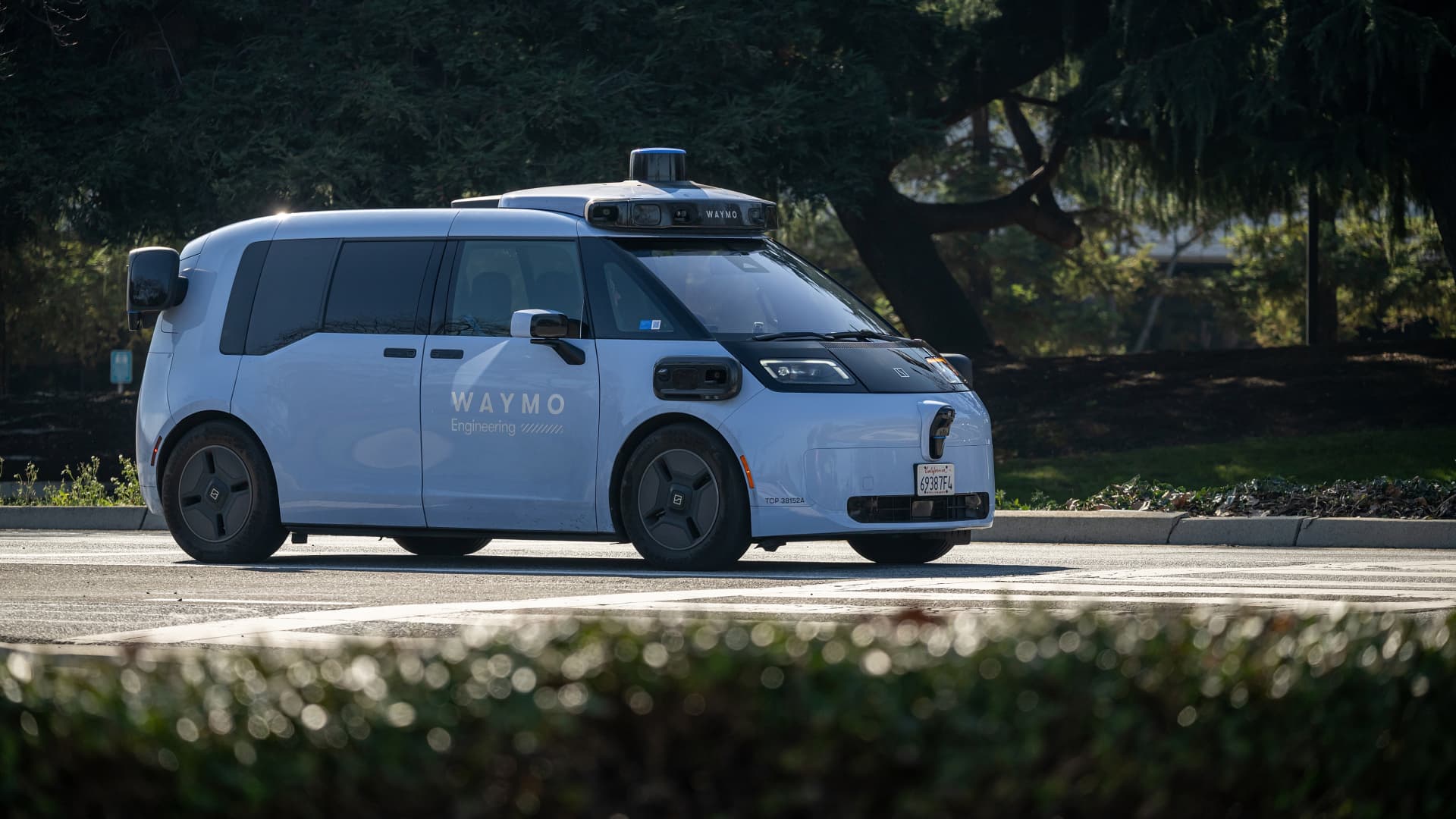
Alphabet’s Waymo is making significant strides in scaling its autonomous vehicle fleet with the introduction of its Ojai robotaxis. These new vehicles, designed for greater cost-efficiency and enhanced performance in varied weather conditions, are now accessible to select public riders in key U.S. markets, signaling a pivotal phase in the company’s ambitious expansion plans.
🚀 Tech Strategy & Market Disruptions
- Cost-Effective Manufacturing. The Ojai robotaxis leverage new hardware and software integrated by Geely, significantly reducing production costs compared to previous models, a key strategy for mass fleet deployment.
- Enhanced Sensory Capabilities. Equipped with improved lidar for adverse weather and upgraded audio receivers, the Ojai vehicles offer enhanced situational awareness, crucial for robust autonomous operation.
- Phased Public Rollout. Waymo’s strategy of initially offering rides to select customers before broader public access allows for data-driven refinement and builds user confidence in the autonomous technology.
Waymo has begun offering rides in its new Ojai robotaxis to a select group of public passengers across San Francisco, Los Angeles, and Phoenix. This rollout is set to expand to San Diego, Las Vegas, and Denver throughout the summer, marking a substantial increase in the accessibility of its autonomous ride-hailing service. The company already has a hundred Ojai vehicles integrated into its nearly 4,000-car fleet, with plans to deploy thousands more by year-end. This strategic deployment is underpinned by the Ojai’s enhanced design, which was first revealed in 2024 and entered employee testing earlier this year.
Ojai’s Design Innovation for Scalability
The Ojai represents a significant evolution in Waymo’s hardware and software integration, utilizing the sixth-generation Waymo Driver system. This proprietary technology is engineered to detect critical environmental details, even in low-light conditions. Notably, the vehicles are manufactured by China’s Geely, a partnership that dramatically reduces production costs relative to earlier models like the Jaguar I-PACE. The Ojai requires fewer expensive cameras and sensors, a crucial factor for Waymo’s aggressive fleet expansion goals and its aim to control expenditures as it competes with rivals like Tesla and Amazon’s Zoox. This focus on manufacturing efficiency is directly contributing to the emerging technologies in the autonomous vehicle sector.
Waymo’s push for scale is further supported by a substantial $16 billion cash infusion from its parent company, Alphabet, and other investors. This capital is enabling the company to expand its operational footprint, with plans for service to commence in London later this year. The ambitious target of achieving 1 million weekly autonomous rides by the end of 2026 underscores the urgency and scale of its growth strategy. The Ojai vehicles are equipped with Waymo’s custom-designed chips, advanced lidar capable of penetrating heavy rain and snow, and improved audio receivers for better detection of emergency sirens and other crucial sounds.
- The Ojai’s interior offers increased spaciousness and features removable steering wheels, aiming to enhance passenger comfort and familiarity.
- Waymo is exploring AI integrations, potentially leveraging Google’s Gemini technology for more intuitive driver-vehicle interaction, such as natural language commands for vehicle positioning.
- Despite advancements, Waymo has encountered regulatory scrutiny and operational challenges, including a recent recall of 3,800 vehicles due to software issues related to driving into flooded areas and a temporary halt on freeway rides following performance issues in construction zones. These incidents highlight the ongoing complexities in autonomous system validation.
For us at StockXpo, the Ojai’s focus on manufacturing cost reduction alongside enhanced environmental sensing capabilities is a textbook example of how hardware innovation and software intelligence must converge to unlock mass market adoption in autonomous mobility. It’s not just about the AI driving the car; it’s about making that entire system economically viable at scale.
The company acknowledges that the familiar design cues of previous models, like the presence of a steering wheel and pedals, help acclimate users to trying new autonomous services. This approach, blending technological advancement with user psychology, is key to overcoming adoption barriers.
Waymo’s Autonomous Fleet Architecture
The Ojai robotaxis are built upon Waymo’s sophisticated sixth-generation Waymo Driver, a system designed for robust performance across diverse environmental conditions. This architecture integrates custom Waymo-developed silicon, advanced lidar sensors that can penetrate inclement weather, and enhanced audio processing units. The manufacturing partnership with Geely is a critical element, streamlining the production process and significantly lowering the per-unit cost. This approach allows Waymo to scale its fleet efficiently, a necessary step to meet ambitious deployment targets and extend its lead in the competitive autonomous driving market. The integration of these advanced hardware components with the AI-driven Waymo Driver software creates a resilient and adaptable autonomous platform.
Waymo’s Market Adoption Challenges
While Waymo is rapidly expanding its service, it faces significant hurdles in achieving widespread public trust and navigating regulatory landscapes. Recent incidents, including a voluntary recall of 3,800 vehicles for issues related to driving into flooded roadways and the temporary pause on freeway rides due to performance anomalies in construction zones, underscore the ongoing challenges in ensuring absolute safety and reliability. These events, captured on social media and reported by various news outlets, highlight the critical need for continuous software updates and rigorous real-world testing. Addressing public safety concerns and demonstrating consistent operational excellence are paramount for broader market acceptance and regulatory approval, impacting the overall technology market trends.
The Path Forward for Waymo’s Ojai Expansion
Waymo’s current expansion phase with the Ojai robotaxis signifies a determined effort to solidify its market leadership. The company’s strategic focus on reducing manufacturing costs while enhancing vehicle capabilities positions it for significant scaling. The successful integration of Geely’s manufacturing prowess with Waymo’s proprietary driving technology is a critical enabler for achieving its goal of 1 million weekly rides. As Waymo continues to deploy these vehicles across more cities, its ability to manage operational challenges and maintain a strong safety record will be key determinants of its long-term success and its impact on the future of urban mobility. This push is being closely watched within the broader technology sector.
📊 StockXpo Analyst’s View
Market Impact: This development by Waymo, focusing on cost reduction and expanded deployment of its Ojai robotaxis, signals a maturing phase for autonomous ride-hailing. Increased vehicle availability at lower costs could accelerate adoption and put pressure on traditional taxi and ride-sharing services, potentially impacting investor sentiment towards mobility tech stocks.
Sector To Watch: The autonomous driving sector, including AI-driven software providers, lidar manufacturers, and electric vehicle component suppliers, will likely see increased investment and consolidation. Companies that can offer comparable cost efficiencies and safety improvements will be well-positioned.
Financial Disclaimer:
StockXpo.com is a financial news aggregator and educational portal, not a registered investment advisor or broker-dealer. All information, news, and analysis provided herein are strictly for educational purposes and do not constitute investment, financial, legal, or tax advice. Investing in the stock market involves high risks, and past performance is not indicative of future results. StockXpo will not be liable for any financial losses or investment damages. Always consult a certified financial advisor before making market decisions.
MORE IN INSIDE TECHNOLOGY

Porsche Profit Rebounds: A Bold Strategic Shift in Global Markets
Published: Tuesday, October 27, 2026 · 6:31 AM

SoftBank AI Investment: Malaysia’s $50 Billion Innovation Surge
Published: Monday, October 26, 2026 · 2:37 AM