Published: Thursday, May 28, 2026 · 1:06 PM | Updated: Thursday, May 28, 2026 · 1:06 PM
📊 231 views




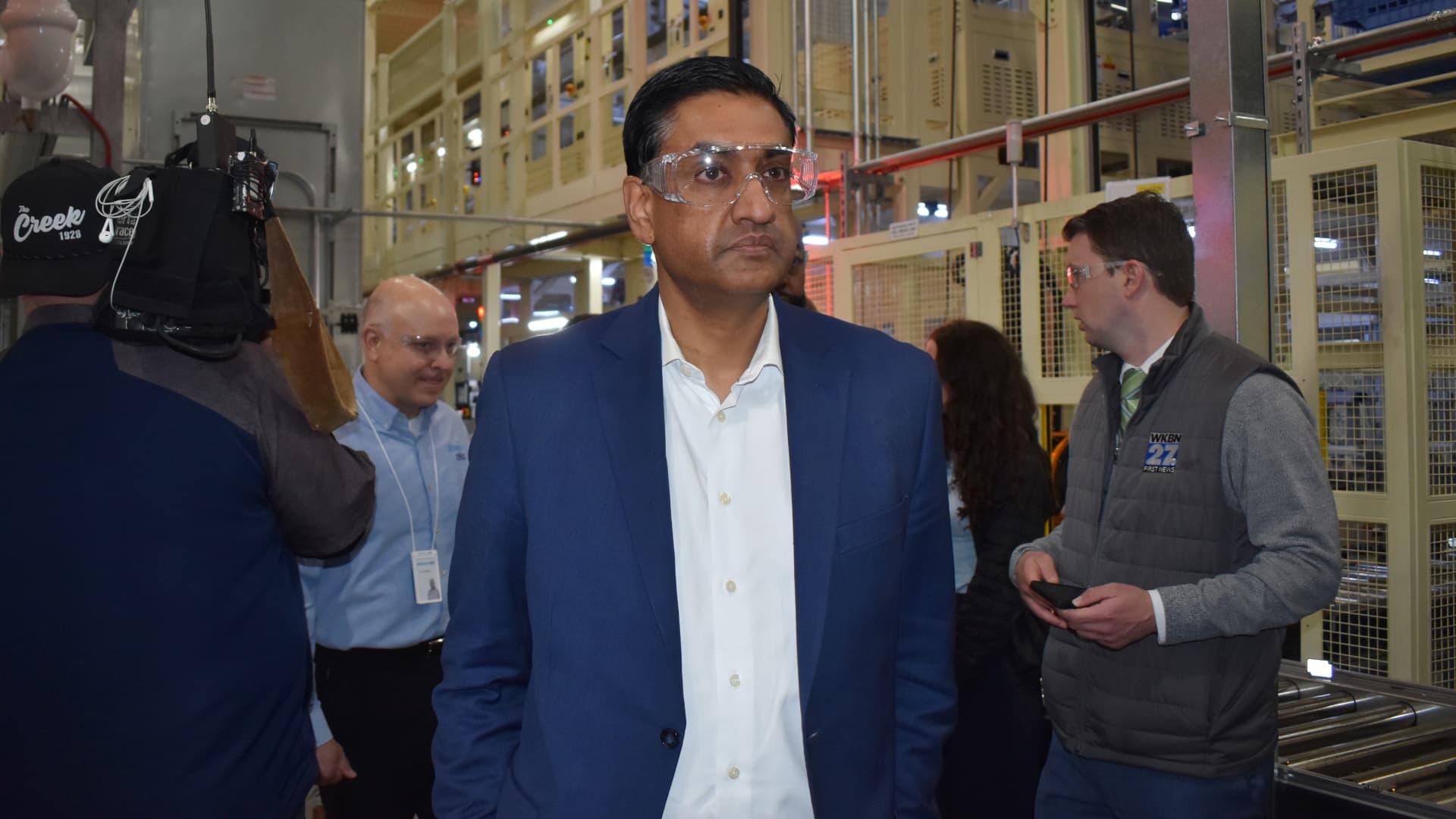
U.S. Representative Ro Khanna is actively touring key industrial states, promoting his ‘New Economic Patriotism’ platform, a comprehensive strategy aimed at revitalizing American manufacturing and addressing global economic challenges. Central to his vision is the Ro Khanna Economic Plan, which proposes innovative financing mechanisms and shifts in taxation to spur domestic industry. This initiative, framed against a potential 2028 presidential bid, seeks to bridge the gap between Silicon Valley’s future-forward technologies and the traditional Rust Belt’s industrial needs.
🚀 Tech Strategy & Market Disruptions
- National Industrial Bank. Proposed to provide capital for critical national interest manufacturing, from steel to advanced energy.
- AI Token Tax. A novel tax on AI companies’ data processing units to fund industrial programs, shifting the tax burden from workers to automation.
- Rust Belt Revitalization. Focused on creating economic opportunity in deindustrialized regions, counteracting years of job loss and fostering an industrial renaissance.
Rep. Ro Khanna, a Democratic Congressman from Silicon Valley, is gaining traction with his ‘New Economic Patriotism,’ a detailed 13-point agenda designed to catalyze an American industrial renaissance. His recent ‘Heartland Tour’ through Pennsylvania, Ohio, and Michigan showcased a focused effort to connect with workers and businesses in regions deeply affected by deindustrialization, emphasizing a proactive stance against economic threats from countries like China.
The core of his strategy involves robust government intervention and targeted investments, signaling a departure from purely market-driven economic policies. Khanna’s signature proposal, a ‘national industrial bank,’ aims to de-risk and capitalize ventures essential to national security and economic independence, spanning critical sectors like steel, automotive, and renewable energy. This concept draws parallels to historical initiatives like the post-WWII Marshall Plan, aiming to rebuild America’s industrial base. Unlike previous efforts, such as the 2022 Inflation Reduction Act’s tax credits—many of which were subsequently revoked—Khanna’s bank is designed for long-term durability and technology-neutral funding, aiming to avoid political vulnerabilities. For example, he observed firsthand the idling of the Ultium Cells EV battery plant in Ohio due to the reversal of consumer tax credits, underscoring the need for more stable policy tools.
Funding such an ambitious agenda is a central question, with the U.S. national debt nearing $40 trillion. Khanna suggests a multi-pronged approach, starting with significant reductions in the annual defense budget—potentially siphoning hundreds of billions. He also advocates for progressive taxation, including a tax on billionaires, an increased estate tax, and a financial transaction tax on Wall Street speculation. A particularly innovative funding mechanism he discussed with tech leaders like Jensen Huang (Nvidia) and Dario Amodei (Anthropic) is a ‘token tax’ on artificial intelligence units. This levy on enterprise software transactions involving AI processing aims to generate revenue while addressing the perceived imbalance where workers are taxed more heavily than AI.
- The proposed national industrial bank seeks to provide consistent capital, mitigating political risks associated with fluctuating tax credit policies.
- A significant portion of funding for industrial programs is envisioned to come from defense budget reallocation and progressive taxation, including an innovative ‘token tax’ on AI services.
- Khanna’s approach emphasizes the rebuilding of critical supply chains and fostering domestic manufacturing capabilities to enhance national security and economic resilience against global competitors.
The introduction of a national industrial bank could initiate a disruptive flow across several industries. This capital injection, specifically targeted at national interest manufacturing, would flow directly to domestic producers. This increased liquidity and guaranteed funding would enable faster scaling of production facilities and accelerated adoption of advanced manufacturing technologies. Consequently, this leads to a reduction in reliance on foreign supply chains, particularly from countries like China, and strengthens national economic security. This shift could rapidly reshape market dynamics, fostering localized innovation hubs and creating new job opportunities in regions previously affected by deindustrialization, driving broader economic revitalization.
‘The concept of an industrial bank, especially one designed to be technology-neutral and resilient to political shifts, represents a critical evolution in industrial policy thinking. It moves beyond short-term incentives to foster sustained, strategic investments in sectors vital for national competitiveness and technological sovereignty. This institutional stability is crucial for private industry to make long-term capital commitments.’ – Elisabeth Reynolds, MIT Professor and former Special Assistant to President Biden for Manufacturing.
Navigating Market Adoption Challenges for the New Economic Patriotism
The successful implementation of Ro Khanna’s ‘New Economic Patriotism’ faces significant market adoption challenges, particularly given the historical context of deindustrialization and voter skepticism in the Rust Belt. While the vision of revived manufacturing and stable employment resonates deeply, the practical execution of a national industrial bank and novel taxation schemes requires overcoming entrenched market forces and political resistance. The failure of prior tax credit programs to maintain momentum, as seen with the EV industry, underscores the volatility of relying on policies that lack bipartisan consensus. Gaining widespread buy-in from diverse industries—from traditional steel to cutting-edge EV battery production—will hinge on demonstrating tangible, durable economic benefits that transcend political cycles. Furthermore, convincing Silicon Valley’s tech giants to embrace an AI token tax, despite Khanna’s discussions, presents a hurdle given the industry’s historical resistance to new taxation models. Success will depend on clear, measurable outcomes and the perception of fairness across all sectors.
Unlocking Ecosystem Expansion Potential with Strategic Funding
Ro Khanna’s plan holds substantial potential for ecosystem expansion, particularly through the strategic deployment of capital via a national industrial bank. By targeting critical national interest sectors, the bank could foster interconnected networks of suppliers, manufacturers, and research institutions. For instance, funding for advanced steel production or battery manufacturing not only supports direct jobs but also stimulates growth in upstream raw material extraction, logistics, and downstream product development. The focus on technology-neutral projects ensures flexibility, allowing the ecosystem to adapt to evolving market and technological demands, from traditional energy infrastructure to emerging technologies like advanced robotics and quantum computing. This comprehensive approach, if executed effectively, could create robust, self-sustaining industrial clusters, driving innovation and resilience across various segments of the technology market trends and the broader economy. This can be seen as a way to build comprehensive infrastructure that encourages new businesses and specialized skill development, fostering a dynamic environment for emerging technologies and manufacturing.
Ro Khanna Economic Plan: Charting a Course for U.S. Industrial Renewal
The Ro Khanna Economic Plan represents a bold attempt to recalibrate America’s economic priorities, shifting focus towards domestic industrial strength and equitable growth. By proposing innovative financial tools and progressive taxation, Khanna aims to foster a more resilient and self-reliant economy. His efforts to bridge the divide between Silicon Valley and the Rust Belt underscore a strategic effort to build a broad coalition for his vision.
- The national industrial bank aims to stabilize long-term capital investment in critical sectors, enhancing supply chain resilience.
- New tax proposals, including an AI token tax, reflect an attempt to fund industrial programs while addressing wealth inequality.
- The plan seeks to re-energize communities impacted by deindustrialization, fostering economic opportunity and national unity.
Can this innovative economic blueprint successfully navigate political headwinds and reshape the future of American manufacturing?
📊 StockXpo Analyst’s View
Market Impact: Khanna’s economic proposals, if gaining significant political traction, could signal a notable shift in market sentiment towards domestic manufacturing and infrastructure. While the concept of a national industrial bank offers stability for long-term projects, the proposed AI token tax could introduce uncertainty for tech sector valuations. Investors might eye companies with strong domestic production capabilities, potentially seeing increased government support or favorable financing.
Sector To Watch: The industrial manufacturing, renewable energy, and critical materials sectors stand to benefit significantly from a national industrial bank. Conversely, the high-growth AI and enterprise software segments could face new regulatory and tax burdens. The viability of these proposals will be a key indicator for these sectors, as detailed by analyses on educational tech insights. Further, observing how global economic competition, particularly from China, continues to influence policy discussions will be crucial for these markets, as reported by leading financial news sources. Companies that are already aligned with domestic production and supply chain resilience might find themselves strategically positioned, according to analysis on global technology markets.
Financial Disclaimer:
StockXpo.com is a financial news aggregator and educational portal, not a registered investment advisor or broker-dealer. All information, news, and analysis provided herein are strictly for educational purposes and do not constitute investment, financial, legal, or tax advice. Investing in the stock market involves high risks, and past performance is not indicative of future results. StockXpo will not be liable for any financial losses or investment damages. Always consult a certified financial advisor before making market decisions.
MORE IN INSIDE TECHNOLOGY

AI’s Dual Edge: Innovation-Driven Growth Meets Global Economic Hazard
Published: Wednesday, October 7, 2026 · 3:12 AM

Anduril Navy Contract: A $2.9 Billion Breakthrough in Submarine Production
Published: Tuesday, October 6, 2026 · 9:36 AM