Published: Friday, May 22, 2026 · 12:12 AM | Updated: Friday, May 22, 2026 · 12:12 AM
📊 318 views




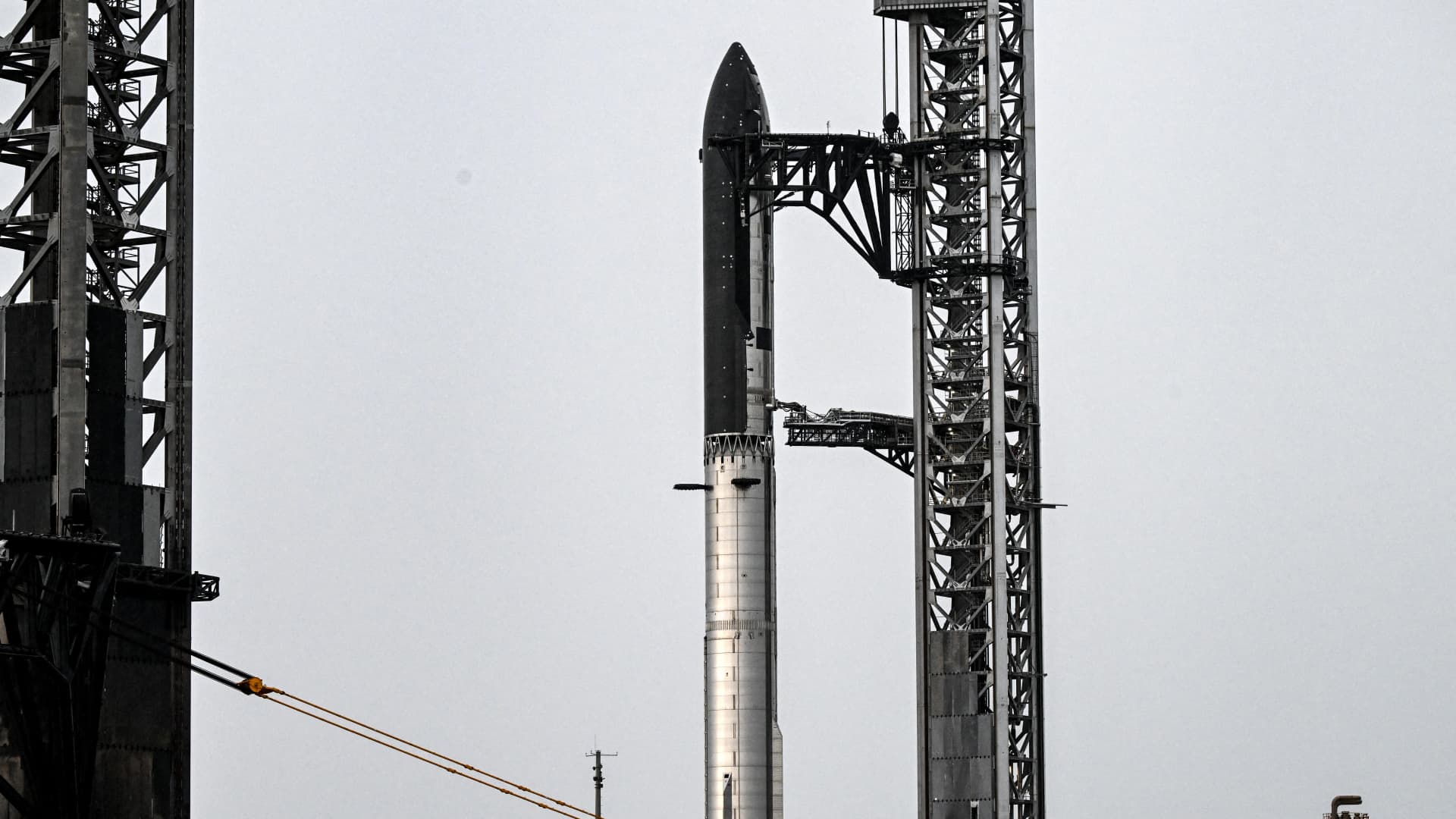
SpaceX’s ambitious twelfth test flight of its massive Starship rocket, the Starship V3, was scrubbed on Thursday evening, pushing its highly anticipated debut to Friday. This delay comes at a crucial juncture for Elon Musk’s company, poised to make a public market splash, as it seeks to demonstrate the advanced capabilities pivotal to its future growth and valuation.
🚀 Tech Strategy & Market Disruptions
- V3’s Strategic Imperative. The new Starship V3 is crucial for scaling Starlink deployment and fulfilling deep-space objectives, directly impacting SpaceX’s IPO valuation and long-term viability.
- Reusable Launch Revolution. Its fully reusable design aims to achieve rapid turnaround times, mimicking commercial aviation and significantly reducing space launch costs, a game-changer for payload delivery.
- Market Capitalization Link. Successful Starship development at scale is explicitly tied to SpaceX’s growth strategy and its ability to attract and retain investors ahead of its public offering.
The scrubbed launch of SpaceX’s twelfth Starship rocket test flight, featuring the new V3 iteration, underlines the immense technical challenges inherent in developing next-generation space technology. This particular flight holds significant weight for the company, coming just before its planned initial public offering (IPO), where investor confidence hinges heavily on the Starship program’s progress. As outlined in SpaceX’s recent IPO prospectus, the Starship V3 is engineered for unprecedented capabilities, designed to deliver 100 metric tons to Earth’s orbit in a fully reusable configuration. This reusability is key to achieving rapid turnaround times, an efficiency paradigm akin to commercial airline operations, drastically altering the economics of space access. According to reports by Bloomberg Technology, the market’s reception to such ambitious projects can be volatile.
SpaceX has already channeled over $15 billion into its Starship program, a massive investment that underscores its belief in this platform as the lynchpin for its ambitious future. A primary driver for Starship is to accelerate the deployment of the Starlink satellite constellation, providing global wireless internet services at a scale unachievable with the current Falcon 9 rockets. The expanded Starlink network is not just a technological feat but a financial powerhouse for SpaceX. In 2025, Starlink, largely comprising the connectivity unit, generated sales of $11.4 billion and an operating income of $4.4 billion, accounting for 61% of the company’s total sales. The success of the Starship rocket is thus directly correlated with the continued financial health and growth of this vital segment. This sentiment is echoed in insights from Reuters, which highlight the financial pressures on private space companies.
The current test, launching from a newly designed pad at Starbase, Texas, is particularly significant as it represents the debut of a more powerful variant. Standing 408 feet tall when fully stacked and featuring new engines capable of 18 million pounds of thrust, Starship V3 is a substantial upgrade. While this flight carries only mock Starlink satellites, its implications extend far beyond commercial endeavors. NASA is relying on Starship to serve as the lunar lander for its Artemis IV mission, slated for early 2028, which aims to return U.S. astronauts to the moon after more than half a century. Furthermore, Elon Musk’s long-term vision of Mars colonization fundamentally depends on Starship’s ability to transport both cargo and up to 100 people at a time into deep space.
- Technical Complexity: Even with advanced systems, cutting-edge space launches face inherent complexities, leading to delays.
- IPO Optics: The timing of the scrub, prior to the IPO, intensifies scrutiny on Starship’s reliability and development timeline.
- Future Dependence: SpaceX’s entire growth trajectory, from Starlink to lunar missions and Mars, hinges on Starship’s successful, scalable deployment.
The Disruptive Path of Space Innovation
The ongoing development of the Starship rocket, despite its inherent challenges, represents a profound disruption flow in the space industry:
New Launch Vehicle (Starship V3) → Increased Payload Capacity & Reusability → Drastically Reduced Launch Costs & Higher Cadence → Accelerated Starlink Deployment & New Revenue Streams → Democratized Space Access & Deep Space Exploration → Market Reconfiguration for Satellite Communications, Logistics, and Planetary Missions. The market continues to examine broader technology market trends, especially in the evolving aerospace sector.
“The Starship V3, with its unprecedented reusability and payload capacity, isn’t merely an incremental upgrade; it’s a foundational shift in how we access and utilize space. Its success or failure will dictate the pace of innovation across commercial satellite services, deep-space exploration, and even lunar economy development, posing both immense opportunities and significant execution risks for SpaceX and its partners.”
SpaceX Starship Program & Financials (2025-2026)
| Metric | Value / Description |
|---|---|
| Total Starship Program Investment | Over $15 billion |
| Starlink Sales (2025) | $11.4 billion |
| Starlink Operating Income (2025) | $4.4 billion |
| Space Segment Revenue (2025) | $4.1 billion |
| Space Segment Operating Loss (2025) | $657 million |
| Starship V3 Height (stacked) | 408 feet |
| Starship V3 Thrust | 18 million pounds |
| Starship V3 Payload to Orbit | 100 metric tons (reusable) |
SpaceX Starship Platform Architecture
The core architectural innovation of the Starship rocket lies in its fully integrated, two-stage-to-orbit design, where both the Super Heavy booster and the Starship upper stage are designed for rapid, full reusability. This modular approach, coupled with the Raptor engines’ methalox propulsion system, allows for unprecedented thrust and efficiency. The architecture prioritizes manufacturing scalability and operational flexibility, enabling quick refurbishment and relaunch, essential for maintaining a high flight cadence needed for large-scale projects like Starlink deployment and crewed missions to the Moon and Mars. Such an intricate design demands robust software control systems and advanced telemetry for autonomous landing and recovery, pushing the boundaries of aerospace engineering. For more insights, readers can gain further educational tech insights into the complexities of space launches.
SpaceX Starship Market Adoption Challenges
Despite its groundbreaking technical prowess, the Starship rocket faces considerable market adoption challenges beyond its developmental hurdles. Regulatory approvals for frequent launches from Starbase, Texas, require extensive environmental assessments and coordination with the FAA, which can introduce delays. Competition from established launch providers and emerging players also remains a factor, though Starship’s unique capabilities set it apart in the heavy-lift and deep-space segments. Furthermore, proving the long-term reliability and economic viability of a fully reusable super heavy-lift system at scale will be critical for widespread commercial adoption and securing contracts beyond NASA’s Artemis program. The initial investment cost and the operational complexity of such a system might deter smaller players, funneling its initial use towards large-scale government or mega-constellation projects. The rapid evolution demands continuous analysis, often covered in depth on platforms dedicated to emerging technologies.
The Starship Rocket’s Trajectory: Beyond the Launch Pad
The brief delay of the Starship rocket‘s V3 test flight underscores the inherent challenges in revolutionary space engineering, yet its strategic importance for SpaceX’s future remains undiminished. This advanced vehicle is not merely a rocket; it’s the lynchpin for expanding Starlink, fulfilling NASA contracts, and realizing long-term interplanetary ambitions. Its successful and repeatable deployment is crucial for justifying its significant R&D investment and solidifying investor confidence ahead of the company’s public market debut.
- The Starship V3’s reusability aims to drastically cut launch costs, potentially making space access routine.
- Starlink’s revenue relies heavily on Starship’s ability to rapidly deploy next-generation satellites.
- NASA’s Artemis program depends on Starship as its lunar lander, highlighting its national strategic value.
How quickly can SpaceX transition from ambitious test flights to reliable, commercial-scale operations with its Starship platform?
📊 StockXpo Analyst’s View
Market Impact: The Starship test flight’s delay, though minor, highlights execution risk for SpaceX, especially with an IPO looming. While not a fundamental issue, prolonged delays could temper investor enthusiasm, particularly concerning the long-term profitability and scalability of the space segment. The market will be keenly watching Friday’s outcome for signs of operational maturity.
Sector To Watch: The aerospace and satellite communications sectors remain profoundly influenced by SpaceX’s progress. A successful Starship rocket launch can accelerate the growth of the burgeoning space economy, impacting everything from global broadband providers to defense contractors. Companies involved in advanced materials, propulsion systems, and ground infrastructure for mega-constellations are particularly sensitive to these developments.
Financial Disclaimer:
StockXpo.com is a financial news aggregator and educational portal, not a registered investment advisor or broker-dealer. All information, news, and analysis provided herein are strictly for educational purposes and do not constitute investment, financial, legal, or tax advice. Investing in the stock market involves high risks, and past performance is not indicative of future results. StockXpo will not be liable for any financial losses or investment damages. Always consult a certified financial advisor before making market decisions.
MORE IN INSIDE TECHNOLOGY

AI’s Dual Edge: Innovation-Driven Growth Meets Global Economic Hazard
Published: Wednesday, October 7, 2026 · 3:12 AM

Anduril Navy Contract: A $2.9 Billion Breakthrough in Submarine Production
Published: Tuesday, October 6, 2026 · 9:36 AM