Published: Thursday, October 1, 2026 · 11:43 AM | Updated: Thursday, October 1, 2026 · 11:43 AM
📊 6 views




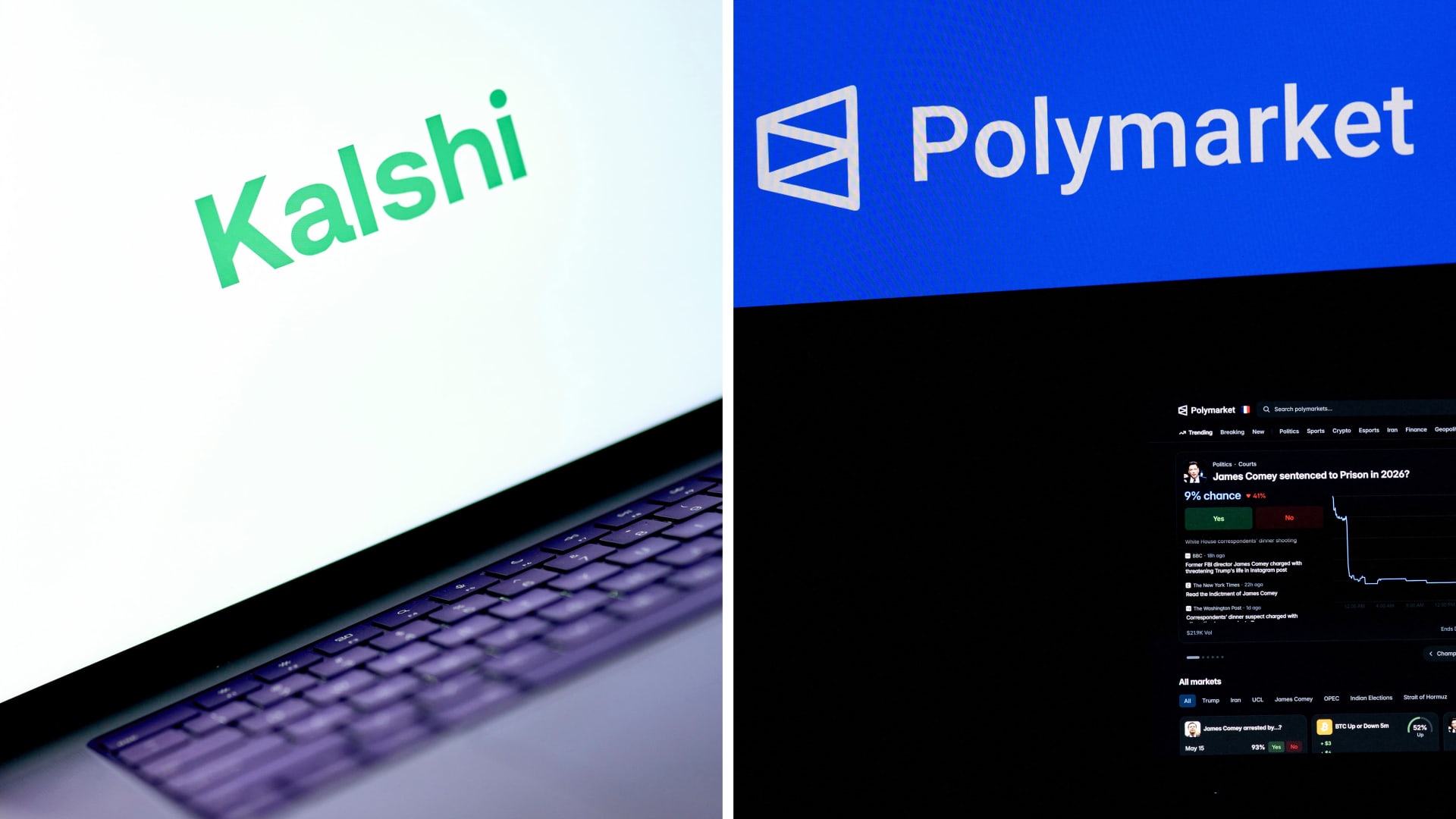
The burgeoning prediction market platforms, Kalshi and Polymarket, are grappling with intense scrutiny over the legitimacy of their reported trading volumes. As both companies pursue significant private market valuations and eye potential public listings, concerns regarding inflated activity and potential market manipulation are escalating, prompting broader questions about the integrity of these nascent financial ecosystems.
💰 Financial Strategy & Market Insights
- Volume Anomalies Identified. Polymarket’s international exchange exhibits disproportionate activity on contracts with low probabilities, while Kalshi’s ether perpetuals show high churn from uniformly sized trades.
- Wash Trading Allegations. Despite denials from both platforms, industry observers and academics voice concerns about potential wash trading or incentives driving inorganic activity, challenging valuation metrics.
- Regulatory Examination. The CFTC is reportedly scrutinizing Kalshi’s trading patterns, signaling heightened regulatory interest in market integrity as these platforms seek to legitimize novel asset classes.
The authenticity of reported trading volumes on platforms like Kalshi and Polymarket has become a focal point for industry observers and regulators. On Polymarket’s international exchange, which operates outside direct U.S. regulatory oversight, a peculiar pattern emerges: significant trading activity often gravitates towards contracts with remarkably low probabilities of occurring, spanning elections, sports, and central bank decisions. For instance, the market for Ethiopia’s next prime minister saw almost $56 million traded on a candidate whose odds consistently stayed below 3%, contrasting sharply with only $170,000 for the actual winner with 98% odds. This anomaly, noted by analysts like Joe Saluzzi of Themis Trading, prompts questions about the underlying motives behind such seemingly irrational trades.
Meanwhile, Kalshi’s perpetual futures market for ether has faced its own set of concerns. A CNBC analysis found that on September 20, nearly half of the dollar volume on Kalshi’s ether perpetuals stemmed from trades consistently sized between $5,495 and $5,505. This pattern, coupled with an abnormally high 24-hour trading volume relative to actual resting liquidity, has led some experts to fear inflated metrics or even wash trading—a manipulative practice where traders collude to buy and sell an asset to create a false sense of activity. Both platforms vehemently deny these allegations, attributing observed patterns to highly active ‘sharps’ exploiting mispricings (Polymarket) or arbitrage opportunities (Kalshi).
* Polymarket’s international exchange saw $158 million traded on Egypt’s FIFA World Cup odds (never above 0.5%), exceeding the $152 million on eventual winner Spain’s odds. Such discrepancies raise questions about genuine demand versus incentivized activity, especially given past hints of a cryptocurrency token airdrop that could reward early or high-volume users, as noted by Kairos co-founder Jay Maliava.
Concerns about wash trading on Polymarket are not new; a November 2025 study from Columbia University researchers suggested such patterns accounted for 60% of Polymarket international’s weekly volume in December 2024, although this declined to 20% by October 2025. While Polymarket attributes the decrease to enhanced surveillance and fees, the lingering popularity of low-odds contracts remains a point of contention for researchers like Allen Sirolly. Kalshi’s defense against its unusual trading volumes centers on market maker incentives and fee waivers through 2026, aimed at bootstrapping liquidity for its new perpetual futures product. However, critics like economics professor Rajiv Sethi argue that Kalshi’s fee structure allows traders to consistently profit from arbitrage, essentially funneling money to aggressive liquidity takers through market makers, undermining the appearance of organic `market analysis` for broader financial markets.
The ratio of 24-hour trading volume to open interest is another red flag. Kalshi’s bitcoin and ether perpetual futures exhibit volumes 42 to 66 times their open interest, a significant divergence from other international perpetual futures products like Hyperliquid (volume 1/3 of open interest) or regulated U.S. exchanges like CME (volume typically less than open interest). Craig Pirrong, a finance professor, likened Kalshi’s liquidity to a ‘self-licking ice cream cone’—activity provided to harvest incentives rather than representing genuine demand. These practices raise concerns for retail investors who may be influenced by these metrics when evaluating future public listings for these companies, as highlighted by finance professor Andre Guettler. As the `financial sector` continuously evolves, understanding these nuances is crucial for discerning genuine growth from manufactured activity, a critical insight for any investor seeking to expand their `educational financial insights`.
While Polymarket’s U.S. exchange, regulated by the CFTC, doesn’t show the same low-odds anomaly as its international counterpart, the overall situation underscores the inherent challenges in regulating rapidly evolving digital financial products. Regulators, as CFTC Chairman Michael Selig stated, maintain a ‘zero tolerance policy’ on manipulative trading, echoing broader sentiment from sources like Reuters on market integrity.
Navigating Investment: Risk vs. Reward in Prediction Markets
- Upside Potential: If prediction markets achieve regulatory clarity and demonstrably organic growth, they could emerge as novel avenues for risk hedging and speculative investment, offering significant returns for early adopters who accurately assess future events.
- Downside Risks: The immediate risks include regulatory crackdowns, loss of investor confidence due to perceived manipulation, and unsustainable valuations built on potentially inflated metrics. Retail investors, especially, face substantial capital loss if these platforms cannot prove the integrity and sustainability of their trading volumes and business models.
Arbitrage Gaming: This term refers to the practice where traders exploit small price differences for the same asset across different markets. In Kalshi’s case, critics argue that fee waivers incentivize traders to consistently profit from these fleeting discrepancies, creating a high volume of ‘churn’ that might not reflect genuine market-making or long-term speculative interest.
Key Market Metrics and Volume Comparisons
- Polymarket International (Ethiopian Election): $56 million traded on a candidate with <3% odds; $170,000 on the 98% odds winner.
- Kalshi Ether Perpetual Futures: Volume approximately 66 times its open interest.
- Hyperliquid Ether Perpetual Futures (International): Volume approximately one-third of its open interest.
- CME Bitcoin Futures (Regulated U.S.): Typically, volume is less than open interest.
Kalshi Liquidity Analysis: Churn vs. Organic Growth
The stark divergence between Kalshi’s reported trading volumes and its open interest raises fundamental questions about the nature of its market liquidity. While Kalshi attributes this to lower leverage (up to 4.9x) compared to offshore exchanges (e.g., Hyperliquid at 25x) and U.S. regulatory constraints on market maker requoting or incentivizing capital parking, experts like Professor Guettler remain unconvinced. The concern isn’t about outright wash trading, which Kalshi denies tracking hundreds of unique users, but rather an inefficient market structure that, combined with fee rebates, actively encourages inorganic activity. This ‘churn’ of volume, where trades occur frequently but with limited impact on overall open positions, creates an illusion of deep liquidity without corresponding capital commitment, potentially misleading investors about the true depth and robustness of the market.
Polymarket Market Sentiment Tracker: Speculation and Airdrop Dynamics
Polymarket’s unusual trading patterns, particularly the high volume on low-probability outcomes on its international platform, present a complex picture of market sentiment. While the company claims these are ‘sharps’ identifying mispricings, a significant undercurrent of speculation points to potential future cryptocurrency token airdrops. Airdrops are a common method in the crypto space to reward early platform users, often based on metrics like trading volume or open interest. This creates a strong incentive for artificial activity—traders might engage in extensive, seemingly irrational trading to accumulate qualifying volume, hoping for a lucrative future token allocation. This dynamic distorts true market sentiment, as perceived demand might be driven by future speculative rewards rather than genuine interest in the underlying prediction outcomes, a trend widely observed by sources such as Bloomberg Markets.
Scrutinizing Trading Volumes: The Integrity Challenge for Kalshi and Polymarket
The challenges facing Kalshi and Polymarket regarding their trading volumes underscore a critical inflection point for prediction markets. As these platforms mature and aspire for mainstream adoption, the credibility of their reported activity will be paramount, directly influencing investor confidence and regulatory perception.
- Market Integrity Imperative: Both platforms face immense pressure to demonstrate unequivocally that their trading activity reflects genuine demand and robust market mechanisms, not artificially boosted metrics.
- Regulatory Tightening: The CFTC’s reported examination of Kalshi signals a broadening regulatory lens on novel financial products, demanding higher transparency and stringent market surveillance standards.
- Valuation Risks: Current multi-billion dollar valuations, partly justified by soaring volumes, could be significantly impacted if these figures are found to be inflated or unsustainable, especially as they eye public listings.
Will these prediction markets successfully navigate the scrutiny and establish themselves as transparent, liquid, and trusted financial venues, or will questions about their fundamental market integrity cast a long shadow over their growth ambitions?
📊 StockXpo Analyst’s View
Market Impact: The ongoing scrutiny of trading volumes on Kalshi and Polymarket introduces a layer of uncertainty across the broader fintech and crypto-derivatives landscape. Should these concerns prove substantial, it could dampen investor sentiment towards novel, unregulated, or lightly regulated financial instruments, pushing capital towards more transparent and established exchanges. The implication is a potential flight to quality, impacting liquidity in less conventional markets.
Sector To Watch: The **Regulated Derivatives** sector, particularly those offering crypto-related products, stands to gain from any trust erosion in unregulated prediction markets. Traditional exchanges like CME, which offer regulated Bitcoin futures, may see increased institutional interest as investors prioritize oversight and verified liquidity. Conversely, the **DeFi and Prediction Market** segment faces enhanced regulatory pressure and a demand for more robust, verifiable activity metrics to restore confidence and attract sustainable investment.
Financial Disclaimer:
StockXpo.com is a financial news aggregator and educational portal, not a registered investment advisor or broker-dealer. All information, news, and analysis provided herein are strictly for educational purposes and do not constitute investment, financial, legal, or tax advice. Investing in the stock market involves high risks, and past performance is not indicative of future results. StockXpo will not be liable for any financial losses or investment damages. Always consult a certified financial advisor before making market decisions.
MORE IN INSIDE FINANCE
Temasek Middle East Expansion: A Bold $400 Billion Capital Shift
Published: Wednesday, September 30, 2026 · 5:31 AM

Humanoid Robot IPOs Face Stricter Chinese Scrutiny, Impacting Asset Valuations
Published: Tuesday, September 29, 2026 · 3:19 AM