Published: Thursday, September 24, 2026 · 4:22 PM | Updated: Thursday, September 24, 2026 · 4:22 PM
📊 1,225 views




The global financial markets are currently grappling with a significant dilemma as surging Treasury yields flash a critical warning signal to the Federal Reserve. This upward trend in yields, driven by a confluence of persistent inflation, rising energy costs, and substantial debt issuance, complicates the Fed’s mandate to balance price stability with economic growth. The situation underscores a growing disconnect between market expectations and central bank communication, creating an environment of heightened uncertainty.
📊 Macro-Economic Strategic Insights
- Inflationary Persistence: Treasury yields are reflecting investor concerns that inflation may prove more durable than initially anticipated, moving beyond temporary shocks.
- Policy Uncertainty: The Fed’s shift away from explicit forward guidance is creating a less predictable monetary policy environment, leaving markets to interpret signals from yield movements.
- Growth-Inflation Trade-off: Higher yields pose a significant risk to economic expansion, potentially leading to slower growth and increased unemployment even if inflation remains elevated, highlighting a difficult policy trade-off.
The bond market is sending a clear, albeit conflicting, message to the Federal Reserve, presenting a complex challenge for policymakers. Treasury yields have continued their ascent, with investors pricing in a persistent inflation rate that remains well above the Fed’s 2% target. This is compounded by recent upticks in energy prices and the financial implications of a global arms race in hyperscale computing, which involves substantial debt issuance. Historically, the Fed has been inclined to dismiss inflation spikes stemming from temporary supply shocks. However, there is a palpable shift in sentiment among Fed officials, who now acknowledge the greater danger of entrenched inflation. This recalibration comes as the central bank has intentionally reduced its forward guidance, leaving markets uncertain about who is truly dictating policy direction.
Joseph Brusuelas, chief economist at RSM, noted that the era of overlooking initial supply shocks has concluded. He emphasized the imperative for the Fed to prioritize price stability, suggesting that current market conditions demand a more serious response. Market participants appear to agree, with a notable increase in the perceived likelihood of an October rate hike, following a modest increase in September. Expectations are now leaning towards at least two additional rate increases by early 2027, a significant departure from earlier projections of a single hike for 2026 followed by cuts.
RSM’s modeling indicates that sharply higher long-term yields could decelerate economic growth and elevate unemployment without necessarily bringing inflation back to the 2% target. Their analysis suggests that a 10-year Treasury yield around 5.5% could reduce GDP growth to 1.5% and push unemployment to 4.7%, while core inflation remains sticky at 2.4%. Brusuelas posits that the Fed may be underestimating the extent of tightening required, suggesting five or six hikes might be necessary rather than the two or three currently priced in.
Conversely, some strategists on Wall Street believe the market is overreacting. They argue that current yield levels already factor in stronger economic growth and are overly sensitive to fluctuations in oil prices due to geopolitical tensions in the Middle East. Andrew Hollenhorst, an economist at Citigroup, contends that the rise in yields, both short and long-term, is a consequence of investors pricing in higher policy rates set by the Fed, rather than an expectation of a too-dovish Fed allowing inflation to persistently exceed its target.
Several key Federal Reserve officials, while supporting near-term rate increases, have also cautioned for patience. New York Fed President John Williams indicated that another rate hike by year-end is plausible but stressed the importance of data dependency rather than adhering to rigid forward guidance. Similarly, Philadelphia Fed President Anna Paulson signaled likely additional tightening, but characterized potential moves as ‘modest’, suggesting a measured approach rather than aggressive rate hiking.
This presents the Fed with a critical policy crossroads: tightening too aggressively risks stifling economic expansion, while insufficient tightening could erode market confidence in its commitment to managing inflation. Krishna Guha of Evercore ISI warned that a lack of clear guidance could force policymakers into making sub-optimal decisions, risking hard-won credibility and leading to unpredictable market reactions. He believes market expectations for rate hikes are currently too aggressive, further complicating the Fed’s decision-making process. Delivering aggressive rate hikes without clear forward guidance could signal a hawkish stance that drastically reprices the yield curve, while skipping a widely anticipated hike could trigger a significant dovish repricing.
The Fed at Odds
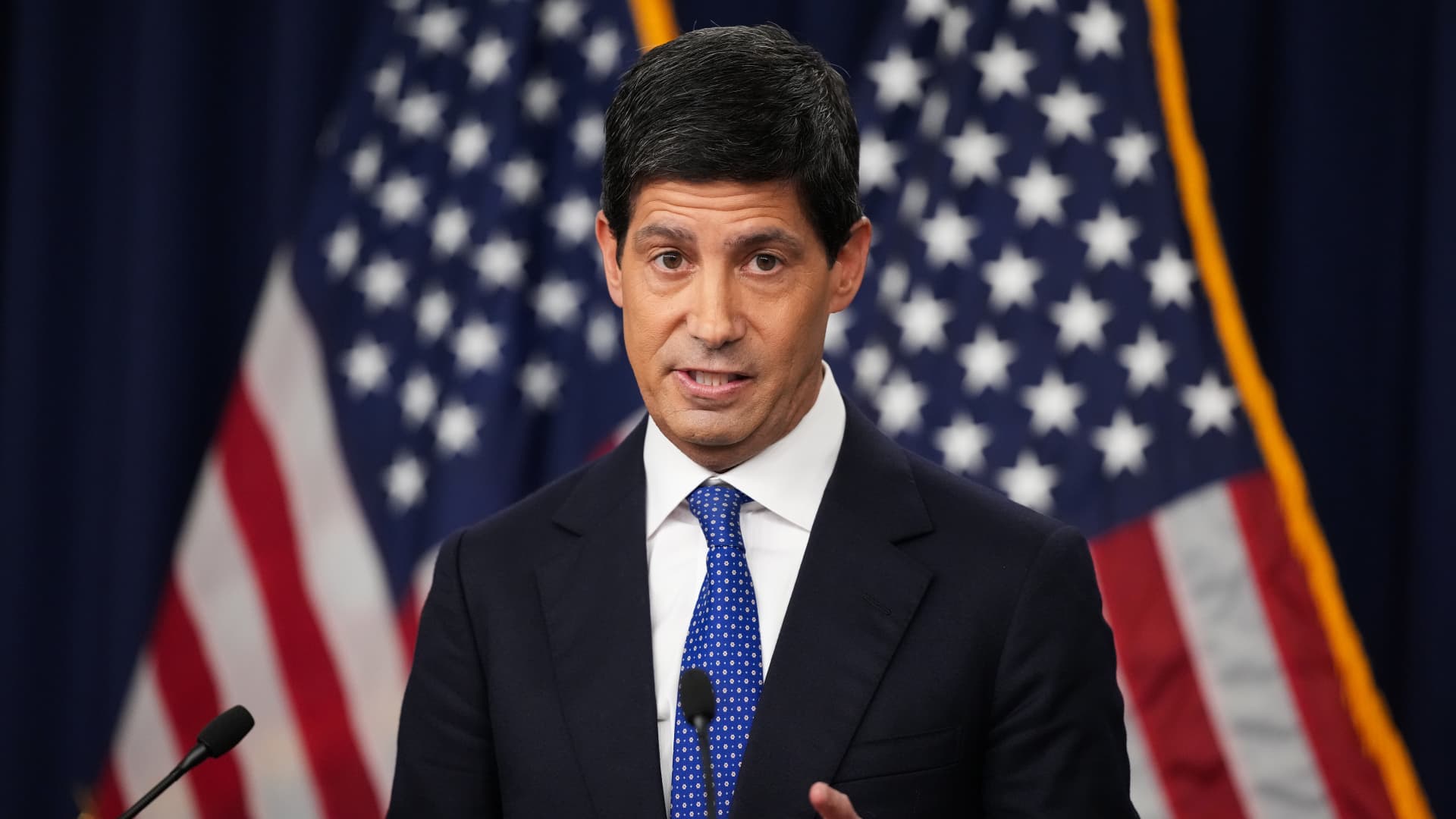
Federal Reserve Chairman Kevin Warsh has notably emphasized allowing market signals to guide policy, a significant shift from the post-2008 financial crisis era of explicit forward guidance. This approach appears to place greater weight on market narratives than on detailed economic measurements. With the 30-year Treasury yield reaching its highest point since 2004, market dynamics suggest Warsh, who previously advocated for rate cuts, is now fostering a hawkish coalition within the Federal Open Market Committee (FOMC). Some analysts speculate that Warsh’s views align closely with the more hawkish members of the FOMC, suggesting a market-driven path toward higher benchmark rates.
US Treasury Market Commentary
Chief economist at RSM, Joseph Brusuelas, highlighted that central bankers are increasingly concerned about economic overheating, particularly within investment sectors. He asserts that ‘Mr. Market’ is conveying a crucial message to policymakers like Kevin Warsh that warrants careful consideration and action, pointing to the influential role of market sentiment in shaping monetary policy discussions.
The Ripple Effect
Surging Treasury Yields → Increased Borrowing Costs → Reduced Business Investment & Consumer Spending → Slowed Economic Growth → Potential Increase in Unemployment → Pressure to Contain Inflation
To truly understand the current market dynamics, one must grasp the concept of ‘real yields.’ Unlike nominal yields (the stated interest rate), real yields adjust for inflation. When real yields rise, it signifies that investors are demanding higher compensation for lending money, reflecting both expectations of higher policy rates from the central bank and a growing premium for inflation uncertainty. This dual pressure is what’s driving longer-term Treasury yields higher, even if economic growth forecasts are tempered.
| Economic Indicator | Current Value | Fed Target | Significance |
|---|---|---|---|
| Core Inflation (CPI) | ~2.4% | 2.0% | Indicates persistent price pressures above the desired level. |
| 10-Year Treasury Yield | ~5.15% | N/A | Reflects market expectations for future interest rates and economic growth. |
| Projected GDP Growth (RSM Model) | ~1.5% | Sustainable Growth | Suggests a significant slowdown in economic activity under higher yield scenarios. |
| Projected Unemployment Rate (RSM Model) | ~4.7% | Full Employment | Indicates a potential rise in joblessness if growth moderates significantly. |
US Treasury Yields Shaping Monetary Policy
The current trajectory of Treasury yields is creating a unique policy challenge for the Federal Reserve, forcing a re-evaluation of its approach to inflation management and market communication. The market’s interpretation of Chairman Warsh’s emphasis on yield signals suggests a hawkish inclination, which could lead to a prolonged period of higher interest rates than previously anticipated.
The Fed’s Tightrope Walk on Interest Rates
The Federal Reserve is navigating a perilous path between controlling persistent inflation and averting an economic downturn. The surge in Treasury yields presents a critical juncture, where the market’s aggressive pricing of future rate hikes clashes with the Fed’s data-dependent approach. This uncertainty risks either overtightening the economy or failing to quell inflation expectations, thereby undermining the central bank’s credibility. The key question for investors and policymakers alike is whether the Fed can successfully recalibrate its strategy to meet these diverging demands without triggering a significant economic dislocation.
- Persistent Inflation Concerns: Investors are pricing in a longer-term inflation outlook that deviates from the Fed’s target, leading to higher yield demands.
- Market-Driven Policy Expectations: The Fed’s reduced forward guidance means market participants are increasingly relying on yield movements to infer future monetary policy, creating a feedback loop.
- Growth vs. Inflation Dilemma: The challenge lies in implementing monetary policy restrictive enough to curb inflation without inducing a recession, a delicate balancing act.
### 📊 StockXpo Analyst’s View
Market Impact: The sustained rise in Treasury yields will likely dampen investor sentiment towards riskier assets, potentially leading to a rotation into safer fixed-income instruments. Market liquidity could tighten as borrowing costs increase across the board, impacting corporate investment and consumer discretionary spending.
Sector To Watch: Technology and growth-oriented sectors that rely heavily on low interest rates for valuation and funding may face significant headwinds. Conversely, sectors like financials, particularly those with strong net interest margins, and value-oriented companies with robust cash flows could see relative outperformance.
Financial Disclaimer:
StockXpo.com is a financial news aggregator and educational portal, not a registered investment advisor or broker-dealer. All information, news, and analysis provided herein are strictly for educational purposes and do not constitute investment, financial, legal, or tax advice. Investing in the stock market involves high risks, and past performance is not indicative of future results. StockXpo will not be liable for any financial losses or investment damages. Always consult a certified financial advisor before making market decisions.
MORE IN INSIDE ECONOMY
Fed Rates: Kevin Warsh’s Hawkish Stance Risks October Surprise
Published: Friday, October 16, 2026 · 2:08 PM

UK Economy Registers Unexpected 0.1% Growth Amidst Headwinds
Published: Thursday, October 15, 2026 · 2:54 AM