Published: Wednesday, August 5, 2026 · 4:18 AM | Updated: Wednesday, August 5, 2026 · 4:18 AM
📊 104 views




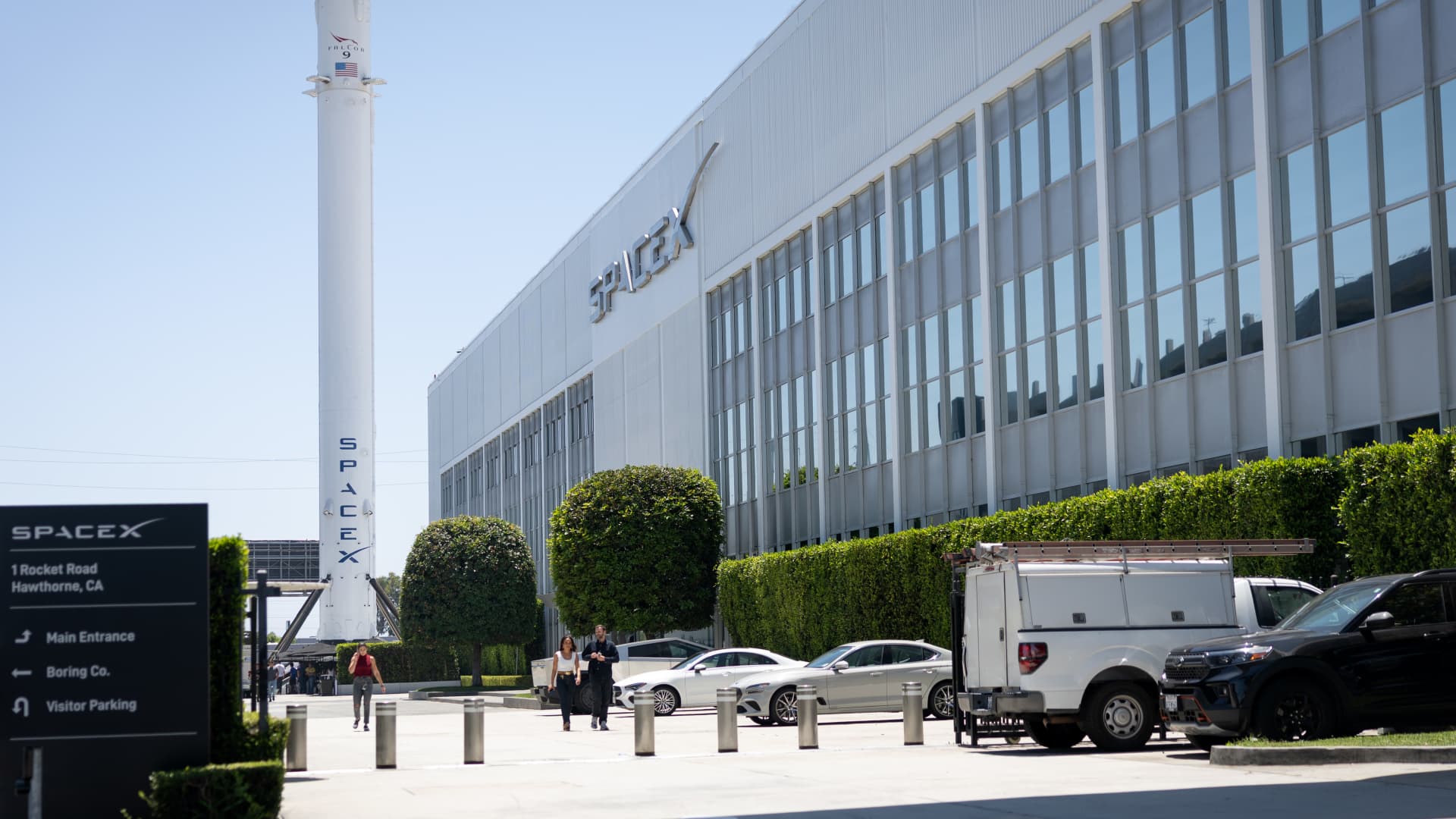
SpaceX’s significant increase in AI spending has triggered investor apprehension, despite the company’s assurances of rapid payback. Following its first earnings report post-IPO, the aerospace and satellite communications giant saw its shares drop as capital expenditures for AI far exceeded analyst expectations, raising questions about its immediate financial strategy.
🚀 Tech Strategy & Market Disruptions
- Aggressive AI Investment. SpaceX’s Q2 2026 capital expenditures surged over sixfold to $18.4 billion, more than double total sales for the quarter, with over 80% allocated to AI infrastructure, far surpassing analyst estimates.
- Shift to AI Compute Reselling. Despite being a newcomer in AI models, SpaceX is actively competing with cloud giants like Microsoft and Amazon by selling vast compute capacity from its Colossus data centers, aiming for a less than one-year payback on these investments.
- Ambitious Revenue Targets. CFO Bret Johnsen projects an annualized recurring revenue (ARR) of $100 billion by the end of 2026, driven by new cloud service contracts totaling billions, a dramatic leap from its 2025 revenue of under $19 billion.
In its first quarterly disclosure since going public in June, SpaceX reported strong revenue growth, up 92% year-over-year. However, the $18.4 billion in capital expenditures, largely driven by SpaceX AI spending, overshadowed this performance. This figure dwarfed the $13.22 billion analyst consensus from FactSet and represented more than double the quarter’s total sales. This substantial outlay contributed to a 7.5% drop in shares after hours, wiping out earlier gains and placing the stock more than 20% below its IPO price.
The company, which entered the AI market through its xAI merger in February, is attempting to compete in a crowded field currently dominated by OpenAI, Anthropic, and Google in models, and against established cloud providers like Microsoft and Amazon in compute capacity. SpaceX’s strategy involves monetizing its extensive AI infrastructure by reselling compute power, a dual monetization approach outlined in its IPO prospectus. Recent agreements include substantial deals with Google ($920 million/month), Anthropic ($1.25 billion/month for three years), and Reflection AI ($150 million/month).
- SpaceX’s AI unit reported an operating loss of $1.26 billion on $2.56 billion in revenue in Q2, following a $2.47 billion loss on $818 million in revenue in Q1.
CFO Bret Johnsen defended the aggressive capital deployment, asserting that the AI compute investments yield a payback in less than a year. He highlighted $6.7 billion in new cloud services revenue contracted for the first six months of the current quarter, reinforcing the company’s aggressive revenue trajectory. Elon Musk reiterated confidence in achieving $100 billion in ARR by year-end, stating, “To be clear, the $100 billion ARR in December is not a question mark.”
This massive investment in AI infrastructure, driven by the construction of data centers like the Colossus facility in Memphis, creates a clear disruption flow. The rapid deployment of high-density AI compute capacity directly translates into a surplus of available processing power. This surplus then enables aggressive reselling strategies, offering competitive rates or unique capabilities to other AI developers and cloud-dependent enterprises. This, in turn, disrupts the traditional cloud market by introducing a new, albeit specialized, large-scale compute provider, potentially shifting demand and pricing dynamics for advanced AI workloads across the broader technology market trends.
CTO Insight: “The sheer scale of SpaceX’s AI capital expenditure reflects a strategic imperative to vertically integrate and control critical compute resources, bypassing traditional cloud providers. While the near-term financial optics may be concerning to Wall Street, owning the infrastructure could yield significant long-term competitive advantages and margin control, especially as AI demand continues its exponential rise. It’s a high-stakes play on fundamental compute commodity, albeit with execution risks.”
Below are key financial metrics highlighting SpaceX’s AI ventures:
| Metric | Q2 2026 (AI Unit) | Q1 2026 (AI Unit) | 2025 (Total Company) |
|---|---|---|---|
| Total Capital Expenditures | $18.4 Billion (total) | N/A | N/A |
| AI-related Capex % | ~80%+ | N/A | N/A |
| AI Unit Revenue | $2.56 Billion | $818 Million | N/A |
| AI Unit Operating Loss | $1.26 Billion | $2.47 Billion | N/A |
| 2026 ARR Target | $100 Billion | N/A | N/A |
| Legal Accrual | $354 Million | N/A | N/A |
SpaceXAI Market Adoption Challenges
SpaceX’s aggressive buildout of AI compute capacity, particularly at its Colossus data centers, indicates a push into a highly competitive market where established players like Google, Amazon, and Microsoft already dominate. While the company has secured significant contracts with Anthropic and Google, the necessity to resell capacity suggests an initial oversupply relative to its internal needs or the pace of market absorption. The challenge lies in sustaining these high-value contracts and attracting new clients in a landscape where trust, scalability, and specialized services are paramount. Furthermore, concerns regarding environmental impact, such as the lawsuit over natural gas turbines, could add regulatory and reputational hurdles to broader market adoption for its facilities. Success hinges not just on raw compute power, but on the integrated ecosystem and service differentiation SpaceX can offer, as detailed in Bloomberg’s technology coverage.
SpaceX Platform Architecture Strategy
SpaceX’s AI platform architecture appears to be based on a vertically integrated model, where the company not only develops AI models (via xAI and Grok) but also constructs and operates the underlying compute infrastructure. This includes massive data centers like Colossus in Memphis, with ambitious plans for 20 gigawatts of capacity. This strategy is distinct from many AI developers who rely heavily on hyperscale cloud providers. By owning and optimizing its hardware stack, power, and cooling, SpaceX aims to achieve greater efficiency, control, and potentially lower long-term operational costs for its AI operations, a key consideration for emerging technologies shaping industries. This capital-intensive approach aligns with Elon Musk’s history of end-to-end control, from rockets to satellite constellations, now extending to AI compute. This architecture could provide a significant advantage in specialized, high-performance AI workloads, as explored in Reuters’ analysis of tech innovation.
SpaceX’s AI Future: Balancing Ambition with Investor Skepticism
SpaceX’s massive investment in AI compute infrastructure represents a high-stakes wager on future AI demand, promising unprecedented revenue growth despite immediate financial losses. The company’s ability to swiftly convert capital expenditure into recurring cloud service revenue will be critical in assuaging Wall Street’s concerns.
- The immediate market reaction underscores investor sensitivity to large, unconventional capital outlays, especially from a newly public company.
- SpaceX’s shift into AI compute reselling diversifies its revenue streams but introduces it to intense competition from established tech giants.
- Achieving the $100 billion ARR target hinges on flawless execution of ongoing contracts and securing additional significant agreements, alongside navigating regulatory and environmental challenges.
Can SpaceX truly redefine the economics of AI infrastructure and secure its projected returns, or will its aggressive SpaceX AI spending continue to fuel investor unease?
### 📊 StockXpo Analyst’s View
Market Impact: SpaceX’s AI spending spree is a significant test of investor appetite for long-term growth versus near-term profitability. While the scale of contracts with Google and Anthropic is impressive, the substantial operating losses in its AI unit indicate the immense upfront cost and the competitive nature of this market. Investor sentiment will remain volatile as the market weighs the promised rapid payback against current cash burn and the risks of competing with established cloud giants. This could put pressure on other high-growth tech companies to justify their own capital expenditures, impacting broader technology market trends.
Sector To Watch: The AI infrastructure and specialized cloud services sectors are unequivocally the ones to watch. SpaceX’s entry intensifies competition, potentially driving down costs or spurring innovation in compute efficiency. Companies like Nvidia (NVDA), which supply the underlying hardware, will continue to benefit from this demand, but firms offering alternative compute or energy-efficient data center solutions may also see increased interest. Additionally, investors should monitor the regulatory environment surrounding data center energy consumption and environmental impact, which could affect operational costs and expansion plans, offering educational tech insights for investors.
Financial Disclaimer:
StockXpo.com is a financial news aggregator and educational portal, not a registered investment advisor or broker-dealer. All information, news, and analysis provided herein are strictly for educational purposes and do not constitute investment, financial, legal, or tax advice. Investing in the stock market involves high risks, and past performance is not indicative of future results. StockXpo will not be liable for any financial losses or investment damages. Always consult a certified financial advisor before making market decisions.
MORE IN INSIDE TECHNOLOGY

Starlink India: Regulatory Hurdles and Innovation-Driven Growth Risks
Published: Friday, October 9, 2026 · 12:48 AM
Starlink Launch: India’s Digital Transformation Faces Regulatory Risk
Published: Thursday, October 8, 2026 · 1:51 AM