Published: Wednesday, August 5, 2026 · 9:35 AM | Updated: Wednesday, August 5, 2026 · 9:35 AM
📊 87 views




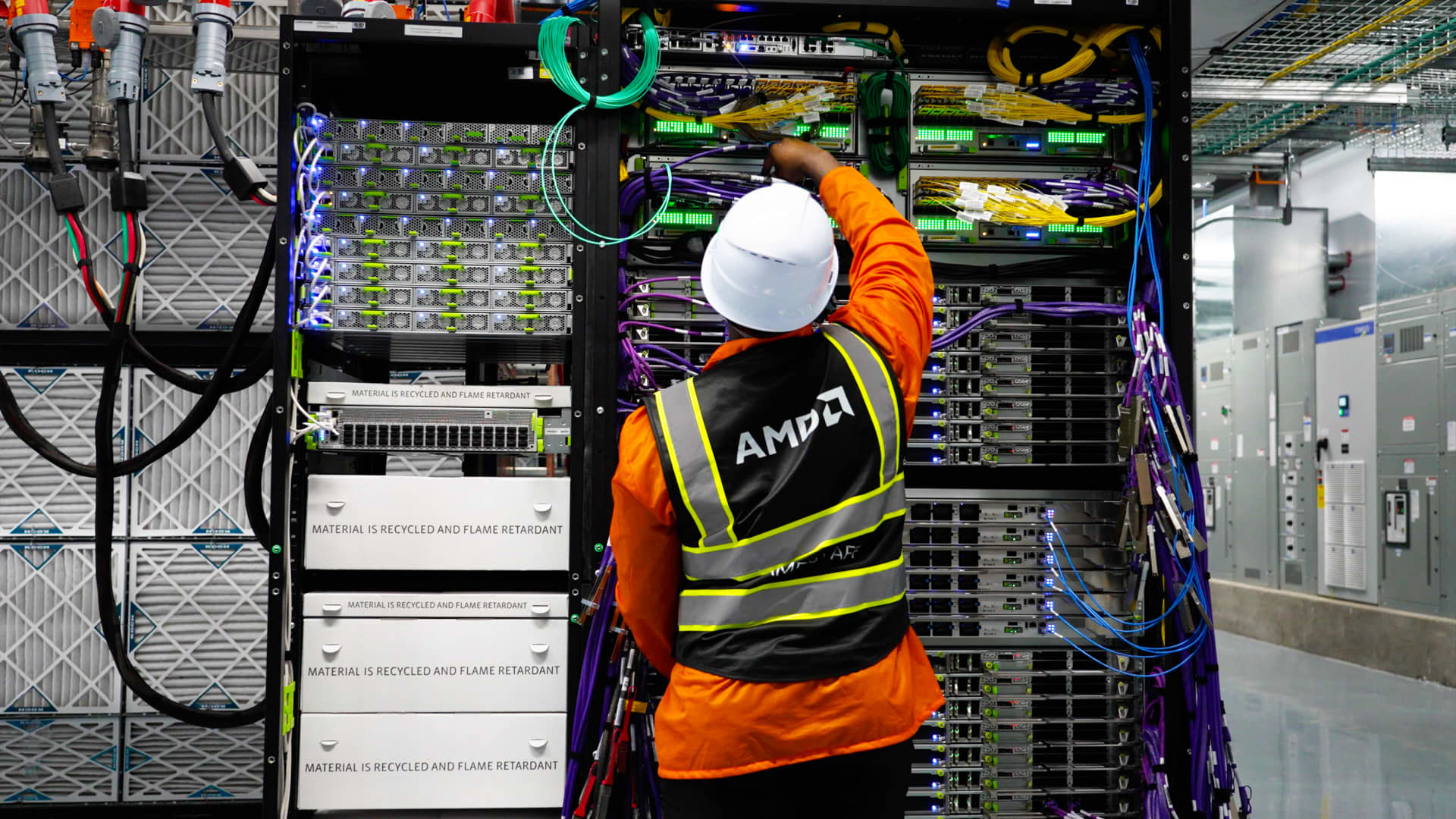
AMD’s recent earnings report highlights the intense pressure on semiconductor innovators to deliver flawless performance metrics to satisfy demanding capital markets. Despite beating revenue expectations for the second quarter, the company’s premarket stock slide demonstrates a growing disconnect between solid business growth and hyper-extended investor expectations. As the market reassesses chip valuations, the narrative shifts from simple supply-chain metrics to systemic execution and software ecosystem depth.
🚀 Tech Strategy & Market Disruptions
- Asymmetrical Market Standards. Beating consensus estimates is no longer sufficient when high-conviction momentum trades demand perfect executions.
- Data Center Dominance. Hyper-scale cloud builders continue to scale infrastructure, generating explosive demand for hybrid CPU-GPU setups.
- Long-Term Market Expansion. Raising target addressable valuations for accelerators signals structural faith in corporate artificial intelligence spending.
Analyzing the underlying numbers reveals that corporate data center sales drove much of the expansion, climbing 107% on an annual basis to $6.7 billion. While this performance demonstrates strong market positioning, some analysts notes that the results fell short of whispered, highly optimistic scenarios. Keeping track of changing technology market trends shows that the broader market is growing cautious of high valuations, even when fundamental execution remains historically strong.
This tension highlights the competitive dynamics between legacy hardware makers and nimble market disruptors as enterprise buyers ramp up enterprise data center investments globally. The rapid growth of cloud workloads requires a massive deployment of high-density accelerators, a sector where Nvidia currently holds a dominant market share. While AMD has successfully positioned its MI300 platform as a viable alternative, scaling production to meet this massive demand remains a complex operational challenge.
- Consensus beating revenue of $11.54 billion reflects strong product market fit.
- Sustained CPU and GPU volume growth signals resilient demand from cloud providers.
- Elevated pre-earnings valuation multiples left very little margin for error.
This market shift follows a predictable sequence: High AI Hardware Valuation -> Strong Fundamental Earnings Beat -> Unmet Whispered Targets -> Selective Stock Repricing.
From a solution architecture perspective, hardware performance is only half the battle; real disruption occurs when the software stack becomes mature enough to enable seamless, vendor-agnostic deployments across multi-cloud environments.
| Metric | Reported Value | Growth / Year-over-Year |
|---|---|---|
| Q2 Total Revenue | $11.54 Billion | Up 50% YoY |
| Data Center Sales | $6.70 Billion | Up 107% YoY |
| Estimated 2028 Industry TAM | $2.00 Trillion | Up from $500B Previous Estimate |
AMD Platform Architecture
From an engineering standpoint, the company’s chiplet architecture design has been key to its ability to scale processing power cost-effectively. By dividing monolithic silicon into smaller, specialized functional dies, the platform achieves higher manufacturing yields and greater design flexibility than traditional designs. This structural approach allows the rapid integration of high-bandwidth memory alongside processing cores, a vital requirement for handling large-scale machine learning datasets.
This layout allows the company to rapidly deploy custom silicon solutions for enterprise customers exploring emerging technologies. By decoupling the core architecture from peripheral connectivity components, development cycles are shortened, allowing faster responses to new market demands. However, maintaining high-speed communication between these chiplets requires sophisticated packaging techniques, which can introduce supply chain risks if manufacturing partners experience capacity constraints.
AMD Market Adoption Challenges
Despite impressive hardware specifications, software compatibility remains a major hurdle for widespread market adoption. Developers are deeply accustomed to Nvidia’s proprietary CUDA framework, which has been the industry standard for a decade. Transitioning enterprise workloads to open-source alternatives like ROCm requires additional software development effort, presenting a hurdle for many IT organizations.
Industry tracking from sources monitoring global semiconductor demand shifts highlights that hardware specs alone do not guarantee design wins. Systems integrators often favor platforms with established, plug-and-play software ecosystems to minimize integration risks. By reviewing our educational tech insights, enterprises can better evaluate the total cost of ownership differences between competing hardware architectures beyond raw processing benchmarks.
Navigating the High Valuation Stakes of AMD in the AI Era
AMD’s solid financial performance shows its strong position in the growing AI hardware market, despite recent stock market volatility. The company’s data center business is growing rapidly, proving its ability to capture market share in high-performance computing. However, short-term stock fluctuations highlight the challenge of balancing long-term growth with high market expectations.
- Operational performance remains strong, driven by explosive data center sales.
- The open-source software stack is improving, helping to lower barriers to adoption.
- Market volatility highlights the risk of high valuations in the semiconductor sector.
Will AMD’s hardware innovations and expanding platform ecosystem be enough to challenge established software standards before high valuations spark a broader market correction?
### 📊 StockXpo Analyst’s View
Market Impact: Short-term market swings show that tech stocks face high expectations, where even strong earnings beats can trigger sell-offs. This dynamic could encourage investors to look for tech companies with more reasonable valuations.
Sector To Watch: The hardware supply chain and packaging sectors are critical to watch, as packaging bottlenecks could limit growth even if chip demand remains strong.
Financial Disclaimer: StockXpo.com is a financial news aggregator and educational portal, not a registered investment advisor or broker-dealer. All information, news, and analysis provided herein are strictly for educational purposes and do not constitute investment, financial, legal, or tax advice. Investing in the stock market involves high risks, and past performance is not indicative of future results. StockXpo will not be liable for any financial losses or investment damages. Always consult a certified financial advisor before making market decisions.
MORE IN INSIDE TECHNOLOGY

Starlink India: Regulatory Hurdles and Innovation-Driven Growth Risks
Published: Friday, October 9, 2026 · 12:48 AM

Starlink Launch: India’s Digital Transformation Faces Regulatory Risk
Published: Thursday, October 8, 2026 · 1:51 AM