Published: Tuesday, August 4, 2026 · 7:14 AM | Updated: Tuesday, August 4, 2026 · 7:14 AM
📊 135 views




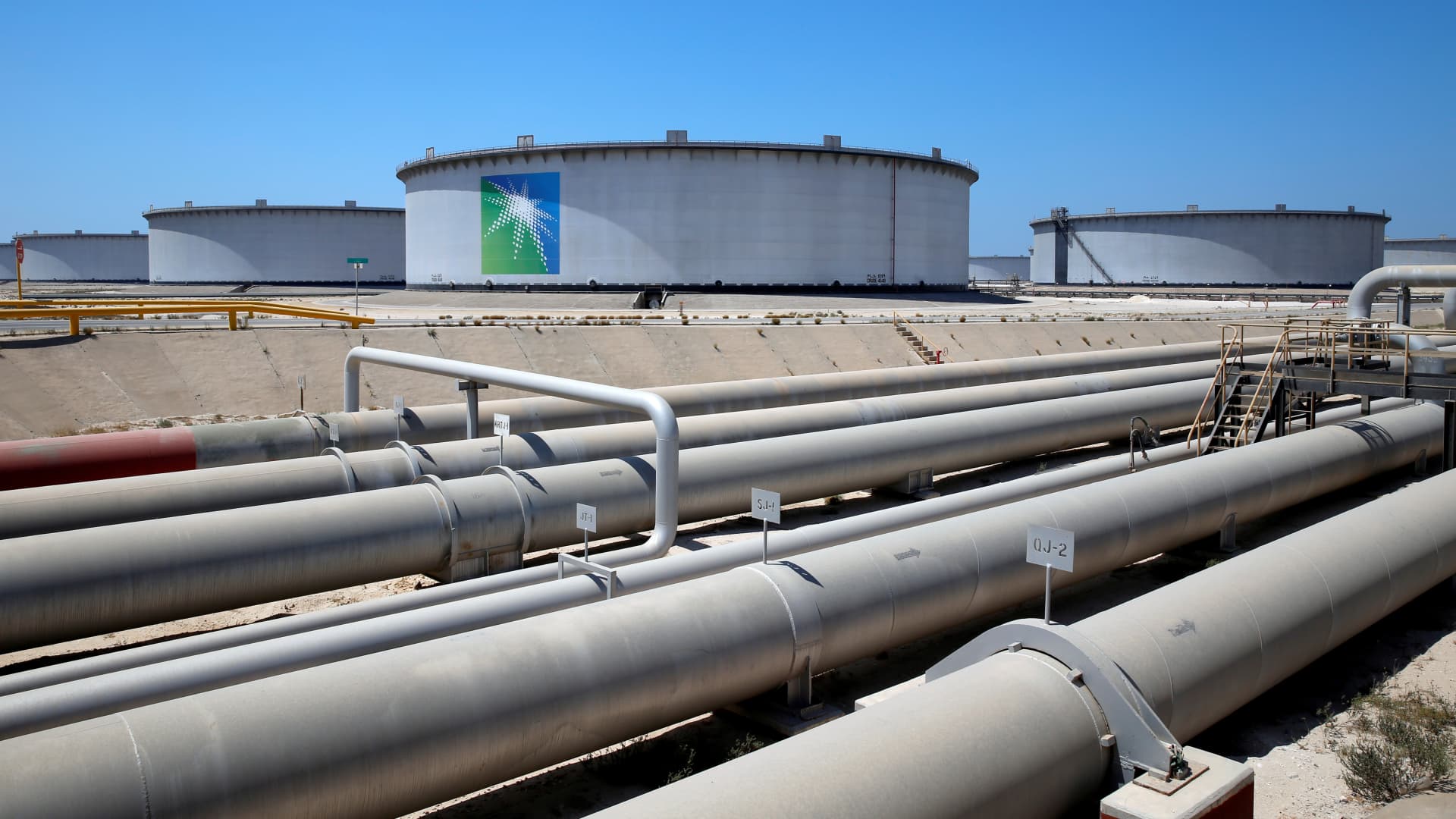
Saudi Aramco posted a significant 33% jump in second-quarter profits, driven by elevated oil prices amid ongoing Middle East geopolitical tensions. This robust performance underscores the energy giant’s strategic resilience in a volatile market, offering crucial insights for long-term capital preservation and alpha generation within diversified portfolios.
💎 Strategic Investment & Portfolio Insights
- Profit Resilience: Saudi Aramco profits surged 33% to $33.4 billion, demonstrating robust performance despite regional instability and beating analyst estimates.
- Strategic Adaptability: The company successfully mitigated supply disruptions by leveraging its East-West pipeline, bypassing the Strait of Hormuz to maintain export capacity.
- Dividend Stability: A Q2 base dividend of $21.9 billion affirms strong shareholder returns, supported by high crude and refined product prices.
Saudi Aramco, the world’s largest oil producer, announced a substantial 33% increase in its second-quarter net income, reaching 125.2 billion Saudi riyal ($33.4 billion). This robust financial performance significantly surpassed analyst expectations of $31.59 billion, reflecting a period marked by heightened crude oil and refined product prices. The surge in Saudi Aramco profits comes amidst ongoing severe disruption in the Strait of Hormuz due to the escalating Middle East conflict, particularly the Iran war, which has tightened global oil supply.
The company’s operational continuity has been a critical factor. Amid geopolitical friction, Aramco effectively utilized its 1,200-kilometer East-West pipeline to the Red Sea. This strategic infrastructure allowed it to bypass the chokepoint of the Strait of Hormuz, maintaining maximum export capacity at 7 million barrels per day. This adaptability highlights a key differentiator in a high-risk operational environment, as confirmed by industry reports.
‘Despite the unprecedented supply disruption through the Strait of Hormuz, we continued to demonstrate our ability to maintain business continuity by capitalizing on our diverse asset base and multi-decade planning, including strategic infrastructure such as the East-West Pipeline, storage capacity, and export terminals,’ stated Aramco President and CEO Amin H. Nasser. This capacity to sustain production and exports under challenging circumstances validates its long-term investment viability.
This trend of elevated energy sector earnings is not isolated to Aramco. Major U.S. oil companies like Exxon Mobil (XOM) and Chevron (CVX) also reported exceptional quarterly profits. Exxon’s Q2 profits more than doubled to $14.5 billion, while Chevron’s surged nearly 400% to $12 billion. This situation has even drawn criticism from President Donald Trump, who publicly expressed disapproval of these companies making ‘too much money’ from high fuel prices during the conflict. The broader market sentiment, as discussed in recent market trend analysis, suggests that while short-term gains are evident, political pressures and global demand shifts remain potent forces.
Key highlights from Aramco’s Q2 performance include:
- Cash flow from operating activities reached $25.4 billion, indicating strong internal liquidity generation.
- The gearing ratio stood at 6.2% by end of June, a slight increase from 4.8% in Q1, reflecting ongoing investment alongside robust earnings.
- Continued strategic utilization of the East-West pipeline to enhance supply flexibility and reduce reliance on vulnerable shipping lanes.
The Broader Implications of Energy Supply Resilience
Elevated geopolitical risk in critical oil-producing regions directly translates into heightened volatility and upward price pressure on crude oil benchmarks. This dynamic leads to an asset revaluation of major energy producers like Saudi Aramco, where their intrinsic value is bolstered by higher commodity prices and demonstrated operational resilience. For portfolio strategists, this necessitates a careful rebalancing towards assets capable of generating alpha in inflationary or supply-constrained environments, ensuring long-term capital preservation against market uncertainties.
Saudi Aramco’s ability to navigate severe geopolitical disruptions via strategic infrastructure offers a compelling case for its role as a defensive energy allocation, particularly for institutional portfolios seeking sustained income and exposure to critical global commodities.
Key Financial Metrics: Q2 2026
| Metric | Value (Q2 2026) | Significance for Investors |
|---|---|---|
| Adjusted Net Income | $33.4 billion | Exceeded analyst expectations, demonstrating robust profitability driven by higher oil prices. |
| Cash Flow from Operating Activities | $25.4 billion | Strong operational cash generation provides capital for investments, dividends, and debt reduction. |
| Gearing Ratio | 6.2% | Reflects financial leverage; a low ratio indicates healthy balance sheet strength, though slightly up from Q1. |
| Q2 Base Dividend | $21.9 billion | Consistent shareholder returns underscore commitment to yield, appealing to income-focused investors. |
Saudi Aramco Competitive Benchmarking: A Global View
When evaluating global energy giants, Saudi Aramco stands apart due to its unparalleled reserve base, low lifting costs, and integrated upstream-downstream operations. Unlike publicly traded international oil companies (IOCs) such as Exxon Mobil (XOM) or Chevron (CVX), Aramco benefits from direct state backing, which provides a unique strategic advantage in large-scale infrastructure projects and long-term supply agreements. Its market capitalization and production capacity far exceed those of its Western counterparts, solidifying its position as the world’s most dominant oil producer. However, this state ownership also introduces geopolitical sensitivities and dependency on Saudi Arabia’s national policy, which can diverge from pure commercial interests. While IOCs grapple with increasing ESG pressures and diversification into renewables, Aramco’s primary mandate remains oil and gas production, making it a pure-play bet on conventional energy, as explored in recent global market analyses.
Saudi Aramco Risk-Reward Matrix: Navigating Volatility
Investing in Saudi Aramco presents a distinct risk-reward profile heavily influenced by global oil price dynamics and regional stability. The reward hinges on its ability to generate substantial free cash flow from its vast, low-cost reserves, supported by a strong dividend policy. The 33% profit jump exemplifies this upside potential during periods of supply constraint and elevated prices. However, significant risks persist:
- Geopolitical Instability: The ongoing Iran war and broader Middle East tensions pose direct threats to production and shipping routes, despite mitigation strategies like the East-West pipeline.
- Commodity Price Volatility: While currently a tailwind, a sustained downturn in crude oil prices, potentially driven by global recession or rapid energy transition, would significantly impact profitability.
- Regulatory and Political Pressure: As seen with President Trump’s comments on U.S. oil majors, state-owned entities often face unique political scrutiny and calls for price controls, impacting long-term revenue predictability.
- ESG Transition: Increasing global focus on climate change and renewable energy could eventually erode demand for fossil fuels, though Aramco’s current scale offers substantial insulation.
For investors prioritizing capital growth, careful consideration of these factors is crucial for prudent portfolio strategy.
Saudi Aramco’s Strategic Resilience: An Outlook for Energy Investors
Saudi Aramco’s robust second-quarter performance, marked by a substantial profit increase and operational adaptability amidst regional conflict, firmly positions it as a resilient force in the global energy market. The company’s ability to leverage its strategic infrastructure to bypass supply chokepoints underscores its unique competitive advantages and commitment to shareholder returns through significant dividends.
- Sustained Profitability: Higher crude and refined product prices, coupled with efficient operations, are driving exceptional earnings.
- Operational Agility: The East-West pipeline proved critical in maintaining export volumes despite severe regional disruptions.
- Shareholder Value: A generous Q2 dividend payout reinforces the company’s commitment to delivering consistent returns.
How will the evolving geopolitical landscape and global energy demand shape Saudi Aramco’s long-term trajectory and its intrinsic value within diversified portfolios?
📊 StockXpo Analyst’s View
Market Impact: Saudi Aramco’s strong earnings inject a bullish sentiment into the broader energy sector, suggesting that despite calls for lower prices, the fundamental supply-demand dynamics, exacerbated by geopolitical risk, continue to favor producers. This performance could reinforce investor confidence in traditional energy plays, potentially attracting more capital to the segment and influencing overall market insights.
Sector To Watch: The upstream oil and gas sector, particularly integrated majors with robust infrastructure and low production costs, remains compelling. Companies with diversified asset bases and operational flexibility, similar to Aramco’s pipeline strategy, are likely to outperform. Furthermore, the defense sector may also see continued interest as global tensions highlight geopolitical risks, affecting investor sentiment towards stability and security.
Financial Disclaimer:
StockXpo.com is a financial news aggregator and educational portal, not a registered investment advisor or broker-dealer. All information, news, and analysis provided herein are strictly for educational purposes and do not constitute investment, financial, legal, or tax advice. Investing in the stock market involves high risks, and past performance is not indicative of future results. StockXpo will not be liable for any financial losses or investment damages. Always consult a certified financial advisor before making market decisions.
MORE IN INSIDE INVESTMENT NEWS
PepsiCo Earnings Forecast Cut: Alpha Generation Amid North American Lag
Published: Thursday, October 8, 2026 · 6:41 AM

Third-Quarter Earnings Season: Alpha Opportunities Emerge as S&P 500 Profits Boom
Published: Wednesday, October 7, 2026 · 3:18 PM