Published: Monday, August 3, 2026 · 1:17 PM | Updated: Monday, August 3, 2026 · 1:17 PM
📊 105 views




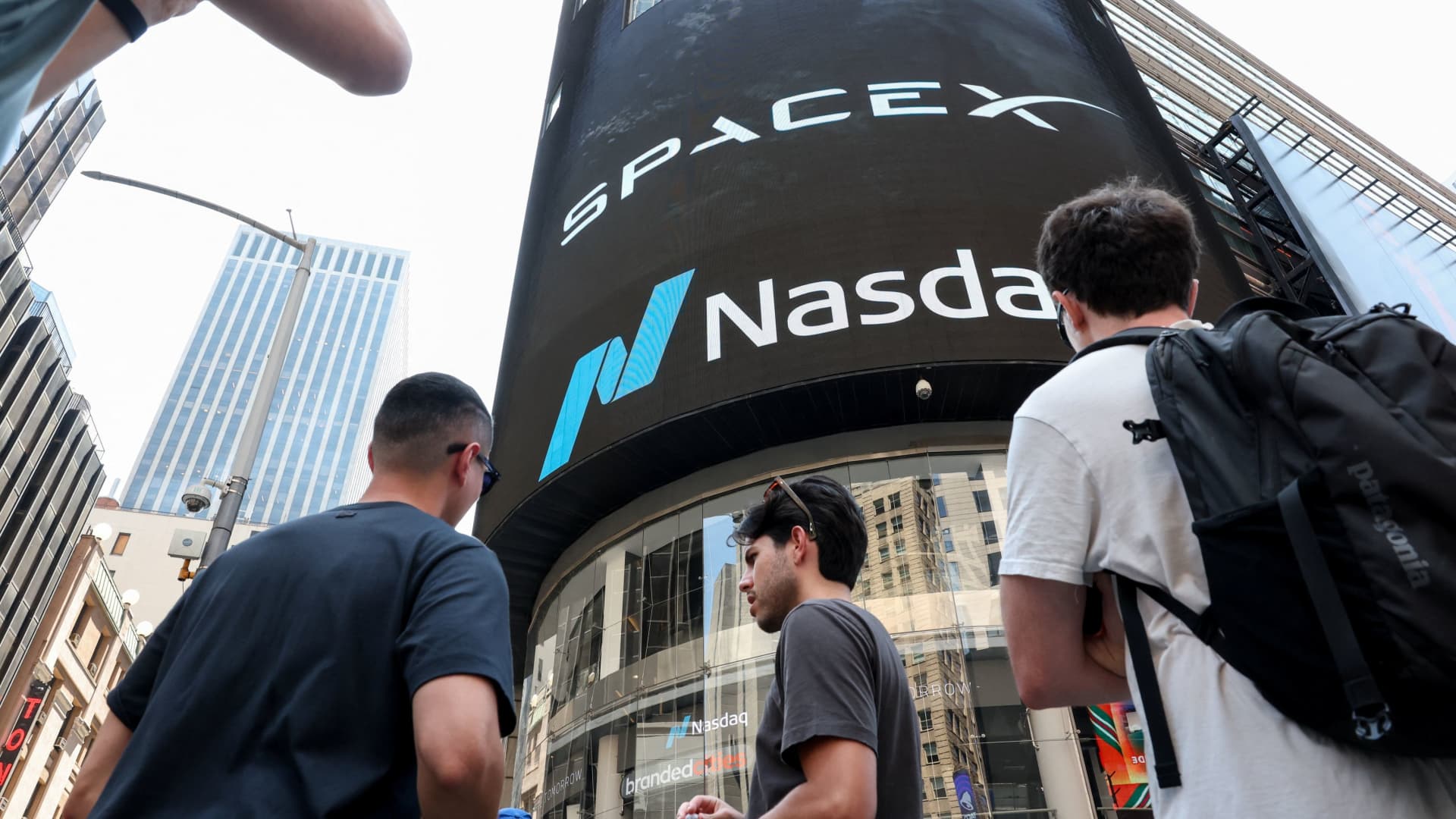
SpaceX (SPCX) faces a critical juncture, with its highly anticipated IPO quickly turning into a significant SpaceX IPO plunge. Having shed over $500 billion in market capitalization since its June 12 debut, the company’s first earnings report as a public entity arrives amidst intense investor scrutiny and widespread market anxiety. This analysis dissects the underlying factors, intrinsic value considerations, and strategic portfolio implications for long-term capital preservation.
💎 Strategic Investment & Portfolio Insights
- Post-IPO Market Value Erosion. SpaceX has lost over $500 billion in market cap, falling more than 50% from its intraday high, signaling substantial investor disappointment akin to (but larger than) Facebook’s 2012 IPO.
- Starship & AI: Dual Catalysts & Risks. The investment thesis hinges on Starship’s full reusability for cost reduction and the success of its nascent AI initiatives, which include xAI integration, the Cursor acquisition, and compute capacity leasing deals.
- Valuation & Liquidity Concerns. With a P/S ratio in the 70s, significant cash burn, and looming lock-up expirations, the current $1.4 trillion market cap lacks traditional financial support, introducing considerable volatility and liquidity pressures.
Since its public debut, SpaceX has endured a tumultuous period, losing over $500 billion in market capitalization, a stark contrast to the initial enthusiasm surrounding Elon Musk’s ambitious space and AI ventures. The stock’s performance mirrors the early struggles of Facebook’s 2012 IPO, yet the scale of value destruction for SpaceX is five times greater, highlighting the intensity of investor disappointment. This backdrop sets a tense stage for the company’s inaugural earnings report, following recent unfavorable reports from Tesla and mixed results from tech’s hyperscalers.
The core investment narrative for SpaceX extends beyond conventional metrics, largely resting on Musk’s audacious vision for space colonization and AI dominance. Unlike its trillion-dollar peers, SpaceX’s $1.4 trillion market cap is not underpinned by traditional financial fundamentals. Its price-to-sales ratio hovers in the 70s based on trailing revenue, coupled with billions in quarterly cash burn and nearly twice as much debt as cash. This aggressive valuation implies massive future growth that is yet to materialize in today’s financial statements.
Adding to the pressure, the expiration of rolling lock-up restrictions is imminent, potentially unleashing a wave of new shares onto the market as early investors gain their first opportunity to sell. This impending liquidity event, combined with existing bearish sentiment, has proven profitable for short sellers, who have accumulated an estimated $8.3 billion in paper profits since the IPO, according to S3 Partners. This represents one of the most aggressive bearish builds observed in a mega-cap name pre-earnings, noted Matthew Unterman, S3 Partners’ head of research.
- Starship’s Strategic Imperative: The fully reusable Starship rocket is central to SpaceX’s long-term economics. It promises to dramatically reduce launch costs for cargo and people, enabling the rapid expansion of Starlink – the company’s only profitable segment – and potentially opening new frontiers in space tourism and orbital AI compute. SpaceX’s IPO prospectus explicitly warned that failure to achieve full reusability could lead to higher costs, slower deployments, delayed revenue, and reputational damage. The recent 13th test flight saw a ‘hard splashdown’ of the Super Heavy booster, underscoring ongoing development challenges.
- AI Ambitions & Revenue Diversification: Following its merger with xAI in February, SpaceX is aggressively pursuing AI, aiming to compete with industry leaders like Google and Anthropic. This strategy requires massive semiconductor availability and compute capacity. Key initiatives include the $60 billion acquisition of AI-coding startup Cursor (expected Q3 closure) and the expansion of its Grok chatbot, which has secured contracts with the U.S. Department of Defense but also generated controversy and regulatory probes. To monetize its extensive buildout, SpaceX has been leasing excess compute capacity, securing significant deals with Google ($920 million/month), Anthropic (utilizing the Colossus 1 data center), and Reflection AI.
Analysts offer a mixed but largely optimistic outlook. Ben Harwood of New Street Research views the downturn as an ‘attractive entry point’ for long-term investors, citing ‘enormous’ growth potential and a wide market moat, with a $165 target price. Bernstein analysts, with a $239 target, emphasize management’s projected confidence over quarterly financials. Cantor analysts, holding a $246 target, anticipate hosted-compute profits and clearer capital funding strategies to alleviate pressures, suggesting SPCX is ‘approaching a bottom into the print.’ Regulatory hurdles, particularly Federal Aviation Administration approvals for Starship launches, and the continuous need for compute capacity in a resource-constrained world, remain critical factors.
Portfolio Positioning Effect: Re-evaluating High-Growth Speculation
Market Volatility & Asset Revaluation → Risk-Adjusted Allocation → Diversification Emphasis. The extreme volatility following the SpaceX IPO plunge serves as a potent reminder of the inherent risks in highly speculative, growth-oriented assets. For diversified portfolios, this necessitates a rigorous re-evaluation of risk-adjusted returns and capital allocation, potentially favoring smaller, more conservative positions or utilizing options strategies to hedge downside exposure. The broader market implications could encourage a flight to quality in certain tech segments while magnifying scrutiny on cash-flow-negative IPOs. Investors seeking deeper insights into managing market volatility can find valuable perspectives on StockXpo market analysis.
‘While the allure of disruptive technology is undeniable, prudent long-term investors must distinguish between visionary potential and present-day financial reality. SpaceX’s current valuation demands exceptional execution, making its first earnings call less about immediate profits and more about management’s strategic clarity and confidence in overcoming significant operational hurdles,’ commented the StockXpo CIO.
SpaceX’s Market Snapshot: Key Performance Indicators
Examining key financial and market indicators provides a clearer picture of SpaceX’s current standing:
| Metric | Value (Post-IPO) | Significance for Investors |
|---|---|---|
| Market Cap Loss | Over $500 Billion | Indicates substantial capital destruction for early retail investors and initial overvaluation. |
| Current Market Cap | $1.4 Trillion | Still a mega-cap, but not supported by traditional financial metrics like profitability or free cash flow. |
| Trailing P/S Ratio | In the 70s | Extremely high, signaling aggressive growth expectations already priced in, despite current cash burn. |
| Short Seller Profits | Approx. $8.3 Billion (S3 Partners) | Reflects strong bearish sentiment and profitable bets against the stock post-IPO. |
SpaceX Risk-Reward Matrix: Navigating Uncharted Orbital Territories
Investing in SpaceX presents a complex risk-reward profile, dominated by a few high-impact variables. The reward hinges on transformative success in fully reusable rocketry via Starship and the rapid monetization of its orbital data centers and AI services. Should Starship achieve consistent, rapid reusability, and its AI ventures scale effectively, the upside potential is substantial, justifying a significant premium.
However, the risks are equally pronounced. Operational failures in Starship development, regulatory delays from the FAA, intense competition in the burgeoning AI space, and potential capital misallocation could severely impair its long-term viability. Furthermore, the reliance on Elon Musk’s singular vision, while historically successful, introduces a key-person risk. The upcoming lock-up expirations also pose a near-term liquidity risk, potentially increasing share supply and downward pressure. For a comprehensive market analysis, investors should regularly check market analysis from leading financial platforms.
SpaceX Competitive Benchmarking: Beyond Earth’s Atmosphere
SpaceX operates in a unique intersection of aerospace manufacturing, launch services, satellite communications (Starlink), and nascent AI/compute infrastructure. While traditional aerospace companies like Boeing or Lockheed Martin are not direct competitors across all segments, Blue Origin (Jeff Bezos) remains a private rival in reusable rocket technology, albeit at a slower pace. In satellite communications, OneWeb and Amazon’s Project Kuiper are emerging competitors to Starlink.
The company’s foray into AI, particularly orbital data centers and services like Grok, places it in direct competition with hyperscalers such as Alphabet, Microsoft, and Amazon, as well as specialized AI firms like OpenAI and Anthropic. Unlike these established tech giants, SpaceX lacks diversified, profitable legacy businesses to cushion its capital-intensive moonshot projects. Its ability to leverage its unique space infrastructure for AI is a potential differentiator, yet it must contend with their massive R&D budgets and entrenched market positions. The competitive landscape for its various ventures, from rocket launches to advanced AI solutions, suggests intense pressure across multiple fronts, requiring an aggressive and well-funded strategy to maintain a competitive edge and drive growth for its investment opportunities, including long-term growth strategies.
The SpaceX IPO Plunge: A Defining Moment for Future Trajectory
The initial SpaceX IPO plunge has set a challenging stage for its first public earnings report, forcing investors to weigh audacious future potential against immediate financial realities. While the company’s vision for space exploration and AI dominance is compelling, its current valuation demands extraordinary operational execution and a clear path to profitability.
- SpaceX’s performance hinges critically on Starship’s rapid reusability and scaling its Starlink and AI compute ventures.
- Near-term volatility is expected due to lock-up expirations and the pressure to demonstrate progress on capital-intensive projects.
- Long-term investors require consistent updates on Starship development, AI monetization, and regulatory approvals to justify the premium.
Can management’s confidence and strategic clarity truly offset the immense financial pressures and execution risks outlined in this pivotal period?
📊 StockXpo Analyst’s View
Market Impact: The dramatic SpaceX IPO plunge and subsequent earnings report will likely act as a bellwether for investor appetite in highly speculative, pre-profit growth stocks. A strong narrative from management, particularly around Starship and AI compute monetization, could help stabilize sentiment, while any signs of further operational delays or increased cash burn could exacerbate market caution towards similar IPOs. The initial weakness also underscores the importance of a robust due diligence process for all high-profile public offerings, prompting renewed focus on intrinsic value for global business insights.
Sector To Watch: The space technology and AI infrastructure sectors are directly impacted. Success in Starship will accelerate the ‘space economy,’ benefiting component suppliers and related service providers. Furthermore, the burgeoning market for leased AI compute capacity, as exemplified by SpaceX’s deals with Google and Anthropic, highlights a critical growth area within the broader technology landscape. Companies facilitating this infrastructure or developing specialized AI applications could see increased investment, influencing our blog on market trends.
Financial Disclaimer:
StockXpo.com is a financial news aggregator and educational portal, not a registered investment advisor or broker-dealer. All information, news, and analysis provided herein are strictly for educational purposes and do not constitute investment, financial, legal, or tax advice. Investing in the stock market involves high risks, and past performance is not indicative of future results. StockXpo will not be liable for any financial losses or investment damages. Always consult a certified financial advisor before making market decisions.
MORE IN INSIDE INVESTMENT NEWS
HSBC Share Buyback: Bullish Capital Move Amid Strong Q3 Performance
Published: Tuesday, October 27, 2026 · 12:59 AM
AI Funding Fears Rattle Wall Street: Adjusting for Alpha and Preservation
Published: Saturday, October 24, 2026 · 12:28 PM