Published: Tuesday, July 21, 2026 · 10:37 AM | Updated: Tuesday, July 21, 2026 · 10:37 AM
📊 225 views





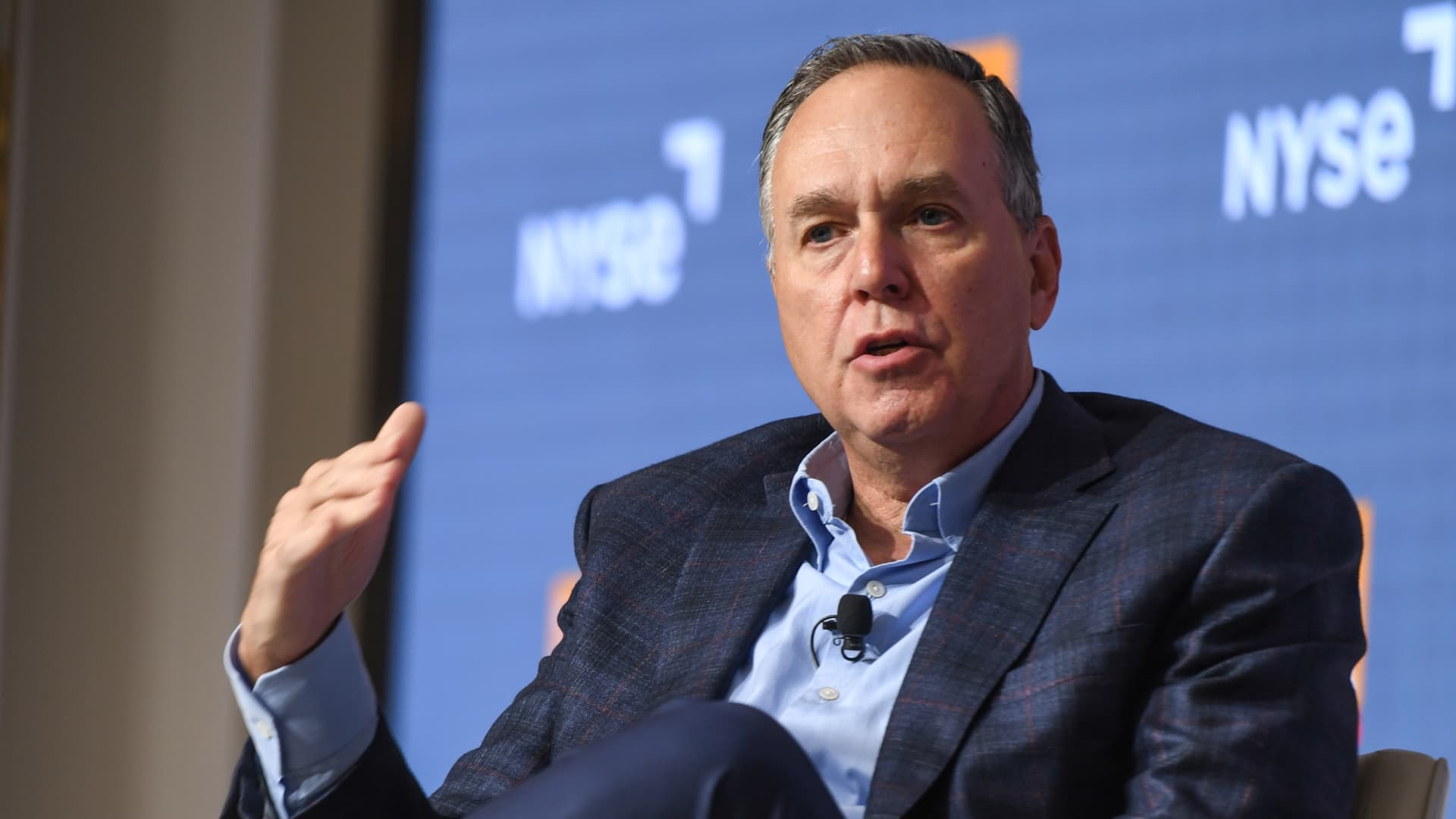
JPMorgan Chase CEO Jamie Dimon has issued a stark Jamie Dimon’s Warning, asserting that global markets are significantly underestimating a confluence of geopolitical and fiscal risks. His cautious stance challenges the prevailing optimism reflected in current equity and Treasury valuations, prompting a reevaluation of investor sentiment amidst a seemingly resilient U.S. economy.
🗝️ Corporate Strategy Insights
- Underpriced Global Risks. Dimon highlights that markets are not fully accounting for escalating geopolitical conflicts and mounting government deficits.
- Cautious Asset Allocation. He advises against purchasing stocks or long-dated U.S. Treasurys at current prices, forecasting potential for higher interest rates.
- Measured AI Outlook. While acknowledging AI’s transformative potential, Dimon warns of an unpredictable timeline and a challenging competitive landscape, drawing parallels to the early internet boom.
JPMorgan Chase CEO Jamie Dimon, a prominent voice in global finance, has reiterated his long-standing concerns regarding the financial markets’ apparent complacency towards significant global threats. In a recent interview, Dimon articulated a powerful Jamie Dimon’s Warning, suggesting investors are not adequately pricing in a growing list of geopolitical flashpoints, including ongoing conflicts in Ukraine and the Middle East, alongside persistent tensions between the U.S. and China. This cautious outlook arrives even as the S&P 500 has seen nearly a 10% return this year, buoyed by consumer spending, moderating inflation, and enthusiasm for artificial intelligence.
Dimon’s perspective stands in contrast to the recent strong performance observed across financial markets, with banks like JPMorgan Chase posting blockbuster quarterly results driven by robust trading and investment banking revenue. This resilience has often been cited as evidence that the U.S. economy is weathering external shocks better than anticipated. However, Dimon cautioned that while the global economy may have gained some resilience, particularly through reduced energy dependence, this does not preclude a sudden ‘tipping point’ from accumulating stressors. He emphasized that the persistent U.S. budget deficits pose a long-term risk, potentially leading to higher interest rates as ‘bond vigilantes’ demand greater compensation for financing government debt, a view that aligns with insights from global market trends.
On specific asset classes, Dimon stated he personally would not buy long-dated Treasurys, predicting that even if inflation returns to the Federal Reserve’s 2% target, the 10-year bond yield should likely settle between 4% to 4.5%. He extended similar caution to the broader equities market, indicating that while individual ‘great investments’ might exist, he would not be a buyer of the aggregate market at its current valuations. The enthusiasm around artificial intelligence also received a measured response from the banking titan. While acknowledging the ‘huge’ spending and probable long-term payoff, Dimon compared the current AI boom to the early days of the internet, where initial leaders like Yahoo and Netscape eventually faded, making way for later giants like Google and Meta. This suggests a potential for significant market volatility and an unpredictable path to profitability for many current AI players, a concept further explored through educational insights on market cycles.
- Geopolitical Volatility: Dimon specifically cited conflicts in Ukraine, the Middle East, and US-China tensions as underappreciated risks.
- Fiscal Pressures: Mounting government deficits in the U.S. are expected to exert upward pressure on interest rates over time.
- Asset Overvaluation: Both long-dated Treasurys and the broader stock market are considered overvalued given the current risk landscape.
- AI Market Maturity: The AI investment cycle is likened to the internet boom, implying a shakeout period before true leaders emerge.
His consistent warnings serve as a counter-narrative to market exuberance, suggesting that underlying structural and geopolitical fragilities remain potent. This perspective is critical for investors assessing their portfolio’s exposure to future shocks, emphasizing a need for vigilance in an environment where positive sentiment often overshadows potential downside risks, a consistent theme in business news.
The Strategic Ripple Effect of Dimon’s Caution
Jamie Dimon’s public stance on market risks creates a significant strategic ripple effect, primarily by injecting a dose of realism into investor expectations. This caution from the head of the world’s largest bank by market capitalization can lead to a shift in institutional capital allocation strategies, potentially diverting funds from riskier growth assets towards more defensive positions. For competitors, Dimon’s insights serve as a benchmark for risk assessment, implicitly challenging other financial institutions to stress-test their own balance sheets and investment portfolios against a more adverse macro scenario. A widespread acceptance of Dimon’s warning could precipitate:
Investor Caution → Demand for Safe Havens (e.g., shorter-dated Treasurys, high-quality corporate bonds) → Increased Market Volatility → Potential for Revaluation of Growth Stocks → Enhanced Focus on Operational Efficiency and Prudent Risk Management across the financial sector.
‘The core strategic takeaway from Jamie Dimon’s consistent warnings is a call for heightened prudence in capital allocation, signaling that long-term market leadership demands a robust understanding of tail risks often overlooked in periods of exuberance.’
Key Market Indicators and Dimon’s Insights
Key indicators influencing current market sentiment and Dimon’s assessment include:
- S&P 500 Year-to-Date Return: Approximately 10%, indicating strong market performance despite geopolitical uncertainties. This metric highlights the current market optimism that Dimon believes is unsustainable.
- Dimon’s 10-Year Treasury Yield Projection: 4% to 4.5%, even if inflation normalizes. This projection underscores his belief in underestimated fiscal pressures driving bond yields higher.
- JPMorgan Chase’s Recent Quarterly Results: Described as ‘blockbuster’ and ‘powered by surging trading and investment banking revenue.’ This demonstrates that even under perceived risks, major financial institutions can achieve operational efficiency and market leadership through astute management and diverse revenue streams.
JPMorgan Chase Strategic Analysis: Navigating Macro Headwinds
JPMorgan Chase, under Dimon’s leadership, has consistently demonstrated a strategic foresight in navigating complex economic landscapes. The bank’s robust balance sheet, diversified business model spanning consumer banking, corporate and investment banking, commercial banking, and asset & wealth management, positions it to absorb shocks. This allows Dimon the credibility to issue public warnings without necessarily implying internal distress, but rather a prudent, long-term view on systemic risks. Their strategy often involves maintaining significant capital buffers and being selective in growth areas, emphasizing risk-adjusted returns over pure market share expansion, a hallmark of their sustained corporate growth.
JPMorgan Chase Competitive Advantages: Resilience in Volatile Markets
JPMorgan Chase’s competitive advantages are deeply rooted in its scale, brand strength, and sophisticated risk management framework. The bank’s ability to generate strong revenue even during periods of market uncertainty, as evidenced by its recent quarterly results, highlights its operational efficiency. Its technological investments, while viewed with Dimon’s long-term caution on AI, are strategically deployed to enhance client services and back-office operations, further solidifying its market leadership. This integrated approach allows JPMorgan to sustain profitability and navigate economic cycles more effectively than many of its peers, leveraging its deep relationships and global footprint.
Jamie Dimon’s Market Outlook: Prudence Amidst Unseen Dangers
Jamie Dimon’s latest commentary serves as a crucial check on market exuberance, reminding investors that underlying geopolitical and fiscal vulnerabilities persist despite strong headline performance. His call for caution underscores the importance of a rigorous, long-term perspective in capital markets, advocating for a focus on risk mitigation and fundamental value.
- Dimon’s stance reinforces the need for investors to conduct thorough due diligence beyond current market sentiment.
- It suggests a potential for increased volatility and revaluation across asset classes if these underestimated risks materialize.
- The comparison to the internet boom for AI warns against over-speculation and highlights the importance of sustainable business models over hype.
Will market participants heed Dimon’s warnings before the next major inflection point?
📊 StockXpo Analyst’s View
Market Impact: Jamie Dimon’s Warning from such an influential figure will likely foster a more cautious sentiment, especially among institutional investors. While not an immediate market mover, his comments contribute to a growing narrative of macro fragility, potentially slowing capital inflows into riskier assets and increasing demand for hedging strategies. This could manifest as subtle downward pressure on growth stocks and a modest flight to quality in bond markets.
Sector To Watch: Given Dimon’s concerns on geopolitical stability and fiscal health, sectors highly sensitive to interest rate fluctuations or global trade disruptions, such as high-growth technology (due to valuation concerns) and globally exposed industrials, warrant close monitoring. Conversely, defensive sectors and companies with strong balance sheets and consistent free cash flow may find increased favor.
Financial Disclaimer:
StockXpo.com is a financial news aggregator and educational portal, not a registered investment advisor or broker-dealer. All information, news, and analysis provided herein are strictly for educational purposes and do not constitute investment, financial, legal, or tax advice. Investing in the stock market involves high risks, and past performance is not indicative of future results. StockXpo will not be liable for any financial losses or investment damages. Always consult a certified financial advisor before making market decisions.
MORE IN INSIDE BUSINESS

Young Airplane Scrapping: A $17 Million Engine Crisis Reshaping Aviation
Published: Saturday, October 24, 2026 · 8:26 AM
American Express Workforce Cuts: A Strategic AI Preparation
Published: Friday, October 23, 2026 · 9:50 AM