
Published: Monday, July 20, 2026 · 8:11 AM | Updated: Monday, July 20, 2026 · 8:11 AM
📊 256 views




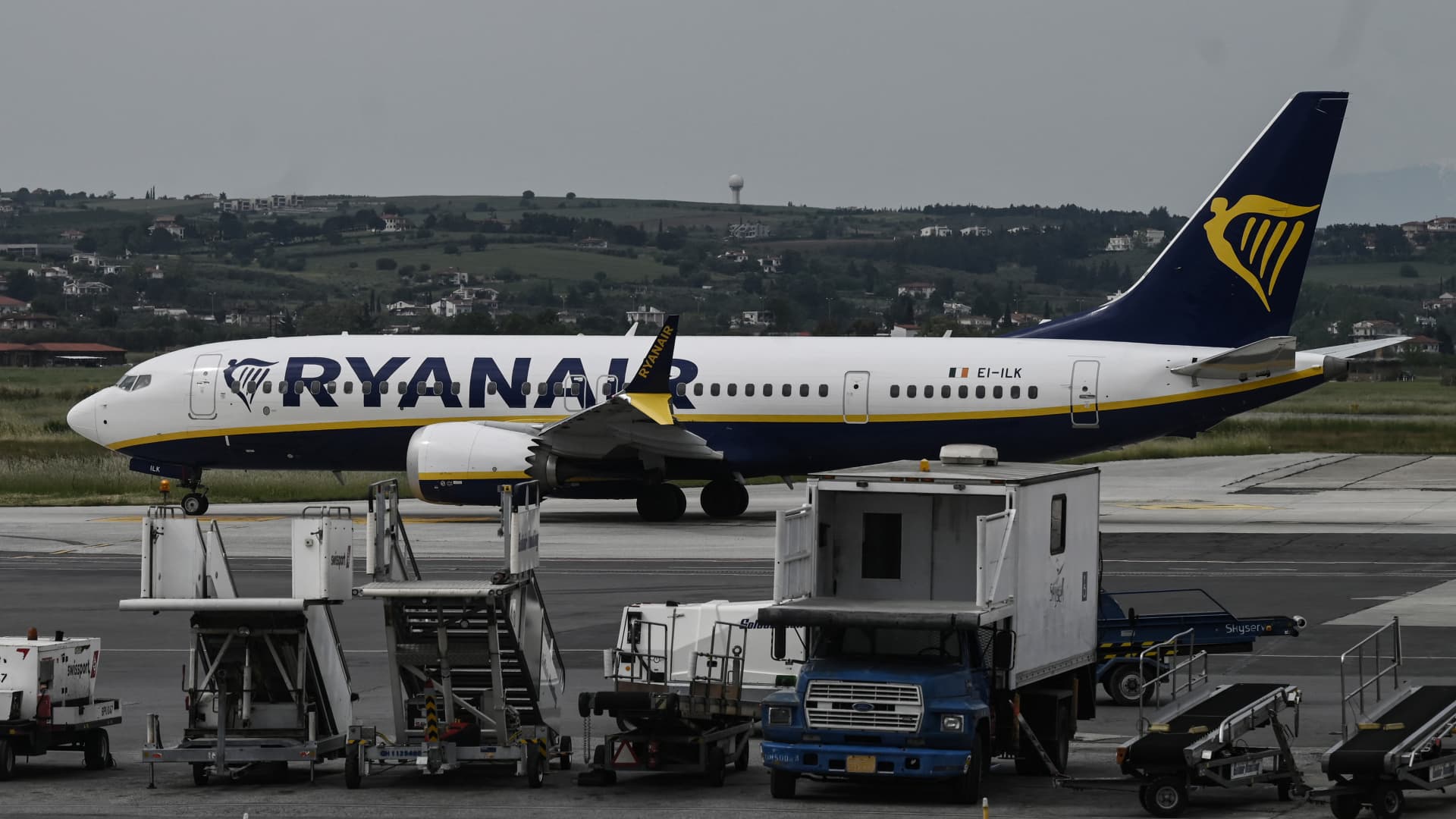
The Ryanair stock saw a notable decline of 5.6% following the airline’s announcement of a substantial 34% drop in first-quarter profit, primarily attributed to escalating fuel costs and dampened consumer confidence amidst ongoing Middle East tensions. This financial downturn signals a challenging period ahead for the European airline sector, even for market leaders.
💎 Strategic Investment & Portfolio Insights
- Fuel Cost Sensitivity. Ryanair’s Q1 profit hit highlights the critical vulnerability of airlines to unhedged fuel exposure, particularly amidst geopolitical shocks.
- Consumer Hesitancy Impact. Geopolitical conflicts are directly affecting consumer booking patterns, leading to later bookings and requiring fare stimulation, impacting revenue per seat.
- Competitive Advantage through Hedging. Ryanair’s strong hedging policy provides a notable cost advantage, potentially enabling it to weather market turbulence better than less-hedged competitors, positioning it as a defensive play within the sector.
Ryanair Holdings Plc reported a significant first-quarter profit after tax of 538 million euros ($615.3 million) for the April to June period, a sharp decline from 820 million euros in the previous year. This substantial 34% reduction was largely driven by a combination of factors, including surging operating costs and a decrease in average ticket fares. The airline noted that 20% of its jet fuel was unhedged, and the price for this portion more than doubled during the quarter, contributing significantly to an 11% increase in overall operating costs, reaching 3.81 billion euros.
Adding to the financial headwinds, average ticket fares saw a 6% decline. CEO Michael O’Leary attributed this to ‘consumer hesitancy’ and ‘later bookings’ stemming from the Middle East conflict, concerns about potential EU jet-fuel shortages, and broader economic uncertainty. Despite these immediate challenges, O’Leary emphasized that Ryanair’s ‘conservative hedging policy’ — with 80% of its 2027 jet fuel hedged at $67 per barrel and 15% for 2028 at $85 per barrel — offers a crucial ‘cost advantage over all other EU competitors’. This strategic stance, as noted by leading financial news outlets, is intended to insulate the airline from oil price volatility.
However, the market reacted swiftly to the news, with Ryanair stock falling 5.6% shortly after the market opened. The company has since issued cautious guidance for the remainder of its financial year, acknowledging that future operating costs are highly dependent on unhedged jet fuel prices. Profit after tax also remains ‘highly sensitive’ to geopolitical developments in regions like the Middle East and Ukraine. The International Air Transport Association’s Jet Fuel Price Monitor underscored the severity of the situation, reporting that the average price of jet fuel surged to $127 per barrel for the week ending July 10, a 41% increase from the prior year.
The challenges faced by Ryanair highlight a critical portfolio re-evaluation trigger: intensified geopolitical risks leading to commodity price volatility. This dynamic translates directly into increased operational costs for airlines, subsequently impacting profitability and stock valuations. For diversified portfolios, this signals a need to assess exposure to high-energy-consumption sectors. The policy shift of airlines prioritizing robust hedging strategies against volatile oil prices leads to asset revaluation, favoring those with stronger balance sheets and proactive risk management, and necessitating a portfolio rebalancing towards more resilient industries or companies with sustainable competitive advantages, such as superior cost structures or pricing power.
“In the current volatile climate, Ryanair’s emphasis on conservative fuel hedging isn’t just a cost management tactic; it’s a strategic moat. While short-term profit dips are unavoidable for the entire airline sector, Ryanair’s long-term competitive positioning could strengthen significantly relative to its less prepared peers. This creates a potential ‘flight to quality’ within the European airline industry for discerning investors.”
| Metric | Current Quarter (2026) | Prior Year (2025) | Significance |
|---|---|---|---|
| Profit After Tax | €538 million | €820 million | Reflects a 34% drop, signaling impact of higher costs and lower fares. |
| Operating Costs | €3.81 billion | ~€3.43 billion (estimated from 11% rise) | Increased by 11%, primarily due to unhedged fuel price doubling. |
| Ticket Fares | Declined 6% | N/A | Indicates consumer hesitancy and pricing pressure. |
| Unhedged Fuel Exposure | 20% | N/A | The primary driver of the cost surge, highlighting risk management. |
| Jet Fuel Price (IATA avg.) | $127 per barrel (July 10) | $90.07 per barrel (estimated from 41% rise) | Illustrates broader market pressure on all airlines. |
Ryanair Risk-Reward Matrix: Navigating Market Turbulence
For investors considering Ryanair stock, the current environment presents a complex risk-reward profile. The immediate risks include prolonged geopolitical instability, further spikes in unhedged fuel costs, and sustained consumer hesitancy that could further depress ticket fares. The airline’s conservative guidance reflects this uncertainty, with Q2 pricing trending modestly down year-over-year. However, the reward stems from Ryanair’s robust balance sheet and its industry-leading cost structure, heavily supported by its aggressive hedging strategy. If competitors struggle or fail, as CEO O’Leary suggests, Ryanair is well-positioned to gain market share post-crisis. The company’s ability to maintain ‘no price increases, no fuel hedging, no fuel surge levy surcharges’ despite market pressure, as reported by CNBC, could be a significant draw for passengers.
Ryanair Competitive Benchmarking: A Stronger Position Amidst Weakness
In a sector facing significant headwinds, Ryanair’s competitive positioning appears to be strengthening relative to its European peers. While all airlines are grappling with high jet fuel prices and reduced consumer confidence, Ryanair’s CEO Michael O’Leary has explicitly warned that ‘unprofitable airlines face a difficult winter’ and that ‘a number of our airline competitors in Europe are going to face real financial difficulties’ if fuel prices remain elevated. This aggressive stance is underpinned by Ryanair’s superior fuel hedging, which provides a tangible cost advantage. This allows the airline greater flexibility in pricing and capacity management compared to rivals heavily exposed to spot fuel prices. As investors refine their investment strategy, the stark contrast in financial preparedness between Ryanair and its less-hedged counterparts becomes a critical differentiator, potentially leading to market consolidation that benefits the stronger players.
Ryanair’s Flight Path: Strategic Resilience Amidst Geopolitical Turbulence
Ryanair’s Q1 performance underscores the profound impact of macro-environmental factors on even well-managed airlines. While the immediate profit decline is concerning, the underlying strength of its operational model and proactive risk management through hedging provides a degree of resilience. The airline’s long-term prospects hinge on its ability to leverage its cost advantage and capture market share as weaker competitors potentially falter.
- Geopolitical stability is paramount for a sustained recovery in consumer confidence and ticket pricing.
- Ryanair’s fuel hedging strategy provides a crucial buffer, offering a competitive edge in a high-cost environment.
- The potential for industry consolidation favors Ryanair, positioning it for stronger growth post-crisis.
Can Ryanair truly navigate this turbulent winter and emerge as an even more dominant force in European aviation?
📊 StockXpo Analyst’s View
Market Impact: The news on Ryanair’s profit dip will likely reinforce cautious sentiment across the broader travel and leisure sector, especially for European carriers. Investors will closely scrutinize fuel hedging policies and balance sheet strength, leading to a flight to quality among airline stocks. Expect increased volatility for airlines with high unhedged fuel exposure and weaker financial positions.
Sector To Watch: The airline industry, particularly low-cost carriers, will remain under pressure. However, companies with robust risk management, strong liquidity, and proven operational efficiency, as highlighted in market insights, may present defensive opportunities. Energy sector stocks, specifically oil and gas, could see continued upside if geopolitical tensions persist and push crude prices higher, creating a divergence in sector performance.
Financial Disclaimer:
StockXpo.com is a financial news aggregator and educational portal, not a registered investment advisor or broker-dealer. All information, news, and analysis provided herein are strictly for educational purposes and do not constitute investment, financial, legal, or tax advice. Investing in the stock market involves high risks, and past performance is not indicative of future results. StockXpo will not be liable for any financial losses or investment damages. Always consult a certified financial advisor before making market decisions.
MORE IN INSIDE INVESTMENT NEWS

Volvo Cars Plunge: Alpha Warning as China Sales Slump Hits Earnings
Published: Friday, October 23, 2026 · 6:18 AM
Procter & Gamble Earnings: Alpha Generation from Consumer Staples Resilience
Published: Thursday, October 22, 2026 · 7:39 AM


