Published: Monday, July 20, 2026 · 10:12 AM | Updated: Monday, July 20, 2026 · 10:12 AM
📊 230 views




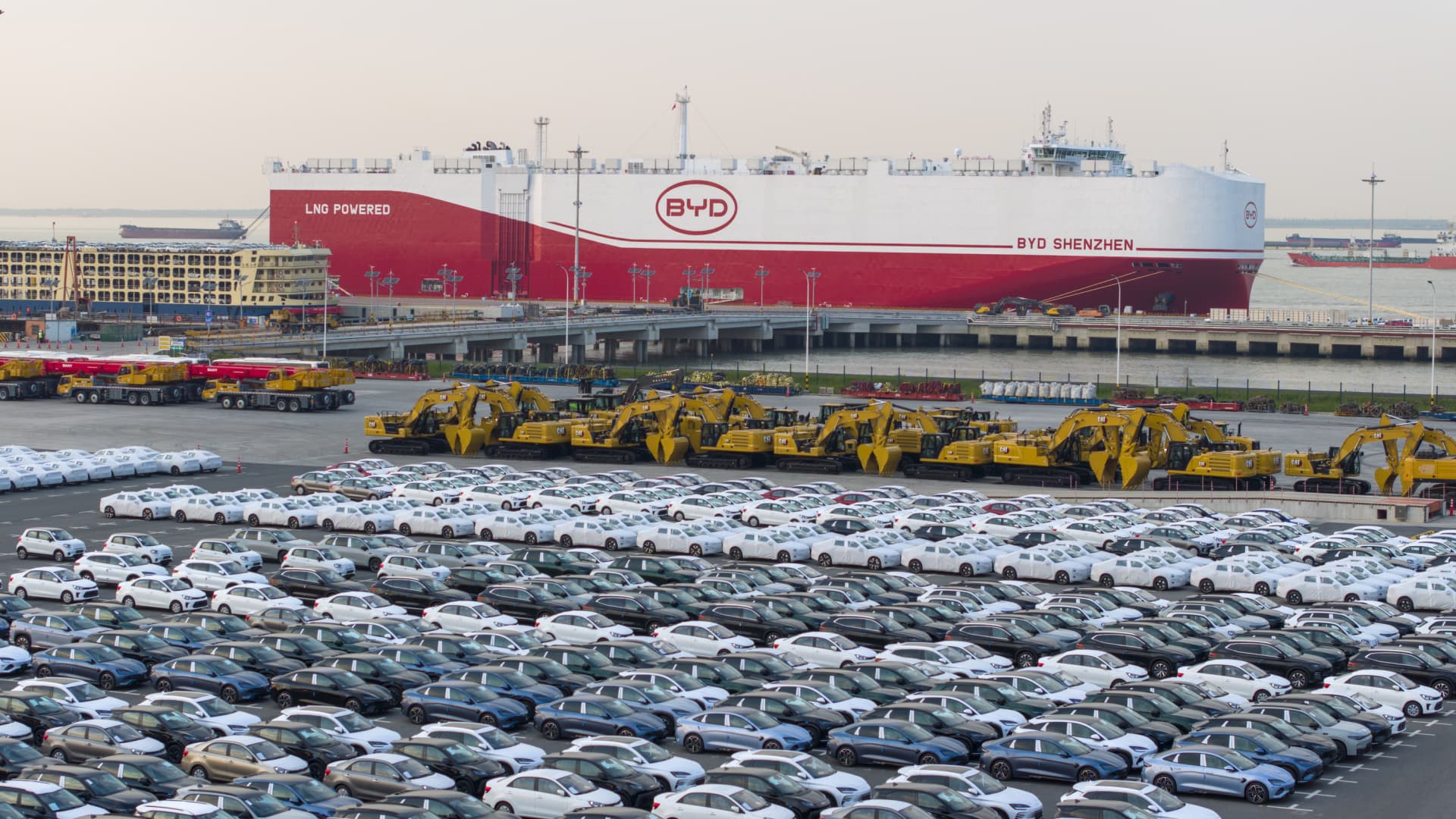
China’s automotive sector is bracing for its most challenging year since 2021, with passenger vehicle sales witnessing a significant 20.2% decline in the first half of 2026. This sharp contraction, driven by shifting consumer demand and rising operational costs, signals a pivotal moment for both domestic and international automakers navigating the world’s largest car market.
💰 Financial Strategy & Market Insights
- Steep Market Correction. The China Passenger Car Association (CPCA) revised its full-year sales forecast to a 14% decline, down from an earlier flat projection, signaling significant downward pressure.
- Profit Margin Squeeze. Rising raw material and component costs, alongside falling passenger vehicle prices, have pushed industry-wide profit margins down to 3.4% (Jan-May 2026), making profitability elusive for many players.
- Export-Driven Recovery Ahead. Despite domestic headwinds, robust export growth (82.3% YoY in June) is expected to fuel a rebound in 2027, driven by overseas demand for Chinese EVs amid global fuel price surges.
The China car market is currently navigating its most severe downturn in recent years, with passenger vehicle sales plummeting by 20.2% in the first half of 2026. This dramatic fall follows a period of record-high sales in 2025, prompting the China Passenger Car Association (CPCA) to significantly revise its 2026 full-year retail sales forecast to a 14% decline, totaling an estimated 20.4 million units, a notable drop from last year’s 23.7 million. Expert analysis from Citic CLSA’s Xiao Feng paints an even starker picture, anticipating a 20% year-on-year cumulative auto sales decline, with new energy vehicles (NEVs) also facing a 5-6% reduction.
This contraction is multifaceted. A primary driver is the soaring transportation energy costs, which increased by 15.3% year-over-year in June, according to China’s National Bureau of Statistics. This surge has disproportionately impacted demand for internal combustion engine (ICE) vehicles, whose retail sales dropped a staggering 39% year-on-year in June, accounting for the bulk of the overall passenger vehicle sales decline. Concurrently, the pullback of previously demand-stimulating NEV subsidies by Beijing has cooled consumer appetite, with analysts suggesting this could be a ‘payback’ for frontloaded demand from the previous year. Sino Auto Insights founder Tu Le describes the current environment as a ‘brutal year,’ intensified by fierce competition among original equipment manufacturers (OEMs) vying for a shrinking market share.
Automakers are also battling a severe profit squeeze. Raw material and component costs, particularly for battery-related inputs like lithium and memory chips, are escalating. This cost pressure, combined with passenger vehicle prices falling over 1% year-on-year in June, has decimated industry profit margins to a mere 3.4% for January-May 2026, with overall industry profits diving 20% year-on-year, as reported by CPCA Secretary General Cui Dongshu. Such razor-thin margins are expected to trigger a significant market consolidation, with Xiao Feng predicting that only seven or eight major players will survive in China’s fragmented EV market by 2030. For broader market analysis, this trend of consolidation is crucial.
Survival in this competitive landscape mandates scale. Analysts estimate that Chinese carmakers require annual sales of 500,000 units to break even, 1 million for sustainable profits, and 2 million to achieve full economies of scale. Companies failing to meet these thresholds risk being ‘largely out of [the] market.’ While domestic giants like BYD (1.8 million sales in H1 2026) and Geely (1.4 million) are showing resilience, foreign players like Volkswagen Group (973,000 deliveries in H1 2026, a 25.9% YoY drop) and Toyota (579,000 deliveries Jan-May) are facing considerable challenges. The industry’s outlook for the second half of the year remains pessimistic. However, a silver lining appears in the form of robust exports. In June, total passenger vehicle exports soared 82.3% year-on-year, reaching 877,000 units, as Chinese automakers capitalize on rising fuel costs in overseas markets. This export surge, partly fueled by global geopolitical factors such as the Middle East conflict pushing consumers towards EVs, is anticipated to drive a significant market rebound in 2027. This cyclical nature of China’s auto market, combined with an improving economic outlook and aging vehicle fleets, underpins expectations for renewed growth. Further detailed insights on global market movements often highlight these interconnections.
- Upside: Export-Driven Recovery: Strong overseas demand for Chinese EVs, fueled by global fuel cost increases, offers a crucial growth avenue for domestic manufacturers, potentially offsetting internal demand weaknesses.
- Upside: Market Consolidation Efficiency: The anticipated market shakedown could lead to a more efficient, profitable industry structure dominated by larger, financially stronger players with better economies of scale.
- Downside Risk: Sustained Domestic Weakness: Continued high fuel costs, prolonged consumer hesitancy, and lack of new subsidy incentives could depress local demand further, making the 2027 rebound uncertain.
- Downside Risk: Intense Price Wars: The current environment of falling prices and rising costs could intensify price wars, eroding profitability for all players and accelerating exits for weaker competitors.
- Downside Risk: Global Trade Tensions: Rising protectionism or trade barriers in key export markets could hinder the growth of Chinese auto exports, negating a significant recovery driver.
The term ‘economies of scale’ is critical in the automotive industry, particularly during consolidation phases. It refers to the cost advantages that enterprises obtain due to their scale of operation, with cost per unit generally decreasing as production volume increases. In a market like China, where breaking even requires 500,000 annual sales and sustainable profits demand 1 million, achieving such scale is no longer merely an advantage but a fundamental prerequisite for survival and long-term viability against fierce competition. This dynamic underscores the intense pressure on smaller players and the strategic importance of market share for leading manufacturers.
Key sales figures from the first half of 2026 highlight the uneven performance across major automakers:
- BYD (domestic): 1.8 million units.
- Geely (domestic): 1.4 million units.
- Volkswagen Group (foreign): 973,000 units (25.9% YoY drop).
- Toyota (foreign): 579,000 units (Jan-May).
- Leapmotor (domestic): 356,000 units.
- Overall passenger vehicle sales: 8.7 million units (cumulative H1).
- Total passenger vehicle exports (June): 877,000 units (82.3% YoY surge).
Navigating China Car Market Liquidity
The current downturn in the China car market profoundly impacts liquidity across the automotive supply chain. With sales falling and profit margins shrinking, cash flow for many manufacturers is under severe strain. This tight liquidity environment is exacerbated by rising input costs, meaning companies need more working capital to sustain operations even as revenues decline. Smaller players, especially those not approaching the critical 500,000 annual sales threshold for break-even, face heightened insolvency risks. Investors should monitor balance sheets closely, looking for companies with strong cash reserves, efficient inventory management, and diverse revenue streams that can weather a prolonged period of reduced domestic demand. The market’s ability to absorb this liquidity crunch without widespread defaults will be a key indicator for the sector’s health heading into 2027. Analyzing the market dynamics is crucial for prudent financial planning.
China Car Market Sentiment Tracker
Market sentiment around the China car market is currently cautious, reflecting the revised sales forecasts and persistent profit pressures. While domestic headwinds dominate the narrative for the latter half of 2026, there’s a nuanced optimism regarding the long-term outlook, primarily driven by export potential. Analyst Xiao Feng’s projection of a cyclical rebound in 2027, coupled with strong overseas demand for Chinese EVs, injects a degree of forward-looking confidence. However, immediate investor sentiment remains tethered to Q3 and Q4 sales figures, raw material price trends, and any potential shifts in government policy regarding consumer incentives or industry support. The current sentiment represents a dichotomy: near-term apprehension contrasted with strategic long-term confidence in China’s role as a global automotive powerhouse, particularly in the EV segment. Traders are advised to monitor market analysis closely.
The Ripple Effect of China Car Market Turmoil on 2026
The severe downturn in China’s automotive sector marks a significant recalibration after a period of rapid growth. While 2026 is projected to be challenging, the underlying market dynamics suggest a future dominated by consolidation and export-led resilience. Companies that can navigate the current liquidity squeeze and leverage international demand for EVs are best positioned to thrive.
- The market is undergoing a necessary ‘shakeout,’ favoring financially robust players with substantial production scale.
- Rising input costs and diminished margins are accelerating this consolidation, forcing inefficient players out.
- Exports, particularly of NEVs, are emerging as a crucial lifeline, indicating a shift in strategic focus for Chinese automakers.
How will global economic conditions and evolving trade policies shape the pace and extent of this projected rebound?
📊 StockXpo Analyst’s View
Market Impact: The steep decline in the China car market is a critical signal for global automotive equities, indicating potential oversupply or cooling demand in key regions. Investors should anticipate increased volatility for companies with significant exposure to the Chinese market, alongside potential shifts in capital allocation towards more resilient export-focused models. Liquidity challenges for smaller players could lead to M&A opportunities for stronger competitors. For a closer look at the financial sector’s performance, our research provides essential data.
Sector To Watch: The NEV sector, particularly Chinese manufacturers like BYD that are aggressively pursuing international expansion, presents a compelling watch. While domestic demand has softened, their competitive pricing and technological advancements are driving export growth, positioning them to capitalize on the global pivot towards electric vehicles, especially in markets impacted by rising fuel costs. However, regulatory shifts abroad will also influence their trajectory. For more insights, keep an eye on our educational financial insights.
Financial Disclaimer:
StockXpo.com is a financial news aggregator and educational portal, not a registered investment advisor or broker-dealer. All information, news, and analysis provided herein are strictly for educational purposes and do not constitute investment, financial, legal, or tax advice. Investing in the stock market involves high risks, and past performance is not indicative of future results. StockXpo will not be liable for any financial losses or investment damages. Always consult a certified financial advisor before making market decisions.
MORE IN INSIDE FINANCE

Temasek Middle East Expansion: A Bold $400 Billion Capital Shift
Published: Wednesday, September 30, 2026 · 5:31 AM

Humanoid Robot IPOs Face Stricter Chinese Scrutiny, Impacting Asset Valuations
Published: Tuesday, September 29, 2026 · 3:19 AM