Published: Monday, July 20, 2026 · 9:30 PM | Updated: Monday, July 20, 2026 · 9:30 PM
📊 5 views




The U.S. government’s efforts to establish robust artificial intelligence oversight have been rocked by significant leadership instability. Chris Fall, the director of the Center for AI Standards and Innovation (CAISI), has resigned just three months into his tenure, raising critical questions about the administration’s ability to navigate the complex landscape of AI regulation and global competitiveness.
🚀 Tech Strategy & Market Disruptions
- Policy Vacuum Intensifies. Fall’s rapid departure, following former White House AI czar David Sacks’ exit, creates a critical void in federal AI leadership amidst escalating geopolitical tech competition.
- Regulatory Uncertainty Lingers. The short-lived tenures underscore challenges in implementing the administration’s “hands-on” AI executive order, leaving tech firms grappling with evolving compliance demands.
- Global AI Race Heats Up. China’s Moonshot AI’s Kimi K3 model achieving parity with, or surpassing, U.S. offerings amplifies the urgency for stable, decisive emerging technologies policy.
Chris Fall, tapped by the Trump administration to lead the Center for AI Standards and Innovation (CAISI), resigned from his post after merely three months, CNBC confirmed on Monday. CAISI, a critical component of the U.S. Department of Commerce, is tasked with facilitating “testing and collaborative research” for commercial artificial intelligence systems. His departure was first reported by Axios, and no official reason was given, though Arvind Raman, director of the National Institute of Standards and Technology (NIST), will serve as acting director.
This leadership void is not isolated. Venture capitalist David Sacks previously served as the White House AI and crypto czar but stepped down in March without a replacement, exacerbating concerns over the Trump administration’s focal point for AI policy. This internal instability coincides with heightened external pressure, particularly from the rapid advancement of Chinese open-source AI models. Last week, Moonshot AI unveiled its Kimi K3 model, claiming it narrows the gap with, and even surpasses, leading U.S. offerings from companies like OpenAI and Anthropic on certain benchmarks.
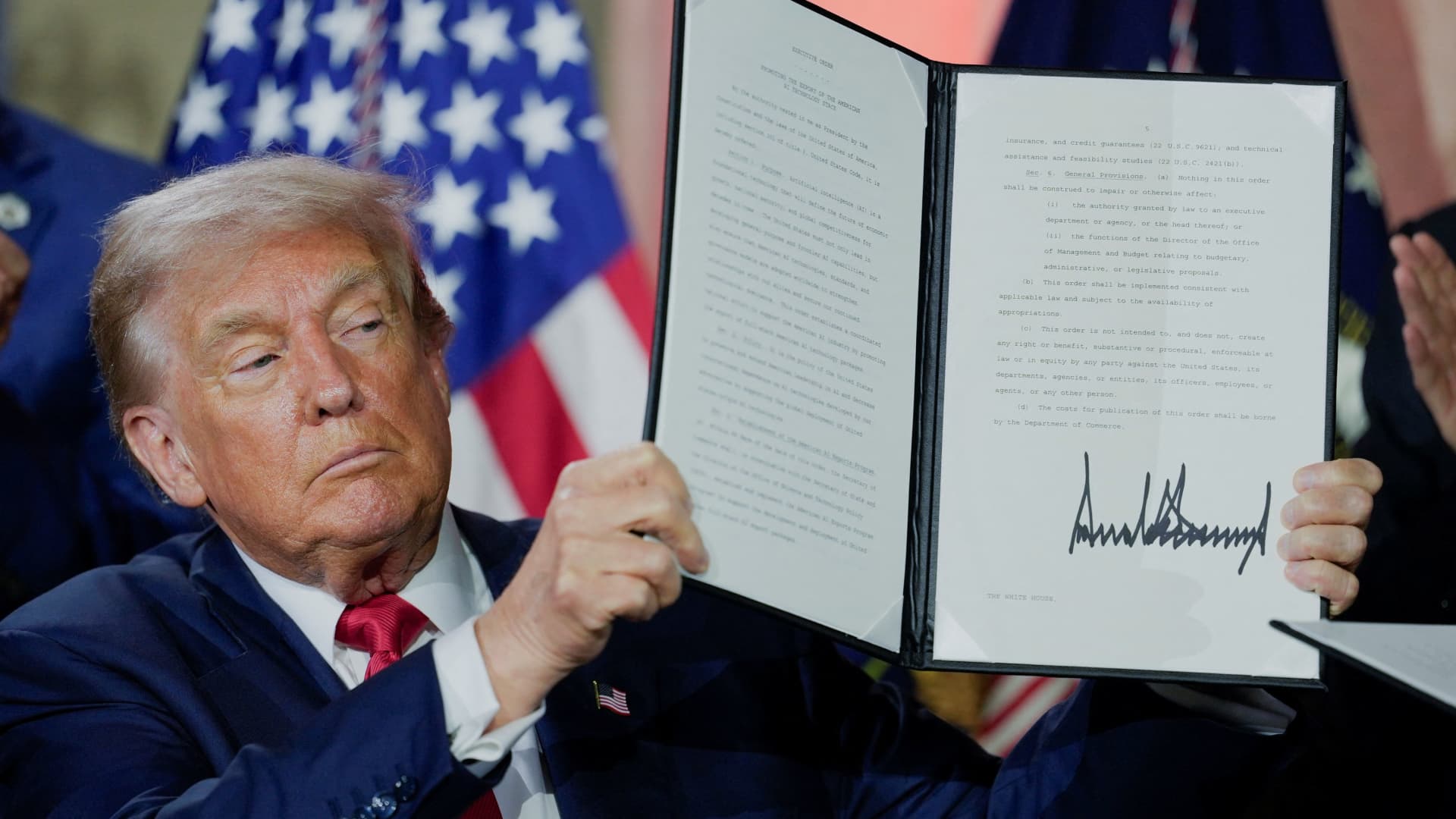
The administration has intensified its approach to AI regulation since President Trump signed an AI executive order in June 2026. This order mandates that AI developers voluntarily submit their models to the government for capability assessment prior to full release and gave federal agencies 60 days to formulate an evaluation framework. This process has led to friction, with companies like OpenAI agreeing to limit the rollout of its GPT-5.6 series to “trusted partners” at the government’s behest, and Anthropic temporarily disabling access to its Fable 5 and Mythos 5 models due to a Commerce Department export control directive. Both companies later secured broader release.
Recent steps to implement the executive order include the launch of “Gold Eagle,” a cybersecurity clearinghouse designed to identify and rectify cyber vulnerabilities. This initiative effectively centralizes the White House’s authority in greenlighting access to advanced AI models. Notably, CAISI was not named as an agency involved in the development of Gold Eagle, further blurring its specific role and influence within the broader AI governance framework. These rapid shifts and personnel changes highlight the complex interplay between innovation, national security, and regulatory oversight in the burgeoning AI landscape. As global competition intensifies, a consistent and authoritative technology market trends vision becomes paramount for the United States to maintain its lead.
“The rapid turnover in leadership within the U.S. AI policy landscape presents significant headwinds for consistent innovation-driven growth. Without stable leadership for the AI safety agency, the industry faces not only regulatory uncertainty but also a potential slowdown in the collaborative research essential for establishing global standards and ensuring responsible development. This is a critical juncture where policy vacuum directly impacts technological trajectory.”
Effective regulation of generative AI models requires robust infrastructure and a clear delineation of responsibilities among agencies. The current flux within the U.S. government’s AI leadership structure complicates this, potentially delaying the creation of a stable environment for both developers and consumers. Here are some key operational implications:
- Delayed Standard Setting: Leadership instability within the AI safety agency (CAISI) can hinder the development and adoption of crucial AI safety and ethical standards, impacting long-term trust and deployment.
- Fragmented Policy Approach: The successive resignations suggest a lack of cohesive strategy, leading to a fragmented policy approach that could confuse businesses operating in the AI space.
- Innovation Bottlenecks: Uncertainty around compliance and regulatory directives, such as the voluntary submission of models and export controls, may cause AI developers to delay product launches or focus on less-regulated markets.
AI Safety Agency Market Adoption Challenges
The nascent Center for AI Standards and Innovation (CAISI) faces an uphill battle in fostering widespread industry adoption of its standards and collaborative frameworks. Its short history and leadership instability inherently undermine its authority and credibility. Tech giants, often operating at breakneck speeds, require clear, consistent guidelines to integrate safety protocols without stifling innovation. Without a strong, visible leader, CAISI struggles to build the necessary rapport and trust with companies developing cutting-edge AI. This also complicates its ability to engage with international partners, where the U.S. aims to set global norms for AI governance. The perceived lack of sustained commitment from the highest levels of government could lead companies to prioritize market speed over adherence to still-forming standards, especially when faced with aggressive international competition. Establishing a legitimate role for a new AI safety agency in a rapidly evolving tech sector demands strong, consistent advocacy and a long-term strategic vision that has yet to materialize fully.
AI Safety Agency Ecosystem Expansion Potential
Despite its rocky start, the concept of an AI safety agency, such as CAISI, holds immense potential for fostering a healthier, more secure AI ecosystem. If properly staffed and given clear mandates, such an agency could serve as a vital nexus for public-private partnerships, accelerating research into areas like model interpretability, bias detection, and adversarial robustness. Collaborating with academic institutions, industry consortia, and international bodies could unlock new pathways for responsible AI development. The “Gold Eagle” initiative, for instance, could be significantly bolstered by a stable CAISI, which could provide standardized testing methodologies and foster a culture of transparent vulnerability disclosure. However, achieving this expansion requires more than just mandates; it demands sustained political will, adequate funding, and a leadership team capable of navigating the complex technical, ethical, and geopolitical dimensions of AI. Without these foundational elements, the agency’s ability to expand its influence and drive meaningful change remains significantly constrained. Continued leadership instability also impacts global collaboration, potentially hindering the U.S.’s ability to shape international technology regulations.
Navigating AI Policy’s Turbulent Waters
Chris Fall’s departure from the AI safety agency underscores a critical period for U.S. leadership in the global AI race. The frequent changes at the helm of key AI policy bodies signal ongoing challenges in developing a cohesive and stable national strategy, particularly as foreign competitors like Moonshot AI demonstrate rapid advancements.
- The immediate impact is heightened regulatory uncertainty for AI developers, potentially slowing innovation.
- The U.S. risks falling behind in establishing global AI safety standards without consistent leadership.
- Market players will closely watch for clarity on the Trump administration’s long-term AI governance plan.
Will the next appointee finally provide the stability needed to solidify America’s strategic vision for AI?
📊 StockXpo Analyst’s View
Market Impact: The instability within the AI safety agency leadership casts a shadow over the U.S. regulatory environment, potentially deterring foreign direct investment into American AI startups that crave predictability. This uncertainty could lead to a cautious stance from investors, impacting valuations and liquidity in the short term, as the market dislikes policy vacuums. The competitive pressure from Chinese AI firms will likely intensify, forcing U.S. companies to innovate faster even as regulatory pathways remain ambiguous.
Sector To Watch: The defense and cybersecurity sectors will be pivotal. As the Gold Eagle initiative gains traction, companies specializing in AI security, vulnerability assessment, and robust model validation will likely see increased demand. However, the broader generative AI platform providers (e.g., cloud AI services, large language model developers) face immediate challenges in navigating evolving compliance, making them a high-risk, high-reward sector for investors looking for educational tech insights into policy impacts.
Financial Disclaimer:
StockXpo.com is a financial news aggregator and educational portal, not a registered investment advisor or broker-dealer. All information, news, and analysis provided herein are strictly for educational purposes and do not constitute investment, financial, legal, or tax advice. Investing in the stock market involves high risks, and past performance is not indicative of future results. StockXpo will not be liable for any financial losses or investment damages. Always consult a certified financial advisor before making market decisions.
MORE IN INSIDE TECHNOLOGY
AI Uncertainty Rattles Markets: Navigating Diversified Innovation Beyond Tech
Published: Tuesday, July 21, 2026 · 12:02 AM

Boeing New Planes: A Strategic Approach to Innovation and Risk Management
Published: Monday, July 20, 2026 · 6:54 PM