Published: Saturday, July 18, 2026 · 12:34 PM | Updated: Saturday, July 18, 2026 · 12:34 PM
📊 219 views




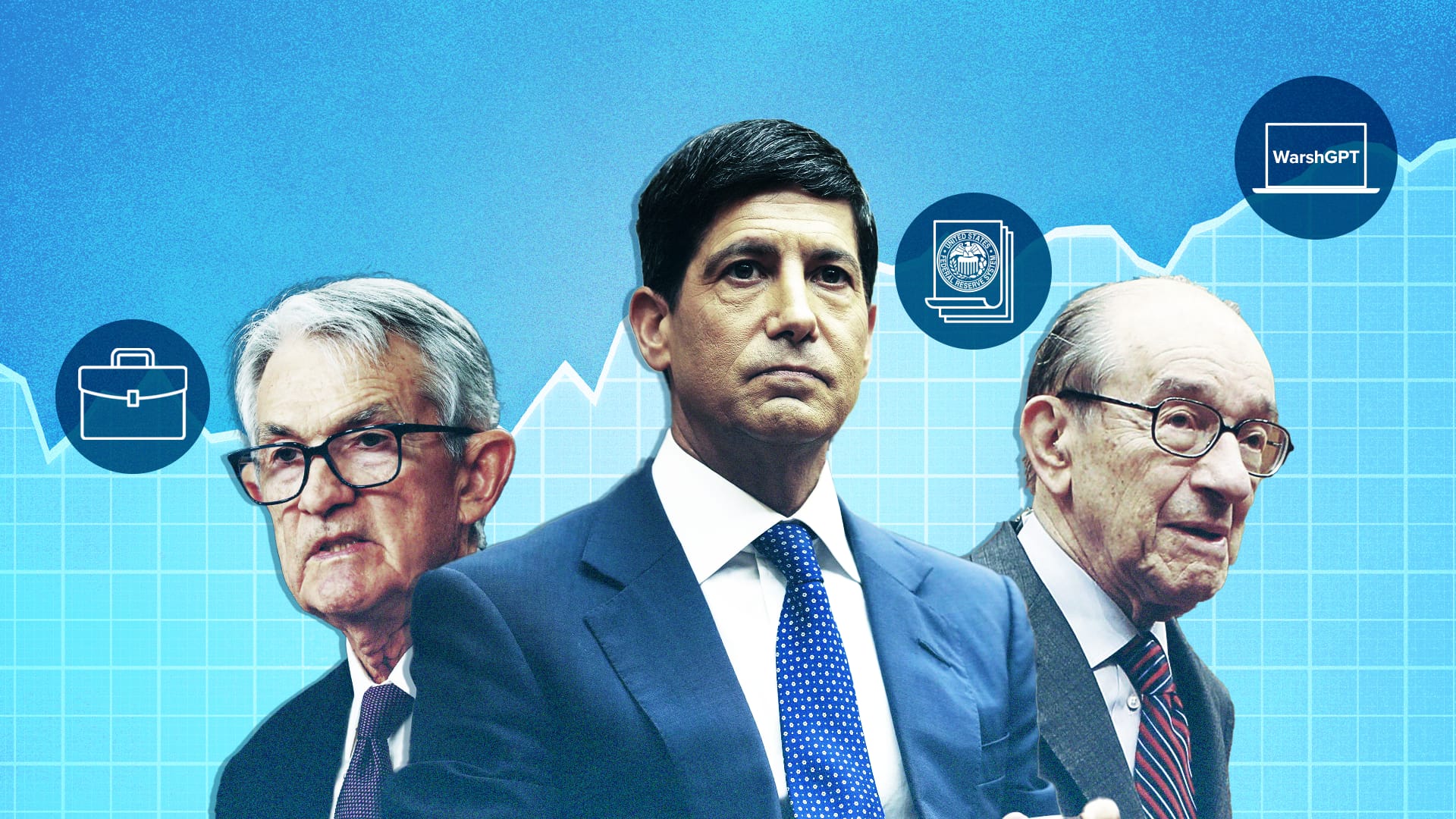
The financial markets are grappling with a profound shift in monetary policy signaling as Federal Reserve Chairman Kevin Warsh steers the central bank towards an era of significantly less forward guidance. Since taking the helm in May, Warsh has initiated an overhaul of the Fed’s communication strategy, moving away from the verbose ‘Fedspeak’ favored by predecessors. This deliberate reduction in explicit forecasting directly impacts firms like F/m Investments, whose CEO Alexander Morris notes the increased difficulty in predicting interest rate movements, leading to the creation of innovative tools to decode the nuanced educational financial insights surrounding Warsh Fed communication.
💰 Financial Strategy & Market Insights
- Reduced Forward Guidance. Chairman Warsh’s Fed is significantly cutting back on explicit forward guidance, with recent statements being notably shorter and press conferences offering fewer policy-relevant comments.
- AI-Driven Adaptation. Financial firms like F/m Investments are deploying AI tools, such as ‘WarshGPT’, to parse past communications and predict the Fed’s analytical framework in a low-transparency environment.
- Increased Market Volatility. Less clarity on the Fed’s reaction function is expected to lead to greater market swings after policy decisions, creating both risk and potential for alpha generation for sophisticated investors.
This transition is reminiscent of former Chairman Alan Greenspan’s enigmatic approach, where even subtle cues, like a simple ‘good evening’ or the size of his briefcase, could send ripples through the market, illustrating the profound impact of central bank transparency. In response to this deliberate opacity, financial institutions are swiftly adapting, with many turning to artificial intelligence. F/m Investments, which manages ETFs tied to inflation and U.S. Treasurys, recently launched ‘WarshGPT.’ This AI-powered tool analyzes nearly 1,800 documents and transcripts from Chairman Warsh, aiming to shed light on his analytical framework for economic and monetary policy issues. As Gary Richardson, a former Fed historian and UC Irvine economics professor, points out, ‘With limited information, people are going to try to do anything they can to figure out what the Fed is thinking.’ This proactive adoption of AI reflects a broader industry trend to maintain an informational edge in market analysis.
The tangible evidence of this communication shift is already apparent. The June Federal Reserve meeting statement, Warsh’s first, contained approximately 130 words, a stark reduction from the over 300 words typically seen in prior publications, according to a CNBC analysis. Furthermore, UBS highlighted that Warsh allocated only 5% of his first post-decision press conference sentences to policy-relevant topics, a sharp contrast to the 27% average under former Chairman Jerome Powell. This clear de-emphasis on explicit forward guidance underscores the strategic intent behind the new financial sector updates on Warsh Fed communication style.
The development of WarshGPT, built on Anthropic’s Claude model for less than $1,000, illustrates the rapid, cost-effective deployment of AI solutions. While it doesn’t impersonate Warsh or offer forecasts, its strength lies in providing historical context from economic and political history to inform its responses. Similarly, UBS offers clients an interactive dashboard to track the Fed’s policy tone, enabling unbiased assessments. Elena Amoruso, a UBS strategist, noted Warsh’s initial policy-relevant comments were ‘overwhelmingly hawkish,’ driven by views on the labor market, growth, and inflation. She emphasized that ‘one word can move dollars,’ underscoring the high value of decoding Fed signals.
Large firms are also developing contingency plans for potential further reductions in transparency. JPMorgan Asset Management’s chief global strategist, David Kelly, indicated his team would scrutinize speeches from Federal Open Market Committee (FOMC) members more closely if the Fed were to discontinue key releases like the ‘dot plot’ summary of interest rate projections. Kelly maintains a patient approach, suggesting that adjustments to internal resources will parallel the Fed’s own deliberative pace in policy changes. Despite these adaptations, the market currently exhibits divergent expectations, with CME’s FedWatch tool indicating an almost 59% likelihood of a September rate hike, while Kalshi traders lean towards rates remaining unchanged.
- This strategic shift in Warsh Fed communication creates a unique environment for investors, where the ability to interpret subtle cues and leverage advanced analytical tools becomes paramount for competitive advantage.
Navigating Market Volatility: Upside and Downside Risks
- Upside: Alpha Generation for Savvy Investors: Less explicit forward guidance could increase market volatility, providing opportunities for investors with robust analytical frameworks and advanced tools (like AI) to generate alpha by predicting policy shifts more accurately than the broader market.
- Upside: Innovation in Financial Analysis: The challenge posed by reduced transparency is spurring rapid innovation in financial technology, particularly AI and machine learning, leading to more sophisticated and efficient market analysis tools.
- Downside Risk: Increased Market Volatility and Uncertainty: A lack of clear Fed guidance can lead to larger market swings after policy announcements or public appearances, increasing systemic risk and making it harder for ordinary investors to navigate.
- Downside Risk: Information Asymmetry: The ability of large financial institutions to invest in AI and hire Fed alumni could create a significant information asymmetry, disadvantaging retail traders and smaller firms who lack similar resources.
- Downside Risk: Misinterpretation and Policy Errors: Reduced clarity increases the risk of market participants misinterpreting the Fed’s intentions, potentially leading to suboptimal investment decisions or even contributing to policy errors if market reactions diverge significantly from central bank expectations.
Forward Guidance: In central banking, forward guidance refers to explicit statements made by a central bank about the likely future path of monetary policy. Traditionally used to influence market expectations, reduce uncertainty, and enhance policy effectiveness, its reduction by the Warsh Fed signals a strategic pivot towards greater policy flexibility and less market conditioning, thereby increasing the onus on market participants to interpret central bank intentions independently.
Key Metrics on Fed Communication Evolution
| Metric | Warsh Fed (June 2026) | Prior Fed Era (Average) | Source/Context |
|---|---|---|---|
| FOMC Statement Length | ~130 words | >300 words | CNBC Analysis |
| Policy-Relevant Sentences (Chair’s Presser) | 5% | 27% (Powell) | UBS Analysis |
| WarshGPT Development Cost | < $1,000 | N/A | F/m Investments |
| CME FedWatch: Sept Rate Hike Probability | ~59% | N/A | CME Group |
| Kalshi Traders: Sept Rate Outcome | Unchanged rates most likely | N/A | Kalshi |
Navigating Market Sentiment Amidst Ambiguity
The intentional move towards less transparency by the Warsh Fed fundamentally alters how market sentiment is formed and tracked. Without explicit forward guidance, investor psychology becomes more susceptible to anecdotal evidence, individual speeches from committee members, and external economic data. This necessitates a heightened focus on real-time sentiment analysis tools, beyond traditional financial news feeds, encompassing social media trends and alternative data sets to gauge collective investor mood.
Firms are likely to increase investments in natural language processing (NLP) models to sift through every available utterance from Fed officials, seeking subtle shifts in tone or choice of vocabulary. The market’s reaction function, once partly anchored by the Fed’s own pronouncements, will now be more fluid and potentially more volatile, requiring faster adaptation from traders and portfolio managers. The emphasis shifts from interpreting direct signals to discerning underlying biases and analytical frameworks within the central bank.
Asset Valuation Under Reduced Central Bank Clarity
The implications for asset valuation are significant in an environment of diminished central bank clarity. Discount rates, a cornerstone of valuation models, become inherently more volatile as the future path of interest rates and economic growth becomes less predictable. This uncertainty can lead to wider bid-ask spreads and reduced deep dive into financial sector market liquidity, particularly for longer-duration assets sensitive to interest rate fluctuations.
Investors may recalibrate their risk premiums to account for the additional policy uncertainty, potentially leading to a repricing of various asset classes. Assets with strong fundamental intrinsic value and less reliance on policy-driven liquidity flows might become more attractive, while highly speculative or growth-dependent assets could face increased scrutiny. The challenge is to build valuation models robust enough to incorporate a broader range of macroeconomic scenarios, without relying on the previously clear signals from the Fed, making fundamental analysis even more critical.
The Warsh Fed Communication Puzzle: Implications for 2026
The deliberate recalibration of Warsh Fed communication marks a significant departure from previous eras, ushering in an environment characterized by increased interpretive challenges for market participants. While some see opportunities for alpha generation through sophisticated analysis, the broader market faces heightened uncertainty regarding interest rate trajectories and economic policy.
- Wall Street’s rapid adoption of AI tools, epitomized by ‘WarshGPT,’ highlights the urgent need for new methodologies to decode central bank intentions in a less transparent landscape.
- The stark reduction in policy-relevant commentary and forward guidance demands a re-evaluation of traditional investment strategies and risk management frameworks.
- Divergent market expectations, as seen in futures vs. prediction markets, underscore the current struggle to gain consensus on the Fed’s likely path, signaling potential for abrupt market movements.
How will investors balance the pursuit of alpha with the imperative for robust risk management in this new era of interpretive finance?
### 📊 StockXpo Analyst’s View
Market Impact: This shift towards less transparent Warsh Fed communication will undoubtedly inject greater volatility into fixed income and equity markets, as interest rate expectations become more reactive to raw economic data rather than central bank telegraphing. Liquidity could periodically tighten as uncertainty prompts investors to demand higher risk premiums, especially in speculative asset classes.
Sector To Watch: Technology firms specializing in AI and predictive analytics are poised to gain, as financial institutions increase spending on tools to decipher policy signals. Conversely, sectors highly sensitive to interest rate fluctuations, such as real estate investment trusts (REITs) and high-leverage growth stocks, may experience amplified swings due to reduced clarity on future borrowing costs.
Financial Disclaimer:
StockXpo.com is a financial news aggregator and educational portal, not a registered investment advisor or broker-dealer. All information, news, and analysis provided herein are strictly for educational purposes and do not constitute investment, financial, legal, or tax advice. Investing in the stock market involves high risks, and past performance is not indicative of future results. StockXpo will not be liable for any financial losses or investment damages. Always consult a certified financial advisor before making market decisions.
MORE IN INSIDE FINANCE

Fixed Income: JPMorgan Calls it a Once-in-a-Generation Opportunity Amid Market Shifts
Published: Saturday, October 10, 2026 · 12:03 PM

Crypto Derivatives Trading: Blockchain.com’s Bold Move into U.S. Markets
Published: Friday, October 9, 2026 · 8:23 AM