Published: Monday, July 13, 2026 · 4:19 PM | Updated: Monday, July 13, 2026 · 4:19 PM
📊 174 views




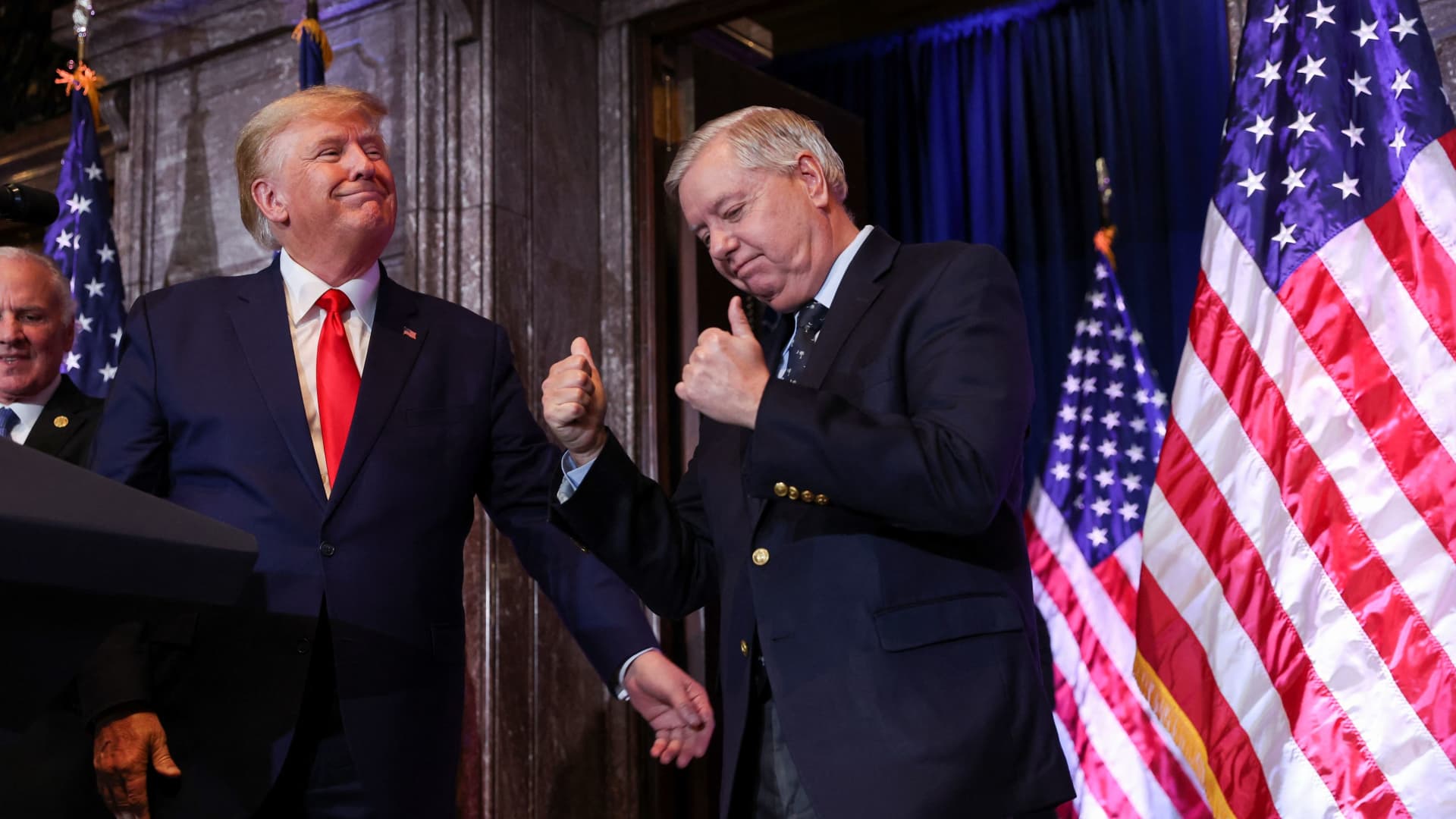
Former President Donald Trump has reignited calls for the Senate to pass the Clarity Act crypto bill, a pivotal piece of legislation aimed at defining the regulatory landscape for digital assets in the United States. This move, made in honor of the late Senator Lindsey Graham, underscores the growing political spotlight on cryptocurrency policy amid global competition, particularly with China.
🚀 Tech Strategy & Market Disruptions
- Regulatory Certainty for Innovation. The bill seeks to provide clear guidelines, potentially unlocking new investment and development in blockchain technologies, reducing legal ambiguities that hinder growth.
- Geopolitical Tech Race. Trump’s emphasis on preventing China’s dominance in crypto and AI highlights a strategic imperative for the U.S. to lead in emerging technologies, shaping future financial infrastructure.
- Industry Divides & Innovation Hurdles. While crypto firms like Coinbase and Ripple champion the Clarity Act for its potential to legitimize the sector, traditional financial institutions and some labor groups raise concerns about market stability and consumer protection.
President Trump’s recent public endorsement for the Clarity Act crypto bill comes at a crucial juncture for digital asset regulation in the U.S. His appeal on Truth Social, framed as a tribute to Senator Lindsey Graham, aligns with broader calls from the crypto industry for defined legal parameters. This proposed legislation is designed to offer a comprehensive framework for cryptocurrencies, an effort widely supported by major players such as Coinbase, Circle, and Ripple, who view regulatory clarity as essential for attracting mainstream investors and fostering innovation.
However, the path to legislative approval is complex and contentious. The bill, which passed the Senate Banking Committee 15-9 with bipartisan support in May, faces significant opposition. Traditional banks have voiced strong objections, fearing that allowing crypto groups to offer interest-like payments on stablecoins could divert deposits, impacting their capital reserves for lending. Additionally, law enforcement agencies and certain labor organizations have expressed concerns, contributing to the legislative friction. The unexpected passing of Senator Graham further narrows the Republican majority to 52-47, potentially complicating future votes and requiring more bipartisan consensus. These internal political dynamics are unfolding against a backdrop of increasing global competition in digital finance, with Trump explicitly warning against China’s potential ‘complete and total control’ over both cryptocurrency and artificial intelligence. Navigating these broader technology market trends will be critical for U.S. leadership.
The potential passage of the Clarity Act could trigger a significant disruption flow within the financial sector. A clear regulatory framework would likely foster increased institutional investment and innovation in emerging technologies, leading to more robust infrastructure for digital assets. This, in turn, could accelerate mainstream crypto adoption, compelling traditional financial institutions to adapt their services and even redefine their business models to integrate blockchain-based solutions. Conversely, continued legislative gridlock would perpetuate regulatory uncertainty, potentially driving innovation and capital to jurisdictions with more defined policies, thus ceding ground in the critical race for digital economic dominance.
“The absence of a clear regulatory framework is often the biggest bottleneck for technological adoption and scale. For digital assets, the Clarity Act is less about control and more about laying foundational rails that enable secure, compliant innovation at a national level, essential for competing on the global stage.”
While direct technical metrics related to the Clarity Act’s implementation are not yet available, several key figures underscore the legislative and market landscape:
- The Senate Banking Committee approved the bill by a margin of 15-9 in May, demonstrating some bipartisan appeal.
- Senator Graham’s passing reduces the Senate Republican majority from 52-48 to 52-47, increasing the challenge for majority-led legislation.
- Former President Trump’s reported “billions of dollars” in crypto investments highlights the personal financial stakes involved for some policymakers, leading to demands for increased ethics guardrails.
Understanding Crypto Regulatory Frameworks
The evolution of cryptocurrency markets has consistently outpaced regulatory responses, creating a complex environment for both innovators and investors. The Clarity Act crypto bill aims to classify digital assets, distinguishing between securities and commodities, a critical step for determining which existing agencies (like the SEC or CFTC) hold jurisdiction. This classification is vital for developing compliant platforms and services, reducing the ‘gray area’ that has stifled institutional engagement and deterred traditional financial entities from fully entering the market. A well-defined framework could facilitate the development of new decentralized finance (DeFi) protocols and foster greater trust, particularly for retail investors looking for robust consumer protections. Further insights into emerging technologies and their regulatory challenges are continually being explored.
The Geopolitical Stakes of Digital Asset Policy
The global race for technological supremacy extends beyond artificial intelligence to the realm of digital assets. Countries like China have already implemented stringent controls and are aggressively developing their central bank digital currencies (CBDCs), while simultaneously cracking down on private cryptocurrencies. Trump’s assertion that China seeks ‘complete and total control’ over this ‘major financial happening’ underscores the strategic importance of the Clarity Act. U.S. leadership in establishing a clear, innovation-friendly regulatory environment could solidify its position as a global hub for blockchain technology, attracting talent and investment. Conversely, a prolonged period of regulatory ambiguity risks ceding this advantage to nations perceived as more forward-thinking or decisive in their approach to digital finance. Exploring these dynamics is essential for educational tech insights.
The Clarity Act’s Crossroads: Navigating Crypto’s Future
The push for the Clarity Act crypto bill represents a critical inflection point for the digital asset industry, balancing the imperative for innovation with the demands for robust regulation and ethical oversight. Its passage could significantly de-risk the crypto market for institutional players, potentially unlocking substantial capital and accelerating technological development within the U.S. However, the existing divisions among stakeholders—from financial incumbents to law enforcement—highlight the delicate political calculus required for its enactment.
- The bill promises to define clear regulatory boundaries, which is crucial for reducing market uncertainty.
- Political complexities, including ethics concerns and shifting Senate dynamics, remain significant hurdles.
- The outcome will heavily influence the U.S.’s competitive standing in the global digital economy against rivals like China.
Will the U.S. Congress successfully forge a consensus that propels digital asset innovation while safeguarding financial stability?
📊 StockXpo Analyst’s View
Market Impact: The renewed political focus on the Clarity Act signals a potential turning point for cryptocurrency markets, which have long yearned for regulatory certainty. Should the bill gain traction, it could instill investor confidence, driving up valuations for established digital assets and blockchain infrastructure providers. Conversely, continued legislative delays might perpetuate volatility and dampen institutional participation, particularly for stablecoins and their associated lending protocols. For a deeper dive into financial technology, see Bloomberg’s tech coverage.
Sector To Watch: The financial technology sector, especially companies heavily invested in blockchain infrastructure, stablecoin issuance, and decentralized finance (DeFi) applications, stands to gain significantly from clear regulation. Banks offering digital asset services and enterprises exploring tokenization will also be directly impacted. Industry analysts continue to monitor emerging tech trends in this space.
Financial Disclaimer:
StockXpo.com is a financial news aggregator and educational portal, not a registered investment advisor or broker-dealer. All information, news, and analysis provided herein are strictly for educational purposes and do not constitute investment, financial, legal, or tax advice. Investing in the stock market involves high risks, and past performance is not indicative of future results. StockXpo will not be liable for any financial losses or investment damages. Always consult a certified financial advisor before making market decisions.
MORE IN INSIDE TECHNOLOGY

State-Backed Dating App Innovation: Singapore’s Bold Demographic Tech Strategy
Published: Sunday, October 4, 2026 · 3:36 AM

Data Centers Face Global Headwinds: A $119 Billion Investment at Risk
Published: Saturday, October 3, 2026 · 2:48 AM