Published: Friday, June 5, 2026 · 6:36 AM | Updated: Friday, June 5, 2026 · 6:36 AM
📊 266 views




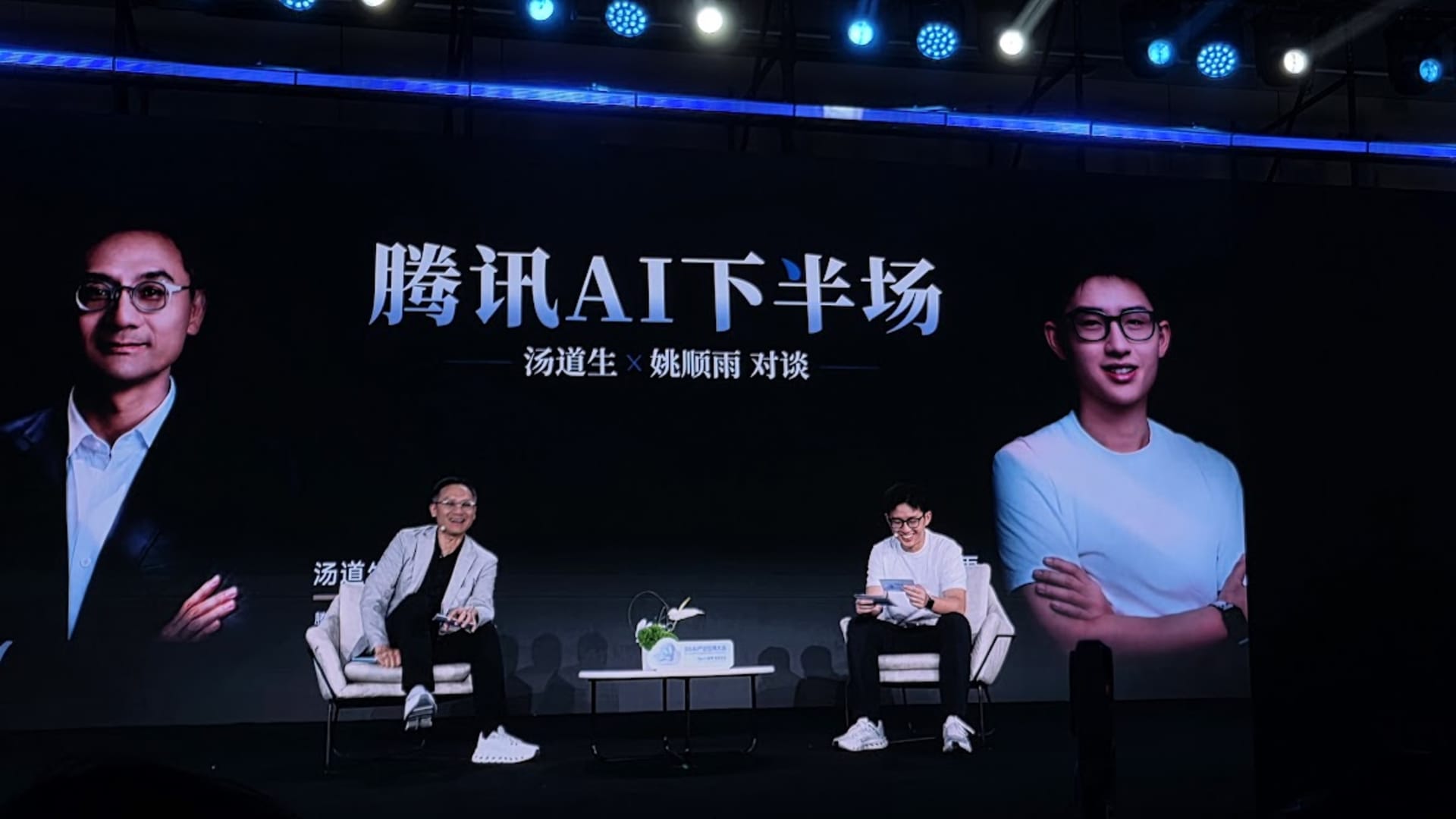
China’s tech giants are aggressively pivoting their artificial intelligence strategy, increasingly mirroring the U.S. pursuit of Artificial General Intelligence (AGI). This strategic shift is largely fueled by a relentless drive to attract top-tier global AI talent, particularly from leading Silicon Valley firms, signaling a new phase in the global tech race.
🚀 Tech Strategy & Market Disruptions
- AGI Ambition Rekindled. Chinese firms like Tencent are now explicitly targeting AGI, a significant shift from their previous focus on application-specific AI, driven by poached U.S. talent.
- Talent Migration Accelerates. High-profile researchers from OpenAI, Google DeepMind, and Meta AI are joining Chinese tech giants, bringing a U.S.-centric AGI vision and expertise to the forefront of China AI development.
- U.S.-China AI Race Intensifies. This talent drain and strategic pivot underscore the escalating competition for AI supremacy, amidst U.S. chip controls and varying industry stances on AI safety.
Recent developments highlight a pronounced shift in the China AI landscape, notably with former OpenAI researcher Yao Shunyu assuming the role of Chief AI Scientist at Tencent. His stated goal to establish a long-term AGI organization in China marks a direct embrace of a vision previously dominated by U.S. giants like OpenAI, Anthropic, and Alphabet’s DeepMind. Historically, Chinese companies, constrained by U.S. chip controls, focused more on leveraging AI for practical applications across manufacturing and consumer electronics, with Baidu’s CEO Robin Li even predicting AGI to be more than a decade away, a stark contrast to more optimistic Western forecasts.
However, the aggressive recruitment of Silicon Valley’s brightest minds is fundamentally altering this trajectory. These new hires are importing not just technical expertise but also the strategic imperative of achieving AGI. This is evidenced by multiple high-profile moves: Alibaba reportedly onboarding Google DeepMind researcher Hao Zhou for Qwen AI, Wu Yonghui moving from Google DeepMind to head research at ByteDance Seed, and Moonshot, the force behind the Kimi AI model, being founded by former Meta AI and Google Brain talent Yang Zhilin. This influx of expertise is crucial for China’s pursuit of scientific breakthroughs and an increased investment in basic research over the next five years.
The global technology market trends suggest this talent transfer is not merely about headcount but about infusing a new strategic direction into Chinese AI development. Yao Shunyu’s vision for AGI encompasses foundational knowledge, product development, and frontier exploration, with an optimistic view of ‘trillions of dollars’ in untapped potential beyond current super-apps like ChatGPT or Claude. This optimism starkly contrasts with growing caution in the U.S., where companies like Anthropic have warned about autonomous self-improving models and called for industry slowdowns or pauses to prevent societal disruption.
- Key Hires Fueling AGI Ambitions: Yao Shunyu (OpenAI to Tencent), Hao Zhou (Google DeepMind to Alibaba), Wu Yonghui (Google DeepMind to ByteDance), Yang Zhilin (Meta AI/Google Brain to Moonshot).
- Strategic Reorientation: A shift in China’s focus from application-centric AI to foundational AGI research and development.
- Market Implications: Intensified global competition for AI talent, accelerated development of foundational models, and potential shifts in global AI leadership.
This migration of elite AI talent from Silicon Valley to Beijing is catalyzing a significant disruption flow. The access to elite expertise from foundational AI research centers is directly leading to accelerated AGI research and development within Chinese tech firms. This, in turn, is pushing a convergence in global AI strategy, where both major economic blocs are now overtly pursuing similar ultimate goals in AI. The long-term impact will be heightened innovation-driven growth, but also a potential rebalancing of market influence and intellectual property dominance in the the global technology landscape.
Artificial General Intelligence (AGI) represents the holy grail of AI development—a hypothetical capability for a machine to understand, learn, and apply intelligence to any intellectual task that a human being can. Its pursuit necessitates foundational breakthroughs in algorithms, data processing, and scalable infrastructure, promising transformative, yet potentially disruptive, shifts across every industry.
While specific technical metrics on these new initiatives are still emerging, the strategic intent is clear. The shift towards AGI necessitates massive investment and long-term vision.
- Baidu CEO Robin Li’s previous AGI forecast: Not before 2034.
- Elon Musk’s contrasting AGI forecast: As early as 2026.
- Tencent Chief AI Scientist Yao Shunyu’s AGI vision: Integration of foundational knowledge, robust products, and relentless frontier exploration.
- Estimated untapped economic potential of AI (Yao Shunyu): In the ‘trillions of dollars’.
Tencent’s AI Ecosystem Expansion Potential
Tencent, already a behemoth in social media and gaming, is strategically positioning itself to leverage its vast user base and cloud infrastructure for AGI development. Yao Shunyu’s mandate to establish a long-term AGI organization within Tencent suggests a systematic approach to integrating cutting-edge AI across its diverse ecosystem, from cloud services to consumer applications. This could enable rapid iteration and deployment of AI models, benefiting from massive proprietary datasets and robust computing power. Success in this area could significantly enhance Tencent’s competitive edge, both domestically and in global emerging technologies, by creating a cohesive AI-driven platform that delivers superior performance and cost efficiency, particularly with smaller, more consistent AI models for basic tasks.
Global AI Talent Market Adoption Challenges
The fierce competition for AI talent underscores a critical challenge in the global technology market. U.S. immigration policies, creating uncertainty for Chinese nationals, inadvertently contribute to a ‘brain drain’ towards their home country, even if compensation might be lower initially. This phenomenon creates a complex dynamic for companies competing for specialized skills, irrespective of their geographical base. The strategic moves by Alibaba, ByteDance, and Moonshot to attract top researchers from DeepMind and Meta AI highlight that a globalized talent market, despite geopolitical tensions, remains a key battleground for AI leadership. Navigating these talent flows efficiently is critical for sustained innovation in the educational tech insights sphere and the broader tech industry developments.
The China AI Inflection Point: What Comes Next?
China’s aggressive pivot towards Artificial General Intelligence, powered by an unprecedented talent acquisition drive from leading U.S. AI labs, marks a critical inflection point in the global tech race. This strategic shift moves beyond application-level AI to foundational research, setting the stage for intensified innovation and competition.
- The pursuit of AGI will likely accelerate, challenging established timelines and pushing the boundaries of AI capabilities.
- Increased investment in basic research and talent development will solidify China’s position as a formidable AI powerhouse.
- Geopolitical dynamics surrounding AI governance and ethical considerations will become even more pronounced.
Will this shift lead to a parallel evolution of AI, or a renewed drive for global collaboration on AGI safety and development?
📊 StockXpo Analyst’s View
Market Impact: This escalating competition in China AI will inevitably drive up valuations for companies heavily invested in foundational AI research and talent, such as Tencent and Alibaba. We foresee increased R&D spending across the sector, potentially compressing short-term margins but promising long-term strategic advantages. Investor sentiment will likely favor firms demonstrating clear pathways to AGI breakthroughs or those effectively integrating advanced AI into their core product offerings, leading to a reallocation of capital towards these growth segments.
Sector To Watch: The Semiconductor and Cloud Computing sectors are paramount. While China faces chip controls, its intensified focus on domestic innovation and AGI will drive demand for specialized AI accelerators and robust cloud infrastructure to power these advanced models. Companies innovating in AI chip design, open-source AI frameworks, and scalable cloud services within China, as well as global firms that can navigate the complex supply chain, stand to gain significantly.
Financial Disclaimer:
StockXpo.com is a financial news aggregator and educational portal, not a registered investment advisor or broker-dealer. All information, news, and analysis provided herein are strictly for educational purposes and do not constitute investment, financial, legal, or tax advice. Investing in the stock market involves high risks, and past performance is not indicative of future results. StockXpo will not be liable for any financial losses or investment damages. Always consult a certified financial advisor before making market decisions.
MORE IN INSIDE TECHNOLOGY

Porsche Profit Rebounds: A Bold Strategic Shift in Global Markets
Published: Tuesday, October 27, 2026 · 6:31 AM
SoftBank AI Investment: Malaysia’s $50 Billion Innovation Surge
Published: Monday, October 26, 2026 · 2:37 AM