Published: Friday, July 10, 2026 · 12:36 PM | Updated: Friday, July 10, 2026 · 12:36 PM
📊 192 views




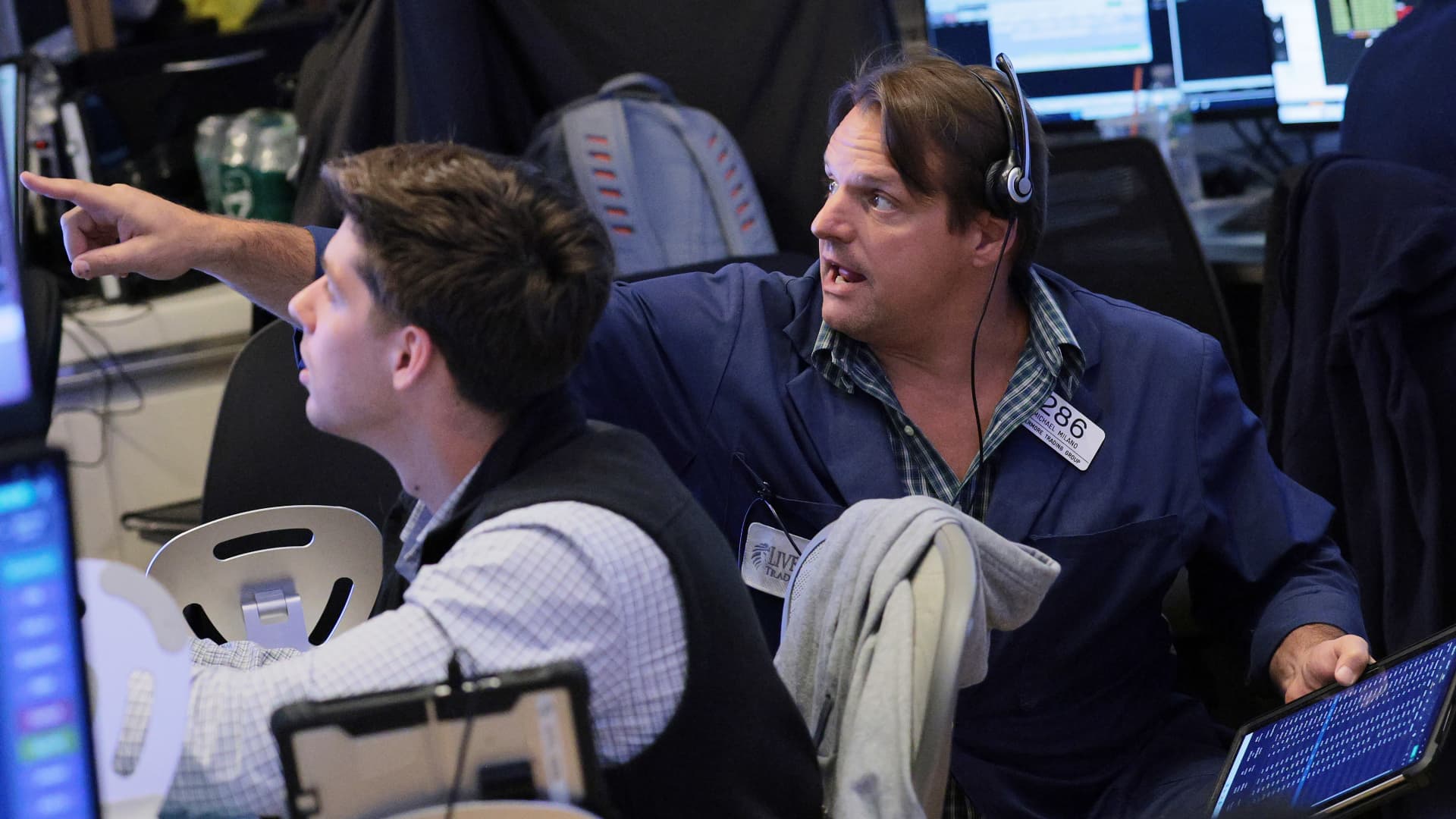
The U.S. financial landscape presents a curious anomaly: while the broader economy experiences tepid growth, the stock market continues its blistering ascent. This notable Stock Market Divergence challenges traditional assumptions about the inherent synchronicity between economic fundamentals and market performance. Our analysis delves into the underlying forces driving this increasingly pronounced disconnect.
🚀 Tech Strategy & Market Disruptions
- AI-Fueled Rally. The stock market’s robust gains are primarily concentrated in the technology sector, driven by investor enthusiasm for artificial intelligence, especially semiconductor and hyperscaler companies.
- Economic Slowdown. In contrast, the ‘real’ economy, measured by GDP, shows decelerating growth (around 1.9-2.0%), alongside a weakening labor market and subdued consumer sentiment, particularly outside of high-income households.
- K-Shaped Recovery Risk. The disproportionate influence of high-net-worth individuals on consumer spending, buoyed by stock market gains, creates a fragile economic dynamic vulnerable to a tech market correction.
The first half of 2026 saw the S&P 500 surge nearly 10%, with the Dow Jones Industrial Average climbing almost 9%, marking its best first-half performance since 2021. These gains follow a remarkable multi-year rally, with the S&P 500 appreciating 24% in 2023, 23% in 2024, and 16% in 2025. This sustained market strength, as highlighted by President Donald Trump citing it as a contributor to his wealth post-return to office, contrasts sharply with the broader economic narrative.
Conversely, the U.S. economy’s real gross domestic product (GDP) has decelerated, dropping from approximately 3.3% in 2023 to about 1.9% year-to-date in 2026. While economists like J.P. Morgan Private Bank’s Joe Seydl describe this growth as ‘steady,’ Moody’s chief economist Mark Zandi characterizes GDP expansion around 2% as ‘soft,’ reflecting a lack of significant forward momentum. Federal Reserve officials had projected a 2.2% growth rate for 2026, yet consensus remains closer to 2%.
- The labor market exhibits concerning trends, with participation rates near a 50-year low (excluding the Covid-19 pandemic) and employers hiring at the slowest pace in over a decade. Long-term unemployment has also seen a steady increase, signaling underlying weakness despite the headline stock market performance. Consumer sentiment, while rebounding slightly in June, remains ‘unfavorable’ following a record low in May, primarily due to persistent inflation fears. This array of economic indicators underscores why many view the current market-economy relationship as a profound Stock Market Divergence.
The primary driver of this market-economy split, according to economists, is the exponential rise of artificial intelligence (AI). Stocks of AI-centric companies have propelled the broader market upward, with technology now accounting for roughly 35% of the overall market, expanding to nearly 50% when factoring in ‘Big Tech’ players like Alphabet, Amazon, Meta, and Tesla, which, though often classified as consumer companies, exhibit tech-like trading patterns. Investors are betting heavily on the future earnings potential of these technology giants, particularly those at the forefront of AI innovation. Capital Economics noted in a July 1 research note that the rise in earnings has been concentrated in major ‘big-tech’ firms, especially semiconductor companies and hyperscalers that underpin AI infrastructure. For more detailed global tech reporting, refer to Reuters’ technology insights.
Unpacking AI’s Market Disruption Flow
The rapid advancement in AI capabilities, from foundational models to specialized applications, has created a significant disruption flow. This translates directly into substantial investment in the underlying infrastructure, namely advanced semiconductors and hyperscale cloud computing. This surge in demand directly translates to unprecedented revenue and earnings growth for companies such as Microsoft, Amazon, Oracle, Intel, TSMC, and Samsung. The resulting financial strength of these tech leaders, in turn, disproportionately inflates the overall market indices, creating a ‘wealth effect’ concentrated among high-income households. This concentration of wealth then drives a segment of consumer spending, further decoupling it from the broader economic reality experienced by the majority, which relies on a more robust labor market and stable purchasing power.
The current market dynamic underscores a critical principle: the stock market is a forward-looking discount mechanism for corporate earnings, not a real-time barometer of broad economic health, especially when innovation-driven growth is highly concentrated.
Key performance indicators from the news highlight the contrast:
- S&P 500 H1 2026 Growth: ~10%
- Dow Jones H1 2026 Growth: ~9%
- Real U.S. GDP 2023: ~3.3%
- Real U.S. GDP H1 2026: ~1.9%
- Technology Sector Weight in S&P 500: ~35% (up to 50% with expanded definition)
These figures illustrate the significant outperformance of market indices against the backdrop of a more subdued economic environment.
AI Ecosystem Expansion Potential
The phenomenal growth of AI is not merely about a few dominant players; it represents a foundational shift with immense emerging technologies and ecosystem expansion potential. As AI models become more sophisticated and accessible, their application across diverse industries—from healthcare and finance to manufacturing and logistics—is set to proliferate. This pervasive adoption will necessitate a massive scaling of computing power, data storage, and specialized algorithms, fostering new markets for AI services, hardware, and integration solutions. While the initial investment wave is concentrated, the downstream effects promise a ripple of innovation that could eventually broaden the economic impact beyond the current tech giants. However, this expansion also introduces new complexities in interoperability and standardization, which innovators will need to navigate.
Hyperscaler Infrastructure & Security Strength
Central to the AI boom is the robust infrastructure provided by hyperscale cloud platforms. Companies like Microsoft Azure, Amazon Web Services (AWS), and Google Cloud Platform are not just hosting AI applications; they are developing the underlying tools, frameworks, and specialized hardware (like AI accelerators) that power the entire AI revolution. Their massive investments in global data centers, advanced networking, and sophisticated security protocols create a resilient and scalable foundation for AI development and deployment. This concentration of infrastructure and expertise within a few hyperscalers also presents unique challenges, including potential vendor lock-in and the need for stringent cybersecurity measures to protect sensitive AI models and data, which is a key consideration for companies looking at their long-term technology market trends.
Stock Market Divergence: Navigating the AI Frontier
The ongoing Stock Market Divergence between market performance and economic reality underscores a crucial period for investors and policymakers. While AI innovation undeniably drives significant wealth creation and technological progress, its economic benefits are currently highly concentrated. This creates a market susceptible to shifts in investor sentiment towards technology, potentially leading to broader economic instability if the wealth effect among high-income earners diminishes.
- The market’s reliance on AI’s future earnings potential makes it vulnerable to any tech correction.
- Broad-based economic growth remains soft, with weak labor market indicators and stagnant consumer spending for the majority.
- Policymakers face the challenge of fostering inclusive growth while capitalizing on technological advancements.
How long can the stock market continue its ascent on the back of concentrated tech gains without a corresponding broad-based economic uplift?
📊 StockXpo Analyst’s View
Market Impact: The persistent Stock Market Divergence, propelled by concentrated AI enthusiasm, creates a bifurcated market. While large-cap tech continues to draw significant capital, the underlying fragility of broader economic indicators suggests a cautious outlook for cyclical sectors. Investor sentiment remains largely bullish on innovation, but liquidity could rapidly shift if macro conditions or tech earnings disappoint.
Sector To Watch: The semiconductor industry (e.g., Nvidia, TSMC) and hyperscale cloud providers will remain pivotal. However, investors should also monitor industries poised for AI-driven productivity gains, such as advanced manufacturing and specialized biotech, which could broaden the economic impact. Concurrently, traditional consumer discretionary sectors face headwinds if consumer spending power outside the top 20% continues to wane. For further analysis on market dynamics, explore our educational tech insights. Additionally, comprehensive Forbes’ tech analysis can provide broader industry perspectives.
Financial Disclaimer:
StockXpo.com is a financial news aggregator and educational portal, not a registered investment advisor or broker-dealer. All information, news, and analysis provided herein are strictly for educational purposes and do not constitute investment, financial, legal, or tax advice. Investing in the stock market involves high risks, and past performance is not indicative of future results. StockXpo will not be liable for any financial losses or investment damages. Always consult a certified financial advisor before making market decisions.
MORE IN INSIDE TECHNOLOGY

State-Backed Dating App Innovation: Singapore’s Bold Demographic Tech Strategy
Published: Sunday, October 4, 2026 · 3:36 AM

Data Centers Face Global Headwinds: A $119 Billion Investment at Risk
Published: Saturday, October 3, 2026 · 2:48 AM