Published: Wednesday, July 8, 2026 · 3:37 PM | Updated: Wednesday, July 8, 2026 · 3:37 PM
📊 217 views




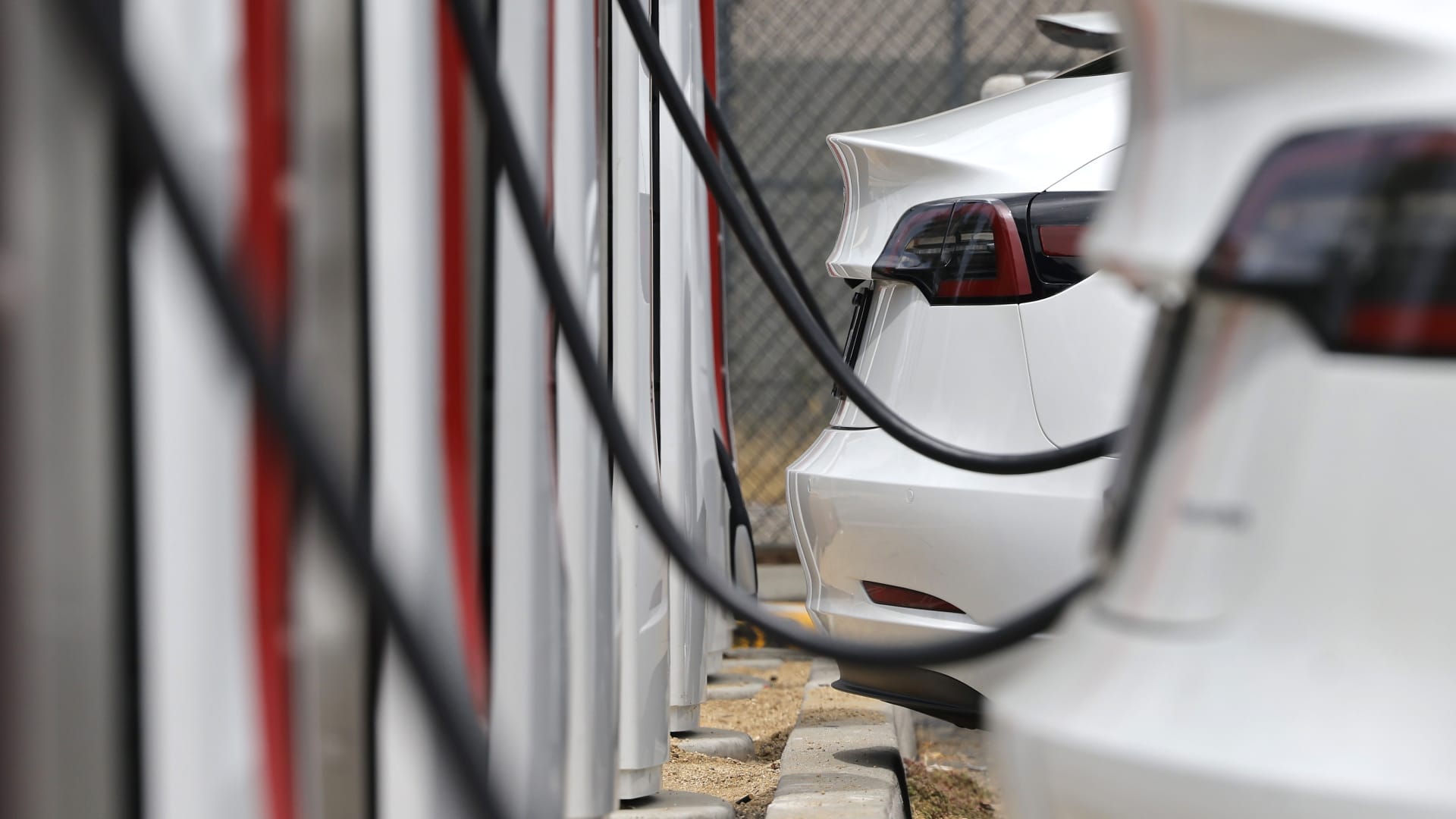
Geopolitical tensions and escalating U.S. gas prices are dramatically reshaping the automotive landscape, with demand for used all-electric vehicles (EVs) surging and driving prices upward. This unexpected market dynamic presents both opportunities and challenges for automakers and consumers, highlighting a critical pivot point in the broader stock markets and the ongoing energy transition.
🗝️ Corporate Strategy Insights
- Market Shift Acceleration. Geopolitical tensions and rising fuel costs are rapidly accelerating consumer adoption of used EVs, driving significant price hikes across wholesale and retail segments.
- Contrasting Market Dynamics. While demand for used EVs is soaring, new EV sales have faced declines, indicating a complex market where affordability and immediate availability are key drivers for consumers.
- Future Supply Headwinds. An anticipated influx of off-lease EVs later in the year poses a potential challenge to sustained price increases, with gas prices acting as a critical swing factor for continued demand.
Demand for Used EVs is skyrocketing, with Cox Automotive reporting a 12% increase in its Manheim Used Vehicle Value Index for EVs last month compared to June 2025. This stands in stark contrast to the modest 1.7% increase observed for non-EVs over the same period, clearly illustrating a consumer flight towards electrification. The ongoing Iran war and persistently high U.S. gas prices are identified as primary catalysts for this dramatic shift, pushing average wholesale EV prices up 11.5% this year to approximately $30,400. Retail prices for consumers typically mirror these wholesale trends, with Kelley Blue Book pegging the average used EV listing price at $37,083 as of May.
This robust performance in the secondary market comes despite significant challenges in the new EV segment. Many automakers reported sharp sales declines for new EVs during the second quarter, partially due to a difficult year-over-year comparison following a spike in demand last year ahead of the conclusion of federal incentives. The initial boost from incentives, which saw EV sales spike to roughly 10% of all vehicles sold in September last year before plummeting, has now faded, leaving affordability and gas price sensitivity as dominant factors for consumers.
Jonathan Gregory, senior director of Cox Automotive, emphasized the critical role of gas prices in shaping future vehicle costs. He highlighted the impending influx of off-lease EVs later this year, a potential supply wave that could pressure specific segments of the market. “The risk we’re watching for the second half is that steep ramp in off-lease supply, EVs especially, which could pressure specific segments even as the headline holds firm. Gas is the swing factor: If pump prices keep falling, some of that EV demand could fade as availability increases,” Gregory stated. AAA reports the national average for gas prices is up roughly 21% compared to a year ago, hitting $3.80 a gallon, a figure exacerbated by recent oil price jumps linked to escalating combat in Iran, as reported by business news updates.
- The current surge in used EV demand creates a complex environment where immediate cost savings on fuel outweigh the initial higher purchase price of new EVs for many consumers.
This dynamic underscores a fundamental shift in consumer purchasing priorities, driven by economic and geopolitical realities rather than purely technological advancements.
Strategic Ripple Effect: How Market Forces are Reshaping Auto Strategies
The surge in demand for used EVs, driven by a confluence of geopolitical instability and inflationary gas prices, sets off a significant strategic ripple effect across the automotive industry. This chain reaction begins with consumer behavioral shifts and extends to manufacturers’ long-term planning.
- Geopolitical Instability + High Gas Prices → Surge in Used EV Demand: External shocks make operating internal combustion engine (ICE) vehicles prohibitively expensive for a growing segment of consumers, compelling them towards more fuel-efficient, albeit pre-owned, electric options.
- Price Inflation for Pre-Owned EVs → Increased Residual Values & Profitability for Used Car Dealers: Higher demand directly translates to appreciating asset values for used EVs, benefiting dealerships and potentially incentivizing investment in used EV inventory and service infrastructure. This also has implications for leasing companies and OEMs handling trade-ins, boosting their asset recovery.
- Shift in Consumer Behavior & Manufacturer Strategy → Rethinking New EV Pricing & Production Mix: The divergence between robust used EV demand and softer new EV sales signals to manufacturers that affordability remains a major hurdle for widespread new EV adoption. This could force companies to re-evaluate their pricing strategies for entry-level new EVs, explore more aggressive leasing options, or even pivot production mixes to better align with prevailing market affordability concerns, as discussed in numerous market performance reports.
This evolving landscape highlights a critical need for automakers to develop more agile capital allocation strategies that account for both primary and secondary market dynamics, ensuring long-term competitive positioning within the accelerating shift to electrification.
The strength of the used EV market, juxtaposed with challenges in new EV sales, reveals a strategic imperative for automakers: affordability, driven by fuel cost savings, is currently a more powerful market lever than cutting-edge technology alone. Companies must bridge this gap to sustain long-term EV growth.
Key Market Indicators Shaping the EV Landscape
The rapid evolution of the EV market is best understood through several critical performance metrics that highlight the divergent trends between new and used vehicles. These indicators provide a factual basis for understanding the strategic challenges and opportunities facing the industry.
- Used EV Wholesale Price Index Growth (MoM): +12% in June 2026 vs. June 2025. This significant rise, far outpacing non-EVs, underscores the acute demand for pre-owned electric vehicles.
- Year-to-Date Used EV Wholesale Price Increase: +11.5% in 2026, reaching an average of ~$30,400. This sustained growth directly reflects the market’s response to external economic pressures.
- Average Used EV Retail Listing Price (May): $37,083. This figure, from Kelley Blue Book, indicates the consumer-facing cost implications of wholesale price surges.
- Used EV Sales Volume (May): 42,923 units, representing a 24.7% year-over-year increase and a 5.5% month-over-month rise. This robust sales growth confirms heightened consumer interest.
- Used EV Market Share (May): 2.8%. While still a small portion of the overall used vehicle market, its rapid growth trajectory is notable.
- National Average Gas Price: $3.80/gallon, up ~21% YoY. The direct correlation between rising fuel costs and used EV demand is a key strategic insight.
Each of these metrics collectively paints a picture of a market in flux, where external factors are exerting a profound influence on consumer choice and, by extension, on the strategic direction of automotive manufacturers.
Tesla Market Leadership: Navigating Evolving Demand
As the undisputed leader in the EV space, Tesla’s market position is uniquely impacted by these shifting demand dynamics. While the current news focuses on used EVs, Tesla models consistently command the largest share of the secondary market, with an estimated 15,353 units sold in May. This strong presence means Tesla benefits directly from higher residual values for its vehicles, enhancing its brand perception of quality and longevity. However, the contrast between surging used EV demand and declining new EV sales could present a strategic conundrum. Tesla’s historical strategy has focused on scaling new vehicle production and driving down costs, but if consumers increasingly opt for more affordable used options, it might necessitate a re-evaluation of its pricing structures, incentive programs, or even the introduction of a more budget-friendly new model to capture the cost-sensitive segment. Understanding corporate growth strategies requires a nuanced view of both market segments, which you can find through corporate growth strategies reports.
Tesla Strategic Analysis: Capitalizing on Secondary Market Trends
Tesla’s strategic positioning allows it to capitalize on the robust used EV market in several ways. The strength of its secondary market helps validate its technology and build long-term brand equity, essential for its “competitive moat.” Higher residual values for Tesla vehicles make leasing more attractive, potentially offsetting some of the current softness in new sales by offering lower monthly payments over the lease term. Furthermore, Tesla’s integrated ecosystem, including Supercharger networks and over-the-air software updates, maintains the value and desirability of its older models more effectively than many competitors. This enables Tesla to retain strong customer loyalty and potentially attract new buyers into the brand through the used market, who may then upgrade to new Teslas in the future. This approach integrates the secondary market as a strategic funnel for future sales and market expansion.
Used EVs: Shifting Tides and Investment Opportunities
The current surge in demand for used EVs marks a significant turning point, underscoring how geopolitical events and energy costs are driving fundamental shifts in consumer behavior and market strategy. This trend, heavily influenced by external factors, highlights the growing importance of affordability in the transition to electric mobility.
- High gas prices and global instability are directly accelerating used EV adoption.
- The used EV market is outperforming new EV sales, creating a complex dual market.
- An upcoming wave of off-lease EVs could test the sustainability of current price increases.
How will automakers adapt their product pipelines and pricing strategies to capitalize on this bifurcated EV market?
📊 StockXpo Analyst’s View
Market Impact: This unexpected strength in the used EV market is a fascinating counter-narrative to the slowing growth in new EV sales. It suggests that while environmental consciousness plays a role, immediate economic savings from avoiding high gas prices are a powerful motivator for consumers. This could lead to a re-rating of companies with strong used vehicle divisions or robust aftermarket support, as investors begin to appreciate the full lifecycle value of EVs. It also indicates that the transition to EVs might accelerate at the lower-cost, secondary market entry point.
Sector To Watch: The automotive retail sector, particularly dealerships with significant used EV inventory and specialized servicing capabilities, stands to gain substantially. Companies like Carvana or CarMax, alongside traditional dealerships investing in EV-specific used car programs, could see enhanced profitability. Additionally, battery recycling and repair services will become increasingly critical as the used EV fleet expands, creating new opportunities for specialized firms within the broader automotive ecosystem. For deeper educational insights, explore our educational insights.
Financial Disclaimer:
StockXpo.com is a financial news aggregator and educational portal, not a registered investment advisor or broker-dealer. All information, news, and analysis provided herein are strictly for educational purposes and do not constitute investment, financial, legal, or tax advice. Investing in the stock market involves high risks, and past performance is not indicative of future results. StockXpo will not be liable for any financial losses or investment damages. Always consult a certified financial advisor before making market decisions.
MORE IN INSIDE BUSINESS
Saudi Arabia Flight Decision: Delta Weighs Safety Amid Regional Tensions
Published: Friday, October 9, 2026 · 7:21 AM

Skydance Vertical Win: Ellison’s Bold Strategy for Media Dominance
Published: Thursday, October 8, 2026 · 12:44 PM