Published: Wednesday, July 8, 2026 · 7:21 AM | Updated: Wednesday, July 8, 2026 · 7:21 AM
📊 202 views




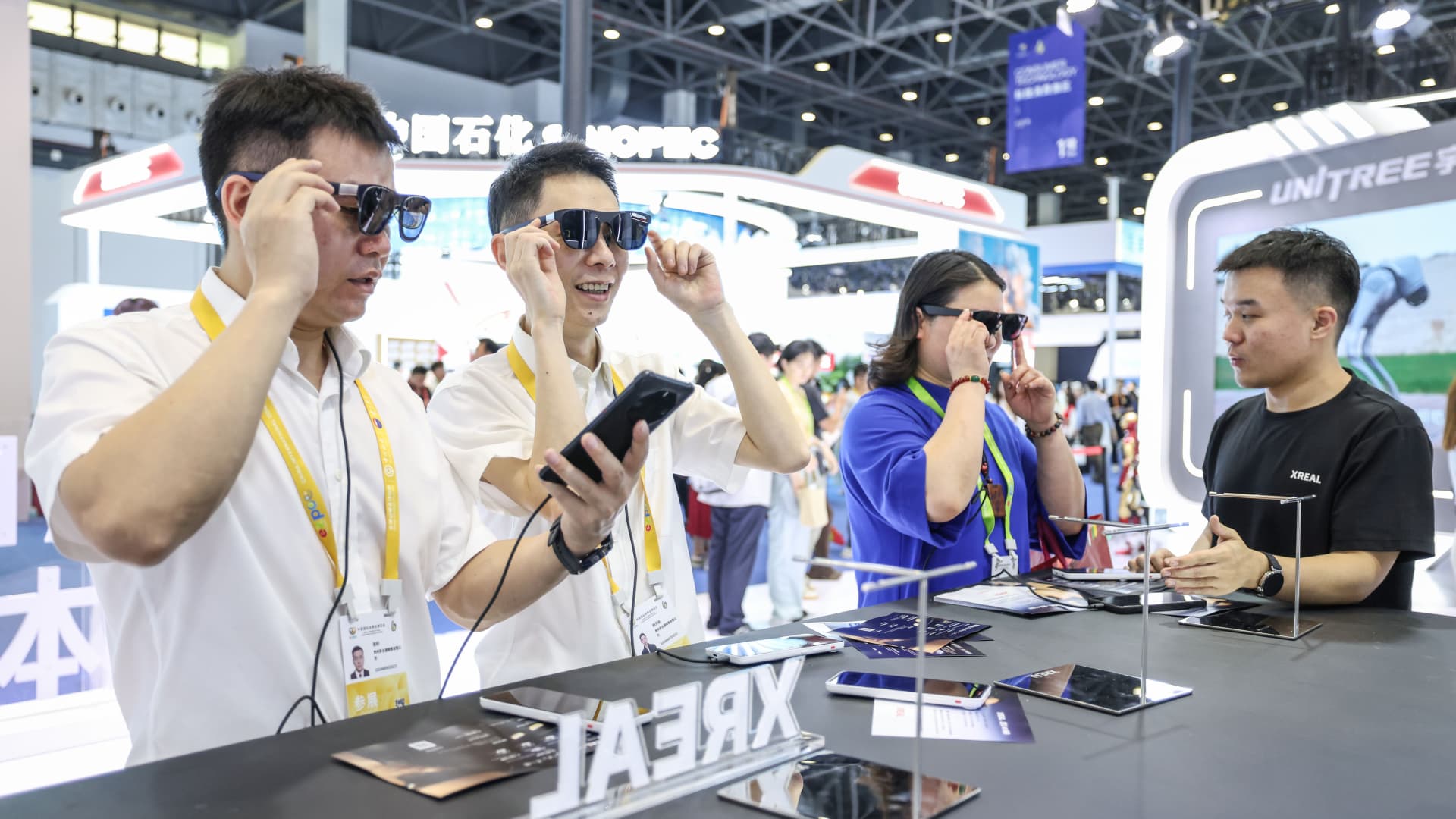
The global technology landscape is witnessing a notable shift, as a former Apple executive, Will Wang, articulates a compelling vision for consumer electronics innovation outside of Silicon Valley. His smart-glasses startup, Even Realities, has secured unicorn status by leveraging Shenzhen’s unparalleled hardware ecosystem, signaling a potent new growth hub for physical tech. This move highlights a growing divergence in venture capital appetite between software-centric Silicon Valley and hardware-rich manufacturing centers.
🚀 Tech Strategy & Market Disruptions
- Shenzhen’s Hardware Dominance. The city offers a deep talent pool in mechanical, electrical, and optical engineering, alongside an established supply chain critical for consumer electronics development.
- Shifting VC Focus. Silicon Valley investors are increasingly favoring AI software applications over hardware, perceiving faster returns and fewer supply chain complexities.
- AI Wearables Race. Even Realities, valued at $1 billion, is entering a competitive AI wearables market, challenging established players like Meta Platforms with its camera-less smart glasses.
Will Wang, CEO of China’s newest smart-glasses unicorn, Even Realities, argues that future consumer electronics giants akin to Apple will emerge from Shenzhen, not Silicon Valley. Wang, who contributed to Apple Watch and iPhone development from 2016 to 2018, explicitly cited Shenzhen’s ‘deep engineering talent pool and supply chain dominance’ as critical advantages. This perspective underscores a widening chasm in innovation priorities, where Silicon Valley’s capital and talent are ‘intensively’ flowing into AI and software agents, leaving hardware ventures with less funding momentum.
Even Realities, founded in 2023, recently raised $150 million at a $1 billion valuation, backed by prominent Chinese investors including Meituan and Tencent. This significant funding round emphasizes the robust domestic support for hardware innovation within China. The company’s Even G2 smart glasses and accompanying R1 control ring aim to capture a share of the burgeoning AI wearables market. Unlike competitors such as Meta’s Ray-Ban line, Even G2 omits cameras and recording hardware, focusing instead on notifications, navigation, and live translation through a heads-up display. Wang noted that the U.S. remains a crucial market, with over half of Even Realities’ users based there.
- Shenzhen’s Magnetism: Beyond Even Realities, Shenzhen boasts a formidable ecosystem for consumer electronics, attracting a new generation of founders building companies from camera maker Insta360 to robotics firm UBTech.
- Domestic Competition: Even Realities faces domestic rivals like Rokid, valued at $2.58 billion (PitchBook), and RayNeo at $239.9 million, indicating a vibrant, competitive landscape in China’s AI hardware sector.
- Global Ambitions: While current funding is primarily Chinese, Even Realities plans to target ‘much more global investors’ for future rounds to support its international expansion, particularly in the U.S. market.
This trend suggests that while America might lead in AI software, China’s manufacturing prowess and specialized engineering talent are poised to drive the next wave of AI-related consumer hardware. The speed of Chinese investors, as cited by Wang, also plays a role in fostering these rapid-growth hardware unicorns. For example, the swift movement of capital from Chinese-origin venture firms like CDH Investments, Monolith Management, and CVC Capital has been instrumental in Even Realities’ early success, as reported by CNBC.
The shift of high-caliber hardware development from Silicon Valley to Shenzhen creates a clear disruption flow: Localized Hardware Expertise → Accelerated Prototyping & Manufacturing Cycles → Rapid Market Introduction of AI-powered Wearables → Global Competition in Consumer Electronics Realigned. This dynamic positions Shenzhen as a potential epicenter for physical product innovation, directly challenging traditional innovation hubs and diversifying the global tech supply chain. The ability to iterate quickly from design to mass production within a concentrated geographical area provides a significant competitive edge, enabling startups to bring complex devices to market faster than ever before. This integrated ecosystem facilitates innovation that traditional models struggle to replicate.
“The gravitational pull towards Shenzhen for hardware ventures is undeniable. It’s not merely about cheaper labor; it’s about a complete ecosystem—from design talent to sophisticated supply chain management and rapid prototyping capabilities. For deep tech, this concentration significantly de-risks the hardware development lifecycle, making it an increasingly attractive launchpad for complex consumer electronics. Silicon Valley’s focus on software has inadvertently created an opportunity for other regions to lead in the physical manifestation of AI,” explained a Senior CTO at StockXpo, highlighting a crucial re-evaluation of global innovation hubs.
Although a formal data table isn’t warranted given the specific metrics, the valuations of key players in the AI wearables space highlight the intense competition and significant capital inflow:
- Even Realities: $1 billion valuation (after $150 million raise)
- Rokid: $2.58 billion valuation (PitchBook)
- RayNeo: $239.9 million valuation
Even Realities’ Ecosystem Expansion Potential
Even Realities’ strategy hinges not just on hardware prowess but on cultivating a robust ecosystem around its smart glasses. By launching the Even G2 smart glasses in conjunction with the Even R1 control ring, the company is building a cohesive user experience designed for intuitive interaction. The absence of a camera in the G2, a deliberate design choice, could also help mitigate privacy concerns often associated with wearable tech, potentially broadening its market appeal. Its focus on practical applications like notifications, navigation, and live translation aligns with immediate user needs, laying a foundation for further software and service integration. Expanding this ecosystem will involve strategic partnerships and developer support to create a rich application landscape for its heads-up display technology, a common strategy seen in successful consumer electronics platforms.
Shenzhen Security & Infrastructure Strength
The robustness of Shenzhen’s manufacturing infrastructure is a key differentiator, offering an integrated network of component suppliers, assembly lines, and logistics. This extensive ecosystem provides unparalleled agility and cost-effectiveness for hardware production. However, for a company like Even Realities eyeing global markets, especially the U.S., questions around supply chain resilience and data security protocols within Chinese manufacturing must be meticulously addressed. While Shenzhen offers efficiency, navigating geopolitical sensitivities and ensuring product integrity against potential intellectual property concerns will be paramount. A strong, transparent security framework for hardware and software development is essential to gain widespread trust, particularly in sensitive sectors like AI wearables. Companies looking to leverage Shenzhen’s capabilities for global distribution must demonstrate rigorous adherence to international security standards and consumer data protection regulations, which can be an advantage for competitive technology market trends.
Even Realities’ Global Ambitions: A New Blueprint for Tech Growth
Even Realities exemplifies a new blueprint for consumer electronics growth, demonstrating that innovation in physical products is increasingly finding its center in global technology news rather than Silicon Valley’s software-dominated landscape. This strategic choice by a former Apple veteran highlights a critical re-evaluation of where the next generation of hardware unicorns will originate.
- Shenzhen Hardware Innovation accelerates complex hardware development through its integrated supply chain and engineering talent.
- The shift in venture capital focus towards software in Silicon Valley opens opportunities for hardware in alternative hubs.
- Even Realities’ camera-less approach to AI wearables may offer a distinct market advantage in privacy-sensitive regions.
Will this geographic rebalancing redefine the global innovation map for consumer electronics, or merely diversify it further?
### 📊 StockXpo Analyst’s View
Market Impact: This development signals a potential re-rating for hardware-focused companies originating from robust manufacturing ecosystems like Shenzhen. Investor sentiment may begin to favor startups that demonstrate end-to-end control over product development and production, rather than solely software innovation. It could also prompt a re-evaluation of supply chain dependencies for existing tech giants, driving further diversification, as seen in industry developments.
Sector To Watch: The AI wearables sector, particularly augmented reality (AR) and smart glasses, is poised for significant growth. Companies that can seamlessly integrate AI functionality with user-friendly, privacy-conscious hardware will likely lead. Watch for continued investment into manufacturing infrastructure and specialized engineering talent within regions fostering innovations in emerging technologies and offering deeper educational tech insights.
Financial Disclaimer:
StockXpo.com is a financial news aggregator and educational portal, not a registered investment advisor or broker-dealer. All information, news, and analysis provided herein are strictly for educational purposes and do not constitute investment, financial, legal, or tax advice. Investing in the stock market involves high risks, and past performance is not indicative of future results. StockXpo will not be liable for any financial losses or investment damages. Always consult a certified financial advisor before making market decisions.
MORE IN INSIDE TECHNOLOGY

Starlink India: Regulatory Hurdles and Innovation-Driven Growth Risks
Published: Friday, October 9, 2026 · 12:48 AM
Starlink Launch: India’s Digital Transformation Faces Regulatory Risk
Published: Thursday, October 8, 2026 · 1:51 AM