Published: Thursday, July 2, 2026 · 12:42 PM | Updated: Thursday, July 2, 2026 · 12:42 PM
📊 232 views




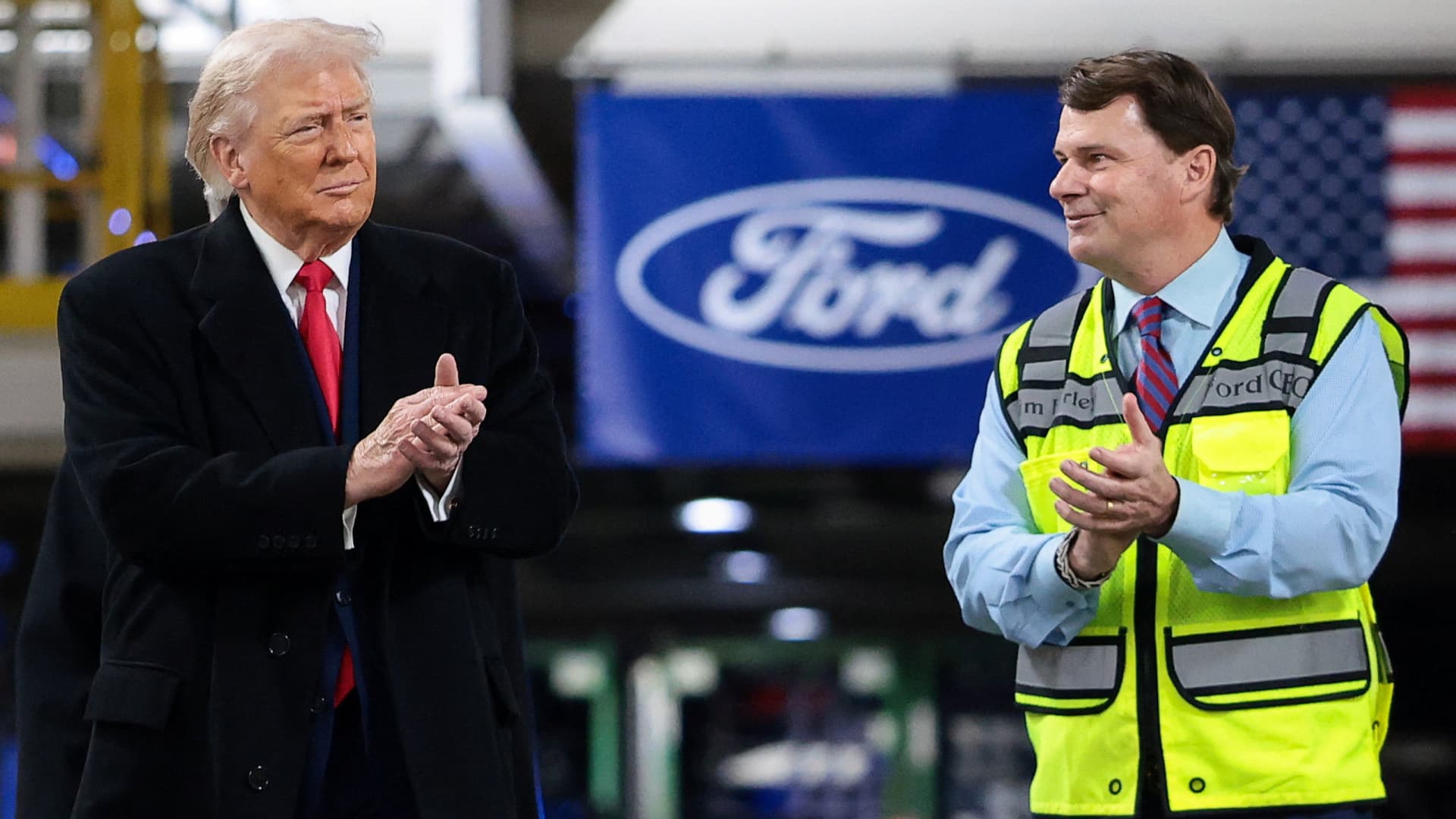
As the USMCA North American trade agreement reopens for negotiations, Ford Motor Company’s CEO Jim Farley has publicly outlined a clear agenda: demanding a more equitable competitive environment that rewards domestic vehicle production. This strategic push by Ford aims to reshape the operational landscape for automakers, potentially penalizing rivals heavily reliant on imports and recalibrating capital allocation strategies across the industry.
🗝️ Corporate Strategy Insights
- Domestic Production Imperative. Ford’s CEO Jim Farley advocates for new USMCA provisions that would explicitly favor automakers with significant U.S. manufacturing footprints, aiming to institutionalize a competitive advantage for companies like Ford.
- Competitive Cost Structures. This stance directly challenges the prevailing economic models of rivals such as General Motors and Toyota, who leverage lower labor costs from international production to import a substantial portion of their U.S. sales.
- Trade Policy Repercussions. The reopening of USMCA negotiations, under the Trump administration’s annual review framework, signals a potential for significant shifts in supply chain strategies and operational efficiencies within the North American automotive sector, with implications for investment and employment.
Ford Motor CEO Jim Farley has articulated a robust position as USMCA trade talks resume, asserting that the agreement should actively benefit automakers predominantly manufacturing their vehicles domestically. Farley’s vision directly targets what he perceives as an uneven playing field, advocating for penalties against companies that rely heavily on imported vehicles for their U.S. sales, a strategy that could profoundly impact the competitive dynamics of the automotive market. The Ford USMCA Strategy is designed to incentivize U.S. job creation and strengthen local supply chains.
Farley specifically cited General Motors and Toyota Motor, highlighting their significant reliance on imports. In 2025, GM imported 1.17 million vehicles, representing 41% of its U.S. sales, while Toyota imported over 1.19 million units, accounting for 47% of its domestic sales. These figures starkly contrast with Ford’s operations; the company reported assembling over 2 million vehicles in the U.S. last year, the highest among all auto manufacturers, exporting 311,000 units, and importing only 378,000 vehicles, or 17% of its 2.2 million sales. This strategic divergence in production models forms the crux of Ford’s argument.
The cost differential associated with manufacturing in countries with lower labor expenses is a central theme in this debate. Ford’s commitment to UAW workers and its high ratio of U.S.-built vehicles underscore its argument for preferential treatment within the revised trade framework. Industry observers note that the automotive sector represents approximately 18% of America’s trade with Canada and Mexico, making any changes to the USMCA critical for broader economic stability. Hyundai Motor, for instance, plans to nearly double its U.S.-produced domestic sales to 80% by 2030, indicating a broader industry trend towards localization in response to evolving trade environments and consumer preferences. For more insights into evolving corporate strategies, visit StockXpo business analysis.
Ford’s aggressive advocacy in the USMCA talks could trigger a substantial strategic ripple effect across the North American auto industry. Should Farley’s proposals gain traction, leading to tariffs or other disincentives on imported vehicles, companies like GM and Toyota would face increased operational costs. This could compel them to re-evaluate their global supply chains and potentially shift significant capital allocation towards expanding U.S. manufacturing capabilities or face erosion of profit margins. This strategic move from Ford could reshape market share dynamics by making domestically produced vehicles more price-competitive, while simultaneously impacting their rivals’ investment strategies, forcing a pivot towards localization that may require substantial upfront expenditure and retooling. Conversely, a failure to secure such provisions might leave Ford at a continued cost disadvantage against import-reliant competitors.
“Farley’s demand for a ‘level playing field’ is more than just trade rhetoric; it’s a direct challenge to the fundamental operating models of some of the largest players in the U.S. auto market, pushing for policy that directly converts domestic production into a tangible competitive advantage.”
Understanding the import landscape provides critical context for Ford’s position:
Major Automakers’ Foreign Imports to the U.S. in 2025
| Automaker | U.S. Sales (Approx.) | Imported Units | % of Sales Imported |
|---|---|---|---|
| Ford Motor | 2.2 million | 378,000 | 17% |
| General Motors | 2.85 million | 1.17 million | 41% |
| Toyota Motor | 2.53 million | 1.19 million | 47% |
Note: U.S. sales figures are estimates based on import percentages provided in the original data. These metrics are crucial for understanding the operational costs and competitive positioning impacted by trade policies.
Ford Motor’s Strategic Analysis: Crafting a Home-Field Advantage
Ford’s current USMCA strategy aligns with a broader long-term objective of solidifying its brand as a leader in American manufacturing. By emphasizing its robust U.S. production footprint and high percentage of unionized workers, Ford aims to leverage nationalistic sentiment and potential governmental incentives. This move is not merely about trade policy but also about reinforcing its market identity and potentially insulating itself from geopolitical supply chain disruptions. The company’s lower reliance on imports provides a strategic buffer, especially in a volatile global trade environment. For detailed investment perspectives, explore StockXpo’s investment analysis section.
Toyota Motor’s Competitive Advantages: Global Supply Chain Resilience
While Ford champions domestic production, Toyota Motor has historically built a reputation for highly efficient global supply chains and diversified manufacturing bases. Its ability to import nearly half of its U.S. sales, while still maintaining significant U.S. assembly operations, speaks to a complex, resilient, and optimized network. Should USMCA terms shift, Toyota’s challenge would be to either adapt its supply chain by increasing U.S. production or absorb potential new tariffs. However, its vast experience in managing global logistics and adapting to varying regulatory landscapes offers a distinct competitive advantage in navigating such shifts, as often discussed in global business news.
Navigating the Ford USMCA Strategy: Implications for Auto Manufacturing
Ford’s assertive stance in the reopened USMCA trade talks represents a significant strategic maneuver aimed at recalibrating the North American automotive competitive landscape. By advocating for policies that reward domestic manufacturing and penalize heavy importers, Ford is attempting to institutionalize a cost advantage and reinforce its identity as a leading U.S. producer. This has profound implications for how major automakers plan their production, manage supply chains, and allocate capital in the coming decade.
- Operational Realignment: Competitors like GM and Toyota may face pressure to ramp up U.S. production to mitigate new trade penalties, leading to substantial investment in domestic facilities.
- Market Share Dynamics: A shift in trade policy could alter vehicle pricing, potentially boosting market share for companies with higher U.S. production ratios.
- Investment Certainty: The ongoing USMCA renegotiations introduce a layer of uncertainty that could temper new investments in manufacturing until clearer policy directions emerge.
For further market commentary and insights into these developments, visit StockXpo’s blog. As the trade talks progress, will this push by Ford redefine the bedrock of North American automotive production and trade for years to come?
📊 StockXpo Analyst’s View
Market Impact: Ford’s public lobbying on USMCA reflects a calculated move to secure regulatory advantages, potentially enhancing its competitive position relative to import-heavy rivals. This news could introduce volatility for automotive stocks, as investors weigh the potential for shifting cost structures and market share dynamics. Companies perceived as vulnerable to increased import tariffs might see downward pressure, while those with robust domestic production, like Ford, could experience increased investor confidence, impacting market liquidity in the short term.
Sector To Watch: The immediate sector to watch is automotive manufacturing, particularly the supply chain and component suppliers. Any changes to trade terms will directly affect sourcing strategies and operational expenditures. Beyond direct automakers, logistics and transportation industries involved in cross-border shipping within North America will also be keenly watching, as their business models could be significantly altered by new trade regulations, as reported by Bloomberg Markets.
Financial Disclaimer:
StockXpo.com is a financial news aggregator and educational portal, not a registered investment advisor or broker-dealer. All information, news, and analysis provided herein are strictly for educational purposes and do not constitute investment, financial, legal, or tax advice. Investing in the stock market involves high risks, and past performance is not indicative of future results. StockXpo will not be liable for any financial losses or investment damages. Always consult a certified financial advisor before making market decisions.
MORE IN INSIDE BUSINESS
American Airlines loss forecast: Strategic Capacity Slowdown Expected
Published: Thursday, October 22, 2026 · 8:40 AM

United Airlines Profit Outlook Slashed Amid Fuel Costs, Strong Demand Persists
Published: Wednesday, October 21, 2026 · 7:30 AM