Published: Wednesday, June 24, 2026 · 7:41 AM | Updated: Wednesday, June 24, 2026 · 7:41 AM
📊 252 views




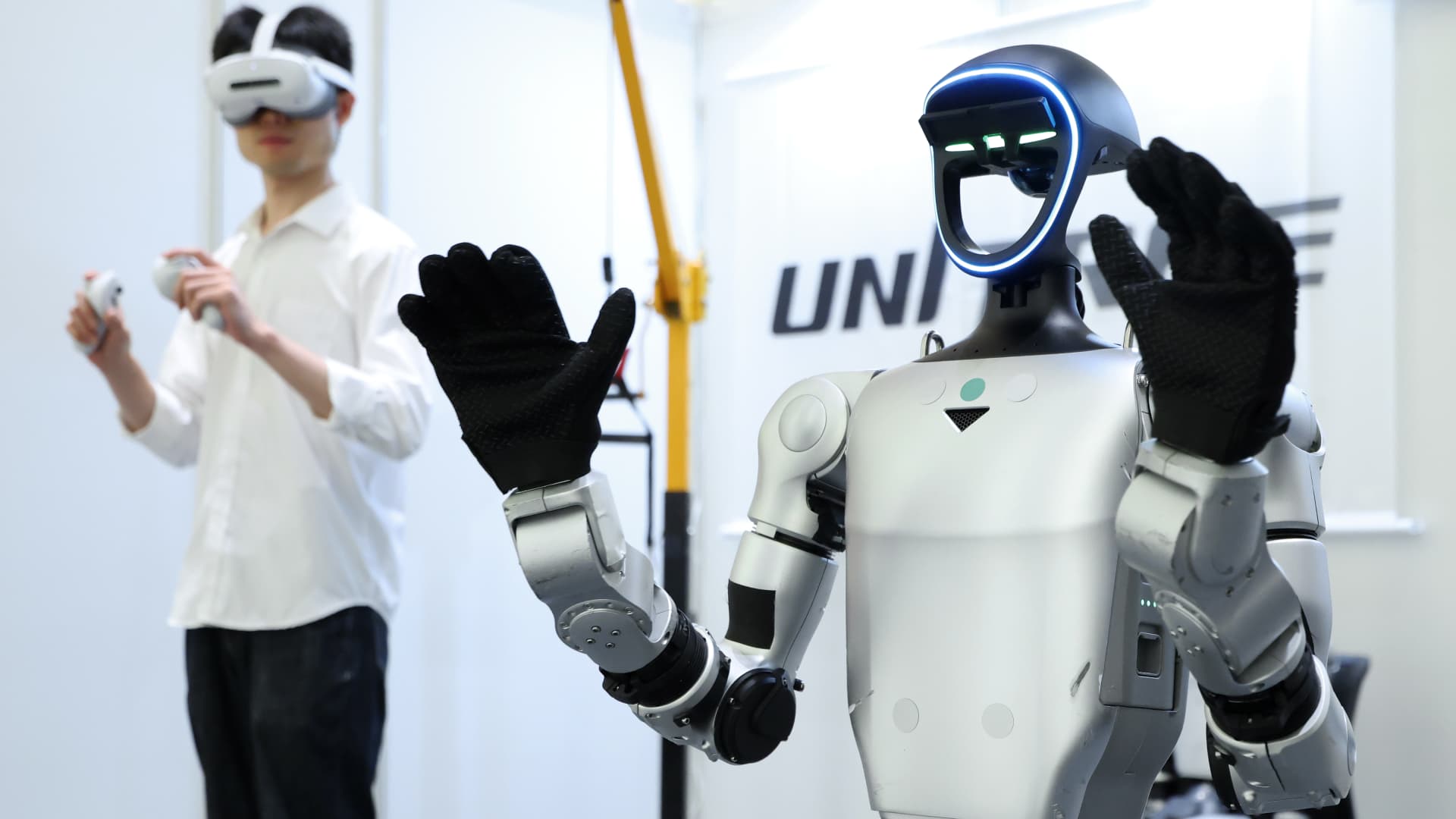
Morgan Stanley has significantly increased its projections for China’s humanoid robot shipments, citing an accelerated transition from developmental stages to commercial deployment. This upward revision underscores a burgeoning industry poised for substantial expansion, driven by policy support and robust supply chain integration.
🚀 Tech Strategy & Market Disruptions
- Accelerated Commercialization. Morgan Stanley has significantly upgraded its forecast for China’s humanoid robot shipments, indicating a faster-than-anticipated shift from demonstration to widespread commercial deployment.
- Government Backing. Beijing’s strategic push for ’embodied AI’ includes substantial policy support, subsidies, and favorable lending terms, fueling domestic manufacturers’ expansion.
- Global Market Dominance. Chinese firms currently lead in global humanoid robot shipments, with strong growth expected to further solidify their position against international competitors like Tesla and Figure AI.
China’s humanoid robot market is experiencing a significant uplift, with Morgan Stanley nearly doubling its annual shipment forecast to 50,000 units this year, up from an earlier projection of 28,000. This marks the second time this year the bank has revised its outlook, initially setting a forecast of 14,000 units in January. The revised estimates project the market value to soar from $2 billion this year to an impressive $15 billion by 2030, with annual shipments reaching 446,000 units.
Several factors contribute to this rapid acceleration. Analysts point to strong commercial verification, robust policy support from the Chinese government, and efficient supply-chain feedback loops as key enablers of faster adoption. Beijing has designated ’embodied AI’ – artificial intelligence integrated into physical systems like robots – as a national priority for the next five years. This strategic focus translates into substantial local government subsidies, including land and office space for startups, alongside favorable lending terms from banks. This concerted effort positions China to dominate the industry, fostering an environment where domestic manufacturers are aggressively scaling production and deploying robots across various real-world applications, from factories and logistics to convenience stores and restaurants.
Last year, global humanoid robot shipments were approximately 13,000 units, with Chinese companies securing the top five positions. In contrast, U.S. competitors like Figure AI and Tesla ranked seventh and ninth, respectively. Tesla CEO Elon Musk has indicated that the company’s Optimus humanoid robot may not be available for public sales until late 2027. This competitive landscape highlights the significant lead Chinese firms have established in the technology market trends of humanoid robotics.
McKinsey Greater China’s senior partner and chairman, Joe Ngai, suggests that humanoid robotics could be the ‘next big frontier’ for investors tracking China’s rapid technological advancements. He observes a pervasive presence of automation and robotics in Chinese factories, surpassing deployment rates elsewhere globally. Morgan Stanley’s supply chain research further corroborates this rapid commercialization, noting extensive rollouts in factory and logistics settings, unmanned retail stores, and interactive commercial services. Suzhou-headquartered Leaderdrive, a key supplier of precision robotic components to Chinese humanoid makers like Ubtech and Galbot, is identified as a major beneficiary. The bank has raised Leaderdrive’s 12-month target price, forecasting it could capture a 40% global market share this year.
The swift commercialization and governmental backing translate into a clear disruption flow: accelerated innovation in embodied AI leads to faster prototyping and deployment, which then drives increased demand for specialized components. This, in turn, fuels supply chain scaling and optimization, ultimately reducing production costs. The lower costs facilitate broader industry adoption across manufacturing, logistics, and retail, culminating in a significant market disruption where humanoid robots become integral to operational efficiency and service delivery.
‘The rapid scaling of China’s humanoid robot sector showcases a critical inflection point where advanced AI hardware meets robust manufacturing capabilities, creating an unparalleled pace of innovation and deployment previously unseen in robotics.’
Key Humanoid Robot Market Metrics
| Metric | 2026 Forecast | 2030 Forecast |
|---|---|---|
| Annual Shipments (Units) | 50,000 | 446,000 |
| Market Value | $2 Billion | $15 Billion |
Humanoid Robot Market Adoption Challenges
Despite the optimistic forecasts, the nascent humanoid robot market in China faces several adoption challenges. One primary hurdle is the integration complexity into existing industrial and commercial infrastructures. While prototypes are proving capabilities, scaling these deployments requires significant investment in re-tooling, workforce training, and developing robust management systems. Furthermore, the cost-benefit analysis for broader consumer-facing applications, such as in convenience stores or restaurants, needs to demonstrate clear ROI before widespread adoption. The reliability and safety aspects of humanoid robots operating in unstructured human environments also remain critical areas requiring continuous refinement and regulatory clarity. Ensuring these machines can perform tasks consistently and safely without human intervention is paramount for public acceptance and market penetration, especially as emerging technologies like these mature.
China’s Ecosystem Expansion Potential
China’s aggressive governmental support and a dense, competitive landscape of domestic manufacturers are fueling an immense ecosystem expansion potential. The focus on ’embodied AI’ as a national priority ensures sustained investment in R&D and manufacturing capabilities. Companies like Seer Intelligent, which recently debuted in Hong Kong, are actively pursuing overseas expansion, indicating a strategic intent to leverage domestic strengths for global market penetration. While geopolitical uncertainties and trade tensions pose headwinds, the strategy of geographic diversification and strict regulatory compliance is being adopted by Chinese firms. This proactive approach, coupled with robust domestic supply chains exemplified by component manufacturers like Leaderdrive, positions China to not only dominate its internal market but also become a significant global exporter of humanoid robot technology and expertise. Further insights can be found by exploring educational tech insights.
The Future Trajectory of China Humanoid Robot Development
China’s rapid ascent in the humanoid robot sector, marked by aggressive commercialization and strong government backing, positions it as a dominant force in the global ’embodied AI’ landscape. The sheer scale of projected shipments and market value growth underscores a profound shift in industrial automation and consumer services.
- The swift pace of commercial deployment, rather than solely R&D, is the core driver of China’s market acceleration.
- Policy support and a robust domestic supply chain are critical enablers, fostering a competitive ecosystem.
- The global competitive landscape is intensifying, with Chinese firms aiming to expand their international footprint despite geopolitical challenges.
Will this rapid expansion fundamentally reshape global manufacturing and service industries within the next decade, or will new challenges emerge?
📊 StockXpo Analyst’s View
Market Impact: Morgan Stanley’s significantly raised forecast signals robust investor confidence in China’s industrial automation sector. This news could attract further capital into related technology stocks, particularly those involved in robotics manufacturing, AI hardware, and component supply chains. The acceleration indicates a tangible shift from speculative investment to growth-driven opportunities, potentially impacting valuations across the global robotics market as China strengthens its lead.
Sector To Watch: The industrial automation and advanced manufacturing sectors are poised for significant gains. Companies specializing in precision components, integrated robotics solutions, and AI development for physical systems (embodied AI) will likely benefit most. Investors should also monitor logistics and retail technology firms integrating these solutions, as they could see enhanced operational efficiencies and new service models.
Financial Disclaimer:
StockXpo.com is a financial news aggregator and educational portal, not a registered investment advisor or broker-dealer. All information, news, and analysis provided herein are strictly for educational purposes and do not constitute investment, financial, legal, or tax advice. Investing in the stock market involves high risks, and past performance is not indicative of future results. StockXpo will not be liable for any financial losses or investment damages. Always consult a certified financial advisor before making market decisions.
MORE IN INSIDE TECHNOLOGY

SoftBank AI Investment: Malaysia’s $50 Billion Innovation Surge
Published: Monday, October 26, 2026 · 2:37 AM

SpaceX AI Chips: $40 Billion Deal Fuels Innovation-Driven Growth
Published: Sunday, October 25, 2026 · 9:35 PM