Published: Tuesday, June 23, 2026 · 1:47 PM | Updated: Tuesday, June 23, 2026 · 1:47 PM
📊 224 views




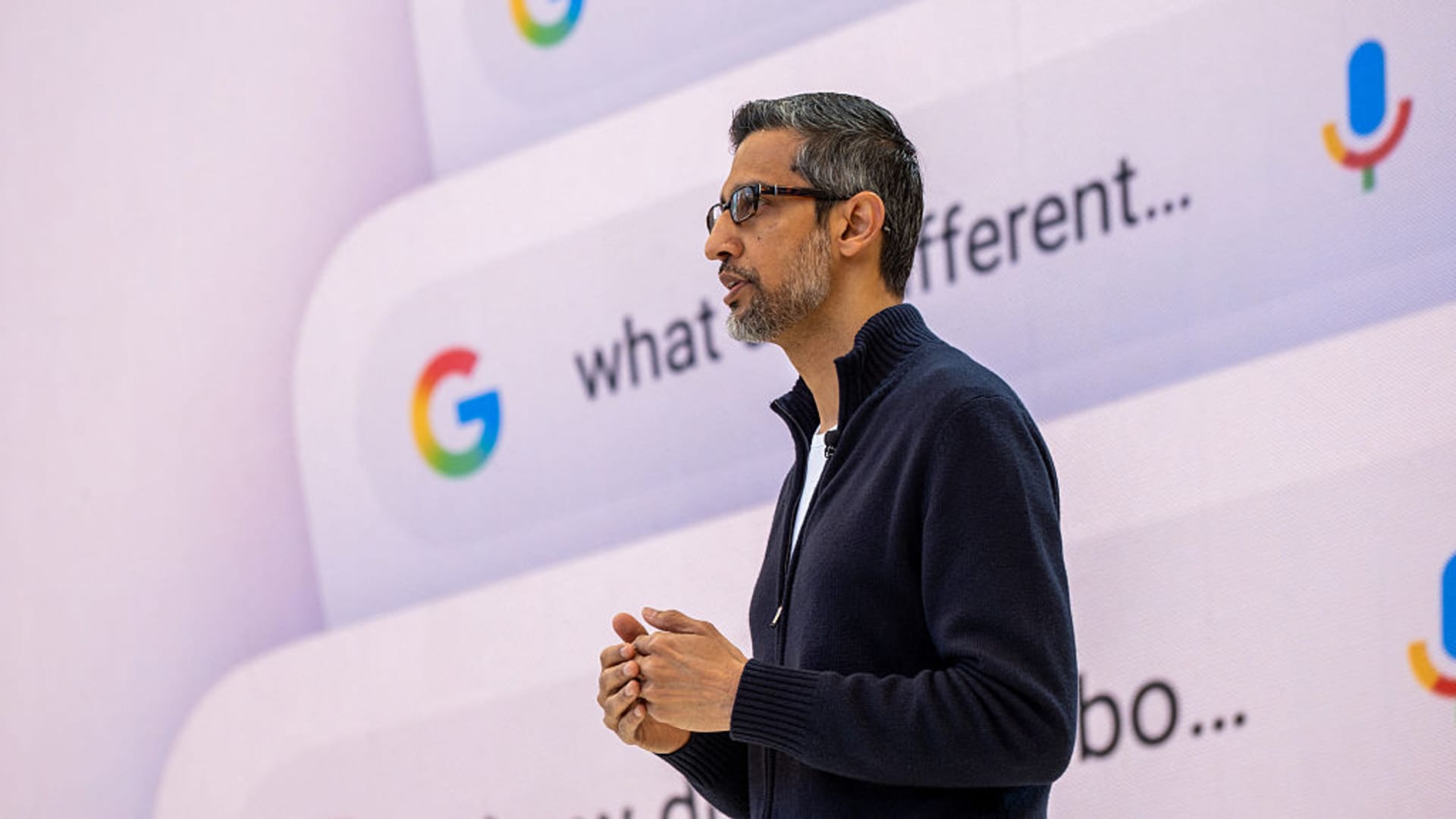
More than three years into the generative AI boom, Google’s online dominance in search is showing nascent signs of strain, challenging its foundational business model. While Google’s stock has surged and revenue growth remains strong, the rapid adoption of AI-powered chatbots and a growing user preference for non-AI alternatives are creating new market dynamics. This shift signals a complex inflection point for the tech giant, forcing a reevaluation of its core strategies amidst unprecedented innovation.
🚀 Tech Strategy & Market Disruptions
- AI Chatbot Ascent. ChatGPT and Anthropic’s Claude are gaining significant user traction, appearing high on app store charts and siphoning search queries from traditional engines, challenging Google’s information retrieval paradigm.
- Privacy-Focused Alternatives. DuckDuckGo’s “no-AI” search option and browser extensions are experiencing surging install rates, indicating a growing segment of users rejecting AI-driven search due to privacy concerns and a desire for more control over information discovery.
- Talent War Intensifies. High-profile departures of Google AI executives to competitors like OpenAI and Anthropic highlight an aggressive industry-wide bidding war for top-tier AI talent, a critical component for sustained innovation-driven growth.
Google has long been synonymous with internet search, controlling an estimated 90% of the market. Despite a recent stock surge and robust revenue growth in Q1 2026, the foundational pillars of Google’s dominance are experiencing new pressures. Competitors such as Microsoft’s Bing have notably surpassed 1 billion users, while privacy-centric DuckDuckGo reports weekly install rate jumps of up to 40-75% following Google’s AI-centric announcements. Concurrently, Google’s overall search traffic has seen a slight dip in the past month, contrasting with a minor uptick for ChatGPT.
The proliferation of generative AI has fundamentally altered user expectations for information retrieval. Chatbots like ChatGPT, which recently exceeded 1 billion monthly active users, and Anthropic’s Claude are emerging as primary tools for many, often outranking Google Gemini in app popularity. This shift challenges the efficacy of Google’s traditional ad-driven search model, which accounts for roughly three-quarters of its revenue. Google’s response has been swift, integrating an ‘AI Mode’ button directly into its redesigned search box and embedding tools like Nano Banana, signaling a deep commitment to AI-first experiences. However, this strategy risks cannibalizing its lucrative search ads for a new, unproven monetization model.
- User anxiety regarding AI, evidenced by a Pew Research Center study where about half of Americans expressed more concern than excitement, is driving some users towards non-AI alternatives.
- The battle for AI talent is fierce, with recent high-profile Google departures, including Gemini co-lead Noam Shazeer to OpenAI and DeepMind’s John Jumper to Anthropic, underscoring the aggressive recruitment tactics of frontier AI labs.
- Publishers are experiencing declining traffic from Google searches as AI summaries reduce the need for users to click external links, sparking antipathy and forcing content creators to reassess their digital strategies.
- Regulatory and ethical concerns also loom large, with wrongful death lawsuits against AI chatbot providers and allegations of chatbots prompting harmful behavior, adding another layer of complexity for tech giants.
Lily Ray, VP of SEO and AI Search at Amsive, noted that Google must “strike a balance” with AI integration to avoid alienating users who prefer traditional search. The rise of zero-click searches, where users find answers directly within search results without visiting external websites, further exacerbates concerns for publishers. Data from SparkToro and Similarweb indicates that approximately 68% of all Google searches now conclude without a single click to an external site, a trend that Condé Nast CEO Roger Lynch described as a persistent, underestimated decline. Further insights into these technology market trends are available on StockXpo.com.
The introduction of powerful AI models has initiated a significant disruption flow within the search industry. Advanced AI models, acting as sophisticated conversational agents, lead to a direct shift in user behavior towards chat-based information discovery. This redefines the traditional search experience, moving from keyword-based queries and link navigation to direct, summarized answers. Consequently, the reliance on ad-supported click-throughs, which form the bedrock of Google’s revenue, diminishes. This, in turn, pressures advertising models, potentially reducing ad revenue streams for both Google and the broader publishing ecosystem, ultimately challenging the established economic equilibrium of the internet.
“The pivot towards AI-first search isn’t merely a feature upgrade; it represents a fundamental re-architecture of information access. For companies, understanding this shift means moving beyond keyword optimization to creating content and data structures that are directly consumable by AI models, anticipating a future where knowledge synthesis, not just retrieval, drives user engagement.”
| Metric | Google (Before/After AI) | Competitors (AI Era) |
|---|---|---|
| Search Market Share | ~90% (still dominant) | Bing: 1 billion users (new high) |
| Monthly Active Users (MAU) | Queries at all-time high (Pichai) | ChatGPT: >1 billion MAU (surpassed) |
| App Store Ranking (iOS) | Gemini: 9th | ChatGPT: Top free app; Claude: 8th |
| DuckDuckGo Install Rates | N/A | Up 40-75% weekly (post-I/O) |
| Google Search Traffic | Down >1% (past month) | ChatGPT Traffic: Up (past month) |
| Zero-Click Searches | ~68% of Google searches end without a click | N/A |
Google’s Market Adoption Challenges
Despite its immense engineering prowess, Google faces significant hurdles in driving widespread adoption for its AI-centric search offerings. The primary challenge lies in overcoming deeply ingrained user habits developed over decades with traditional keyword search. Users accustomed to navigating through organic results and external links may find AI-summarized answers disorienting or untrustworthy, especially given the ongoing issues of AI hallucination and bias. Furthermore, Google’s automatic activation of ‘AI Overview’ without explicit user consent, as highlighted by DuckDuckGo’s policy chief, risks alienating a segment of the user base seeking more control and transparency. The anxiety surrounding AI, as captured in various studies, suggests that a ‘one-size-fits-all’ approach may impede, rather than accelerate, market acceptance for advanced AI search functionalities. Convincing a skeptical public and navigating privacy concerns will be crucial for the long-term success of its AI initiatives.
Google’s Ecosystem Expansion Potential
Beyond its core search business, Google’s robust ecosystem offers substantial potential for AI-driven expansion and diversification. Its extensive reach across Android, Chrome, YouTube, and its Google Cloud platform provides multiple touchpoints for embedding AI capabilities. For instance, deeper integration of Gemini into Android, Google Workspace applications, and even Waymo’s autonomous driving technology could create synergistic value, expanding AI beyond just search. The company’s significant investment, reportedly close to $200 billion, in AI infrastructure underscores its long-term vision. This foundational investment positions Google to not only enhance its existing product lines but also to launch entirely new services that leverage its AI capabilities, potentially creating new revenue streams that are less reliant on the traditional search advertising model. The challenge will be to seamlessly integrate these AI advancements into a cohesive user experience without diluting the value proposition of its established platforms, especially as it seeks to fend off emerging technologies and competitive pressures detailed in Bloomberg podcast discussions.
Navigating Google’s Shifting Search Landscape in the AI Era
Google finds itself at a pivotal juncture, navigating the transformative currents of the AI era while striving to maintain its foundational search business. The company’s proactive integration of AI features into search is a necessary evolution, but it must carefully balance innovation with user expectations and the delicate economics of its advertising model. The coming years will reveal whether its AI investments yield new monetization pathways or accelerate the erosion of its traditional revenue streams.
- The rise of conversational AI presents an existential threat, demanding Google redefine what ‘search’ means in a post-chat interface world.
- A growing user segment prefers non-AI alternatives, signaling a need for diversified options and increased transparency in AI integration.
- Maintaining talent leadership and fostering trust with publishers and users will be critical for Google’s sustained market leadership.
Can Google successfully evolve its core business to leverage AI without fundamentally disrupting the very ad-driven revenue model that has underpinned its unparalleled success for decades?
### 📊 StockXpo Analyst’s View
Market Impact: The evolving dynamics in the search market present a nuanced picture for Alphabet investors. While current revenue growth remains strong, the long-term uncertainty around AI monetization and potential advertising cannibalization could introduce volatility. We anticipate increased investor scrutiny on Google’s ability to diversify revenue beyond search ads and effectively integrate AI without degrading core product value. This re-evaluation of its market position could influence broader tech stock valuations. Our emerging technologies reports offer deeper insights.
Sector To Watch: The immediate beneficiaries are niche privacy-focused search engines and dedicated AI chatbot platforms. Furthermore, companies focused on ethical AI development and transparent data handling within Reuters reports may see increased investor interest. We also advise monitoring the content publishing sector, which is under pressure to adapt its business models away from traditional search traffic dependencies, leading to potential investment opportunities in direct-to-consumer content platforms. For further educational tech insights, visit our blog.
Financial Disclaimer:
StockXpo.com is a financial news aggregator and educational portal, not a registered investment advisor or broker-dealer. All information, news, and analysis provided herein are strictly for educational purposes and do not constitute investment, financial, legal, or tax advice. Investing in the stock market involves high risks, and past performance is not indicative of future results. StockXpo will not be liable for any financial losses or investment damages. Always consult a certified financial advisor before making market decisions.
MORE IN INSIDE TECHNOLOGY

Data Centers Face Global Headwinds: A $119 Billion Investment at Risk
Published: Saturday, October 3, 2026 · 2:48 AM

AI Cyberattacks: Interpol Warns of Escalating Speed and Risk
Published: Friday, October 2, 2026 · 1:18 AM