Published: Thursday, June 18, 2026 · 10:09 AM | Updated: Thursday, June 18, 2026 · 10:09 AM
📊 246 views




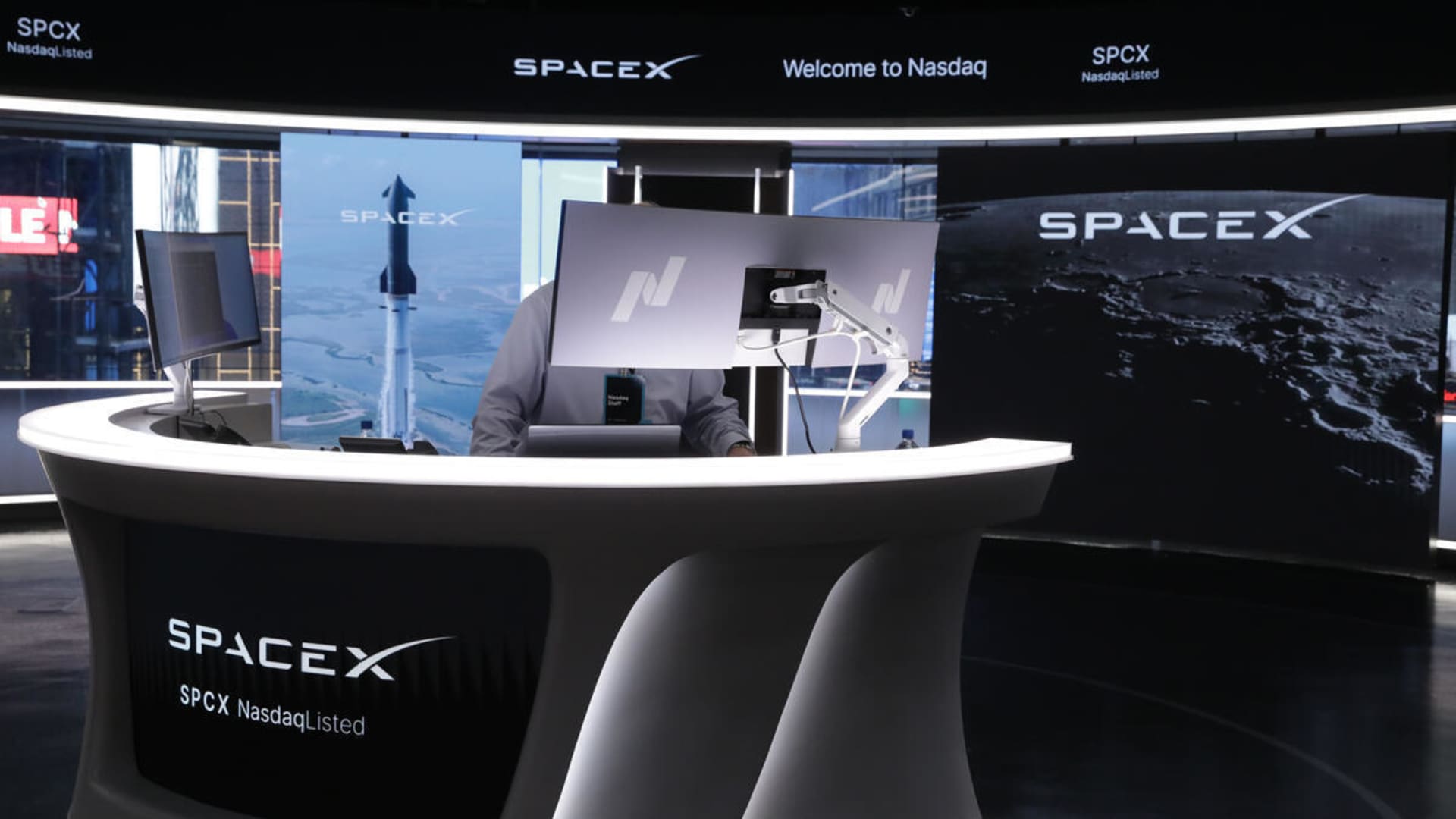
SpaceX shares, after a tumultuous yet triumphant post-IPO debut, have shown signs of stabilizing, marking a critical phase for Elon Musk’s ambitious aerospace and AI venture. Following a surge that propelled its valuation past tech giants, the company now faces the complexities of public market scrutiny and sustained growth expectations.
🚀 Tech Strategy & Market Disruptions
- Post-IPO Volatility. After a record-breaking debut, SpaceX shares experienced a significant rally followed by a cooling period, reflecting market reaction to its colossal valuation.
- Valuation & Governance. SpaceX achieved a market capitalization exceeding Amazon, highlighting its disruptive potential, yet its unique governance structure with Elon Musk’s dominant control presents an interesting dynamic for future investors.
- Strategic Board Expansion. The addition of Roelof Botha as an independent director and audit committee member aims to bolster corporate governance as the company navigates its public market journey and ambitious growth targets.
After a remarkable entrance onto the public market last week, where initial shares were offered at $135, SpaceX shares experienced a robust rally of over 40%, briefly positioning the company as one of the world’s most valuable entities. This meteoric rise saw its market capitalization surpass e-commerce behemoth Amazon and, for a short period, even software giant Microsoft. However, the initial investor exuberance showed signs of moderation on Wednesday, as the stock retraced by 5%, before settling 0.3% higher in premarket trading on Thursday.
The swift ascent of SpaceX’s valuation, which concluded Wednesday below Amazon’s at $2.52 trillion, underscores the market’s bullish long-term outlook on its diverse portfolio spanning space exploration, satellite internet, and AI. This unprecedented valuation, however, brings with it increased scrutiny on both its technological roadmap and corporate governance. The company recently announced the appointment of Roelof Botha, a longtime associate of CEO Elon Musk, to its board as an independent director and a member of the audit committee. This move adds an eighth member to the board, where Musk already holds roles as chairman, CEO, and technology chief.
Musk’s substantial influence is further cemented by his control of over 82% of voting rights and ownership of more than $1 trillion in company shares, a structure that inherently limits the leverage of outside shareholders. This governance model, while concentrating vision and swift decision-making, raises questions about minority investor protection. On the revenue front, Musk publicly shared on X his ambitious projection for SpaceX, hinting at the possibility of achieving approximately $1 trillion in revenue by 2030.
Critical market observations include:
- Initial public offering at $135 per share, leading to a >40% surge.
- Peak valuation briefly exceeded Microsoft, settling below Amazon at $2.52 trillion.
- Appointment of Roelof Botha as independent director signifies a step towards formalizing corporate governance post-IPO.
The successful public listing of SpaceX, coupled with its rapid ascent to a multi-trillion-dollar valuation, establishes a profound disruption flow across multiple sectors. This move from a privately held, innovation-centric startup to a publicly traded titan first triggers significant shifts in venture capital exit strategies, validating long-term bets on capital-intensive space tech. Secondly, the unprecedented valuation sets new benchmarks for what is possible in frontier technologies, encouraging further investment into emerging technologies and complex engineering challenges. Lastly, as SpaceX shares become a public commodity, its market performance directly influences competitor strategies and investor appetite for other high-risk, high-reward ventures, potentially redirecting significant capital flows within the broader technology market trends.
From a CTO’s perspective, SpaceX’s valuation isn’t merely about current revenue; it’s a testament to the immense, untapped potential of vertically integrated space and AI technologies. The challenge now lies in scaling these foundational innovations from cutting-edge R&D into predictable, mass-market revenue streams while managing investor expectations under public scrutiny. This requires not only robust engineering and operational excellence but also a clear, sustainable tech roadmap for continued innovation-driven growth.
Key financial and structural metrics underpinning SpaceX’s recent market activity include:
- IPO Share Price: $135 per share.
- Initial Rally: Over 40% gain post-debut.
- Current Valuation: Approximately $2.52 trillion, positioned just below Amazon.
- Elon Musk’s Control: Holds over 82% of voting rights and more than $1 trillion in shares.
- 2030 Revenue Projection: Potentially $1 trillion, as stated by Musk.
SpaceX Market Adoption Challenges
Despite its stellar valuation, SpaceX faces formidable market adoption challenges, particularly in fully commercializing its innovative technologies beyond government contracts and early adopters. Expanding Starlink’s global footprint requires navigating diverse regulatory environments and competing with established telecommunication infrastructures, demanding significant upfront investment and sustained operational efficiency. Similarly, making space travel and lunar missions economically viable for a broader commercial audience means overcoming extreme engineering hurdles and achieving consistent cost reductions. The inherent complexity and capital intensity of these ventures require a long-term strategic vision, a deep understanding of emerging technologies, and an unwavering commitment to operational excellence to truly achieve widespread market penetration.
SpaceX Ecosystem Expansion Potential
The strategic expansion of SpaceX’s technological ecosystem holds immense potential for future revenue streams and market influence. Beyond its core launch and satellite internet services, the integration of advanced AI capabilities across its operations, from autonomous rocket landings to optimizing satellite constellations, represents a significant growth vector. Furthermore, its endeavors into lunar and Martian exploration lay the groundwork for a future space economy, creating opportunities for resource utilization, space manufacturing, and even interplanetary logistics. This multifaceted approach to innovation and ecosystem development positions SpaceX not just as a rocket company, but as a foundational architect of humanity’s multi-planetary future, driving demand for specialized infrastructure and pioneering new industry frontiers as detailed by leading technology reports, such as those found on Bloomberg Technology.
SpaceX’s Growth Trajectory: Balancing Ambition and Market Realities
SpaceX’s initial public market journey highlights both its groundbreaking potential and the inherent volatility of innovation-driven growth. While the unprecedented valuation signals strong investor confidence in its long-term vision, the company must now consistently demonstrate execution against ambitious targets, particularly given its unique governance structure. The addition of an independent board member is a step towards institutional maturity, but the path to sustaining a multi-trillion-dollar valuation requires meticulous strategic planning.
- SpaceX must validate its aggressive revenue projections through tangible operational achievements.
- Maintaining investor confidence will depend on transparency regarding R&D milestones and commercial scaling.
- The company’s governance model will remain a key area of interest for market analysts and potential investors.
Can SpaceX consistently deliver on its visionary promises and redefine the boundaries of aerospace and AI, or will its lofty valuation invite increased skepticism?
📊 StockXpo Analyst’s View
Market Impact: The initial volatility in SpaceX shares, following a remarkable rally, reflects a healthy market correction typical for high-growth, high-valuation IPOs. While the company’s long-term potential remains significant, investors are now seeking concrete evidence of sustainable profitability and market scalability beyond visionary projections. The governance structure, heavily centralized around Elon Musk, will be a continued point of analysis for institutional investors, impacting overall market liquidity and investor sentiment in the short to medium term. The ability of such a concentrated power structure to adapt to public market demands without stifling innovation will be crucial.
Sector To Watch: The aerospace and defense sector, alongside adjacent emerging technologies like satellite communications and advanced AI, will remain highly dynamic. SpaceX’s performance will serve as a bellwether, influencing investment into other space tech startups and established players. Companies focusing on sustainable orbital infrastructure, next-generation propulsion, and AI-driven autonomous systems, as discussed in educational tech insights, are particularly well-positioned for future growth in this evolving landscape. Further analysis on market trends, including those impacting innovation-driven companies, is frequently featured on Reuters Technology.
Financial Disclaimer:
StockXpo.com is a financial news aggregator and educational portal, not a registered investment advisor or broker-dealer. All information, news, and analysis provided herein are strictly for educational purposes and do not constitute investment, financial, legal, or tax advice. Investing in the stock market involves high risks, and past performance is not indicative of future results. StockXpo will not be liable for any financial losses or investment damages. Always consult a certified financial advisor before making market decisions.
MORE IN INSIDE TECHNOLOGY
Bond Yields Under Pressure: IMF Warns of ‘Disorderly’ Spike Driven by AI Debt and Inflation
Published: Tuesday, October 13, 2026 · 1:21 AM
AI Breakthroughs: TikTok CEO Predicts Major Scientific Leap Within Three Years
Published: Monday, October 12, 2026 · 2:40 AM