Published: Tuesday, June 16, 2026 · 2:58 PM | Updated: Tuesday, June 16, 2026 · 2:58 PM
📊 250 views




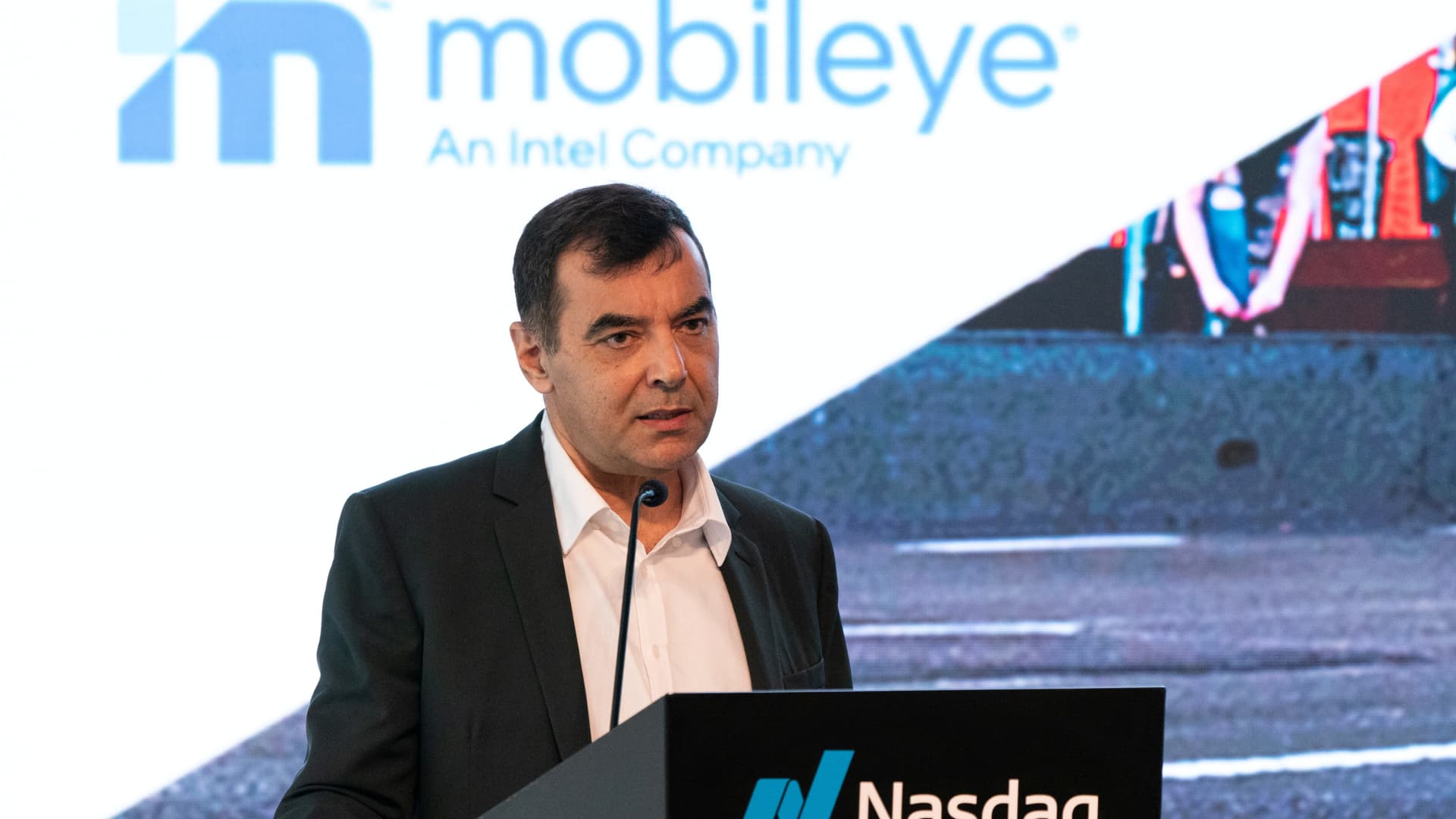
Mobileye Global (MBLY) announced an ambitious plan to enter the U.S. robotaxi market directly, targeting a 2027 robotaxi launch in a major American city. This strategic pivot signals a significant evolution for the autonomous driving technology supplier, placing it in direct competition with some of its established customers.
🚀 Tech Strategy & Market Disruptions
- Direct Market Entry. Mobileye, traditionally a supplier, is now launching its own robotaxi service, challenging customer relationships.
- Aggressive Scaling Targets. Plans to deploy 100 vehicles initially in 2027, scaling to 17,000 within five years, indicating strong confidence in its Mobileye Drive platform.
- Validation and Competition. This move serves as both a demonstration of the Mobileye Drive platform’s capabilities at scale and a foray into a highly competitive L4 autonomous market.
The Israeli-based firm, a prominent player in advanced driver-assistance systems (ADAS) and autonomous vehicle technology, revealed on Tuesday its intention to deploy an initial fleet of 100 vehicles for a commercial robotaxi launch. This service is slated to begin phased operations throughout 2027 in a major U.S. urban center, with a subsequent goal to expand the fleet to approximately 17,000 vehicles over the following five years. The announcement saw Mobileye’s shares climb around 6%, reflecting investor optimism about this bold new direction.
Mobileye CEO Amnon Shashua emphasized that the new venture is ‘built on deep autonomous-driving expertise, strong industry partnerships, and proven capabilities across the mobility ecosystem.’ This strategy marks a departure from its traditional role as a pure technology supplier, placing it in direct competition with partners who currently integrate Mobileye Drive technology into their own autonomous vehicle initiatives. The company, however, views this as a ‘complementary path to market,’ a strategic move to further validate and showcase the robustness of its platform at an operational scale for broader adoption within the larger technology market trends.
- Strategic Rationale: Mobileye aims to demonstrate the full potential and reliability of its Mobileye Drive platform in real-world commercial operations.
- Market Positioning: Transitioning from a B2B supplier to a B2C operator, competing with existing and potential customers like Waymo, Cruise, and possibly even companies like General Motors, which uses Mobileye tech.
- Growth Trajectory: The aggressive scaling plan from 100 to 17,000 vehicles in five years highlights ambitious growth projections and belief in market readiness.
Mobileye’s direct entry into the robotaxi service market initiates a distinct disruption flow within the autonomous vehicle industry. This move transitions the company from a key component supplier to a direct competitor. The cause is Mobileye’s confidence in its Mobileye Drive platform, leading to the effect of enhanced operational validation and real-world data collection. This, in turn, fuels faster iterative development cycles and accelerates the maturation of their Level 4 autonomous driving technology. The ultimate market disruption manifests as intensified competition in the burgeoning robotaxi sector, potentially altering existing partnerships and accelerating the timeline for widespread autonomous vehicle deployment across urban landscapes, forcing other players to reassess their own market strategies and speed of innovation.
‘This strategy from Mobileye is a classic example of a technology enabler becoming a direct market participant. It’s a bold move that not only validates their core autonomous driving platform through real-world deployment but also captures a higher margin business model. The challenge will be managing channel conflict with existing OEM customers while simultaneously proving operational scalability and safety in complex urban environments,’ noted a lead solution architect at a prominent tech consultancy.
Navigating Mobileye’s Market Adoption Challenges
The direct market entry by Mobileye, while strategically sound for demonstrating platform capabilities, inherently creates complex market adoption challenges. The most immediate is the potential for channel conflict with original equipment manufacturers (OEMs) and other autonomous vehicle developers who currently license Mobileye’s technology. These customers may perceive Mobileye’s robotaxi venture as competitive, potentially leading them to explore alternative ADAS and AV stack providers. Building trust in a dual role—both supplier and competitor—will require nuanced communication and clear differentiation of their offerings. Additionally, securing regulatory approvals across various U.S. jurisdictions for large-scale robotaxi operations is a formidable task, demanding significant investment in safety validation, policy engagement, and public acceptance campaigns. The journey will also demand substantial capital allocation for vehicle acquisition, maintenance, and operational logistics at scale, posing considerable financial and logistical hurdles in a nascent, highly regulated market.
Mobileye’s Ecosystem Expansion Potential Unlocked
Despite the competitive complexities, Mobileye’s robotaxi initiative significantly expands its ecosystem potential. By operating its own fleet, Mobileye can directly influence the definition and development of future autonomous mobility services, leveraging real-time operational data to refine its entire technology stack, from EyeQ chips to its mapping solutions. This hands-on experience allows for the creation of new software tools, AI models, and data services that can then be productized and offered back to its OEM partners, enriching their existing offerings. Furthermore, a successful robotaxi operation could establish Mobileye as a benchmark for safety and efficiency in Level 4 autonomous driving, potentially attracting new partnerships and accelerating the deployment of its technology in other transportation verticals, such as logistics or last-mile delivery. The ability to control the full technology stack and service delivery offers unparalleled insight into customer needs and operational realities, driving iterative innovation and potentially opening avenues for diversified revenue streams beyond component sales. For more insights into emerging technologies, explore the StockXpo Blog.
Mobileye’s Robotaxi Ambition: A Strategic Inflection Point
Mobileye’s venture into operating its own robotaxi fleet marks a critical inflection point for the company and the broader autonomous vehicle industry. It underscores a conviction in their proprietary Mobileye Drive platform and a bold move to capture value higher up the mobility stack. This vertical integration strategy, while fraught with potential customer conflicts, aims to validate the technology at scale and unlock new revenue streams.
- The shift from pure supplier to operator signifies Mobileye’s confidence in its Level 4 autonomous driving capabilities.
- Expect heightened competition in the robotaxi sector as more tech firms enter the service provision arena.
- The successful deployment and scaling of this fleet could redefine Mobileye’s market perception and valuation.
Will this calculated risk transform Mobileye into a dominant force in autonomous mobility, or will it strain its crucial supplier relationships?
📊 StockXpo Analyst’s View
Market Impact: Mobileye’s robotaxi launch announcement has injected a fresh wave of optimism into autonomous vehicle stocks, visible in the immediate 6% jump in its shares. This move suggests a potential shift in market liquidity towards companies demonstrating full-stack capabilities and direct service provision, rather than just component supply. It signals a belief that the commercialization of Level 4 autonomy is nearing, potentially drawing more institutional investment into the sector. We expect increased investor scrutiny on operational scalability and regulatory navigation for all players in this space.
Sector To Watch: The automotive and ride-hailing sectors are poised for significant changes. Existing robotaxi operators like Waymo and Cruise will face a new, well-funded competitor leveraging deep ADAS expertise. Traditional automakers partnering with Mobileye may need to reassess their long-term autonomous strategies. Furthermore, the semiconductor and sensor technology market supporting autonomous driving will continue to be a key area for innovation and investment as demand for advanced perception systems grows. For a broader perspective on technology, check out Bloomberg’s technology coverage and Reuters’ tech news.
Financial Disclaimer:
StockXpo.com is a financial news aggregator and educational portal, not a registered investment advisor or broker-dealer. All information, news, and analysis provided herein are strictly for educational purposes and do not constitute investment, financial, legal, or tax advice. Investing in the stock market involves high risks, and past performance is not indicative of future results. StockXpo will not be liable for any financial losses or investment damages. Always consult a certified financial advisor before making market decisions.
MORE IN INSIDE TECHNOLOGY

AI Legal Tech: Revolutionizing Billing and Training in Law with Innovation
Published: Saturday, October 10, 2026 · 2:58 AM

Starlink India: Regulatory Hurdles and Innovation-Driven Growth Risks
Published: Friday, October 9, 2026 · 12:48 AM