Published: Monday, June 15, 2026 · 4:13 PM | Updated: Monday, June 15, 2026 · 4:13 PM
📊 369 views




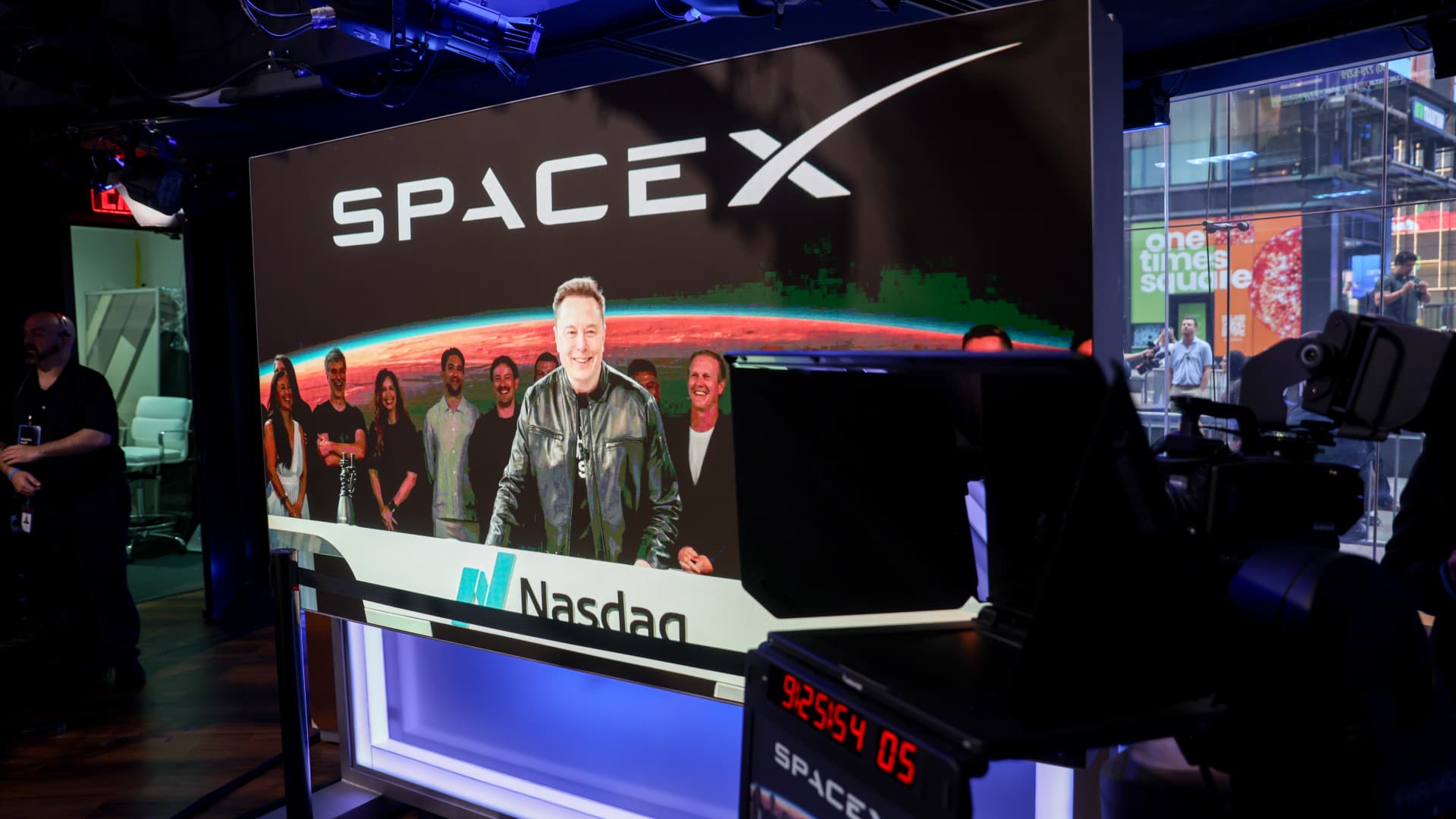
Elon Musk’s SpaceX has successfully completed its initial public offering, raising an unprecedented $85.7 billion after underwriters exercised the ‘greenshoe’ overallotment option. This landmark SpaceX IPO, now the largest in history, injects substantial capital into the company’s ambitious plans to revolutionize space exploration and advanced AI infrastructure.
The capital infusion is slated to accelerate the development of reusable Starship rockets, expand its Starlink satellite internet service, and fund pioneering projects like orbital AI data centers.
🚀 Tech Strategy & Market Disruptions
- Accelerated Starship Development. The significant capital from the SpaceX IPO enables faster completion and commercialization of Starship, targeting fully reusable launch capabilities for massive payloads.
- Space-Based AI Infrastructure. Funds are earmarked for orbital data centers and a massive chip factory with Tesla and Intel, positioning SpaceX as a leader in next-generation, power-efficient AI compute.
- Expanded Starlink V3 Network. The capital will fuel the deployment of advanced V3 satellites, dramatically enhancing Starlink’s capacity and global reach, disrupting traditional internet service providers.
Underwriters for the SpaceX IPO, including Goldman Sachs and Morgan Stanley, exercised their option to purchase an additional 83.3 million shares, increasing the total raised from an initial $75 billion. This overallotment, known as a ‘greenshoe’ option, is typically exercised when market demand for a stock is strong and its price rises post-debut, indicating robust investor confidence in SpaceX’s trajectory.
Following its pricing at $135 per share, the stock surged 19% on its Friday debut, closing at approximately $161 and pushing the company’s valuation beyond $2 trillion. Monday saw shares climb a further 7%, underscoring sustained investor enthusiasm for the space and artificial intelligence pioneer. This historic capital raise signals a new era for space commercialization, setting a precedent for future emerging technologies and their market entry.
Musk reportedly communicated to employees that the public offering was critical to finance a ‘significant growth phase.’ This growth hinges on bringing the largest-ever Starship rockets to full commercial operation, deploying advanced V3 satellites for Starlink, and venturing into novel territories such as orbital AI data centers and a colossal chip factory in collaboration with Tesla and Intel. These initiatives are not merely incremental improvements; they represent foundational shifts in how critical infrastructure for AI and global connectivity will be built.
While the company has racked up over $41 billion in total losses since its inception, with a $4.9 billion loss last year, its market capitalization of $2.1 trillion reflects an extraordinary forward-looking valuation, trading at 112 times last year’s revenue. This metric highlights that investors are betting heavily on SpaceX’s future potential rather than its current profitability, a common pattern for highly disruptive technology companies. For more on market dynamics and innovative companies, you can explore current technology market trends.
The Cascade of Innovation from Capital Infusion
SpaceX’s successful IPO represents a potent catalyst, initiating a cause-and-effect chain of disruption across multiple sectors. The massive capital injection directly funds the acceleration of Starship’s development and commercialization, which in turn unlocks unprecedented payload capacity and cost efficiency for launching satellites and potentially human missions. This capability allows for the rapid deployment of Starlink’s V3 satellites, transforming global internet access with higher bandwidth and lower latency. Simultaneously, the vision for orbital AI data centers and advanced chip manufacturing with industry titans like Intel could redefine the very architecture of high-performance computing, providing solutions for AI’s escalating power demands and potentially creating new geopolitical considerations for data sovereignty. For a deeper analysis of these market implications, resources like Reuters’ technology coverage offer valuable insights.
As CTO, I see the SpaceX IPO not just as a financial event, but as an inflection point for space-based infrastructure. The sheer scale of capital infusion, combined with Musk’s audacious vision for orbital data centers, challenges traditional terrestrial compute models and could fundamentally alter our approach to global data processing and digital sovereignty. The engineering hurdles are immense, but the strategic implications are profound.
Key Financial Metrics of the SpaceX IPO
| Metric | Detail |
|---|---|
| Initial Capital Raised | $75 billion |
| Total Capital Raised (with Greenshoe) | $85.7 billion |
| Initial IPO Share Price | $135 per share |
| Debut Closing Price | ~$161 per share (+19%) |
| Current Market Valuation | Over $2 trillion |
| Last Year’s Loss | $4.9 billion |
| Valuation Multiple (Revenue) | 112x |
SpaceX Ecosystem Expansion Potential: Beyond Low Earth Orbit
The capital raised from the SpaceX IPO is not just for iterative improvements; it’s a strategic investment into a sprawling ecosystem that aims to connect terrestrial and orbital operations seamlessly. The development of Starship is central to this, enabling not only the launch of Starlink’s advanced V3 satellites but also serving as the foundational transport layer for future lunar and Martian missions. This integrated approach extends to their proposed orbital data centers, which could leverage Starlink for high-speed, low-latency connectivity to Earth, effectively creating a distributed cloud infrastructure in space. Such an ecosystem promises to diversify SpaceX’s revenue streams beyond launch services and satellite internet, venturing into data services, in-space manufacturing, and even interplanetary logistics, significantly expanding its market addressable by redefining what’s possible in a space economy. For broader perspectives on how these developments fit into the tech landscape, visit our educational tech insights.
SpaceX Market Adoption Challenges: Overcoming Technical and Regulatory Hurdles
Despite the staggering success of the SpaceX IPO and its ambitious plans, significant market adoption challenges remain. The Starship rocket, while monumental in its potential, is still in its testing phase, facing technical hurdles and a history of explosive failures that highlight the inherent risks of cutting-edge aerospace engineering. Furthermore, the concept of orbital AI data centers is entirely unproven, presenting immense challenges related to radiation shielding, thermal management, data security in a non-terrestrial environment, and power generation. Regulatory frameworks for such ventures are nascent at best, requiring complex international coordination and licensing that could slow down development and deployment. Additionally, while Starlink is growing, scaling a global satellite internet service faces competition from established players and other LEO constellations, along with the operational complexities of maintaining thousands of satellites. Public sentiment and environmental concerns regarding space debris also represent ongoing challenges that SpaceX must navigate to achieve widespread adoption and long-term sustainability. Insights from publications like Forbes’ technology section frequently cover these emerging industry challenges.
SpaceX’s Orbital Ambitions: Charting a Multi-Trillion Dollar Future
The completion of the record-setting SpaceX IPO marks a pivotal moment, providing the financial horsepower needed to propel the company into its next, even more audacious, phase of growth. This capital is more than just funding; it’s a validation of a future vision where space is not merely a destination but an integral platform for critical infrastructure. While the financial figures reveal a company valued on future potential rather than past profits, the market’s confidence underscores the belief in SpaceX’s capability to deliver on its revolutionary promises. This strategic infusion of capital is set to accelerate:
- The commercial readiness of Starship for heavy-lift and deep-space missions.
- The expansion and technological leap of the Starlink satellite internet constellation.
- The pioneering development of space-based AI data centers and advanced chip manufacturing.
With such aggressive innovation on the horizon, how will SpaceX manage the execution risks and regulatory complexities inherent in creating a truly orbital-based economy?
📊 StockXpo Analyst’s View
Market Impact: The successful SpaceX IPO, particularly the greenshoe exercise, signifies extraordinary investor appetite for disruptive space technology and AI infrastructure. This colossal capital injection will likely bolster investor confidence across the entire commercial space sector, potentially attracting more private and public funding for related ventures. While the valuation is ambitious given current losses, the market’s forward-looking assessment could drive liquidity and elevate valuations for other innovative, high-growth tech companies, especially those with long-term, transformative visions.
Sector To Watch: Beyond aerospace, the most immediate sector to watch is advanced computing and AI infrastructure. SpaceX’s plans for orbital data centers and chip manufacturing with Tesla and Intel could redefine cloud computing and data sovereignty. Companies involved in satellite manufacturing, advanced materials, and AI hardware are likely to experience increased interest and investment, driven by the potential for new space-based markets and technologies.
Financial Disclaimer:
StockXpo.com is a financial news aggregator and educational portal, not a registered investment advisor or broker-dealer. All information, news, and analysis provided herein are strictly for educational purposes and do not constitute investment, financial, legal, or tax advice. Investing in the stock market involves high risks, and past performance is not indicative of future results. StockXpo will not be liable for any financial losses or investment damages. Always consult a certified financial advisor before making market decisions.
MORE IN INSIDE TECHNOLOGY
AI Pricing Innovation: Reshaping Retail & Consumer Spend
Published: Sunday, October 11, 2026 · 1:36 AM

AI Legal Tech: Revolutionizing Billing and Training in Law with Innovation
Published: Saturday, October 10, 2026 · 2:58 AM