Published: Wednesday, June 10, 2026 · 3:07 PM | Updated: Wednesday, June 10, 2026 · 3:07 PM
📊 279 views




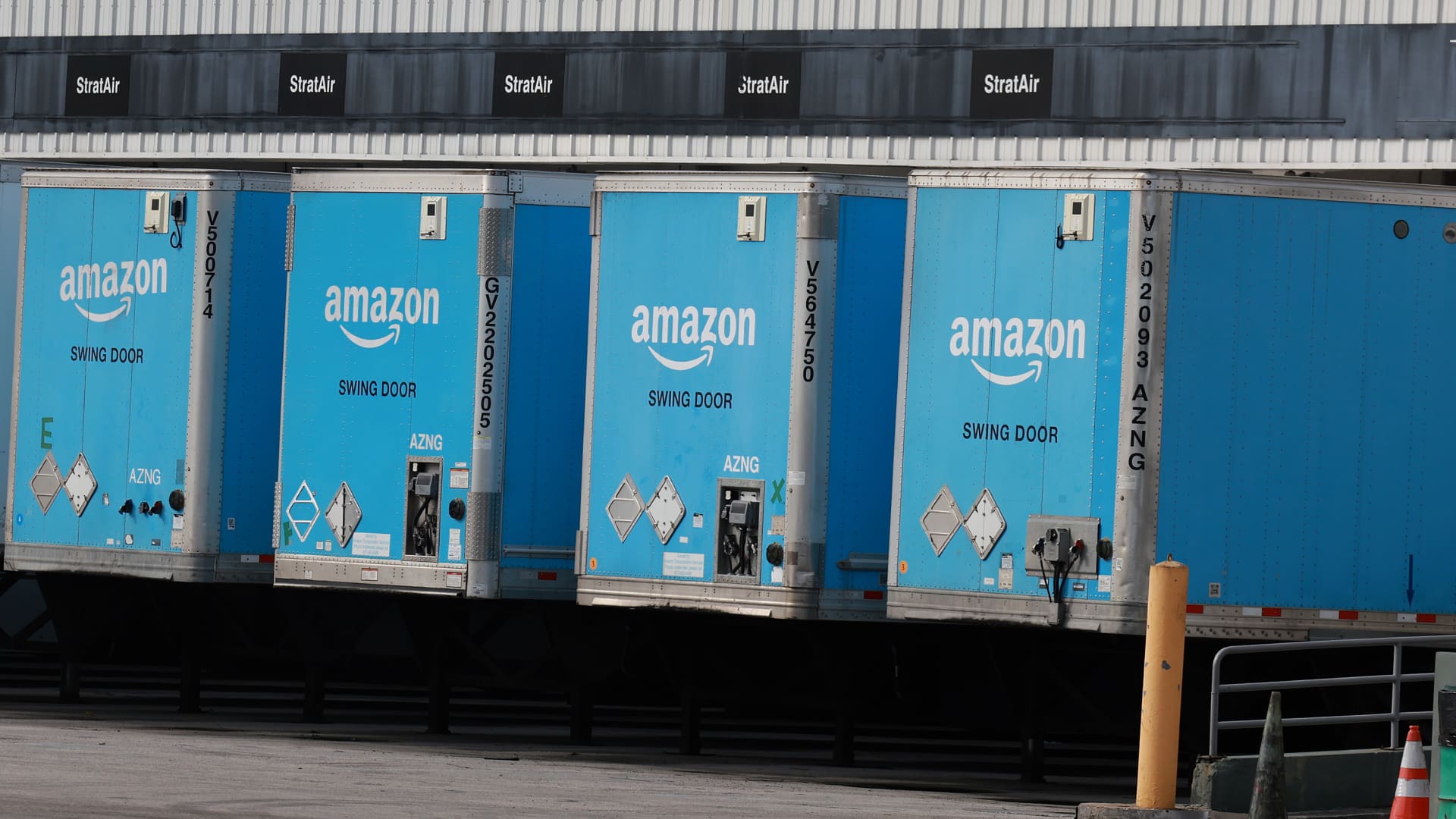
Amazon’s aggressive expansion into the third-party freight market, announced this week, is sending shockwaves through the established logistics industry, prompting a significant sell-off in the stocks of major carriers. The e-commerce giant is now opening its extensive trucking network, previously used primarily for its own fulfillment, to all businesses, signaling a profound shift in how goods will move across the United States.
🚀 Tech Strategy & Market Disruptions
- Amazon’s LTL Offering: Amazon is now providing less-than-truckload (LTL) shipping services to any business, not just those shipping to its warehouses, expanding its reach nationwide.
- Incumbent Stock Volatility: The announcement triggered immediate declines in the stock prices of established freight companies like Old Dominion Freight Line, ArcBest, Saia, XPO Logistics, and the newly spun-off FedEx Freight.
- Leveraging Existing Infrastructure: Amazon is capitalizing on its vast logistics infrastructure, including a substantial fleet of trailers, containers, and planes, to offer competitive freight solutions.
The move by Amazon is a direct application of its deep investment in logistics infrastructure, transforming it from an internal operational necessity into a revenue-generating service for external clients. This strategic pivot leverages the company’s technological prowess in optimizing routes, managing capacity, and ensuring timely deliveries, capabilities that are now being offered to the broader market through its nascent Amazon Supply Chain Services program. The less-than-truckload (LTL) model, which consolidates shipments from multiple customers onto a single trailer, is particularly well-suited for Amazon’s network density and operational efficiency.
The Shifting Sands of Freight Logistics
Historically, companies like Old Dominion Freight Line and ArcBest have dominated the LTL market by building specialized networks and forging long-term client relationships. However, Amazon’s entry, backed by its immense scale and sophisticated technology stack, presents a formidable challenge. The immediate market reaction—a sharp decline in stock prices for competitors—underscores the perceived threat to incumbent business models. This expansion is not just about offering a new service; it represents a fundamental reshaping of emerging technologies‘ impact on traditional industries.
- The market saw significant drops: Old Dominion Freight Line (-6%), ArcBest (-4%), Saia (-5%), XPO Logistics (-5%), and FedEx Freight (-3%).
- Amazon’s LTL service aims to provide technology, visibility, and reliability previously sought by its selling partners.
- This initiative is part of Amazon’s broader strategy to offer integrated supply chain solutions to businesses of all sizes.
Amazon’s strategy is rooted in its continuous drive for efficiency and its ability to leverage data analytics for optimal resource allocation. By opening its freight services, Amazon is essentially commoditizing a critical aspect of the supply chain, potentially driving down costs for businesses and forcing competitors to innovate at an accelerated pace. This development aligns with broader trends in digital transformation where established companies are increasingly adopting platform-based business models to unlock new revenue streams and market share. Learn more about these trends at stockxpo.com.
Amazon’s foray into the third-party freight market is a testament to its ‘always-on’ innovation engine. By monetizing its existing, massive logistics infrastructure, Amazon is not merely entering a new market but redefining the competitive landscape for established players, forcing a re-evaluation of their own technological investments and operational strategies.
Amazon’s Logistics Empire: A Network Built for Disruption
Amazon has systematically built out a comprehensive logistics empire over the past decade, reducing its reliance on third-party carriers for its own e-commerce operations. This infrastructure now includes a dedicated fleet of cargo planes, tens of thousands of delivery vans, and a rapidly expanding freight division with a significant number of trailers and containers. This move to offer these services externally demonstrates a clear intent to become a major logistics provider, competing directly with UPS and FedEx, whose stocks also saw downward pressure following similar announcements in the past.
The core of Amazon’s advantage lies in its ability to integrate and optimize complex logistical operations through advanced software and data science. This technological foundation allows for dynamic route planning, real-time tracking, and predictive analytics, all of which are critical for efficient LTL operations. Companies seeking to leverage this capability will find a robust, scalable solution that potentially offers greater transparency and cost-effectiveness than traditional options. For insights into similar technological advancements, explore Bloomberg’s technology coverage.
The Imminent Threat to Traditional Logistics Players
The expansion of Amazon Supply Chain Services, which bundles various logistics and freight offerings, poses an existential threat to traditional carriers. This is not the first time Amazon has flexed its logistical muscle; previous announcements of integrated supply chain services have already impacted the market. The company’s feedback loop, driven by its own vast network of sellers and partners, allows it to refine its offerings based on direct market demand, ensuring its services are both competitive and highly relevant.
The success of this venture will hinge on Amazon’s ability to maintain service quality and reliability at scale, while also navigating the complex regulatory environment of the freight industry. Competitors will need to accelerate their own digital transformation efforts, focusing on enhancing technological capabilities and customer service to counter Amazon’s disruptive approach. The ongoing evolution of logistics technology suggests a future where efficiency, transparency, and adaptability are paramount.
Amazon’s Next Growth Phase: Logistics as a Service
Amazon’s strategic pivot towards offering its logistics capabilities as a service marks a significant evolution for the company and the broader industry. This move leverages its technological infrastructure and operational scale to capture a share of the lucrative freight market.
- Amazon’s LTL service introduces advanced technology and visibility, challenging traditional carriers.
- The market reaction indicates a strong perception of Amazon’s disruptive potential in freight logistics.
- Incumbent carriers must accelerate innovation to remain competitive in the face of this new threat.
Will Amazon’s entry into the third-party freight market fundamentally alter the competitive dynamics for decades to come?
📊 StockXpo Analyst’s View
Market Impact: The expansion of Amazon trucking services is poised to exert downward pressure on freight rates and profit margins for established carriers. Investor sentiment is likely to remain cautious for companies directly competing with Amazon’s scale and technological advantages, potentially impacting market liquidity for these stocks. This disruption may also spur increased M&A activity as smaller players seek to consolidate or be acquired to gain scale.
Sector To Watch: The logistics and supply chain technology sector will be a key area to monitor, as demand for advanced tracking, route optimization, and supply chain visibility software is expected to surge. Companies offering complementary services that enhance efficiency and transparency within the Amazon ecosystem or provide viable alternatives will likely see significant growth opportunities. Traditional carriers will need to demonstrate substantial investments in their own technology stacks to retain market share.
Financial Disclaimer:
StockXpo.com is a financial news aggregator and educational portal, not a registered investment advisor or broker-dealer. All information, news, and analysis provided herein are strictly for educational purposes and do not constitute investment, financial, legal, or tax advice. Investing in the stock market involves high risks, and past performance is not indicative of future results. StockXpo will not be liable for any financial losses or investment damages. Always consult a certified financial advisor before making market decisions.
MORE IN INSIDE TECHNOLOGY

AI Buildout Hits Credit Headwinds: Neoclouds Under Pressure
Published: Saturday, October 24, 2026 · 12:23 AM

SK Hynix Shares Rebound: A Strategic Shift in Semiconductor Funding
Published: Friday, October 23, 2026 · 1:46 AM