Published: Friday, June 5, 2026 · 4:17 PM | Updated: Friday, June 5, 2026 · 4:17 PM
📊 232 views




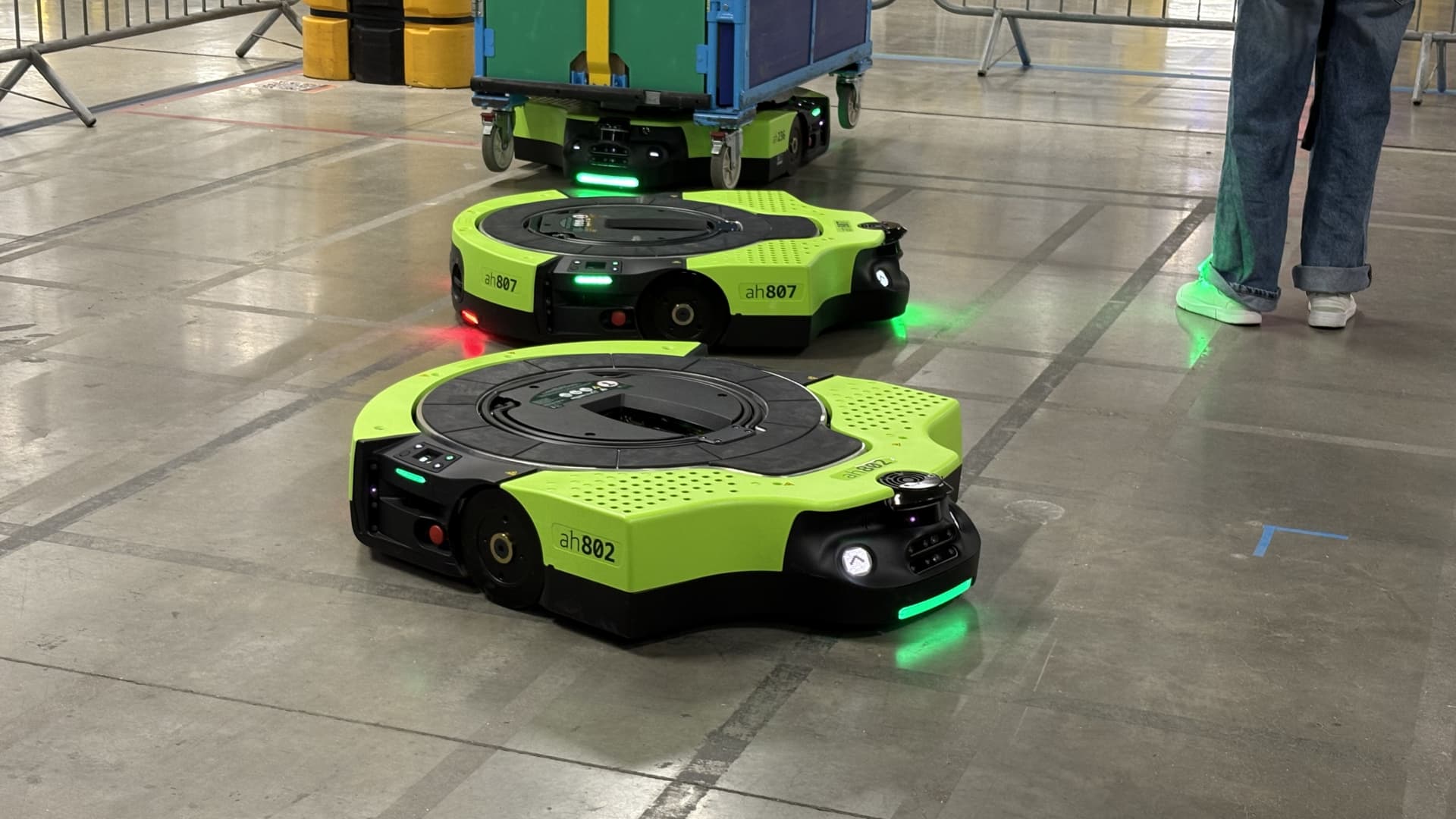
Amazon’s unveiling of its latest warehouse robot, Proteus, which can process conversational commands, highlights a significant trend: the simultaneous advancement of AI-powered automation and a continued wave of corporate workforce reductions across the tech sector. This strategic push toward AI-driven efficiencies is reshaping operational landscapes and labor demands.
🚀 Tech Strategy & Market Disruptions
- Robotic Autonomy Advances. Amazon’s Proteus robot can now interpret natural language, streamlining warehouse operations and worker interaction.
- AI-Driven Workforce Realignment. The company’s investment in automation coincides with significant corporate workforce reductions, signaling a shift in labor needs.
- European Expansion of Automation. Proteus is slated for a European rollout, with substantial investment earmarked for modernizing fulfillment centers across the region.
The evolution of Amazon’s Proteus robot signifies a sophisticated leap in warehouse automation, moving beyond simple task execution to intuitive human-robot interaction. The ability to understand natural language commands means that human workers can direct these autonomous mobile robots without needing specialized technical input. This development is not isolated; it mirrors broader industry trends where companies are leveraging AI to optimize operations, often as a precursor to or concurrent with workforce adjustments. Amazon’s commitment to investing 10 billion euros in its European fulfillment infrastructure over the coming years further underscores its long-term vision for AI and robotics integration.
This latest iteration of Proteus builds upon its predecessor, which was introduced in 2022 to assist with physically demanding tasks, such as transporting carts weighing up to 400 kilograms. Its current deployment across 25 U.S. fulfillment centers is set to expand significantly with the European rollout planned for the first half of 2027. Amazon also showcased other robotic innovations, including Vulcan, a robot with tactile sensing capabilities, and STARK, a robotic tote handling system, indicating a multifaceted approach to improving supply chain efficiency through advanced robotics.
The concurrent context of substantial AI layoffs across major tech firms, including Amazon’s own cuts totaling over 30,000 corporate employees in late 2025 and early 2026, frames these automation advancements within a broader narrative of technological efficiency driving labor market changes. CEO Andy Jassy has publicly stated that AI is expected to lead to a reduction in the corporate workforce over the next few years, necessitating fewer people in certain roles and a greater need for new skill sets in others. This strategic realignment suggests a future where AI and robotics are not just tools for augmentation but also drivers of structural changes in employment within the tech industry and beyond.
This trend is not unique to Amazon. Giants like Microsoft, Salesforce, and IBM have also been implicated in thousands of AI-related layoffs in 2025, with reports indicating over 50,000 job cuts attributed to AI advancements in the U.S. alone. More recently, companies like Block, Oracle, and Meta have also implemented workforce reductions, often citing AI’s role in operational optimization. The debate continues on the net effect of these technologies on employment. Tye Brady, Chief Technologist at Amazon Robotics, argues that investments in robotics have historically created jobs, emphasizing the need for upskilling and fostering new roles. However, Rob Garlick of Citi Global Insights posits that the pursuit of profitability, coupled with rapid technological progress, could lead to a significant substitution of human labor by AI and robots, which offer a quicker return on investment.
Navigating the Shifting Job Landscape
The implications of these advancements extend to emerging workforce challenges, particularly for younger generations. In the U.K., over a million young people between 16 and 24 were not in education, employment, or training by May 2026, a situation exacerbated by AI’s potential to displace entry-level positions and increase job market competition. John Boumphrey, Amazon’s U.K. and Ireland Country Manager, acknowledges this as a “national crisis,” attributing part of the issue to young people’s preparedness for the modern workplace. Despite these concerns, Boumphrey also highlights a paradox: Amazon struggles to find enough skilled workers for roles such as robotic technicians and mechatronic engineers, leading the company to invest in over 6,000 apprenticeships in the U.K. and provide training subsidies.
‘The integration of AI and advanced robotics is not merely about replacing tasks; it’s about fundamentally redefining the symbiotic relationship between human ingenuity and machine capability. Companies pursuing innovation must balance the pursuit of efficiency with a strategic investment in workforce adaptation, ensuring that technological progress fosters an environment of shared growth rather than widespread displacement. This requires a proactive approach to reskilling and creating new avenues for human contribution.’
The broader market impact of these developments is significant. As companies increasingly adopt AI and robotics for efficiency and cost reduction, the demand for specialized technical skills will rise, while traditional roles may face attrition. This could lead to increased market liquidity for companies at the forefront of AI development and automation solutions, while potentially impacting sectors reliant on lower-skilled labor. Understanding the trajectory of these technologies is crucial for investors and businesses alike as we navigate this transformative period.
Amazon’s Automation Ambitions Fueling Future Roles
Amazon’s continued investment in sophisticated automation, as exemplified by the Proteus robot, suggests a strategic focus on optimizing logistics and supply chain operations. This not only aims to enhance efficiency but also to adapt to evolving consumer demands. While the narrative of AI layoffs often dominates headlines, Amazon’s perspective, as articulated by Boumphrey, suggests that such technological advancements can, paradoxically, create new job categories and increase employment in the long run by requiring more skilled personnel to manage and integrate these complex systems. The company’s significant investment in apprenticeships and training programs reflects a commitment to bridging the skills gap and ensuring its workforce can adapt to these new operational paradigms.
The Broader AI Robotics Market Trajectory
Looking ahead, the integration of AI and robotics is poised to reshape industries globally. Forecasts suggest a substantial increase in AI robots, potentially exceeding the human working population by 2035 and growing exponentially thereafter. This rapid expansion necessitates a deep understanding of the economic incentives driving this transition, where profitability and technological advancement converge to create compelling business cases for automation. The question for the future is not if these robots will become more prevalent, but how societies and economies will adapt to their widespread integration.
The continuous innovation in robotics, exemplified by Amazon’s Proteus, presents a compelling case study in the dynamic interplay between technological advancement and labor markets. As companies like Amazon push the boundaries of automation, the focus shifts towards developing a workforce equipped with the skills to manage and collaborate with these intelligent systems. This strategic evolution, while creating efficiencies, also presents challenges and opportunities for the future of work. The path forward demands continuous adaptation and a clear vision for how human capital and artificial intelligence can coexist and thrive.
The future of logistics and operations will undoubtedly be shaped by these intelligent machines. For companies like Amazon, the investment in robotics is not just about immediate efficiency gains; it’s about building a resilient and scalable operational framework for the future. This trajectory raises critical questions about societal adaptation and the long-term implications for human employment. As we observe these developments, it’s essential to consider how educational systems and corporate training initiatives can evolve to meet the demands of an increasingly automated world. The ongoing evolution of emerging technologies like advanced robotics and AI will continue to define the technology market trends for years to come, impacting various sectors from e-commerce to manufacturing.
Amazon’s Proteus: A Glimpse into the Automated Future
Amazon’s unveiling of its advanced Proteus robot is a clear signal of the company’s deep commitment to leveraging AI and robotics to redefine operational efficiency. The robot’s ability to understand natural language commands is a significant step towards more seamless human-machine collaboration within its vast fulfillment network. This innovation, juxtaposed with ongoing AI-driven workforce adjustments across the tech industry, underscores a critical juncture in how businesses are strategizing for the future of work and operational scaling. As this technology matures, its impact on supply chain dynamics and labor requirements will become increasingly pronounced, offering valuable educational tech insights.
The increasing sophistication of warehouse automation, as demonstrated by Amazon’s Proteus, highlights a critical inflection point for the logistics industry. The ability of these robots to interact naturally with human workers and perform complex tasks autonomously is poised to drive substantial gains in efficiency and throughput. This evolution is not merely incremental; it represents a fundamental shift in how warehouse operations can be managed, potentially setting new benchmarks for productivity and agility. As such advancements continue, companies that fail to adapt risk falling behind in an increasingly competitive global market.
The strategic integration of AI and robotics by leading companies like Amazon is reshaping competitive landscapes and driving innovation across the technology sector. The ongoing debate surrounding automation’s impact on employment, particularly with ongoing AI layoffs, emphasizes the need for adaptable business models and proactive workforce development strategies. The success of these technologies hinges not only on their technical capabilities but also on the societal and economic frameworks that support their integration. The continuous push for advanced solutions in areas like logistics automation suggests a future where human and machine collaboration will be paramount for sustained growth and market leadership. Examining these trends can offer investors a clearer picture of market dynamics.
Financial Disclaimer:
StockXpo.com is a financial news aggregator and educational portal, not a registered investment advisor or broker-dealer. All information, news, and analysis provided herein are strictly for educational purposes and do not constitute investment, financial, legal, or tax advice. Investing in the stock market involves high risks, and past performance is not indicative of future results. StockXpo will not be liable for any financial losses or investment damages. Always consult a certified financial advisor before making market decisions.
MORE IN INSIDE TECHNOLOGY

AI’s Dual Edge: Innovation-Driven Growth Meets Global Economic Hazard
Published: Wednesday, October 7, 2026 · 3:12 AM

Anduril Navy Contract: A $2.9 Billion Breakthrough in Submarine Production
Published: Tuesday, October 6, 2026 · 9:36 AM