Published: Wednesday, June 3, 2026 · 9:31 PM | Updated: Wednesday, June 3, 2026 · 9:31 PM
📊 244 views




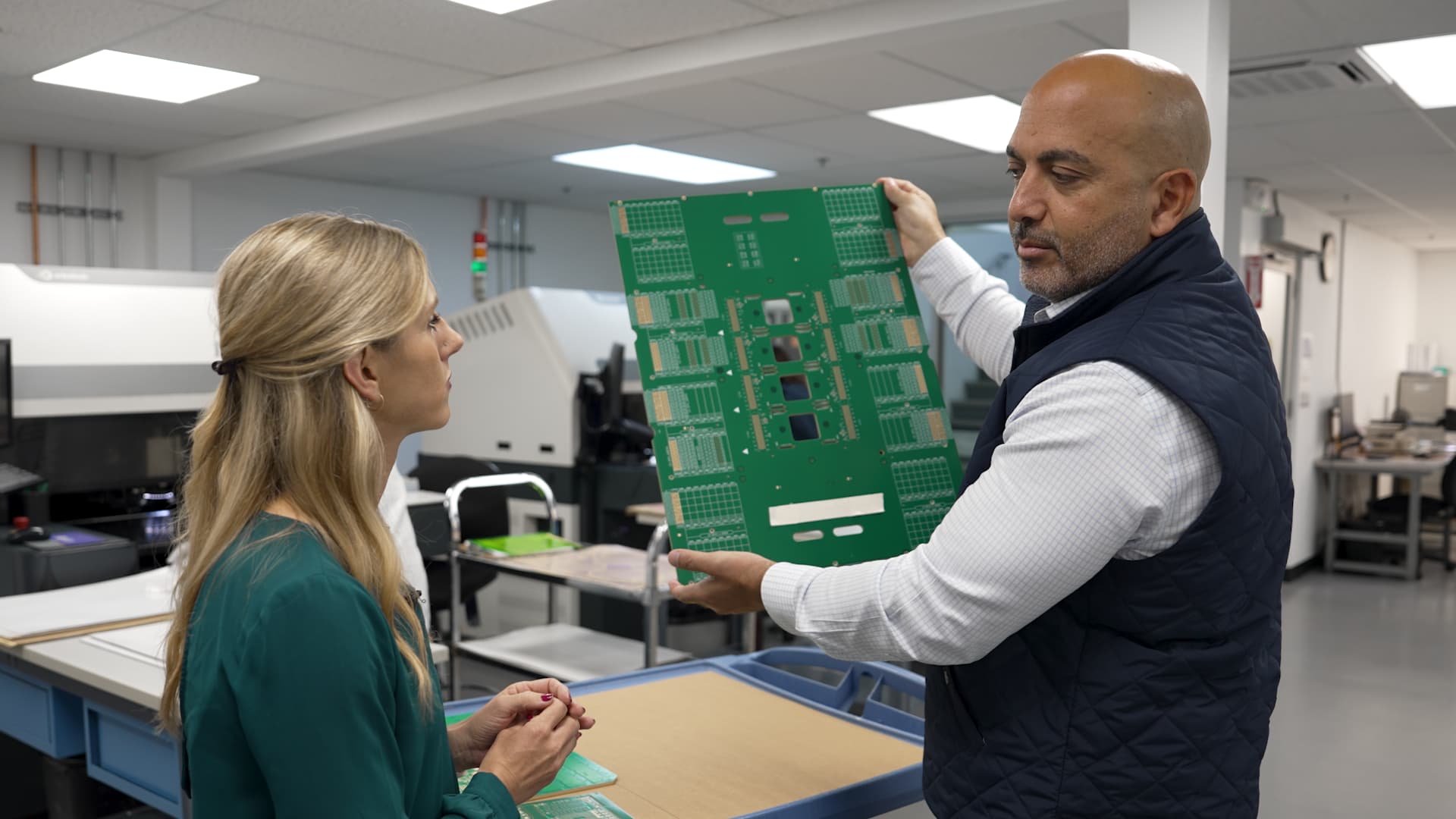
The critical role of printed circuit boards (PCBs) beneath the surface of advanced technologies, particularly in the booming AI sector, is drawing significant national security scrutiny in the U.S. With a vast majority of these essential components manufactured in China, a growing dependency is raising alarms for defense and technology sectors alike, even as domestic players see unprecedented growth.
🚀 Tech Strategy & Market Disruptions
- Supply Chain Vulnerability. The heavy reliance on Chinese manufacturing for circuit boards creates significant geopolitical and security risks, impacting critical AI and defense systems.
- Domestic Manufacturing Push. Driven by security concerns and increasing demand, the U.S. government and private sector are investing in and expanding domestic PCB production capabilities.
- Innovation in Materials and Design. Startups are exploring novel approaches like ‘fluid’ circuit boards and AI-driven design to accelerate iteration and reduce reliance on traditional manufacturing.
The Hidden Architecture of AI’s Dependence
Printed circuit boards, the silent workhorses beneath virtually every chip, are foundational to the rapid expansion of artificial intelligence. These intricate layers enable communication and functionality, making them indispensable for companies like Nvidia, Google, and Apple. However, the overwhelming concentration of PCB manufacturing in China has created a significant national security concern for the United States. U.S. defense officials have highlighted that compromised circuit boards could lead to catastrophic failures in critical systems, ranging from malfunctions in advanced weaponry to sophisticated data exfiltration back to adversarial nations. This dependency is starkly illustrated by the U.S. Defense Department’s increasing mandate for domestic sourcing of its PCB purchases.
Historically, the U.S. accounted for approximately 30% of the global PCB supply. That figure has plummeted to a mere 4%, with China now dominating the market. This shift is attributed to lower material and labor costs in China, alongside robust state-sponsored manufacturing initiatives. The implications are profound, creating a ‘risky dependency’ that experts warn is difficult to untangle quickly.
- The global PCB market is projected to exceed $96 billion this year and reach $123 billion by the end of the decade, underscoring its massive economic importance.
- Domestic players like TTM Technologies (TTMI) and Sanmina (SANM) are experiencing substantial growth, with TTMI shares surging nearly 500% in the past year alone.
- Geopolitical tensions and conflicts, such as those in the Middle East, are further disrupting the supply chain and increasing the cost of essential raw materials like copper and resin.
The urgency to bolster domestic production is amplified by surging demand from both the commercial AI sector and defense applications. Companies are struggling to meet military requirements amidst ongoing global conflicts, exacerbated by the impact of regional instability on raw material availability. This demand-supply imbalance has led to significant price increases for PCBs, with some manufacturers announcing hikes of 5% to 25%.
Navigating the Supply Chain Tightrope
The U.S. government is actively exploring legislative and financial incentives to revitalize domestic PCB manufacturing. Proposals include subsidies, tax credits, and grants aimed at encouraging companies to build and expand production facilities within the United States. These efforts are intertwined with the broader U.S.-China tech competition, where accusations of industrial-scale intellectual property theft by Chinese entities add another layer of complexity.
For a potential malicious actor, compromised PCBs represent multiple avenues of attack. In a worst-case scenario, a compromised PCB could mean a missile malfunctions in flight. This stark reality underscores the critical need for robust domestic manufacturing capabilities.
The growth trajectory for domestic PCB manufacturers is dramatic. TTM Technologies, a leading U.S. producer, is actively expanding its footprint with new factories in New York and Wisconsin, aiming to balance its significant Asian production capacity. This expansion is crucial, as the company supplies major AI players whose chips cannot function without these essential substrates. The need is so acute that even as Moore’s Law approaches its limits, the complexity and integration capabilities offered by advanced PCBs become even more critical for future computing power.
[TTMI] Market Adoption Challenges
While the demand for American-made PCBs is soaring, particularly from the aerospace and defense sectors which will soon face legal mandates for domestic sourcing, challenges remain. The significant upfront investment required to establish new PCB factories, estimated between $250 million and $400 million, presents a hurdle. For tech megacaps, demonstrating long-term profitability to Wall Street for this shift in production is paramount. However, the growing recognition of supply chain risks is pushing executives to factor these considerations into their cost analyses, driving a need for diversification. This evolving landscape is creating opportunities for innovation, with startups exploring advanced design techniques and novel materials to create more resilient and adaptable circuit boards.
The Imperative for Domestic Resilience in Circuit Board Manufacturing
The current scenario highlights a critical inflection point for the U.S. technology and defense sectors. The nation’s dependence on foreign manufacturing for essential components like circuit boards is not merely an economic concern but a significant national security vulnerability. The surge in growth for domestic manufacturers like TTM Technologies is a positive indicator, but the scale of investment and strategic planning required to truly decouple from China’s dominance is immense.
- The U.S. must rapidly scale domestic manufacturing capacity to meet both commercial and defense demands.
- Government incentives and private sector innovation are crucial for making U.S.-based production competitive.
- Diversifying raw material sources and reducing reliance on single-source suppliers is a key strategic imperative.
Will the current momentum in domestic PCB production be enough to secure the nation’s technological future against evolving global threats?
📊 StockXpo Analyst’s View
Market Impact: The news signals a heightened awareness of supply chain vulnerabilities in critical technology sectors, potentially leading to increased defense spending and government support for domestic manufacturing. This could create significant opportunities for U.S.-based electronics manufacturers and material suppliers. Investor sentiment may shift towards companies with diversified and localized supply chains, while those heavily reliant on single-source foreign production could face increased scrutiny.
Sector To Watch: The aerospace and defense technology sector, alongside advanced semiconductor packaging and electronic manufacturing services (EMS) providers, are poised for significant growth. Companies enabling reshoring efforts and those developing next-generation PCB technologies will be key beneficiaries. Investors should monitor companies actively investing in U.S.-based production and those with strong government contracts.
Financial Disclaimer:
StockXpo.com is a financial news aggregator and educational portal, not a registered investment advisor or broker-dealer. All information, news, and analysis provided herein are strictly for educational purposes and do not constitute investment, financial, legal, or tax advice. Investing in the stock market involves high risks, and past performance is not indicative of future results. StockXpo will not be liable for any financial losses or investment damages. Always consult a certified financial advisor before making market decisions.
MORE IN INSIDE TECHNOLOGY

Bond Yields Under Pressure: IMF Warns of ‘Disorderly’ Spike Driven by AI Debt and Inflation
Published: Tuesday, October 13, 2026 · 1:21 AM

AI Breakthroughs: TikTok CEO Predicts Major Scientific Leap Within Three Years
Published: Monday, October 12, 2026 · 2:40 AM