Published: Tuesday, June 2, 2026 · 2:32 PM | Updated: Tuesday, June 2, 2026 · 2:32 PM
📊 251 views




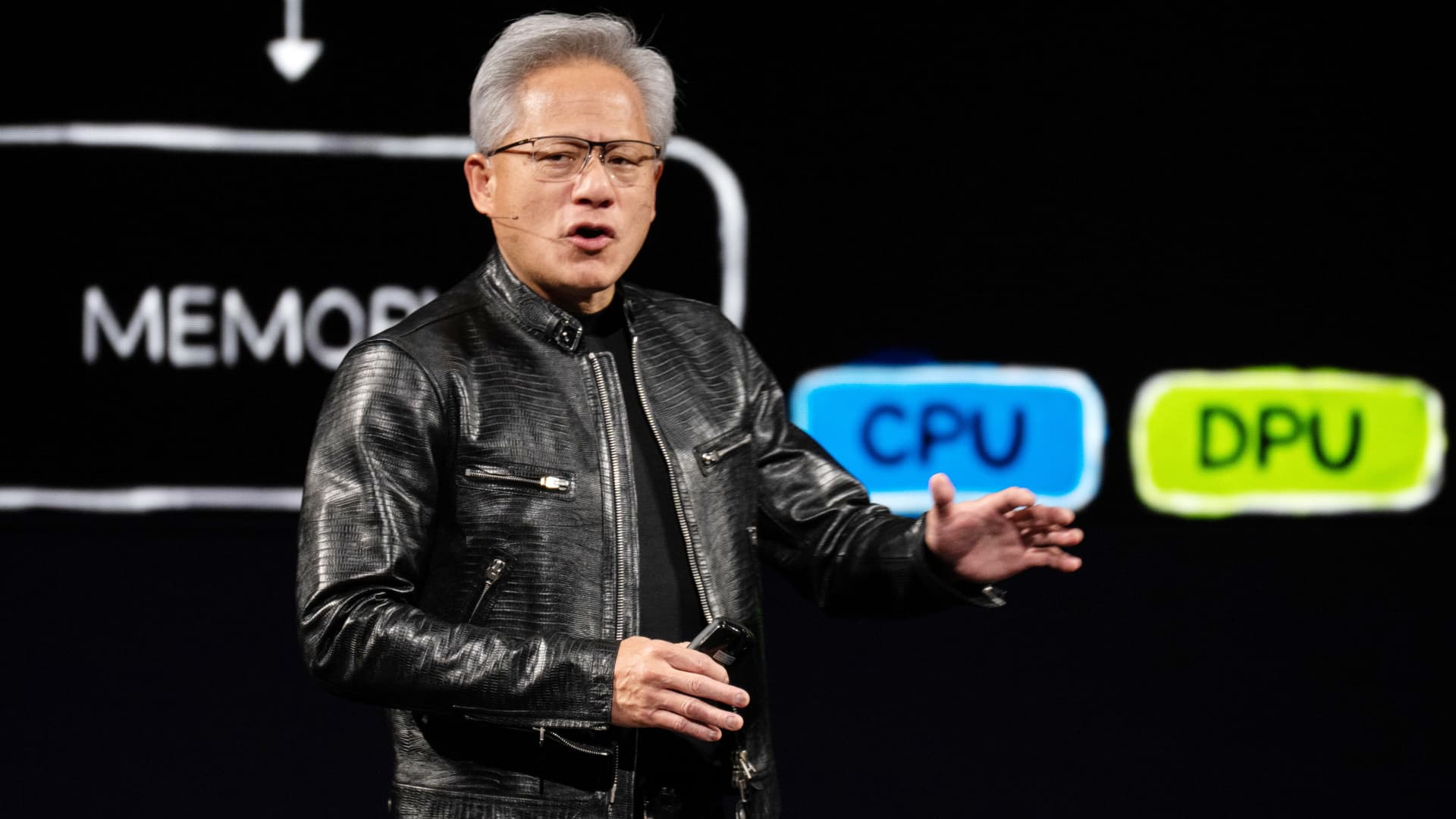
Nvidia, renowned for its data center dominance, is making a pivotal move into the personal computing market with its new RTX Spark (N1X) SoCs. This strategic expansion signals CEO Jensen Huang’s ambition to permeate every layer of the burgeoning AI stack, extending the company’s formidable presence beyond the cloud to the burgeoning edge AI ecosystem. The introduction of these Nvidia PC chips heralds a significant shift, aiming to redefine the PC experience through localized artificial intelligence.
🚀 Tech Strategy & Market Disruptions
- Edge AI Expansion. Nvidia’s move into PCs extends AI capabilities from data centers to local devices, enabling more efficient and private on-device processing for agentic AI.
- Arm Architecture Shift. The RTX Spark chips leverage Arm-based CPUs, marking a significant challenge to the x86 duopoly of Intel and AMD and accelerating a broader industry transition.
- Reinventing the PC Experience. By integrating powerful GPUs and unified memory, Nvidia aims to deliver a new generation of AI-powered PCs capable of running complex AI agents locally, enhancing productivity and user interaction.
Jensen Huang’s announcement at Computex underscores a clear intent: to own ‘every bit of the AI stack.’ Until recently, Nvidia’s astronomical growth, reaching a market capitalization of $5.4 trillion, was almost exclusively driven by its data center GPUs, which power large-scale AI models. Now, the company, in collaboration with Microsoft and partners like Dell, HP, ASUS, Lenovo, and MSI, is poised to bring its AI prowess directly to consumer PCs later this year with the RTX Spark, also known as N1X. This System-on-Chip (SoC) integrates Nvidia’s cutting-edge Blackwell GPU with a MediaTek CPU, a crucial step in delivering AI capabilities at the edge.
This expansion into the PC market immediately sent ripples through the industry, with shares of rivals like Advanced Micro Devices (AMD), Intel, and Qualcomm experiencing downward pressure. While Intel and AMD have historically dominated the PC CPU landscape with their x86 architecture, and Qualcomm has recently pushed its Arm-based SoCs for Windows laptops, Nvidia’s entry introduces a formidable new player. The integration of unified memory in the RTX Spark is particularly noteworthy, allowing the CPU and GPU to share memory on a single SoC, thereby removing a significant bottleneck for AI workloads and enabling more complex models to run locally on devices.
Analysts note that while the PC market represents a relatively small portion of Nvidia’s revenue compared to its $75 billion data center business or $15 billion networking segment, it is a strategic long-term play for edge AI. IDC analyst Tom Mainelli emphasizes that Nvidia’s established reputation in cloud AI, combined with its GPU expertise, lends significant credibility to its push for AI PCs. This contrasts with earlier ‘AI PC’ concepts, which struggled to gain traction due to a lack of compelling software and Microsoft’s initial Copilot challenges. Nvidia’s approach with RTX Spark, specifically targeting agentic AI applications like OpenClaw or Hermes Agent that can run continuously and ‘meter free’ on devices, presents a more tangible value proposition for users seeking enhanced productivity without cloud dependency.
The broader shift towards Arm architecture further solidifies Nvidia’s strategic positioning. For decades, x86 instruction sets pioneered by Intel and AMD were the bedrock of PC CPUs. However, Arm’s power-efficient design, first popularized by Apple’s iPhone and later by Amazon’s Graviton processors for data centers, has seen increasing adoption. Apple famously transitioned its MacBooks from Intel’s x86 chips to its own Arm-based M-series processors, demonstrating the viability and performance advantages of this alternative architecture. Even Arm itself recently unveiled its first in-house CPU, with major tech players like Meta and Microsoft adopting Arm-based solutions for their data centers. This trend signifies a weakening of the traditional x86 stronghold, opening avenues for players like Nvidia to redefine the computing landscape with custom Arm-based solutions, a development that StockXpo highlights in its coverage of global technology market trends.
This competitive landscape means that Nvidia, despite its formidable balance sheet and market momentum, faces an uphill battle. The PC market, while large, is not a high-growth sector like generative AI has been.
- Market Size: 296 million PC chips shipped in 2025, significantly below the 2021 peak of 361 million.
- Revenue Scale: Intel’s client computing group reported $32.2 billion in 2025, dwarfed by Nvidia’s $75 billion data center revenue in a recent quarter.
- Projected Impact: Nvidia might sell 10 million PC chips over the next two years, a modest start compared to its core businesses.
These figures underscore the long-term nature of Nvidia’s ambition in the PC space, rather than an immediate revenue explosion.
DISRUPTION FLOW:
Integrated GPU/CPU Architecture with Unified Memory → Enhanced On-Device AI Performance & Efficiency → Cost-Effective Local AI Agent Execution → Reduced Cloud Dependency & Improved Privacy → Reinvention of the PC as an ‘AI Agent Hub’ → Increased Competition in the Traditional PC Chip Market → Accelerated Shift Towards Arm-based Ecosystems in Windows PCs → New Era of Productivity and User Interaction.
“Nvidia’s strategic move into the PC market with highly optimized AI SoCs represents a critical pivot towards decentralized intelligence. By embedding powerful AI capabilities directly onto endpoint devices, they are not just selling chips; they are fundamentally redefining the compute paradigm from ‘cloud-first’ to ‘cloud-and-edge seamless’. This shift demands a rethinking of application architecture, emphasizing robust on-device inferencing and model optimization, crucial for developers building the next generation of agentic AI experiences.”
Nvidia Platform Architecture: The Edge AI Foundation
Nvidia’s RTX Spark (N1X) platform leverages a sophisticated System-on-Chip (SoC) design that integrates a Blackwell-class GPU with an Arm-based MediaTek CPU. This combination is central to its edge AI strategy. The key architectural differentiator is the unified memory, which allows both the CPU and GPU to access the same pool of high-bandwidth memory directly. This eliminates data transfer bottlenecks common in traditional discrete CPU-GPU setups, significantly boosting performance for AI inference and model execution on the device. Furthermore, the architecture is designed for optimal power efficiency, a critical factor for laptops and other portable devices, while still delivering the raw computational power needed for complex AI agents. This tightly coupled design underpins the ability to run advanced AI models locally, fostering new application development without constant reliance on cloud resources. As emerging technologies evolve, Nvidia’s foundational architecture could become a blueprint for future edge computing initiatives across various sectors.
Nvidia Market Adoption Challenges and Opportunities
Despite Nvidia’s formidable technological lead and market valuation, cracking the entrenched PC market presents unique adoption challenges. Intel and AMD hold decades-long relationships with PC manufacturers, a vast software ecosystem optimized for x86, and extensive supply chains. While Microsoft’s partnership is a significant advantage, ensuring widespread software compatibility and developer support for Arm-based Windows environments remains critical. Consumer perception and pricing will also play a role; RTX Spark chips are expected to debut in premium-priced computers, potentially limiting initial market penetration. However, the opportunity lies in redefining the ‘AI PC’ narrative. By offering genuinely transformative on-device AI capabilities—especially for agentic workloads—Nvidia can differentiate its offerings. If these capabilities translate into tangible productivity gains and user experiences that surpass existing solutions, it could incentivize developers to optimize their applications for the Nvidia-Arm platform, ultimately driving broader market acceptance and making it a topic of interest for broader tech industry shifts.
Nvidia PC Chips: Redefining the Edge AI Landscape
Nvidia’s aggressive entry into the PC chip market with RTX Spark signifies more than just product diversification; it’s a profound strategic move to solidify its control over the entire AI value chain, from data centers to the end-user device. This initiative, powered by Arm architecture and deep integration with Microsoft, could catalyze a true reinvention of personal computing, making agentic AI a local reality rather than a cloud-dependent luxury.
- Accelerated Edge AI: The RTX Spark’s unified memory and powerful GPU-CPU integration will enable sophisticated AI models and agents to run efficiently on local devices.
- Intensified Competition: Nvidia’s entry will force established players like Intel, AMD, and Qualcomm to accelerate their own AI-focused SoC development and market strategies.
- Future of Computing: This marks a pivotal step towards a new generation of PCs where on-device AI becomes fundamental to productivity and user experience, mirroring the smartphone revolution.
Will this bold expansion redefine the standard for personal computing and usher in an era of ubiquitous local AI?
📊 StockXpo Analyst’s View
Market Impact: Nvidia’s pivot towards the PC market with its Nvidia PC chips is likely to sustain investor confidence, reinforcing the company’s long-term vision beyond data center dependency. While immediate revenue contributions from PC chips may be modest, the strategic implications of capturing the edge AI market are immense, potentially creating new valuation drivers. Competitors in the x86 and mobile SoC spaces could face increased pressure, leading to volatile stock performance as the market digests this new competitive landscape. This move also highlights a growing investor appetite for integrated AI solutions that span the entire computing stack, an important consideration for investors following the latest technology market trends.
Sector To Watch: The PC manufacturing sector (Dell, HP, ASUS, Lenovo, MSI) is poised for a significant uplift as new AI-powered devices stimulate upgrade cycles and potentially higher average selling prices. Furthermore, the broader software and application development ecosystem, particularly for agentic AI and productivity tools, stands to benefit from a new platform capable of executing complex AI locally. Investors should also keep a close eye on Arm Holdings, as the increased adoption of Arm-based chips in Windows PCs validates their architectural advantages and expands their licensing opportunities, a development that often features in Bloomberg’s technology coverage.
Financial Disclaimer:
StockXpo.com is a financial news aggregator and educational portal, not a registered investment advisor or broker-dealer. All information, news, and analysis provided herein are strictly for educational purposes and do not constitute investment, financial, legal, or tax advice. Investing in the stock market involves high risks, and past performance is not indicative of future results. StockXpo will not be liable for any financial losses or investment damages. Always consult a certified financial advisor before making market decisions.
MORE IN INSIDE TECHNOLOGY

NextDC Shares Plunge: Power Delays Threaten Australia’s Data Center Growth
Published: Wednesday, October 21, 2026 · 1:50 AM

AI Adoption: Germany’s $10 Billion Breakthrough in Industrial AI
Published: Tuesday, October 20, 2026 · 12:39 AM