Published: Tuesday, June 2, 2026 · 5:05 PM | Updated: Tuesday, June 2, 2026 · 5:05 PM
📊 235 views




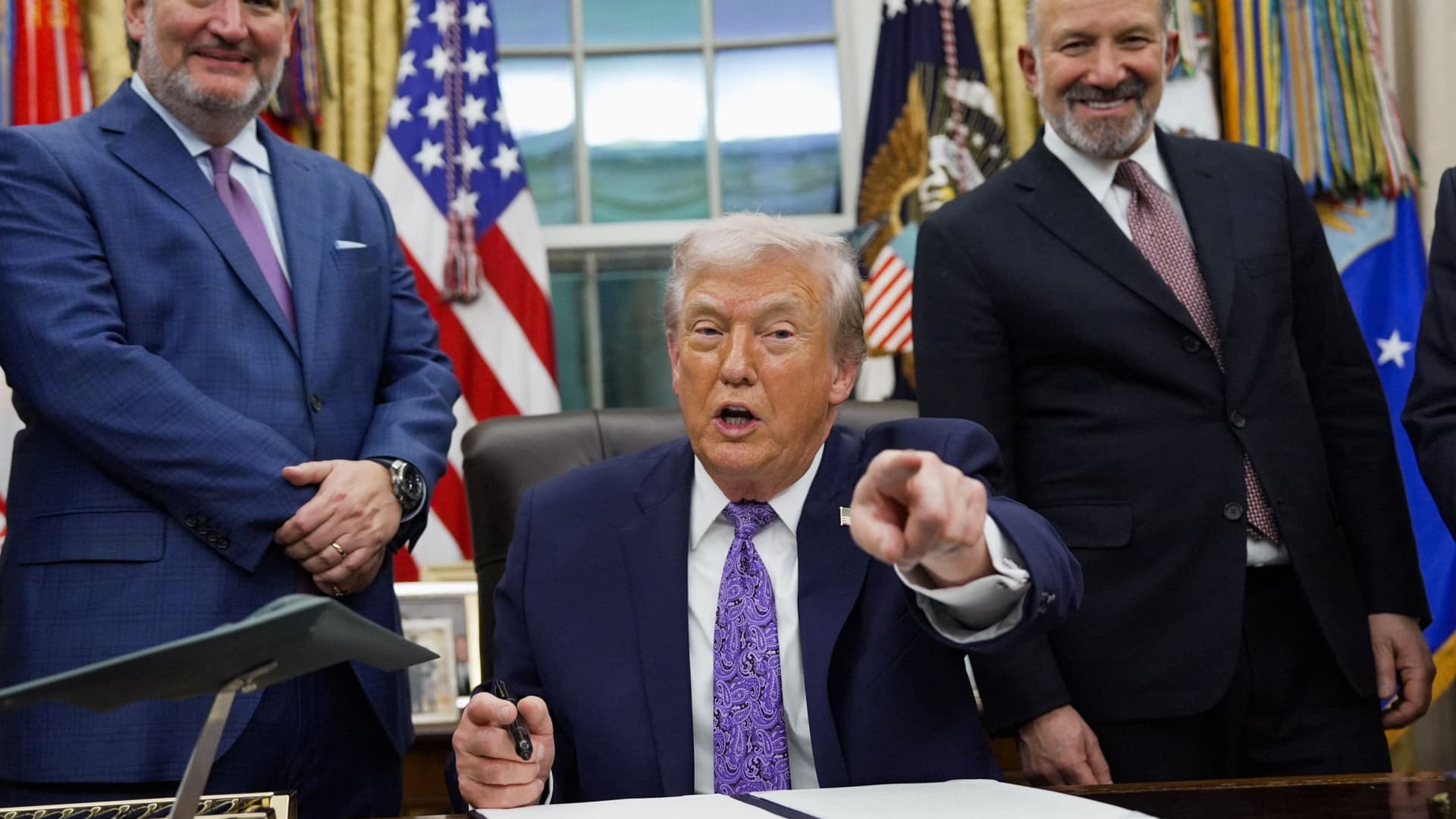
President Donald Trump has signed a new AI executive order, a move that formally requests artificial intelligence companies to grant federal agencies early access to their advanced models for evaluation. This initiative marks a significant step towards government oversight in the rapidly evolving AI landscape, aiming to assess capabilities and potential risks before broader public release.
🚀 Tech Strategy & Market Disruptions
- Voluntary Benchmarking. The order asks AI developers to voluntarily participate in a federal process to assess ‘covered frontier models’ for cyber capabilities.
- Early Access Requirement. Companies are requested to provide models up to 30 days prior to general release, allowing government selection of ‘trusted partners’.
- No Mandatory Licensing. Explicitly states the order does not authorize mandatory licensing or preclearance, addressing industry concerns raised by key tech executives.
The recently signed AI executive order by President Trump introduces a framework where artificial intelligence developers are asked, on a voluntary basis, to submit their ‘covered frontier models’ for federal evaluation. This process aims to benchmark advanced cyber capabilities, with a request for up to 30 days of early access before models are broadly released. This pre-release assessment would also enable the government to designate ‘trusted partners’ for early engagement with these powerful AI systems. Crucially, the order explicitly avoids creating a mandatory licensing or preclearance requirement, a point of contention that reportedly led to an earlier signing ceremony being postponed after lobbying efforts from influential tech figures like Elon Musk and Mark Zuckerberg, as reported by global technology news outlets.
This directive arrives at a time of intense activity within the AI sector, as meticulously tracked by latest developments in tech reports. Companies such as Anthropic have confidentially filed for IPOs, while OpenAI is also reportedly preparing for a public offering. Elon Musk’s SpaceXAI, a subsidiary of SpaceX, is anticipated to enter the public market even sooner, potentially valuing the company at over a trillion dollars. The substantial financial stakes and rapid technological advancements underscore the government’s perceived urgency in establishing some form of oversight.
The White House’s engagement with AI has seen fluctuations, with figures like venture capitalist David Sacks serving in an advisory capacity before his role concluded. The administration’s prior attempts at an AI order faced industry resistance, particularly regarding concerns over stifling innovation. This revised, voluntary approach reflects an attempt to balance national security interests with the tech industry’s drive for development.
A key event highlighting the dual nature of AI development—both its potential and its risks—was the emergence of Anthropic’s Claude Mythos Preview. This model, lauded for its ability to identify software weaknesses and security flaws, was initially rolled out to a select group of companies under the ‘Project Glasswing’ cybersecurity initiative, which Anthropic later expanded. Such capabilities naturally drew the attention of government officials, leading to high-profile meetings with Anthropic executives and senior administration members.
While the order emphasizes voluntary participation, its implications for the trajectory of cutting-edge AI development are significant:
- Standardization Push. The benchmarking process could lay the groundwork for future industry standards around AI safety and capabilities.
However, the relationship between developers and the government isn’t without friction. The Department of Defense (DOD) previously labeled Anthropic a ‘supply chain risk,’ effectively prohibiting defense contractors from utilizing the company’s technology. Anthropic subsequently sued the Trump administration over this designation, with the litigation still active. This complex interplay underscores the challenge of regulating a sector moving at an unprecedented pace, where perceived security risks often clash with innovation incentives and corporate autonomy.
The Cascade of Disruption from AI Oversight
The potential disruption flow initiated by this AI executive order can be traced as follows:
New Voluntary Oversight → Early Government Insights → Potential for Standardized Security Benchmarks → Reduced Catastrophic Risk from Frontier Models → Increased Public Trust in AI Adoption → Accelerated Broader Digital Transformation Across Sectors.
‘The push for early model access, even on a voluntary basis, fundamentally alters the innovation roadmap for frontier AI. Companies must now factor in a pre-release evaluation phase, potentially shifting development priorities towards transparency and verifiable safety measures. This is less about regulation and more about collaborative risk mitigation at the very leading edge of emerging technologies, which will have significant implications for how organizations approach their digital transformation strategies,’ says a Lead Solution Architect at StockXpo.com specializing in advanced AI deployments.
Key Concurrent Market & Regulatory Dynamics
Key developments shaping the AI landscape concurrent with the executive order include:
- Anthropic IPO Filing: Confidentially filed with SEC for an initial public offering (IPO).
- OpenAI IPO Readiness: Reportedly gearing up for a potential public offering this year.
- SpaceXAI Public Debut: Poised for a public market debut as soon as next week, potentially valuing the company over $1 trillion.
- Mythos AI Expansion: Anthropic expanded ‘Project Glasswing’ initiative leveraging Mythos AI for cybersecurity.
- DOD vs. Anthropic: Ongoing litigation regarding ‘supply chain risk’ designation by the Department of Defense.
Navigating Frontier AI Market Adoption Challenges
For AI developers, the new request for early model access presents a complex set of market adoption challenges. While voluntary, the implicit pressure to comply, particularly for companies seeking to engage with lucrative government contracts or avoid potential future regulatory scrutiny, is undeniable. This environment could force smaller, less resourced startups to re-evaluate their go-to-market strategies, potentially favoring larger incumbents with the legal and compliance infrastructure to navigate these requests. Furthermore, the debate around intellectual property rights and data security during the pre-release evaluation period remains a sensitive area, requiring transparent frameworks to maintain trust and foster continued innovation. The industry’s ability to adapt to this new paradigm, balancing rapid development with increased transparency, will dictate the pace and direction of AI’s integration into critical national infrastructure. For additional educational tech insights, visit our blog.
AI Oversight: Ecosystem Expansion Potential
Paradoxically, the AI executive order could also unlock significant ecosystem expansion potential. By engaging directly with federal agencies, AI companies might gain invaluable insights into public sector needs, leading to the development of specialized models for defense, cybersecurity, healthcare, and infrastructure management. This collaborative model, while under scrutiny, could foster a symbiotic relationship where government agencies become early adopters and critical feedback providers, driving specific innovation streams. The selection of ‘trusted partners’ for early access could also catalyze new private-public partnerships, leading to bespoke solutions for national security challenges and enhanced cyber defense capabilities, as seen with initiatives like Anthropic’s Project Glasswing.
The AI Executive Order: A Defining Moment for Innovation and Trust
President Trump’s AI executive order signals a critical juncture for the artificial intelligence industry, attempting to strike a balance between fostering rapid innovation and addressing significant national security concerns. While framed as voluntary, the request for early access to advanced models establishes a new precedent for government interaction with frontier technology developers. The success of this approach will hinge on the level of transparency, trust, and mutual understanding forged between the public and private sectors.
- Regulatory Precedent: Establishes a framework for voluntary pre-release model evaluation, potentially influencing future global AI governance.
- Industry Response: Companies must balance innovation speed with compliance, shaping future R&D and market strategies.
- National Security Nexus: Prioritizes cyber defense capabilities and responsible AI development for critical infrastructure.
Can this voluntary framework evolve into a sustainable model for managing advanced AI, or will it inevitably lead to calls for more stringent, mandatory regulations?
📊 StockXpo Analyst’s View
Market Impact: This executive order introduces a new layer of uncertainty and potential complexity for AI firms, particularly those developing frontier models. While not mandatory, the implicit pressure for compliance could lead to increased R&D costs for safety and auditing, potentially favoring larger, established players who can absorb these overheads. Investor sentiment may become more discerning, prioritizing companies demonstrating robust governance and security frameworks alongside technological prowess. This could create a bifurcation in market valuations between ‘safe’ and ‘unregulated’ AI ventures. For deeper dives into technology market trends and their investment implications, consult our platform.
Sector To Watch: Cybersecurity and defense tech sectors stand to gain significantly. Companies that can demonstrate AI models capable of enhancing national security, cyber defense, or critical infrastructure protection are likely to see increased government interest and potential funding. Additionally, enterprise software providers integrating secure, audited AI capabilities will find a growing market, as businesses seek to de-risk their AI adoption strategies in light of governmental oversight trends.
Financial Disclaimer:
StockXpo.com is a financial news aggregator and educational portal, not a registered investment advisor or broker-dealer. All information, news, and analysis provided herein are strictly for educational purposes and do not constitute investment, financial, legal, or tax advice. Investing in the stock market involves high risks, and past performance is not indicative of future results. StockXpo will not be liable for any financial losses or investment damages. Always consult a certified financial advisor before making market decisions.
MORE IN INSIDE TECHNOLOGY
NextDC Shares Plunge: Power Delays Threaten Australia’s Data Center Growth
Published: Wednesday, October 21, 2026 · 1:50 AM

AI Adoption: Germany’s $10 Billion Breakthrough in Industrial AI
Published: Tuesday, October 20, 2026 · 12:39 AM