Published: Monday, June 1, 2026 · 5:18 AM | Updated: Monday, June 1, 2026 · 5:18 AM
📊 328 views




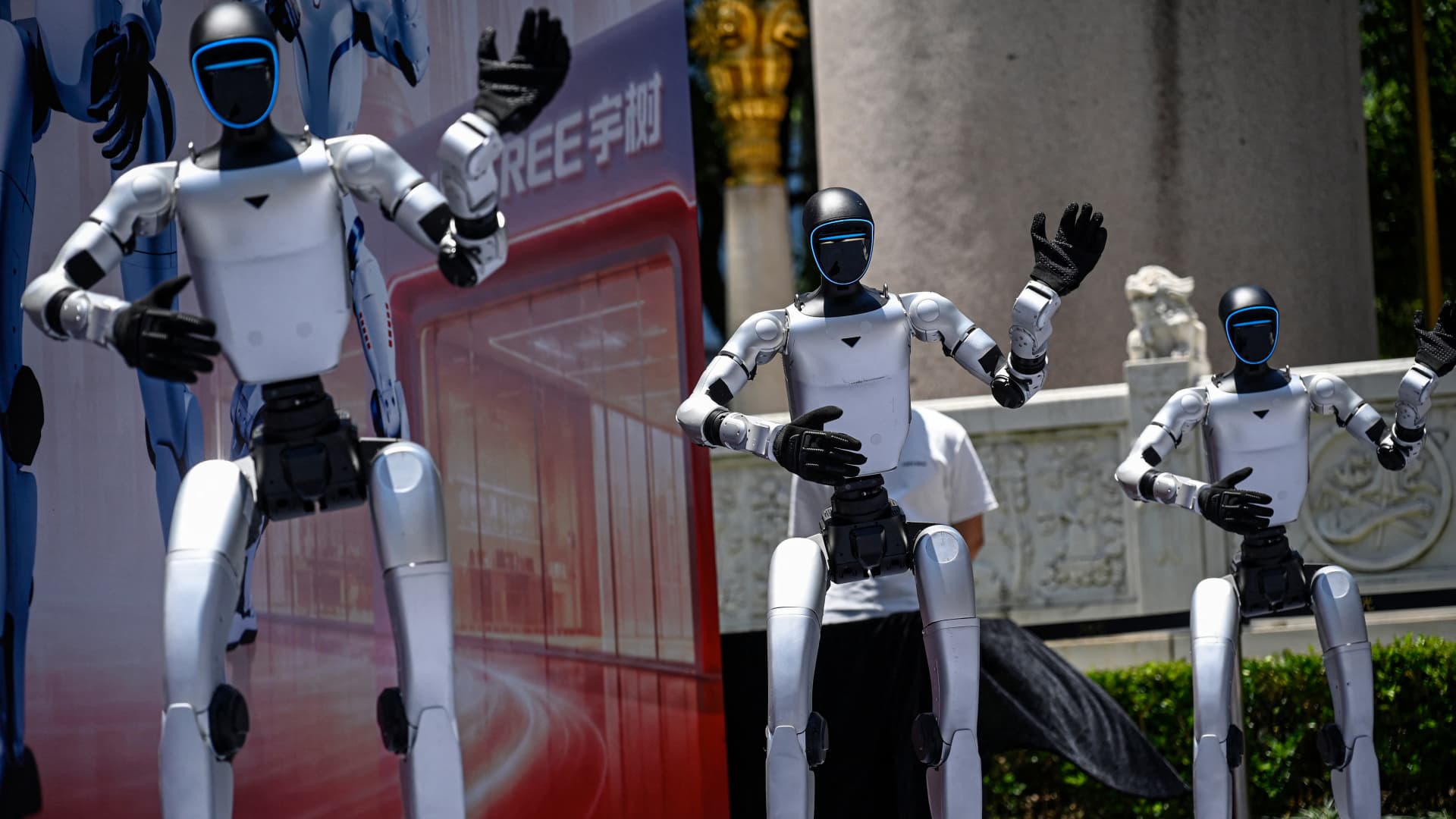
Nvidia is making a significant push into physical AI, partnering with Chinese firm Unitree to provide an advanced Nvidia humanoid robot platform to leading global research institutions. This strategic move, integrating Unitree’s H2 robot with Nvidia’s Jetson Thor hardware and Isaac GR00T AI, aims to accelerate innovation in a market projected to reach trillions of dollars.
🚀 Tech Strategy & Market Disruptions
- Strategic Partnership Deepens. Nvidia teams with Chinese humanoid robot maker Unitree to offer a fully integrated research platform, combining Unitree’s hardware with Nvidia’s advanced AI and simulation stack.
- Democratizing AI Research Access. The system, featuring the Jetson Thor and Blackwell GPU, will be sold to universities like Stanford and ETH Zurich, broadening access to cutting-edge humanoid robotics development beyond major tech firms.
- Physical AI Market Acceleration. This initiative supports Nvidia CEO Jensen Huang’s vision of a multi-trillion-dollar ‘physical AI’ market, expanding Nvidia’s influence in robotics software and hardware as it targets an IPO for Unitree.
The global race to commercialize humanoid robotics is intensifying, with Nvidia at the forefront through its latest collaboration. The tech giant has selected Unitree, a Chinese humanoid robot manufacturer, to anchor its initial robotics system, designed specifically for researchers. This pivotal offering combines Unitree’s nearly 6-foot-tall H2 humanoid robot with Nvidia’s formidable Jetson Thor hardware, which integrates the advanced Blackwell GPU to power on-device artificial intelligence capabilities. This comprehensive package includes Nvidia’s humanoid-focused AI models, known as Isaac GR00T, alongside its sophisticated simulation systems, forming a robust testing environment for academic and institutional exploration.
A key component of this integrated system is the sophisticated mechanical hands, supplied by Singapore-based Sharpa, an AI robot maker with significant venture backing. Nvidia’s CEO Jensen Huang has been vocal about the immense potential of ‘physical AI,’ forecasting it to become a market valued in the tens of trillions of dollars. Huang underscored this vision in a recent Taipei keynote, describing the Nvidia Isaac Root as a ‘reference humanoid robot, all fully integrated,’ highlighting its 25 degrees of freedom on each Sharpa-made hand and 31 degrees of freedom on the robot itself. He emphasized its design for accessibility, particularly for higher education and university researchers, acknowledging the prohibitive complexity of building such systems from scratch, which aligns with insights often found when accessing educational tech insights.
This initiative not only deepens Nvidia’s footprint in robotics software development, leveraging its dominance in AI computing through its CUDA software platform, but also strategically positions Unitree. The Chinese startup is concurrently pursuing a 4.2 billion yuan ($620 million) IPO on Shanghai’s STAR board, a move that aligns with its global ambitions, evidenced by over 40% of its revenue already originating from outside China. The upcoming H2 Plus, an enhanced version of the H2 humanoid robot, slated for an October release, aims to be broadly accessible, further catalyzing widespread adoption.
- This collaboration signifies a strategic effort to extend advanced robotics tools beyond the confines of a few large corporations, making frontier humanoid research more widely available.
- The integration of Nvidia’s advanced AI hardware and software with Unitree’s robust robot chassis creates a powerful platform for accelerating physical AI development.
- Unitree’s global market presence and IPO plans reflect the increasing commercial viability and investor interest in the humanoid robotics sector.
The introduction of an accessible, integrated Nvidia humanoid robot platform by Nvidia and Unitree creates a significant disruption flow. This begins with the standardization of advanced hardware and software, lowering entry barriers for research. This leads directly to accelerated physical AI R&D, as universities and labs can now focus on algorithms and applications rather than hardware integration. The broader access fosters rapid innovation across diverse academic settings, potentially uncovering novel use cases and capabilities at a much faster pace. This ultimately results in a quicker path to commercial deployment of humanoid robots, transforming industries from logistics and manufacturing to healthcare and service sectors, and validating Jensen Huang’s multi-trillion-dollar market projection for physical AI.
‘The strategic importance of democratizing advanced robotics platforms cannot be overstated. By packaging high-performance AI hardware, sophisticated simulation environments, and a robust humanoid chassis, Nvidia is effectively short-circuiting years of foundational R&D for countless institutions. This move is less about selling units today and more about cultivating a developer ecosystem that will drive the next wave of disruptive innovation in physical AI.’
Given the lack of 3+ verifiable technical metrics suitable for a formal table, a bulleted list is more appropriate to convey key specifications:
- Robot Height: Nearly 6 feet
- Hand Articulation: 25 degrees of freedom per hand (Sharpa)
- Robot Articulation: 31 degrees of freedom
- AI Processing: Nvidia Jetson Thor with Blackwell GPU
- AI Models: Nvidia Isaac GR00T
- Target Users: Higher education and university researchers
Nvidia’s Ecosystem Expansion Potential
Nvidia’s venture with Unitree extends far beyond a simple hardware sale; it’s a calculated move to solidify its position as the foundational platform for all things AI, especially in the burgeoning field of robotics. By providing a comprehensive, integrated solution that includes its Jetson Thor hardware, Blackwell GPUs, and Isaac GR00T software, Nvidia is actively nurturing an ecosystem of developers and researchers. This strategy mirrors its success with CUDA, which has made Nvidia GPUs indispensable for deep learning. As more researchers adopt this standardized humanoid platform, they will inherently become entrenched in Nvidia’s software stack, further entrenching the company’s dominance. This proactive ecosystem development ensures that as physical AI scales, Nvidia remains at the core, facilitating future commercial breakthroughs and maintaining a competitive edge against other chipmakers and robotics firms globally, as seen in global technology developments.
Unitree’s Market Adoption Challenges
While the collaboration with Nvidia offers significant visibility and technical validation for Unitree, the Chinese startup faces its own set of market adoption challenges. Despite reporting over 40% of its revenue from international markets and eyeing a substantial IPO on the Shanghai STAR board, widespread commercial deployment of humanoid robots remains a nascent and capital-intensive endeavor. Unitree must navigate the complexities of manufacturing at scale, ensuring reliability and cost-effectiveness for broader industrial and consumer applications beyond research labs. Furthermore, geopolitical considerations and supply chain vulnerabilities could impact its global market penetration, especially as competition from other robotics firms intensifies. Balancing innovation with practical commercialization and regulatory compliance will be critical for Unitree’s long-term success in the burgeoning humanoid robotics sector, as companies are staying abreast of industry shifts.
The Ripple Effect of Nvidia Humanoid Robot Platform on AI Development
The launch of Nvidia’s integrated humanoid robot platform, in concert with Unitree and Sharpa, marks a significant inflection point in the advancement and accessibility of physical AI. This initiative is set to democratize advanced robotics research, pushing the boundaries of what’s possible in automation and embodied intelligence across various sectors.
- The collaborative platform significantly lowers the barrier to entry for complex humanoid robotics research.
- Nvidia’s strategy reinforces its ecosystem dominance, embedding its hardware and software deep into future AI innovation.
- Unitree gains crucial validation and market exposure, strengthening its position ahead of its IPO and global expansion plans.
Will this foundational platform catalyze a rapid acceleration in real-world humanoid robot applications within the next five years?
📊 StockXpo Analyst’s View
Market Impact: This partnership signals Nvidia’s aggressive expansion into the multi-trillion-dollar physical AI market, solidifying its platform dominance beyond data centers. For investors, it reinforces Nvidia’s long-term growth trajectory in AI hardware and software, potentially drawing more capital into the broader robotics and automation sector. Unitree’s IPO, backed by this high-profile collaboration, could see strong initial interest, reflecting confidence in the commercialization potential of humanoid robotics.
Sector To Watch: Robotics and AI integration firms are poised for accelerated growth. Industries such as logistics, advanced manufacturing, and service automation, which stand to benefit most from sophisticated humanoid capabilities, should be closely monitored. The democratizing effect of this platform could also spark a wave of innovation among startups leveraging these new frontiers in emerging technologies, potentially creating new market leaders.
Financial Disclaimer:
StockXpo.com is a financial news aggregator and educational portal, not a registered investment advisor or broker-dealer. All information, news, and analysis provided herein are strictly for educational purposes and do not constitute investment, financial, legal, or tax advice. Investing in the stock market involves high risks, and past performance is not indicative of future results. StockXpo will not be liable for any financial losses or investment damages. Always consult a certified financial advisor before making market decisions.
MORE IN INSIDE TECHNOLOGY

AI Legal Tech: Revolutionizing Billing and Training in Law with Innovation
Published: Saturday, October 10, 2026 · 2:58 AM
Starlink India: Regulatory Hurdles and Innovation-Driven Growth Risks
Published: Friday, October 9, 2026 · 12:48 AM